
Myrmecina rugosa
- Sci. Name
- Myrmecina rugosa
- Tribe
- Crematogastrini
- Subfamily
- Myrmicinae
- Author
- Forel, 1902
- Distribution
- Found in 1 countries
Introduction
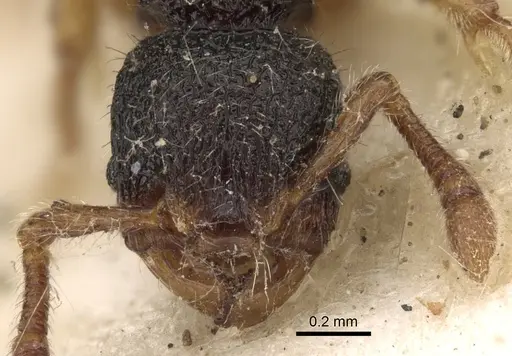
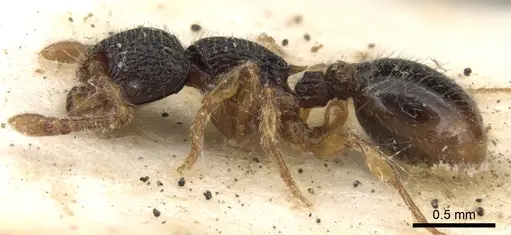
Myrmecina rugosa is a tiny ant species native to Australia, first described in 1902. It was the first species in the genus described from Australia and remains one of the rarest Myrmecina species known, documented only from type specimens. The species is recognized by its distinctive irregular rugose (wrinkled) body sculpturing, which differs from other Australian Myrmecina species that have more defined ridge patterns. Workers are dark brown-black with yellow-red antennae, mandibles, legs, and the tip of the abdomen. These ants belong to the Tropical Climate Specialist functional group and are typically found in leaf litter in forested areas of coastal Queensland and eastern New South Wales .
Quick Summary
- Difficulty: Unknown, data insufficient
- Origin & Habitat: Australia, specifically coastal Queensland and eastern New South Wales. Found in leaf litter in forested areas, nesting in soil with or without coverings, between rocks, in twigs on the ground, or in rotten wood [3].
- Colony Type: Small colonies in soil and rotting wood. Colony structure is unconfirmed, no data on queen number exists for this specific species.
- Size & Growth:
- Queen: Size data unavailable, no queen measurements exist for this species
- Worker: Very small, approximately 2mm inferred from genus patterns (workers measure less than 1mm in head width) [2]
- Colony: Small colonies, exact maximum unknown
- Growth: Unknown, no development data exists
- Development: Unconfirmed, no species-specific data available (No development data exists for this species.)
- Antkeeping:
- Temperature: Based on Tropical Climate Specialist classification and Australian wet tropics habitat, aim for 22-26°C with stable conditions.
- Humidity: Requires moderate to high humidity, damp forest floor conditions. Keep nest substrate consistently moist but not waterlogged.
- Diapause: Unknown, no specific research on overwintering requirements. Australian tropical species may have reduced activity periods rather than true hibernation.
- Nesting: In nature they nest in soil, under rocks, in twigs on the ground, or in rotten wood. For captivity, a small test tube setup or Y-tong nest with moist substrate works well. Provide small chambers scaled to their tiny size.
- Behavior: These are tiny, cryptic ants that spend most of their time in leaf litter and soil. They are not aggressive and rarely venture into the open. Some Myrmecina species are predatory on oribatid mites, so they may accept small live prey. Escape prevention should be excellent due to their very small size, they can squeeze through tiny gaps. They are not known to sting.
- Common Issues: extremely limited availability, this species is one of the rarest in the genus and is not commonly available in the antkeeping trade, no established care protocols exist since the species is only known from type specimens, their tiny size makes escape prevention critical, use fine mesh and tight-fitting lids, specialized diet may be difficult to replicate in captivity, wild-caught colonies may be difficult to locate due to their rarity and cryptic habits
Availability and Acquisition
Myrmecina rugosa is one of the rarest ant species in the genus Myrmecina and is known only from type material collected in Australia [2]. It is extremely unlikely to be available through commercial antkeepers or suppliers. The species has only been encountered in leaf litter samples in forested areas and has never been commonly collected. If you are interested in keeping Myrmecina ants, you may have better luck seeking related Australian Myrmecina species that are more commonly documented, though even these remain rare in the hobby. This caresheet is provided for educational purposes for those who may encounter this species in research or field work.
Natural History and Biology
Myrmecina rugosa was described by Forel in 1902 and was the first Australian species in this genus to be formally identified [2]. The species is morphologically distinct from other Australian Myrmecina, featuring irregular rugose sculpturing on the head and mesosoma rather than the more defined carinae (ridges) seen in related species. The majority of Australian Myrmecina species are found in coastal Queensland, with some also occurring in eastern New South Wales and one species restricted to the Northern Territory [3]. Several Australian Myrmecina species are among the most restricted and high-elevation specialist ants known from the continent, with some only found above approximately 1000m elevation.
Diet and Feeding
While specific feeding data does not exist for this species, related Myrmecina species are known to be predatory on oribatid mites (tiny soil mites) [3]. The larvae of Myrmecina have exceptionally small heads, which is an adaptation to feeding on the partially opened bodies of these mites. In captivity, you could attempt to culture and offer small oribatid mites or other micro-arthropods. These ants are likely to accept small live prey rather than sugar sources, given their predatory specialization. Start with tiny live prey items like springtails or micro-mites and observe acceptance.
Housing and Nesting
In the wild, Myrmecina rugosa nests in soil with or without coverings, between rocks, in twigs on the ground, or in rotten wood [3]. They are leaf-litter dwelling ants most often encountered through litter extraction in forested areas. For captive care, provide a small nest setup with moist substrate, a test tube with a cotton water reservoir or a small Y-tong/plaster nest works well. The chambers should be small and scaled to their tiny worker size. Maintain moderate to high humidity and provide a shallow foraging area with leaf litter or small pieces of rotting wood to mimic their natural environment.
Temperature and Humidity
As a Tropical Climate Specialist species from Australia's humid tropics [1], Myrmecina rugosa requires warm and humid conditions. Aim for temperatures in the 22-26°C range with stable conditions. Provide a gentle gradient if possible so the ants can self-regulate. Humidity should be moderate to high, think damp forest floor. Keep the nest substrate consistently moist but avoid waterlogging, which can drown these tiny ants. A small water dish in the outworld can help maintain humidity. Avoid cold temperatures and drafts.
Frequently Asked Questions
Is Myrmecina rugosa available for sale in the antkeeping hobby?
No. This species is one of the rarest in the genus and is only known from type specimens. It is not commercially available and is unlikely to be encountered in the antkeeping trade.
How big do Myrmecina rugosa colonies get?
Colony size is unconfirmed for this specific species, but Myrmecina colonies are typically small, likely under 100 workers based on genus patterns.
What do Myrmecina rugosa ants eat?
While not directly studied for this species, related Myrmecina are predatory on oribatid mites. In captivity, offer small live prey such as springtails or micro-mites.
Do Myrmecina rugosa ants sting?
Myrmecina ants are not known for having painful stings. Given their tiny size, any sting would likely be negligible to humans.
What temperature should I keep Myrmecina rugosa at?
Based on their classification as Tropical Climate Specialists from Australia's wet tropics, keep them at 22-26°C. Provide stable, warm conditions with a gentle gradient if possible.
Do Myrmecina rugosa ants need hibernation?
Diapause requirements are unknown for this species. As a tropical species from coastal Queensland, they likely do not require true hibernation but may have reduced activity periods.
How do I set up a nest for Myrmecina rugosa?
In nature they nest in soil, under rocks, or in rotting wood. For captivity, use a small test tube setup or Y-tong nest with moist substrate. Keep chambers small and scaled to their tiny size. Provide a shallow foraging area with leaf litter.
Why is Myrmecina rugosa so rare?
This species is known only from type material and is considered one of the rarest in the genus. It was the first Australian Myrmecina described but remains poorly documented. Most Australian Myrmecina species have highly restricted ranges, with some limited to specific mountain tops or small rainforest patches.
Can I keep multiple Myrmecina rugosa queens together?
Colony structure is unconfirmed for this species. No data exists on whether they are single-queen or multi-queen colonies. Combining unrelated queens is not recommended due to lack of information.
How long does it take for Myrmecina rugosa to develop from egg to worker?
Development timeline is unconfirmed, no species-specific data exists for this species.
Report an Issue
The current care sheet is based fully on literature. See inconsistencies, or something that's incorrect? Please , it will be resolved after review from an admin. Contributing to the blogs tab also helps providing information, to make us be able to further improve the caresheets. Thank you for your support!
References

This caresheet is licensed under CC BY-SA 4.0 .
Community Blogs
CASENT0281802
View on AntWeb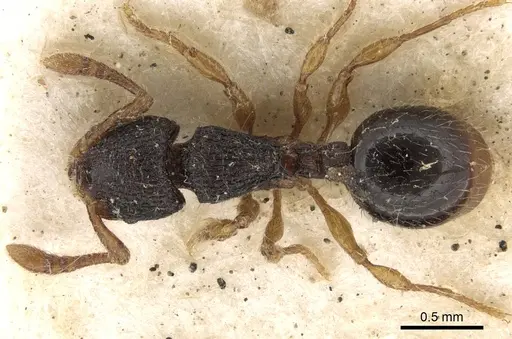
Literature
Loading distribution map...Loading products...