
Myrmecina pauca
- Sci. Name
- Myrmecina pauca
- Tribe
- Crematogastrini
- Subfamily
- Myrmicinae
- Author
- Huang <i>et al.</i>, 2008
- Distribution
- Found in 1 countries
Introduction
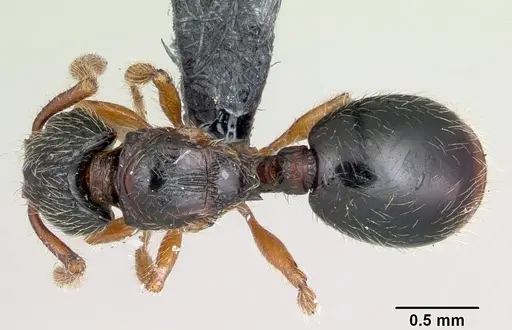
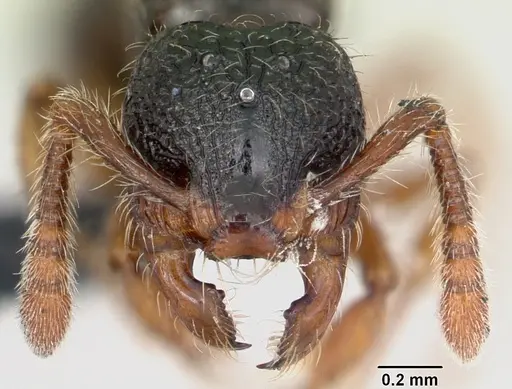
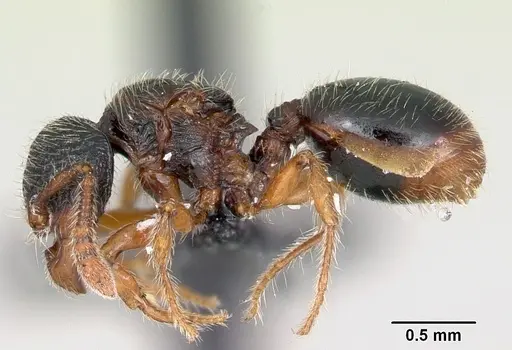
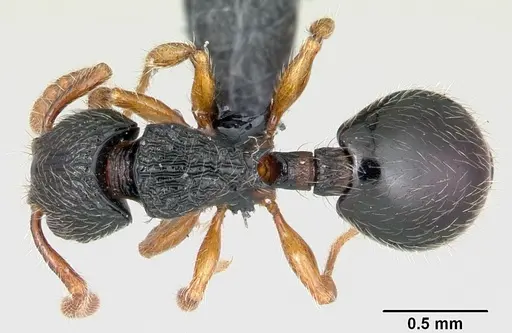
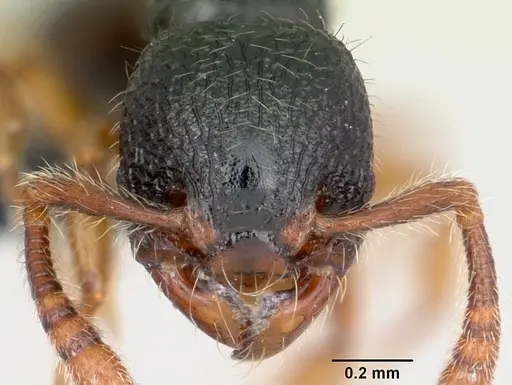
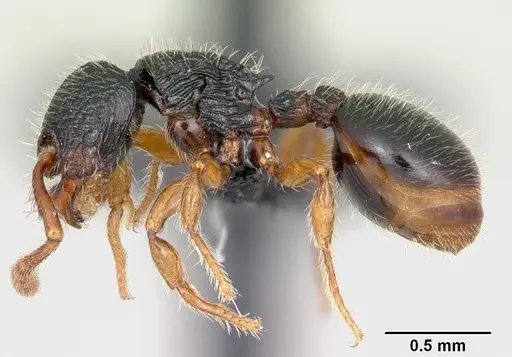
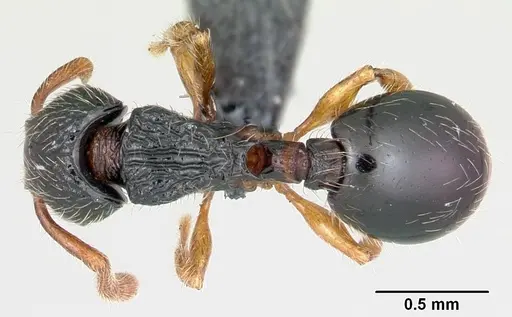
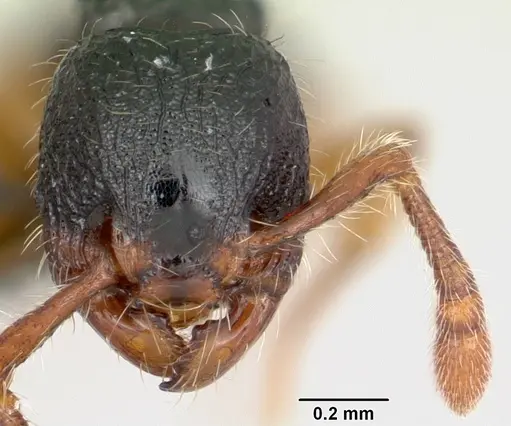
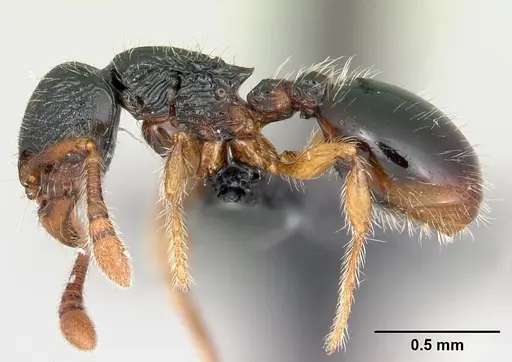
Myrmecina pauca is a tiny myrmicine ant native to central and southern China. Workers measure 2.78-2.98 mm and queens 3.35-3.59 mm, making them one of the smaller ants you can keep . They are easily recognized by their 11-segmented antennae - a unique feature that sets them apart from all other Myrmecina species worldwide, which have 12 segments . Their body is blackish brown with yellowish-brown legs, antennae, and mandibles, covered in distinctive pale golden hairs . The species was described in 2008 from Hunan Province and has since been found in Guangxi and Hainan as well . These ants naturally nest in hidden microhabitats like soil, leaf litter, rotten wood, and under stones or moss . Colonies are tiny, rarely exceeding 50 workers, and their exact biology remains poorly studied . For antkeepers, providing a damp, shaded setup that mimics forest leaf litter is key.
Quick Summary
- Difficulty: Medium
- Origin & Habitat: Central and southern China (Hunan, Guangxi, Hainan provinces). Found in subtropical forest environments, typically in leaf litter, soil, under stones, and in rotten wood [6][1].
- Colony Type: Single-queen colonies (monogyne), based on typical Myrmecina patterns, though not directly confirmed for this species. Colonies are very small, averaging 30-50 workers [6].
- Size & Growth:
- Antkeeping:
- Temperature: Based on their subtropical distribution, keep at room temperature 20-24°C [1]. Avoid temperatures above 28°C. If the colony seems sluggish, check temperature.
- Humidity: Keep the nest substrate consistently moist but not waterlogged. These ants come from damp forest leaf litter, so provide a moisture gradient (one wet area, one dry) so they can choose [6].
- Diapause: Likely yes. Their native Hunan range has cool winters. Give them a cool period at 10-15°C for 2-3 months during winter. Reduce feeding and disturbance during this time [1].
- Nesting: Small test tube setups are ideal for founding. For larger colonies, use Y-tong (AAC), plaster, or soil nests with narrow chambers. Add some leaf litter or soil for natural feel [6].
- Behavior: These are tiny, cryptic ants that spend most of their time hidden. Workers are slow-moving and not aggressive. Their defense mechanism uses a modified spatulate stinger to smear venom onto threats rather than stinging (typical of Crematogastrini tribe), completely harmless to humans. They likely forage for small prey and honeydew in leaf litter. Because they are under 3 mm, escape prevention is critical, seal all gaps smaller than 1 mm. They are not strong climbers, so standard barriers (fluon, oil) usually work, but double-check for tiny openings.
- Common Issues: tiny size means they can escape through very small gaps, seal everything, very slow colony growth, don't expect quick expansion, humidity must stay high, if the nest dries out, the colony may collapse, very little species-specific care data exists, expect to experiment, wild-caught colonies may carry parasites, quarantine before adding to main setup
Nest Preferences
In the wild, Myrmecina pauca nests in soil, leaf litter, rotten wood, under bryophyte moss, and under deep-set stones [6]. For captivity, start with a standard test tube setup, the high humidity of a test tube mimics their natural damp microhabitat. As the colony grows, move them to a small Y-tong or plaster nest with narrow chambers (they dislike large open spaces). Add a thin layer of organic soil or leaf litter on the nest floor for them to excavate. Because colonies stay small (under 50 workers), a nest with 3-4 chambers is plenty. Avoid large acrylic nests, they don't provide the stable humidity these ants need.
Feeding and Diet
These ants are likely generalist feeders, collecting honeydew and scavenging small arthropods in leaf litter [6]. In captivity, provide constant access to sugar water or honey (diluted to avoid drowning). For protein, offer fruit flies, pinhead crickets, or tiny mealworm pieces once or twice a week. Prey should be smaller than the workers (under 3 mm) so they can carry it. Remove uneaten prey after 24 hours to prevent mold. Some Myrmecina species may also eat seeds, but this is not confirmed specifically for M. pauca.
Temperature and Seasonal Care
Myrmecina pauca comes from Hunan Province in central China, which has a subtropical climate with distinct seasons. Keep the nest at room temperature, ideally 20-24°C. They can tolerate slightly cooler conditions (down to 18°C) but avoid temperatures above 28°C as they are prone to overheating [1]. During winter, reduce the temperature gradually to 10-15°C for 2-3 months to simulate their natural seasonal cycle. This likely helps trigger proper queen reproduction in spring. Do not feed heavily during diapause and minimize disturbance. Return to normal temperatures gradually by raising 2-3°C per week.
Behavior and Handling
These are docile, non-aggressive ants that pose no threat to keepers. Workers are small and slow-moving, spending most of their time hidden in the nest. Their primary defense is a modified stinger that smears venom over the cuticle of enemies rather than piercing skin (common to the Crematogastrini tribe). They are harmless to humans, you'd struggle to even feel them. When disturbed, they may freeze or play dead. Colonies are peaceful and do not exhibit territorial behavior far from the nest. Because they are so small and cryptic, they are best suited for keepers who enjoy peeking into a quiet microcosm rather than watching busy trails. Escape prevention is vital: seal any gaps in the outworld smaller than 1 mm, as these ants can squeeze through tiny openings despite not being strong climbers.
Frequently Asked Questions
How long does it take for Myrmecina pauca to produce first workers?
No direct data exists for this species. Based on typical Myrmecina patterns, estimate 8-12 weeks from egg to worker at 20-24°C. The first workers (nanitics) will be smaller than the normal 2.8 mm workers.
How big do Myrmecina pauca colonies get?
Colonies typically average 30-50 workers in the wild, and may reach up to 50 workers in captivity [6]. These are very small colonies compared to most ants.
Can I keep multiple Myrmecina pauca queens together?
Not recommended. The colony structure is not confirmed as monogyne or polygyne for this species, but typical Myrmecina are single-queen. Combining unrelated queens is likely to result in fighting or one queen being killed.
What do Myrmecina pauca ants eat?
They accept sugar water or honey for energy, and small protein prey like fruit flies, tiny crickets, or small mealworm pieces. Feed protein once or twice weekly, keep sugar water constant. Always ensure prey is smaller than the workers themselves.
Do Myrmecina pauca sting?
They have a modified spatulate stinger used for smearing venom onto enemies, a defense mechanism typical of the Crematogastrini tribe. They cannot pierce human skin, so they are completely harmless.
Are Myrmecina pauca good for beginners?
They are moderate difficulty. Peaceful and small, but they require high humidity and grow slowly. Their tiny size makes escape prevention challenging. Beginners can keep them if they are prepared to maintain stable conditions and seal the setup carefully.
Do Myrmecina pauca need hibernation?
Likely yes. Their native central China range has cool winters. Provide a cool period at 10-15°C for 2-3 months during winter. This is not confirmed experimentally but follows from their subtropical distribution [1].
What makes Myrmecina pauca special compared to other ants?
They are the only known Myrmecina species in the world with 11-segmented antennae, all other species have 12. This makes them easily identifiable [2][1]. They are also one of the rarest species in the antkeeping hobby.
When should I move my colony to a formicarium?
Move from the founding test tube to a small Y-tong or plaster nest once the colony reaches 15-20 workers or the test tube becomes crowded. Use a formicarium with narrow chambers to suit their small size.
Why are my Myrmecina pauca dying?
Most common causes: the nest drying out (these ants need high humidity), overheating above 28°C, poor nutrition (lack of protein), or escape (they can fit through tiny gaps). Wild-caught colonies may also carry parasites. If you see workers wandering outside the nest with no trail, check for escape routes immediately.
Report an Issue
The current care sheet is based fully on literature. See inconsistencies, or something that's incorrect? Please , it will be resolved after review from an admin. Contributing to the blogs tab also helps providing information, to make us be able to further improve the caresheets. Thank you for your support!
References

This caresheet is licensed under CC BY-SA 4.0 .
Community Blogs
Literature
Loading distribution map...Loading products...