
Myrmecia petiolata
- Sci. Name
- Myrmecia petiolata
- Tribe
- Myrmeciini
- Subfamily
- Myrmeciinae
- Author
- Emery, 1895
- Distribution
- Found in 1 countries
Introduction
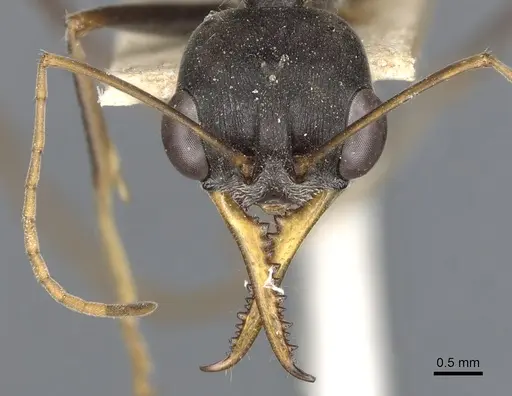
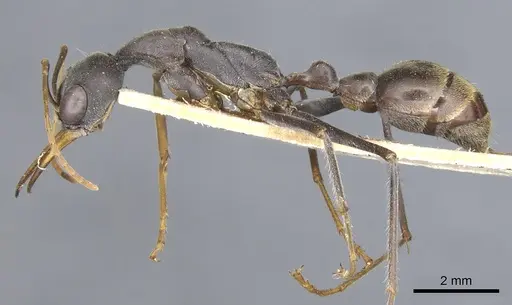
Myrmecia petiolata is a bulldog ant belonging to the nigrocincta species group, found in Queensland, Australia. The species was originally described by Emery in 1895 from the Bellenden Ker region. As with all Myrmecia species, these ants possess a potent sting and should be handled with extreme caution. They are daytime foragers with excellent vision, using their large compound eyes to hunt prey and navigate their territory. This species is known from limited museum specimens, and detailed biological information is scarce. The nigrocincta group contains several Australian bulldog ant species that are generally considered less aggressive than some other Myrmecia groups, though all retain the ability to deliver painful stings.
Quick Summary
- Difficulty: Medium
- Origin & Habitat: Queensland, Australia, specifically the Bellenden Ker region in northeastern Queensland. Found in tropical to subtropical forested areas [1].
- Colony Type: Colony structure is unconfirmed. The nigrocincta species group has not been studied for colony social structure.
- Size & Growth:
- Queen: Size data unavailable, no measurements exist for this species
- Worker: Size data unavailable, no measurements exist for this species
- Colony: Colony size data unavailable for this species
- Growth: Growth rate is unconfirmed for this species
- Development: Development timeline is unconfirmed for this species (Development time likely varies with temperature, as with most Myrmecia)
- Antkeeping:
- Temperature: Temperature requirements are unconfirmed for this species. Keep within the low-to-mid 20s°C range and observe colony activity.
- Humidity: Humidity requirements are unconfirmed. Provide a water tube and keep nest substrate slightly moist.
- Diapause: Diapause requirements are unconfirmed. Based on Queensland's mild climate, a true hibernation may not be necessary, but cooler temperatures during winter months may slow activity.
- Nesting: Nesting preferences are unconfirmed. Provide a dark nest chamber as Myrmecia generally prefer dark nesting sites.
- Behavior: Behavior is poorly documented for this species. Like other Myrmecia, they are daytime foragers with excellent vision and are primarily predatory. The sting is potent, all Myrmecia have large stingers capable of delivering painful venom. Handle with extreme caution and avoid bare-hand contact. Escape risk is moderate due to their medium size.
- Common Issues: limited biological data makes specific care recommendations difficult, wild-caught colonies may have parasites that cause colony decline in captivity, potentially long initial founding period with slow visible progress, the potent sting makes this species unsuitable for handling
Species Identification and Taxonomy
Myrmecia petiolata belongs to the nigrocincta species group within the genus Myrmecia [2]. The species was described by Emery in 1895 from specimens collected in the Bellenden Ker region of Queensland, Australia [1]. The type material is held at MSNG (Museo di Storia Naturale di Genova). This species remains poorly studied, with limited museum records and no published biological observations.
Defense Mechanism
Myrmecia petiolata possesses a large, smooth stinger capable of delivering multiple rapid injections of highly allergenic venom. This is consistent with all species in the subfamily Myrmeciinae. The sting is potent and can cause significant pain lasting several hours. Allergic individuals should avoid this species entirely. When working with colonies, use tools rather than bare hands.
Housing and Nest Setup
Specific housing requirements are unconfirmed for this species. Use standard Myrmecia care as a starting point. Y-tong (acrylic) nests or test tube setups work well for founding colonies. Provide a dark nest chamber as Myrmecia generally prefer dim conditions. Ensure constant access to fresh water. Use vaseline or fluon barriers to prevent escapes.
Feeding and Nutrition
Feeding requirements are unconfirmed but likely follow typical Myrmecia patterns. These ants are primarily predatory, so offer small insects like fruit flies, small crickets, and mealworms. Remove uneaten prey within 24 hours to prevent mold. Some Myrmecia accept sugar sources occasionally, but protein is essential for brood development.
Temperature and Seasonal Care
Specific temperature requirements are unconfirmed. Based on the Queensland habitat, aim for warm conditions in the low-to-mid 20s°C range. Observe colony behavior, if workers become sluggish, slightly warmer temperatures may help. Based on Queensland's mild climate, a true hibernation is likely not required, but cooler winter temperatures may naturally reduce activity.
Handling and Safety
Myrmecia petiolata has a potent sting. Allergic individuals should avoid this species entirely. When working with the colony, use tools rather than bare hands. Never disturb the nest during founding, stressed queens may abandon or consume eggs. These ants will sting if threatened. Watch for defensive posture as a warning sign. Keep the formicarium in a low-traffic area to minimize disturbance.
Colony Development
Colony development timeline is unconfirmed for this specific species. Based on typical Myrmecia patterns, expect a lengthy founding period. A newly mated queen will seal herself into a chamber and lay eggs. First workers may take several months to emerge, depending on temperature. Myrmecia queens can live 15-20 years, so patience is essential. Do not disturb the founding chamber unnecessarily.
Frequently Asked Questions
How long does it take for Myrmecia petiolata to produce first workers?
Development timeline is unconfirmed for this species. Based on typical Myrmecia patterns, expect several months from founding to first workers emerging.
What do Myrmecia petiolata eat?
Feeding is unconfirmed but likely follows typical Myrmecia patterns. Offer small insects like fruit flies, small crickets, and mealworms. Protein is essential for brood development.
Can I keep multiple Myrmecia petiolata queens together?
Colony structure is unconfirmed for this species. Without specific data, assume single-queen colonies and avoid introducing additional queens.
What temperature do Myrmecia petiolata need?
Temperature requirements are unconfirmed. Keep nest in the low-to-mid 20s°C range and observe colony activity. Based on Queensland habitat, they prefer warm conditions.
How big do Myrmecia petiolata colonies get?
Colony size data is unavailable for this species. Most Myrmecia colonies reach several hundred workers over several years.
Do Myrmecia petiolata need hibernation?
Diapause requirements are unconfirmed. Based on Queensland's mild climate, a true hibernation may not be necessary, but cooler winter temperatures may naturally reduce activity.
Is Myrmecia petiolata good for beginners?
This is not a beginner species. The potent sting makes them unsuitable for handling, and the limited biological data means care recommendations are largely inferential.
When should I move my colony to a formicarium?
Move to a larger setup when the test tube becomes crowded or the water reservoir is depleted. Myrmecia do well in Y-tong nests once they reach 30-50 workers.
Why is my Myrmecia petiolata colony not growing?
Without species-specific data, common causes may include temperatures outside their preferred range, insufficient protein in diet, overfeeding leading to mold, or disturbance during founding. Start by reviewing temperature and feeding practices.
Report an Issue
The current care sheet is based fully on literature. See inconsistencies, or something that's incorrect? Please , it will be resolved after review from an admin. Contributing to the blogs tab also helps providing information, to make us be able to further improve the caresheets. Thank you for your support!
References

This caresheet is licensed under CC BY-SA 4.0 .
Community Blogs
CASENT0903789
View on AntWeb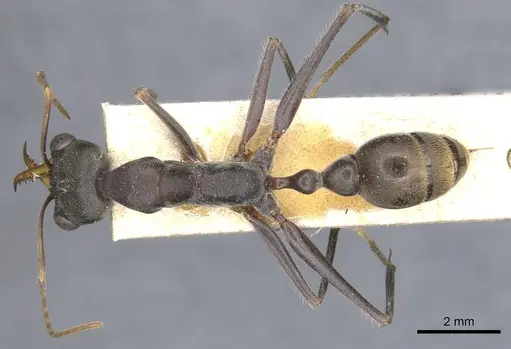
Literature
Loading distribution map...Loading products...