
Myrmecia minuscula
- Sci. Name
- Myrmecia minuscula
- Tribe
- Myrmeciini
- Subfamily
- Myrmeciinae
- Author
- Forel, 1915
- Distribution
- Found in 1 countries
Introduction
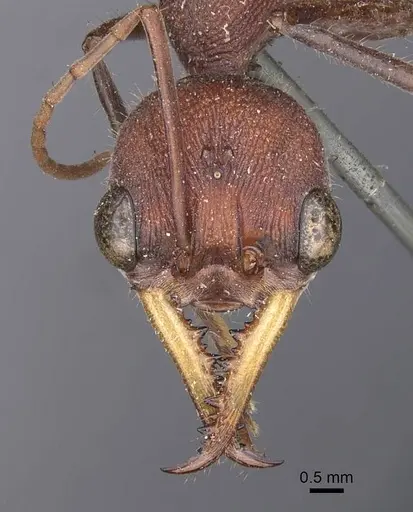
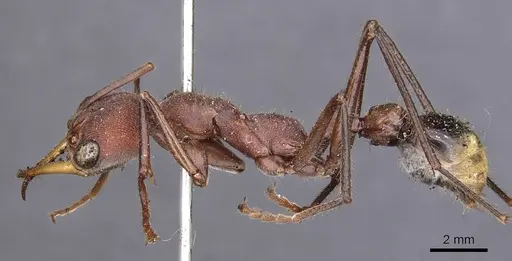
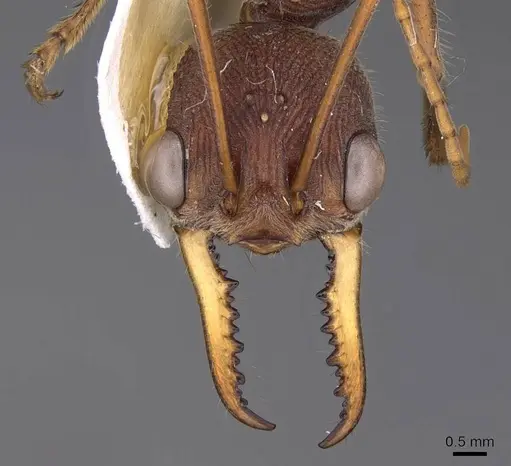
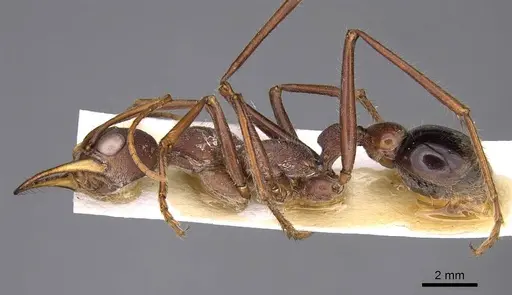
Myrmecia minuscula is a species of Australian bulldog ant in the genus Myrmecia, known for their robust build, powerful mandibles, and potent sting. Workers are large ants, typically ranging around 15-20mm, with queens being significantly larger. This species is native to southern Australia, particularly South Australia and Victoria, where it inhabits arid and semi-arid regions, nesting in soil or under stones in open woodland and grassland areas. Like all Myrmecia species, workers are solitary foragers that hunt independently for prey and collect honeydew rather than forming coordinated foraging trails. The genus represents one of the more primitive ant groups in Australia with relatively simple social structures. Myrmecia minuscula exhibits classic bulldog ant behavior - these ants are defensive, fast-moving, and will readily chase and attack perceived threats. They have excellent vision and can jump short distances when provoked. The sting is medically significant, causing intense pain that can last for hours and may trigger allergic reactions in sensitive individuals. Colony foundation is claustral, with the queen sealing herself in a chamber and raising her first brood without foraging.
Quick Summary
- Difficulty: Medium
- Origin & Habitat: Southern Australia, particularly South Australia and Victoria. Inhabits arid and semi-arid regions, nesting in soil or beneath stones in open woodland and grassland areas [1].
- Colony Type: Monogyne, single queen colonies. The queen seals herself in during founding (claustral) and raises the first brood alone.
- Size & Growth:
- Queen: ~20-25mm, inferred from Myrmecia genus patterns
- Worker: ~15-20mm, inferred from Myrmecia genus patterns
- Colony: Up to several hundred workers at maturity based on typical Myrmecia colony sizes
- Growth: Moderate, Myrmecia species typically take several months to a year to establish first workers
- Development: Approximately 8-12 weeks at optimal temperature, inferred from Myrmecia genus patterns (Development time is inferred from genus patterns as species-specific data is not available. Queens are claustral and will seal themselves in during founding.)
- Antkeeping:
- Temperature: Keep at 24-28°C during active season. A thermal gradient allowing warmer (26-28°C) and cooler (22-24°C) zones is ideal. Reduce to room temperature during winter rest.
- Humidity: Maintain moderate humidity in the nest. These are arid-region ants, so avoid constant dampness. Provide a water tube but keep the nest substrate relatively dry.
- Diapause: Yes, Myrmecia species require a winter rest period of 8-12 weeks at 10-15°C. This mimics their natural seasonal cycle in southern Australia.
- Nesting: Y-tong (AAC) nests or plaster nests work well. Provide a deep chamber for the queen to seal herself in during founding. Outworld should be spacious with secure barriers, these are large, strong ants.
- Behavior: Myrmecia minuscula is defensive and aggressive when threatened. Workers are solitary foragers, they do not use trail pheromones but search independently for prey and sugar sources. They have excellent vision and will investigate movement. Escape risk is moderate, they are large but determined. They can jump when provoked. The sting is potent and medically significant, handle with caution. They are not colony-friendly toward other ant species and should be kept separately.
- Common Issues: sting severity, these ants have a painful sting that can cause allergic reactions in some people, use caution when handling, winter mortality, colonies often fail if proper hibernation conditions are not provided or if the colony is too small, founding failure, claustral queens sometimes fail to establish if disturbed or if conditions are unsuitable, slow growth, Myrmecia colonies grow more slowly than many common ant species, requiring patience, escape attempts, large workers can push at lids and barriers, use secure formicarium connections
Housing and Setup
Myrmecia minuscula requires secure housing due to their size and strength. Y-tong (AAC) nests or plaster nests work well for this species. The nest should have chambers deep enough for the founding queen to seal herself in, a chamber of at least 2-3cm depth is recommended. Provide a water tube connected to the nest for humidity control. The outworld should be spacious enough for workers to forage and should have excellent escape prevention, these ants are strong and will push at any weak points. Use tight-fitting lids and consider barrier tape on the edges of formicaria. A layer of substrate in the outworld allows for natural digging behavior if they want to expand. [1]
Feeding and Diet
Myrmecia minuscula is a predatory species that primarily hunts insects and other small arthropods. Feed workers small live insects like fruit flies, small crickets, or mealworms. They will also accept sugar sources, offer honey water or sugar water regularly, especially once the colony has workers. In the wild, they forage solitarily for prey and collect honeydew from aphids and scale insects. Feed workers 2-3 times per week, removing any uneaten prey after 24 hours. A constant sugar source should be available. Colonies will self-regulate their feeding, do not overfeed.
Temperature and Seasonal Care
Maintain temperatures between 24-28°C during the active growing season. A thermal gradient is ideal, warmer areas around 26-28°C and cooler areas at 22-24°C allow the ants to regulate their own temperature. During winter, reduce temperatures to 10-15°C for an 8-12 week hibernation period. This mimics their natural seasonal cycle in southern Australia. Do not feed during hibernation but ensure a water source is available. Resume normal feeding and temperatures gradually in spring. Failure to provide proper hibernation can weaken and kill colonies over time.
Behavior and Handling
Myrmecia minuscula workers are defensive and will attack if they feel threatened. They have excellent vision and will investigate movement around their nest. When provoked, they may jump short distances and deliver a painful sting. The sting is medically significant, it causes intense pain that can last for several hours and may cause allergic reactions in sensitive individuals. Never handle these ants without tools. When working with the colony, use patience rather than force, blowing on them or gently tapping the formicarium will usually cause them to retreat rather than attack. Workers are solitary foragers and do not form foraging trails, they search independently for food.
Colony Development
Myrmecia minuscula colonies start with a claustral queen who seals herself in a chamber and raises the first brood alone. She relies on stored fat reserves and does not leave to forage during founding. The first workers (nanitics) are typically smaller than mature workers and emerge after 8-12 weeks under optimal conditions. After the first workers eclose, the colony enters a growth phase. Myrmecia colonies grow more slowly than many common ant species, expect several months to reach 20-30 workers, and a year or more to reach 100+ workers. Growth rate depends heavily on temperature and feeding. Mature colonies may reach several hundred workers.
Frequently Asked Questions
How long does it take for Myrmecia minuscula to get first workers?
Expect 8-12 weeks from egg to first worker at optimal temperature (24-28°C). This is based on typical Myrmecia genus development patterns as species-specific data is not available.
Do Myrmecia minuscula ants sting?
Yes, they have a potent sting that causes intense pain lasting several hours. The sting is medically significant and can cause allergic reactions in sensitive individuals. Handle with extreme caution.
Are Myrmecia minuscula good for beginners?
No, this species is recommended for intermediate to advanced antkeepers. Their potent sting, specific temperature and hibernation requirements, and slower growth rate make them challenging for beginners.
What do Myrmecia minuscula eat?
They are predatory, feed small live insects like fruit flies, small crickets, or mealworms. They also accept sugar sources like honey water or sugar water. Feed workers 2-3 times per week with constant sugar available.
Do Myrmecia minuscula need hibernation?
Yes, they require an 8-12 week winter rest period at 10-15°C during winter. This mimics their natural seasonal cycle in southern Australia and is essential for colony health.
Can I keep multiple Myrmecia minuscula queens together?
No, Myrmecia minuscula is monogyne (single-queen). Queens will fight and only one will survive. Do not attempt to house multiple foundress queens together.
How big do Myrmecia minuscula colonies get?
Mature colonies typically reach several hundred workers. Growth is slow, expect several months to a year to establish the first workers, and several years to reach full size.
What temperature do Myrmecia minuscula need?
Keep them at 24-28°C during the active season with a thermal gradient. Provide warmer areas (26-28°C) and cooler areas (22-24°C) so ants can regulate their own temperature.
When should I move Myrmecia minuscula to a formicarium?
Keep founding queens in a test tube setup until the first workers eclose. After 20-30 workers have developed, you can move them to a proper formicarium with connected outworld.
Why is my Myrmecia minuscula colony dying?
Common causes include improper hibernation, too low or too high humidity, temperature extremes, or disturbance during founding. Ensure proper winter rest at 10-15°C and maintain moderate humidity. Do not disturb sealed founding chambers.
Report an Issue
The current care sheet is based fully on literature. See inconsistencies, or something that's incorrect? Please , it will be resolved after review from an admin. Contributing to the blogs tab also helps providing information, to make us be able to further improve the caresheets. Thank you for your support!
References

This caresheet is licensed under CC BY-SA 4.0 .
Community Blogs
CASENT0907078
View on AntWeb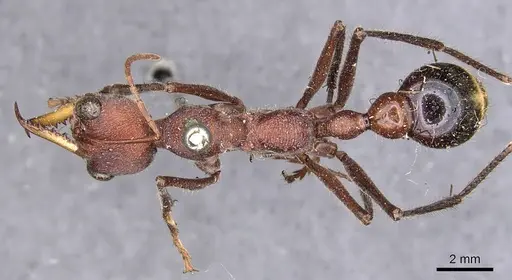
CASENT0914021
View on AntWeb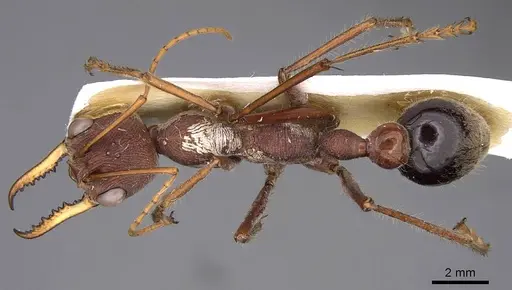
Literature
Loading distribution map...Loading products...