
Myrmecia fulgida
- Sci. Name
- Myrmecia fulgida
- Tribe
- Myrmeciini
- Subfamily
- Myrmeciinae
- Author
- Clark, 1951
- Distribution
- Found in 1 countries
Introduction
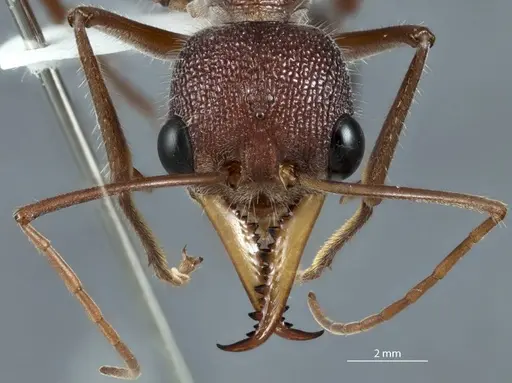
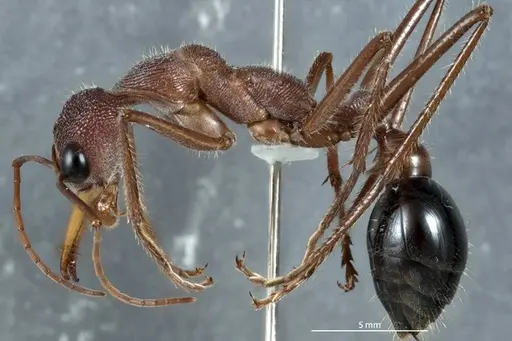
Myrmecia fulgida is a large bulldog ant species native to Western Australia's western goldfields region. Workers are robust ants, identified by their distinctive long, erect hairs (setae) on the head, mesosoma, and metasoma - a key feature that distinguishes them from related species in the vindex subgroup . This species belongs to the Myrmecia gulosa group and is part of the 'vindex' species subgroup . The genus Myrmecia represents some of the most evolutionarily ancient ants, retaining primitive traits like functional stings. These ants are predatory, hunting insects and small invertebrates, and are known for aggressive nest defense. The species was formally described by Clark in 1951 from specimens collected near Parker's Range in Western Australia .
Quick Summary
- Difficulty: Medium
- Origin & Habitat: Western Australia, specifically the western goldfields region near Parker's Range. Found in arid to semi-arid habitats typical of inland WA [3].
- Colony Type: Single-queen colonies with non-parasitic life history. Based on genus patterns, queens likely establish nests independently.
- Size & Growth:
- Queen: ~25-35mm, inferred from Myrmecia genus patterns
- Worker: ~15-25mm, inferred from Myrmecia genus patterns
- Colony: Up to several hundred workers, estimated based on genus patterns
- Growth: Moderate
- Development: Approximately 3-6 months based on genus patterns (Development time is temperature-dependent, warmer conditions within safe range accelerate development)
- Antkeeping:
- Temperature: Keep nest area at 22-26°C during active season. Myrmecia from inland WA tolerate warmer conditions. Provide gentle gradient allowing ants to self-regulate.
- Humidity: Moderate humidity. These are arid-region ants, keep substrate relatively dry with a moist area for drinking. Avoid constant dampness.
- Diapause: Yes, Myrmecia species require winter dormancy. Keep at 10-15°C for 2-3 months during winter months (typically June-August in Southern Hemisphere).
- Nesting: Y-tong (AAC) nests or plaster nests work well. Provide deep substrate (at least 10cm) for colony expansion. Outworld should be spacious with minimal smooth vertical surfaces as these large ants can fall and injure themselves.
- Behavior: Highly defensive and aggressive when nest is disturbed. Workers possess functional stings and will sting repeatedly, their stings are painful and can cause allergic reactions. Foraging is primarily diurnal. They are active hunters, pursuing prey aggressively. Escape risk is low due to their large size, but they are strong climbers. Always use barrier tape or fluon on enclosure edges.
- Common Issues: stinging incidents are the primary hazard, handle with extreme caution and use protective equipment, colonies grow slowly and beginners may lose patience or overfeed, leading to mold issues, winter dormancy is essential, keeping them warm year-round can shorten lifespan, large workers can injure themselves falling from smooth surfaces, provide textured climbing surfaces, wild-caught colonies may have parasites that cause colony collapse in captivity
Housing and Nest Setup
Myrmecia fulgida requires spacious housing due to their large size. A Y-tong (AAC) nest or plaster formicarium works best, providing chambers scaled to their size. The nest should have deep substrate chambers (at least 10cm depth) to allow for colony expansion as the colony grows. The outworld needs to be spacious with multiple feeding stations and a reliable water source. Because these large ants can injure themselves falling from smooth surfaces, provide textured surfaces or multiple climbing structures. Escape prevention is straightforward due to their size, standard barrier tape or fluon on container edges works well, though the nest entrance should still be securely closed.
Feeding and Diet
Myrmecia fulgida is a predatory species that hunts insects and other small invertebrates. In captivity, offer live prey such as crickets, mealworms, and other appropriately-sized insects 2-3 times per week. They will also accept sugar water or honey as an energy source, particularly when the colony has many workers. Remove uneaten prey within 24 hours to prevent mold. A constant water source must be available, a shallow water dish with cotton or a dedicated water feeder works well. As the colony grows, increase feeding frequency and prey size accordingly.
Temperature and Seasonal Care
Maintain nest temperatures between 22-26°C during the active season. These ants from inland Western Australia can tolerate warmer conditions than some coastal Myrmecia species, but avoid extreme heat above 30°C. During winter (typically June-August), the colony requires a diapause period at 10-15°C. This winter dormancy is essential for colony health and longevity, colonies kept warm year-round often experience reduced lifespan and health issues. Provide a temperature gradient within the nest so workers can self-regulate by moving between warmer and cooler areas.
Behavior and Defense
Myrmecia fulgida is among the more aggressive Myrmecia species, with workers readily attacking threats to the nest. They possess functional stings and will sting repeatedly when provoked, these stings are painful and can cause severe allergic reactions in sensitive individuals. Workers are diurnal foragers, actively hunting during daylight hours. They use chemical alarm signals to recruit nestmates to threats. When keeping this species, always use protective equipment (long sleeves, gloves, eye protection) when working near the nest. Never blow on the colony or make sudden movements that might be interpreted as threats. Their large size makes them impressive display ants, but they require respectful handling.
Colony Founding
Newly mated queens of Myrmecia fulgida establish colonies through claustral founding. The queen seals herself in a chamber, using stored fat reserves to survive and raise the first brood without foraging. She lays eggs and tends the larvae until the first workers (nanitics) emerge. These initial workers are typically smaller but immediately begin helping with colony tasks. The founding chamber should be provided in a test tube setup with a water reservoir. Place the tube in darkness and avoid disturbing the queen during this critical period. First workers typically appear after several months, depending on temperature.
Frequently Asked Questions
How long does it take for Myrmecia fulgida to produce first workers?
Expect first workers (nanitics) to emerge in approximately 3-6 months after the queen seals herself in, depending on temperature. Warmer conditions within the safe range (22-26°C) accelerate development. The claustral founding phase is lengthy compared to many ant species.
Do Myrmecia fulgida ants sting?
Yes, they have functional stings and are highly defensive. Their stings are painful and can cause severe allergic reactions in sensitive individuals. Always handle with extreme caution and wear protective equipment when working near the colony.
Are Myrmecia fulgida good for beginners?
No, this species is recommended for intermediate to experienced antkeepers. Their slow growth, specific temperature requirements, need for winter dormancy, and painful sting make them unsuitable for complete beginners. They require more patience and specialized care than beginner-friendly species.
What do Myrmecia fulgida eat?
They are predatory ants that primarily eat live insects (crickets, mealworms, and other small invertebrates). They will also accept sugar water or honey as an energy source. Feed protein-rich prey 2-3 times per week with a constant sugar water source available.
Do Myrmecia fulgida need hibernation?
Yes, they require a winter dormancy period (diapause) of 2-3 months at 10-15°C during winter months. This rest period is essential for colony health. Without proper hibernation, colonies may have reduced lifespans and health issues.
Can I keep multiple Myrmecia fulgida queens together?
No, Myrmecia fulgida is monogyne (single-queen species). Multiple unrelated queens will fight to the death. Only keep one queen per colony. If you acquire a wild-caught colony, it will have only one functional queen.
How big do Myrmecia fulgida colonies get?
Based on genus patterns, colonies likely reach several hundred workers over several years. Myrmecia colonies are long-lived and can persist for many years with a single healthy queen.
When should I move Myrmecia fulgida to a formicarium?
Keep founding colonies in test tubes until they have 20-30 workers. Moving too early can stress the queen and cause colony failure. Once the test tube becomes crowded and workers frequently explore beyond the nest area, transfer to a proper formicarium with adequate space.
What temperature should I keep Myrmecia fulgida at?
Maintain nest temperatures between 22-26°C during the active season. These arid-region ants from inland WA can tolerate warmer conditions but avoid temperatures above 30°C. Provide a gentle gradient so workers can self-regulate.
Why is my Myrmecia fulgida colony dying?
Common causes include: improper hibernation (too warm or no dormancy period), overfeeding leading to mold, wrong humidity (too damp), disturbing the queen during founding, or parasites from wild-caught colonies. Review each of these factors and adjust care accordingly.
Report an Issue
The current care sheet is based fully on literature. See inconsistencies, or something that's incorrect? Please , it will be resolved after review from an admin. Contributing to the blogs tab also helps providing information, to make us be able to further improve the caresheets. Thank you for your support!
References

This caresheet is licensed under CC BY-SA 4.0 .
Community Blogs
JDM32-002458
View on AntWeb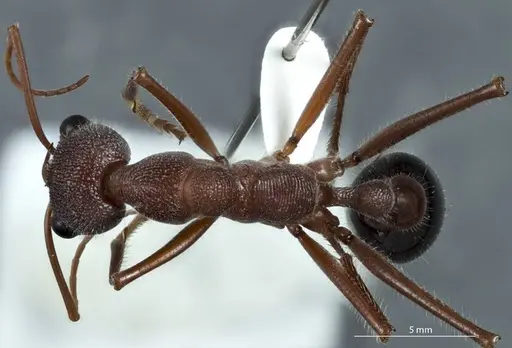
Literature
Loading distribution map...Loading products...