
Myrmecia fabricii
- Sci. Name
- Myrmecia fabricii
- Tribe
- Myrmeciini
- Subfamily
- Myrmeciinae
- Author
- Ogata & Taylor, 1991
- Distribution
- Found in 1 countries
Introduction
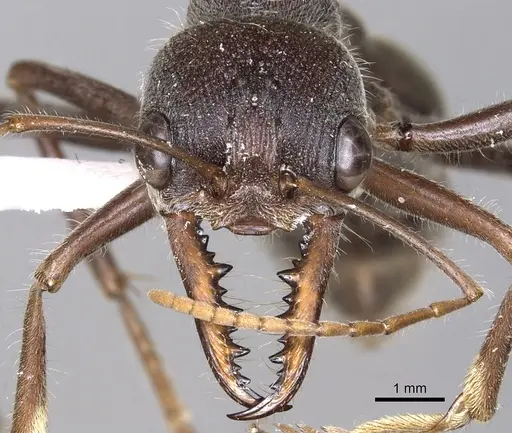
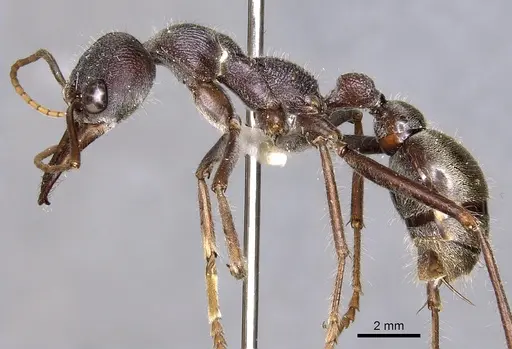
Myrmecia fabricii is a large ant species in the gulosa species group, native to Queensland, Australia. Workers are robust with powerful stings, and they inhabit tropical to subtropical forests, nesting in soil or under stones . As a bulldog ant, M. fabricii is a solitary hunter with excellent vision and a potent sting, making it a challenging species for experienced keepers .
Quick Summary
- Difficulty: Medium
- Origin & Habitat: Eastern Queensland, Australia, tropical to subtropical forest and woodland habitats. Nests in soil or under stones in warm, shaded locations [1].
- Colony Type: Unconfirmed, research does not specify colony structure.
- Size & Growth:
- Antkeeping:
- Behavior: Myrmecia fabricii is an active, alert species with strong defensive instincts. Workers forage individually and have excellent vision. The sting is potent and painful, handle with extreme caution. Escape prevention is important due to their size [1].
- Common Issues: sting hazard, their potent sting can cause significant pain and allergic reactions, handle with extreme caution., slow founding, queens take months to raise first workers, patience is essential., overheating risk, too high temperatures can kill colonies, monitor closely., colonies can become aggressive during founding when queen is vulnerable, minimize disturbances., large size requires spacious formicarium, cramped conditions lead to stress and abandonment.
Housing and Nest Setup
Myrmecia fabricii requires spacious housing due to their large size. A Y-tong (AAC) nest with appropriately sized chambers works well, or use a naturalistic setup with a deep soil area for nesting and a separate foraging area. Provide a water test tube as a constant water source. The outworld should be escape-proof but spacious for hunting [1].
Feeding and Diet
Myrmecia fabricii is predatory and hunts small invertebrates. In captivity, feed live insects like small crickets or mealworms 2-3 times per week, and provide constant sugar water access. Founding queens do not need feeding until workers emerge.
Temperature and Seasonal Care
As a Queensland species, keep nest area at 25-30°C with a heating cable for gradient. During winter, reduce temperatures slightly to 20-22°C but avoid dramatic cooling[1].
Behavior and Handling
Myrmecia fabricii is alert and defensive with a painful sting. Never handle with bare hands, use caution during nest inspections. Workers are solitary foragers with excellent vision [1].
Colony Development and Growth
Queens likely seal themselves in chambers to raise first brood alone. Development takes several months, and growth is steady but not rapid[2].
Frequently Asked Questions
How long does it take for Myrmecia fabricii to produce first workers?
Expect 8-12 months from founding to first workers at optimal temperature. The queen raises the first brood alone, and development takes several months.
Do Myrmecia fabricii ants sting?
Yes, they have a potent sting that causes significant pain. Handle with extreme caution and avoid bare hands [1].
What do Myrmecia fabricii eat?
They primarily eat live insects like crickets and mealworms, and accept sugar water. Feed protein prey 2-3 times per week.
Are Myrmecia fabricii good for beginners?
No, they are not recommended for beginners due to their sting and specific care needs [1].
What temperature do Myrmecia fabricii need?
Keep nest temperatures between 25-30°C with a gradient. Avoid temperatures above 35°C[1].
Can I keep multiple Myrmecia fabricii queens together?
Unconfirmed, research does not specify, but Myrmecia species are typically monogyne.
How big do Myrmecia fabricii colonies get?
Colonies can reach up to 500 workers in captivity.
Do Myrmecia fabricii need hibernation?
No true hibernation is required, reduce temperatures slightly in winter[1].
What type of nest is best for Myrmecia fabricii?
Y-tong nests with large chambers or naturalistic soil setups work best.
Why is my Myrmecia fabricii colony dying?
Common causes include improper temperature, humidity, stress, or insufficient food. Review care conditions.
Report an Issue
The current care sheet is based fully on literature. See inconsistencies, or something that's incorrect? Please , it will be resolved after review from an admin. Contributing to the blogs tab also helps providing information, to make us be able to further improve the caresheets. Thank you for your support!
References

This caresheet is licensed under CC BY-SA 4.0 .
Community Blogs
CASENT0902794
View on AntWeb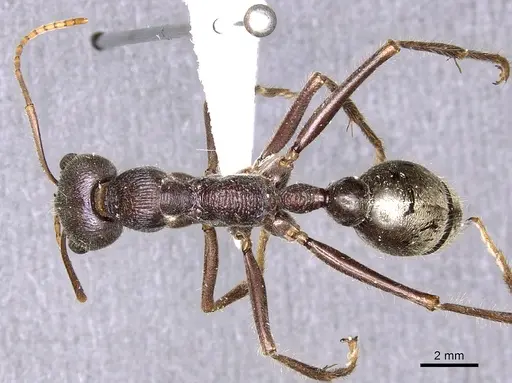
Literature
Loading distribution map...Loading products...