
Myrmecia chasei
- Sci. Name
- Myrmecia chasei
- Tribe
- Myrmeciini
- Subfamily
- Myrmeciinae
- Author
- Forel, 1894
- Distribution
- Found in 1 countries
Introduction
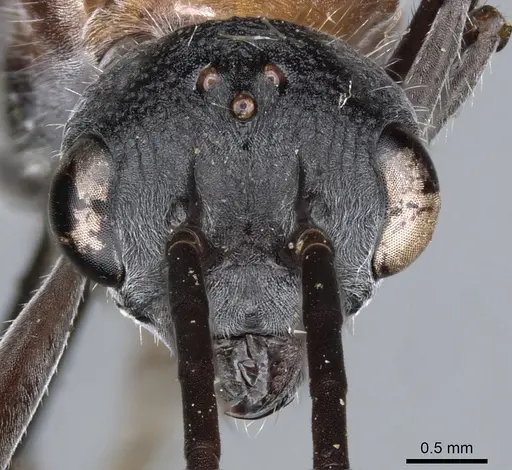
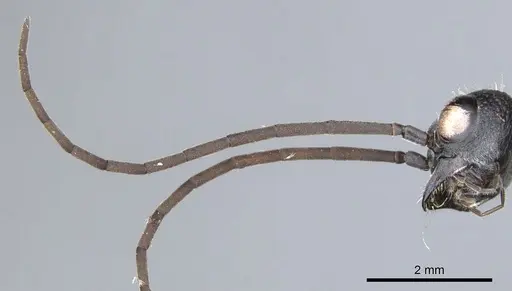
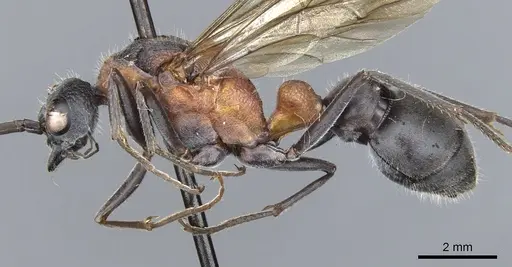
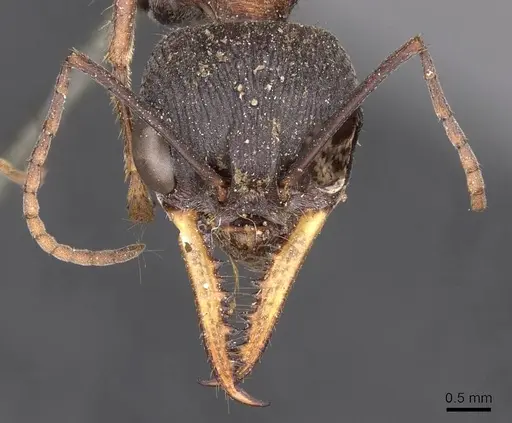
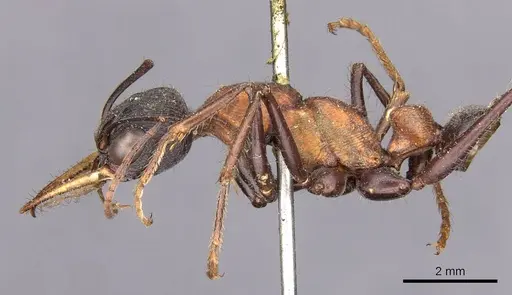
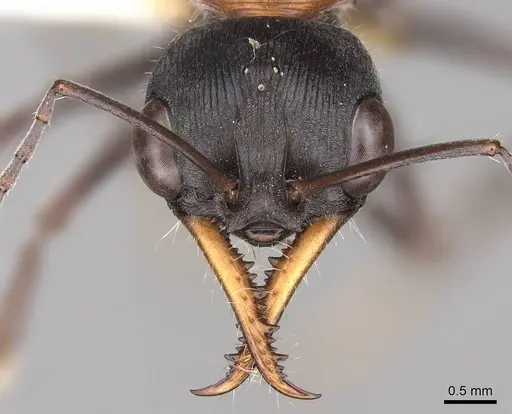
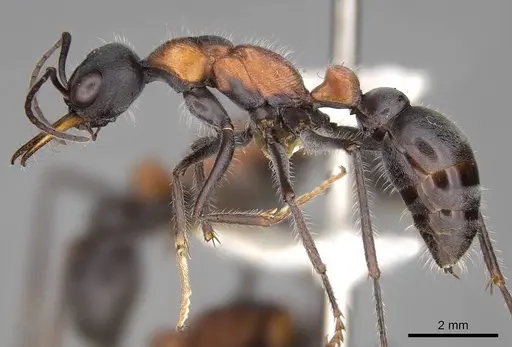
Myrmecia chasei is a large bulldog ant native to Western Australia, particularly the Darling Range around Perth. Workers are 12-15.5 mm long, while queens are 22-24 mm long . They have yellow mandibles, hairy tibiae, and belong to the pilosula species group . This species is known for its powerful sting, which can cause allergic reactions in humans . In the wild, they nest in soil under stones in sclerophyll forests . One notable aspect is the significant size difference between queens and workers, with queens being nearly twice as long .
Quick Summary
- Difficulty: Medium
- Origin & Habitat: Western Australia, Australia, Darling Range including Perth area. They inhabit sclerophyll forest and woodland, nesting in soil under stones or in natural ground cavities [1].
- Colony Type: Based on Myrmecia patterns, likely monogyne (single-queen colonies).
- Size & Growth:
- Antkeeping:
- Behavior: Myrmecia chasei is aggressive with a powerful sting [3]. Workers are territorial and will defend the nest. Escape prevention is important due to their climbing ability [1].
- Common Issues: Sting risk is significant, these ants belong to the jumper ant group known for causing anaphylactic reactions [3]., Large size requires spacious outworlds and properly sized nest chambers to avoid stress., Slow colony development requires patience, founding colonies may take months to produce workers., Winter diapause is essential for long-term colony health., Wild-caught colonies may be difficult to establish after transport stress.
Housing and Nest Setup
Myrmecia chasei requires appropriately sized housing due to their large worker size [1]. For founding colonies, a standard test tube setup works well, use a tube with a water reservoir at one end, stopped with cotton [1]. Once the colony reaches 15-20 workers, transfer to a proper formicarium. Y-tong nests are excellent for Myrmecia as they provide appropriate chamber depth [1]. The outworld should be spacious, and use a deep escape barrier like fluon [1].
Feeding and Diet
Myrmecia chasei is an opportunistic predator and scavenger. In captivity, they accept live insects like crickets and mealworms, along with sugar sources [1]. Feed protein-rich foods 2-3 times per week for growing colonies, and provide a constant sugar source [1].
Temperature and Seasonal Care
Maintain nest temperatures between 24-28°C for optimal brood development [1]. During winter, reduce temperatures to 15-18°C to induce diapause [1]. Avoid sudden temperature changes.
Behavior and Defense
Myrmecia chasei is aggressive with a powerful sting [3]. Workers are highly territorial and will defend the nest against intruders. This species is not suitable for handling, use tools for nest maintenance [1].
Colony Development
A newly mated queen may seal herself in a chamber, but founding behavior is unconfirmed. After workers emerge, the colony grows moderately. Be patient with founding colonies, as it may take months for workers to appear [1].
Frequently Asked Questions
How long does it take for first workers to appear?
Expect 8-12 weeks from egg to first worker at optimal temperature, but this is estimated based on typical Myrmecia development. Founding colonies require patience.
Can I keep multiple queens together?
Based on Myrmecia patterns, colonies are likely monogyne, so multiple queens may fight. House founding queens separately.
Do Myrmecia chasei need hibernation?
Yes, a winter diapause period is recommended, reducing temperatures to 15-18°C for 2-3 months [1].
What do Myrmecia chasei eat?
They are predators and scavengers, accepting live insects and sugar sources [1].
Are Myrmecia chasei good for beginners?
Not recommended for beginners due to their aggressive temperament and powerful sting [3].
When should I move from test tube to formicarium?
Move when you see 15-20 workers and the test tube is crowded [1].
How big do Myrmecia chasei colonies get?
Mature colonies can reach up to several hundred workers.
What temperature do they need?
Keep the nest at 24-28°C with a gradient [1].
Where is Myrmecia chasei from?
Western Australia, specifically the Darling Range around Perth, nesting in soil under stones [1].
Report an Issue
The current care sheet is based fully on literature. See inconsistencies, or something that's incorrect? Please , it will be resolved after review from an admin. Contributing to the blogs tab also helps providing information, to make us be able to further improve the caresheets. Thank you for your support!
References

This caresheet is licensed under CC BY-SA 4.0 .
Community Blogs
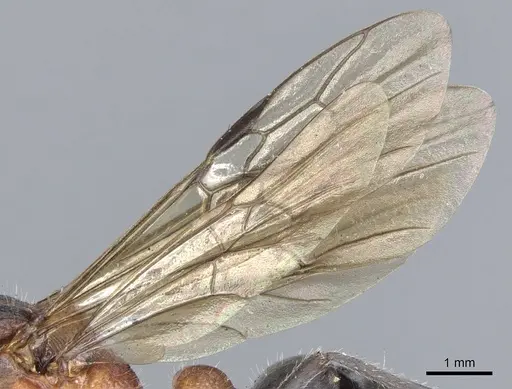
CASENT0903663
View on AntWeb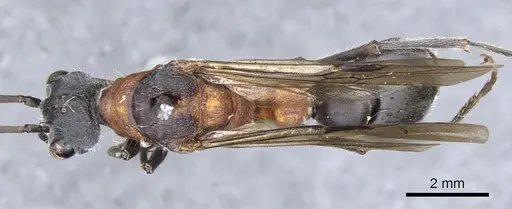
CASENT0907076
View on AntWeb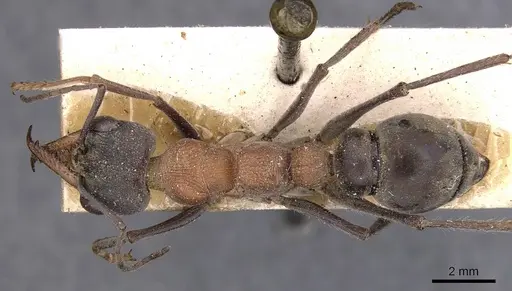
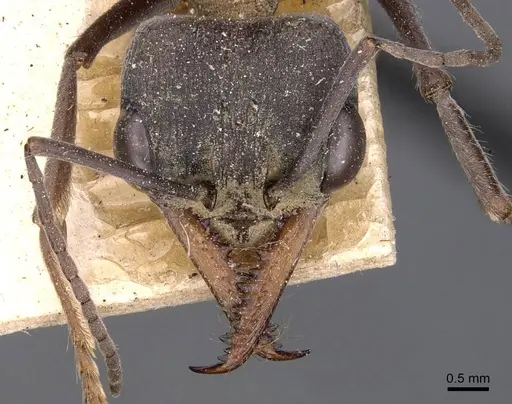
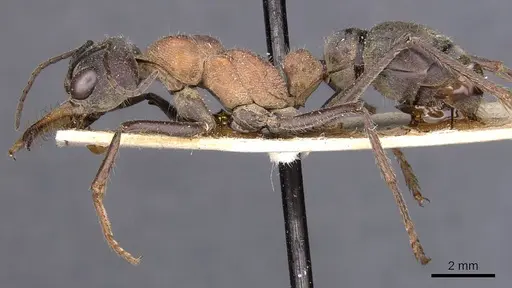
CASENT0907091
View on AntWeb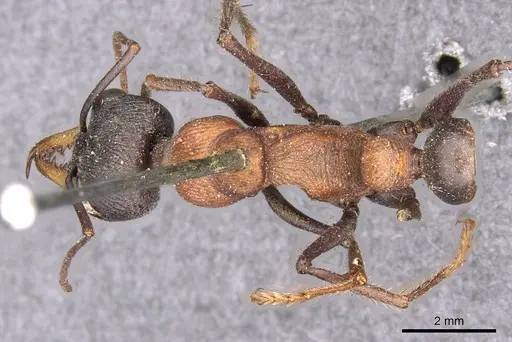
CASENT0914309
View on AntWeb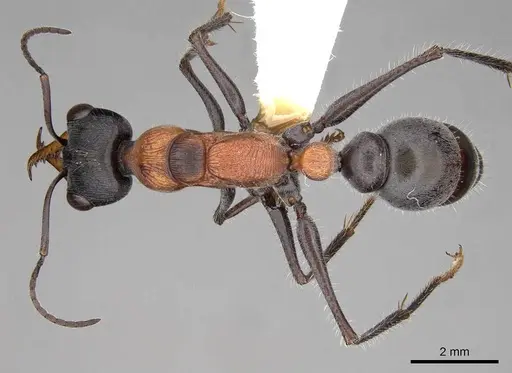
Literature
Loading distribution map...Loading products...