
Myopias luoba
- Sci. Name
- Myopias luoba
- Tribe
- Ponerini
- Subfamily
- Ponerinae
- Author
- Xu & Liu, 2012
- Distribution
- Found in 0 countries
Introduction
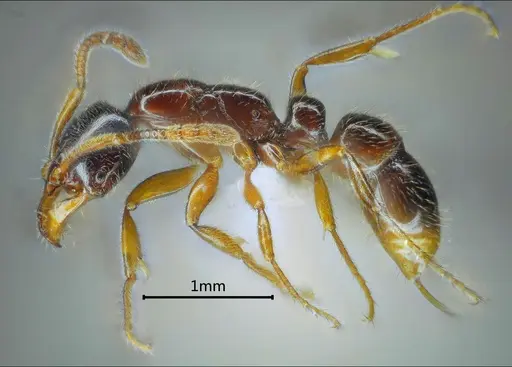
Myopias luoba is a tiny Ponerine ant species from Tibet, China, measuring 3.8mm in total length . Workers have an almost black head with a blackish brown body, while the mandibles, clypeus, antennae, legs, and gastral apex are brownish yellow . This species was described in 2012 and named after the Luoba ethnic minority who live in southeastern Tibet . Only the worker caste has been documented, making this one of the more mysterious ant species in the hobby. As a Ponerine ant, they possess a developed sting .
Quick Summary
- Difficulty: Expert
- Origin & Habitat: Tibet, China at 820m elevation in secondary rain forest [1]. The type locality is in Medog County, Yarang, a humid forested area in the eastern Himalayas.
- Colony Type: Unknown, colony structure has not been documented.
- Size & Growth:
- Antkeeping:
- Temperature: Inferred: Based on Tibetan highland location (820m elevation), expect cool to moderate temperatures. Room temperature (18-24°C) is likely appropriate. Start around 20-22°C and observe colony activity.
- Humidity: Inferred: Secondary rainforest habitat suggests high humidity needs. Keep nest substrate consistently moist but not waterlogged. Provide a humidity gradient so ants can choose their preferred zone.
- Diapause: Unknown, no research on seasonal behavior. Tibetan location suggests potential for cool-season dormancy, but this is unconfirmed.
- Nesting: Inferred: Ground-nesting species collected from forest floor. Test tube setups or plaster nests with moisture retention work well. Provide narrow chambers scaled to their tiny 3.8mm size.
- Behavior: Not documented in captivity. As a Ponerine ant, likely predatory on small invertebrates. Ground-foraging behavior documented in wild [1]. Escape prevention is important due to small size, use fine mesh barriers. Sting is developed [1], so caution is warranted.
- Common Issues: no captive husbandry information exists, this is one of the least studied ant species in cultivation, development timeline unknown makes colony management challenging, humidity and temperature requirements are inferred rather than confirmed, only worker caste known, queen and colony structure remain undocumented, wild-caught colonies may have parasites or diseases with no documented treatment
Discovery and Naming
Myopias luoba was described in 2012 by Xu, Z. & Liu from Tibet, China [1]. The species name honors the Luoba people, an ethnic minority who primarily inhabit southeastern Tibet where this ant was discovered [1]. The holotype worker was collected on May 20,2008,by Zheng-Hui Xu while it was foraging on the ground in a secondary rainforest at 820 meters elevation in Medog County [1]. This species is closely related to Myopias amblyops Roger, but can be distinguished by its distinct protruding triangular median lobe on the anterior margin of the clypeus and its large triangular subpetiolar process when viewed from the side [1]. Only the worker caste has been documented, making this one of the more recently described and poorly understood ant species in the Myopias genus.
Identification and Physical Characteristics
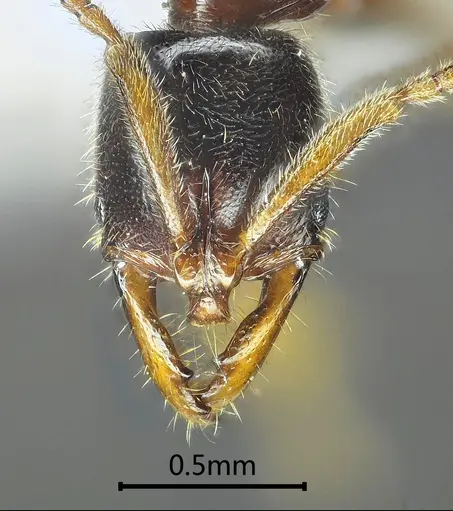
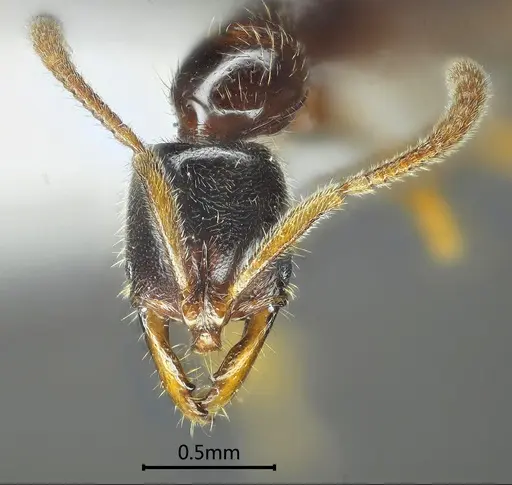
Workers measure 3.8mm in total length, making this a very small ant species [1]. The head is nearly rectangular, longer than broad, and slightly widened forward with an almost black coloration [1]. Mandibles are elongate triangular with 4 teeth on the masticatory margin [1]. The eyes are extremely small, containing only 6 facets in maximum diameter, this is a key identification feature [1][2]. The body is blackish brown with brownish yellow on the mandibles, clypeus, antennae, legs, and gastral apex [1]. The petiolar node is nearly square in profile view, and the subpetiolar process is large and triangular [1]. A developed sting is present and laterally compressed [1]. The antennae have 12 segments with a 4-segmented club [1].
Natural Habitat
This species is known only from Tibet, China, specifically from Medog County at approximately 820 meters elevation [1][2]. The type locality is in secondary rainforest, a humid, shaded forest environment with significant plant growth following disturbance [1]. The collection was made from the ground where workers were foraging [1]. This habitat suggests they prefer stable, humid conditions with moderate temperatures typical of forested areas at this elevation in the eastern Himalayas. The highland Tibetan location implies they may experience seasonal temperature variations, but their specific seasonal behaviors remain undocumented.
Keeping Myopias luoba - What We Don't Know
This is one of the least documented ant species in the antkeeping hobby. No captive colonies, breeding behavior, development timeline, or specific care requirements have been published. The following represents informed speculation based on genus patterns and natural history: Myopias ants are Ponerine predators, so expect them to hunt small invertebrates. The tiny size (3.8mm) and ground-foraging behavior suggest they would accept small prey items like springtails, fruit flies, and other micro-arthropods. The secondary rainforest habitat indicates high humidity needs, aim for consistently moist substrate without flooding. The Tibetan location suggests moderate temperatures around 18-24°C would be appropriate. For nesting, provide small chambers scaled to their tiny size, test tubes with cotton barriers work well for founding colonies. This species is recommended only for experienced antkeepers comfortable with experimental husbandry.
Genus Background
Myopias is a small genus of Ponerine ants found primarily in Asia and Australasia. These are small to medium-sized predatory ants that typically nest in soil or rotting wood and hunt small invertebrates. The genus is characterized by their relatively simple colony structures and well-developed stingers. Many Myopias species remain poorly studied, and M. luoba follows this pattern as one of the more recently described species. The closely related M. amblyops and other Southeast Asian species provide some context for understanding this genus, though each species may have unique requirements. Ponerine ants in general are considered more primitive than advanced ants like Formicinae or Myrmicinae, often exhibiting more direct hunting behaviors and simpler social structures. [1]
Frequently Asked Questions
How do I care for Myopias luoba ants?
No captive care information exists for this species. Based on genus and habitat inference, provide high humidity, moderate temperatures (18-24°C), and small live prey. This is experimental husbandry, be prepared to adjust conditions based on colony response.
What do Myopias luoba ants eat?
Not documented, but as a Ponerine ant they are likely predatory. Offer small live prey like springtails, fruit flies, and tiny crickets. Sugar acceptance is uncertain, some Ponerines take honey occasionally but protein is likely the primary food source.
How big do Myopias luoba colonies get?
Unknown, colony size has not been documented. Most Myopias species form small colonies based on genus patterns.
Do Myopias luoba ants sting?
Yes, they have a developed sting [1]. Handle with standard antkeeping precautions.
What temperature do Myopias luoba ants need?
Unconfirmed, inferred from Tibetan highland habitat to be moderate, around 18-24°C. Start at room temperature and observe colony behavior. Avoid high temperatures.
How long does it take for Myopias luoba to develop from egg to worker?
Unknown, no development research exists for this species.
Can I keep multiple Myopias luoba queens together?
Unknown, colony structure has not been documented. Ponerine ants are typically single-queen colonies, but polygyny cannot be ruled out. Combining unrelated queens is not recommended without evidence of social tolerance.
Is Myopias luoba a good species for beginners?
No, this species is not recommended for beginners. No captive husbandry information exists, making successful keeping very challenging. Only experienced antkeepers comfortable with experimental care should attempt this species.
Where does Myopias luoba live in the wild?
Only known from Tibet, China, specifically Medog County at 820m elevation in secondary rainforest [1]. This is in the eastern Himalayas, a humid forested region.
What is the queen size of Myopias luoba?
Unknown, only the worker caste has been described [1]. Queens have not been documented in scientific literature.
Report an Issue
The current care sheet is based fully on literature. See inconsistencies, or something that's incorrect? Please , it will be resolved after review from an admin. Contributing to the blogs tab also helps providing information, to make us be able to further improve the caresheets. Thank you for your support!
References

This caresheet is licensed under CC BY-SA 4.0 .
Community Blogs
ANTWEB1060513
View on AntWeb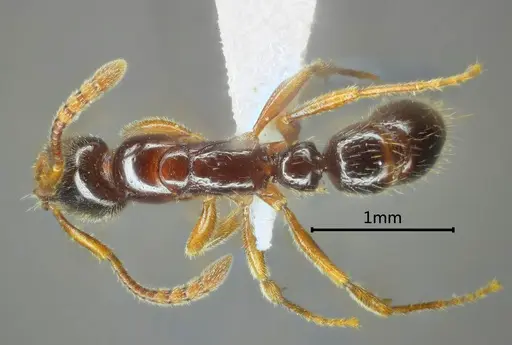
Literature
Loading distribution map...Loading products...