
Myopias lobosa
- Sci. Name
- Myopias lobosa
- Tribe
- Ponerini
- Subfamily
- Ponerinae
- Author
- Willey & Brown, 1983
- Distribution
- Found in 1 countries
Introduction
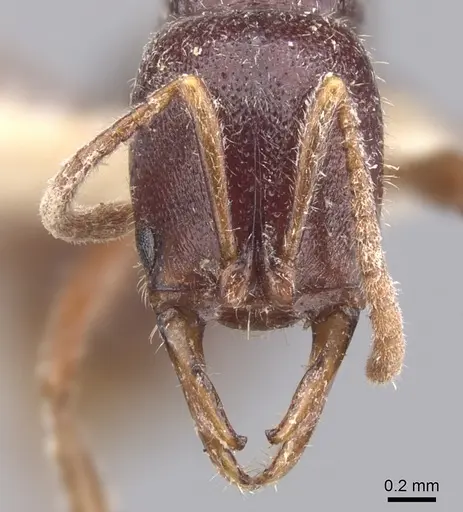
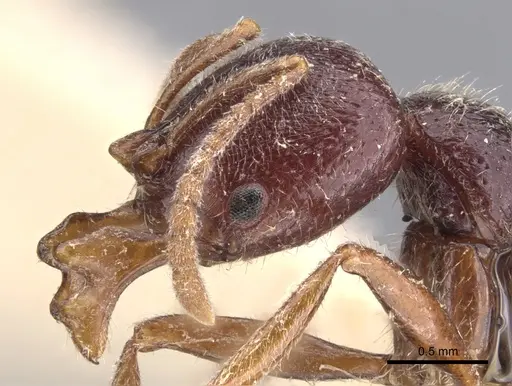
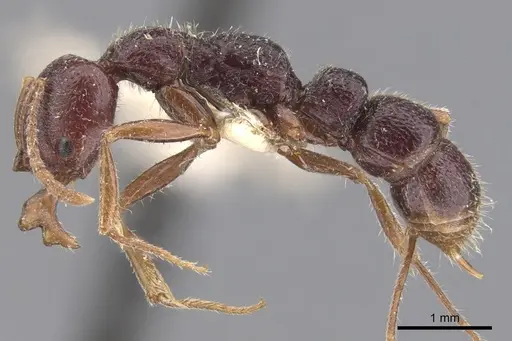
Myopias lobosa is a medium-sized ponerine ant native to the Philippines, specifically found on Negros Island. Workers measure 6.0-6.3mm in total length and have a distinctive appearance with notably broadened mandibles featuring exaggerated triangular lobes, a long head, and very short antennae scapes. The body is bright to deep brownish-red with lighter yellowish mandibles and appendages. This species belongs to the Ponerinae subfamily, which contains ants equipped with potent stings. The queen is slightly larger than workers and was described as dealate (having shed her wings). Nothing is known about the biology of this species in the wild or in captivity - it's one of the most poorly documented ants in the hobby.
Quick Summary
- Difficulty: Expert
- Origin & Habitat: Philippines (Negros Island), collected from the Cuernos Mountains near Dumaguete [1]
- Colony Type: Unknown colony structure, founding behavior and queen number have not been documented
- Size & Growth:
- Queen: ~6-7mm, slightly larger than workers [1]
- Worker: 6.0-6.3mm total length [1]
- Colony: Unknown, no colony data available
- Growth: Unknown, no development data exists
- Development: Unconfirmed, likely 6-10 weeks based on typical Ponerinae patterns (Development timeline unconfirmed for this species. Ponerine ants typically take 6-10 weeks from egg to worker at warm temperatures.)
- Antkeeping:
- Temperature: Keep warm around 24-28°C, inferred from their tropical Philippine distribution and typical Ponerinae preferences. Observe colony activity and adjust accordingly.
- Humidity: Maintain moderate to high humidity (60-80%), Philippine forests are humid environments. Keep nest substrate consistently moist but not waterlogged.
- Diapause: Unknown, tropical ants from Negros likely do not require true hibernation, but may have reduced activity during cooler periods.
- Nesting: No specific nesting data exists. Based on their Philippine forest habitat, they likely prefer humid, dark spaces. A Y-tong or plaster nest with good moisture retention would be appropriate. Avoid drying out.
- Behavior: No behavioral observations have been documented for this species. As a Ponerine ant, they have a potent sting and are predatory, hunting small invertebrates. Their unusual broadened mandibles with exaggerated teeth suggest specialized hunting or prey handling. Escape prevention should be taken seriously given their medium size, standard barriers should work but monitor for squeezing through small gaps.
- Common Issues: no biological data exists, this is an extremely poorly known species and all care is speculative, growth and development timelines are completely unknown, colony founding behavior is unconfirmed, unknown if claustral or semi-claustral, sting potency has not been documented specifically for this species, risk of colony failure due to lack of species-specific husbandry knowledge
Species Overview and Identification
Myopias lobosa is a medium-sized ant measuring 6.0-6.3mm in total length for workers, with queens being slightly larger. This species was described by Willey and Brown in 1983 from specimens collected on Negros Island in the Philippines. The most distinctive physical features are their notably broadened mandibles where the two major teeth before the apex are exaggerated into triangular lobes, giving them a unique appearance among ants. They have a long head that is distinctly longer than broad, very short antennal scapes, and a bright to deep brownish-red coloration with lighter yellowish mandibles and legs. The eyes are relatively small with only about 12-15 fine facets. This species belongs to the Ponerinae subfamily, which is known for containing ants with potent stings and predatory lifestyles. [1]
Distribution and Natural Habitat
Myopias lobosa is known only from Negros Island in the Philippines. The type specimens were collected from the Cuernos Mountains near Dumaguete. This is in the Visayas region of the Philippines, which has a tropical climate with high humidity year-round. The specific microhabitat and nesting preferences are unknown, but the general Philippine forest environment suggests they prefer shaded, humid areas with access to small invertebrate prey. No additional distribution data or ecological observations have been recorded since the original description. [1]
Housing and Nesting
Since no specific nesting data exists for this species, housing recommendations must be based on what we know about related Ponerine ants and their likely preferences. A Y-tong or plaster nest with good moisture retention would be appropriate for maintaining the humidity they likely need. Keep the nest area dark and undisturbed. The nest should have chambers scaled to their medium size (6mm workers). Maintain substrate moisture, the nest material should feel damp but not be waterlogged. Provide an outworld for foraging with access to small live prey. Escape prevention is important though their medium size means standard barriers should be adequate.
Feeding and Diet
As a Ponerine ant, Myopias lobosa is predatory like others in this subfamily. They likely hunt and capture small invertebrates such as springtails, fruit flies, small beetles, and other tiny arthropods. Their unusual mandibles with the exaggerated triangular lobes suggest they may have a specialized method of prey handling, though we don't know what. In captivity, you should offer small live prey regularly, flightless fruit flies, pinhead crickets, small mealworms, and micro-arthropods like springtails are appropriate choices. Sugar sources like honey or sugar water may be accepted but are not a primary food source for predatory Ponerines. Feed small prey items 2-3 times per week and remove uneaten prey within 24 hours.
Temperature and Humidity Requirements
Being from the tropical Philippines, Myopias lobosa requires warm and humid conditions. Aim for temperatures in the range of 24-28°C, which is typical for tropical species. A heating cable on one side of the nest can create a temperature gradient allowing the ants to self-regulate. For humidity, maintain 60-80% relative humidity within the nest, Philippine forests are consistently humid environments. Keep the nest substrate moist but not waterlogged. Monitor condensation levels and rehydrate when the substrate begins drying. Good ventilation is important to prevent mold while maintaining humidity.
Colony Development and Growth
The complete development timeline from egg to worker is unknown for this species, no observations have been published. Based on typical Ponerine ant patterns, development likely takes 6-10 weeks at optimal warm temperatures. The first workers (nanitics) will typically be smaller than normal workers. Colony growth rate is completely unconfirmed. Given the lack of biological data, you should expect a potentially slow founding phase and be patient. Do not disturb the queen during the founding stage. Once workers emerge, growth will depend on successful feeding and proper conditions. Maximum colony size is unknown.
Frequently Asked Questions
How long does it take for Myopias lobosa to produce first workers?
The egg-to-worker timeline is unconfirmed for this species. Based on typical Ponerine ant development patterns, expect approximately 6-10 weeks at optimal warm temperatures (24-28°C). However, this is an estimate since no specific data exists for Myopias lobosa.
What do Myopias lobosa ants eat?
As a Ponerine ant, they are predatory and likely hunt small invertebrates. Feed them small live prey such as flightless fruit flies, pinhead crickets, small mealworms, and micro-arthropods like springtails. Remove uneaten prey within 24 hours. Sugar sources may be accepted but are not a primary food source.
What temperature should I keep Myopias lobosa at?
Keep them warm at 24-28°C based on their tropical Philippine distribution. A heating cable on part of the nest can create a gradient. Monitor colony activity, if they seem sluggish, slightly increase temperature, if they avoid the heated area, reduce it.
Do Myopias lobosa need hibernation?
Hibernation requirements are unknown but likely not needed. Being from tropical Negros Island, they probably do not require a true diapause. They may have reduced activity during cooler periods, but standard room temperature (around 24-26°C) should be suitable year-round.
Is Myopias lobosa good for beginners?
No, this species is not recommended for beginners. This is an extremely poorly documented species with no biological data available. All care recommendations are speculative based on related ants. There is a high risk of colony failure due to lack of species-specific husbandry knowledge. This species is best left to experienced antkeepers who can experiment and document their findings.
How big do Myopias lobosa colonies get?
Maximum colony size is unknown, no colony data has been documented for this species. Related Ponerine ants typically form colonies ranging from dozens to a few hundred workers. Expect a moderate-sized colony but actual numbers are uncertain.
What type of nest should I use for Myopias lobosa?
A Y-tong or plaster nest with good moisture retention works well. The chambers should be scaled to their medium size (around 6mm workers). Keep the nest dark and humid. Maintain substrate moisture without waterlogging.
Can I keep multiple Myopias lobosa queens together?
Colony structure is unconfirmed, we don't know if they are single-queen or multi-queen colonies. Combining unrelated queens has not been documented and is not recommended given the lack of biological data.
Why is Myopias lobosa so difficult to keep?
This species has no documented biological data, we don't know their founding behavior, development timeline, diet preferences, humidity needs, or colony structure. Every aspect of care is speculative. This makes them extremely risky to keep and document results is challenging. They are truly one of the least-known ant species in captivity.
Report an Issue
The current care sheet is based fully on literature. See inconsistencies, or something that's incorrect? Please , it will be resolved after review from an admin. Contributing to the blogs tab also helps providing information, to make us be able to further improve the caresheets. Thank you for your support!
References

This caresheet is licensed under CC BY-SA 4.0 .
Community Blogs
CASENT0902528
View on AntWeb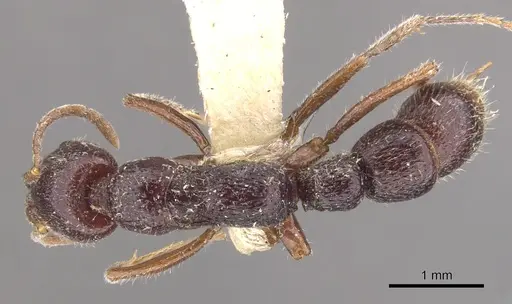
Literature
Loading distribution map...Loading products...