
Myopias hania
- Sci. Name
- Myopias hania
- Tribe
- Ponerini
- Subfamily
- Ponerinae
- Author
- Xu & Liu, 2012
- Distribution
- Found in 1 countries
Introduction
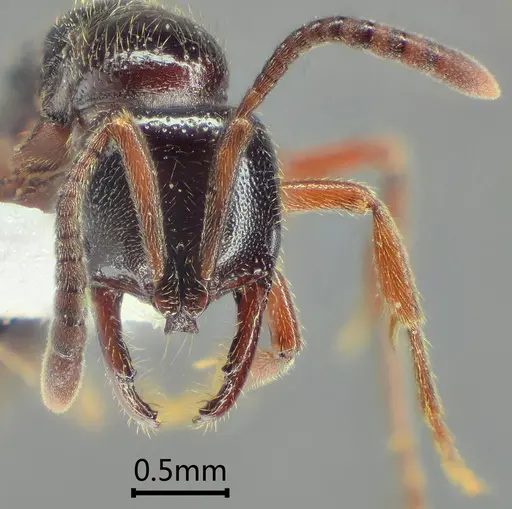
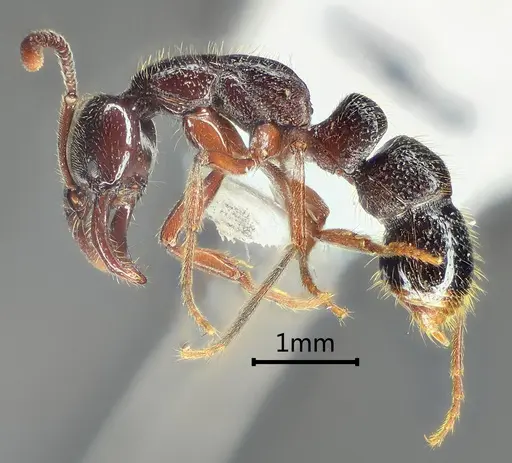
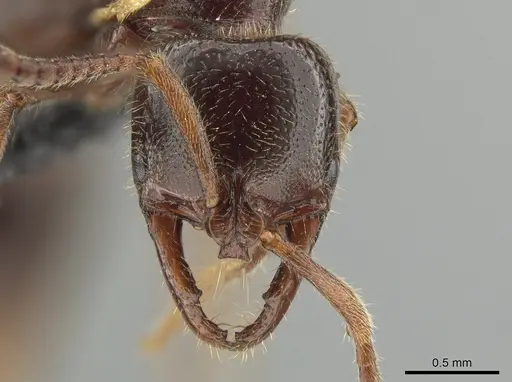
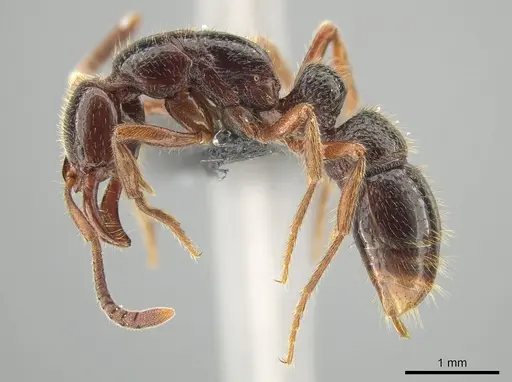
Myopias hania is a medium-sized ponerine ant native to southern Yunnan Province, China. Workers measure 5.9-6.1mm in total length with a distinctive dark brownish-black body and reddish-brown appendages including mandibles, antennae, legs, and the tip of the abdomen. The head is nearly square with relatively large eyes, and the antennae have a 4-segmented club. This species was described in 2012 and is known only from the worker caste. It was collected from a soil sample in a monsoon forest at 750m elevation in Hekou County. The species name honors the Hani minority who live in southern Yunnan. This ant is a habitat specialist restricted to primary forest and has not been found in secondary forest or rubber plantations .
Quick Summary
- Difficulty: Unknown, limited data available
- Origin & Habitat: Yunnan Province, China, monsoon forest at 750m elevation. Primary forest specialist, not found in secondary forest or rubber plantations [3][1].
- Colony Type: Unconfirmed, colony structure has not been documented for this species.
- Size & Growth:
- Antkeeping:
- Temperature: Aim for 22-26°C based on its tropical/subtropical monsoon forest origin. Provide a gentle temperature gradient so ants can self-regulate. Avoid temperatures below 18°C or above 30°C.
- Humidity: High humidity is essential, monsoon forest habitat indicates consistently moist conditions. Keep nest substrate damp but not waterlogged. Provide a water source nearby.
- Diapause: Unknown, no data on overwintering requirements. The Yunnan location experiences mild winters, so a reduced activity period may be needed if kept in cool conditions.
- Nesting: Soil-nesting species based on type collection from soil sample. In captivity, a naturalistic setup with moist soil or a Y-tong/plaster nest works well. Provide deep substrate for nesting chambers.
- Behavior: Behavior is not well documented. As a Ponerine ant, they have a functional stinger for defense. They are likely predatory and may be more active foragers compared to many formicine ants. Escape prevention is important, medium-sized ants can escape through small gaps but are not extreme escape artists.
- Common Issues: limited data means care requirements are partially inferred, observe colony behavior and adjust accordingly, habitat specialist may be sensitive to environmental changes, avoid keeping in dry or unstable conditions, predatory feeding requirements may be challenging, need consistent access to live prey, primary forest specialist may not adapt well to captivity if wild-caught, established colonies from reputable sources preferred, temperature and humidity must be carefully maintained in monsoon forest conditions
Discovery and Description
Myopias hania was described in 2012 by Xu and Liu from Yunnan Province, China. The type specimens were collected from a soil sample in a monsoon forest at 750m elevation in Hekou County. The species is named after the Hani minority ethnic group that commonly lives in southern Yunnan Province. Only the worker caste has been described, the queen and male castes remain unknown. The species is closely related to Myopias conicara but can be distinguished by its scapes not reaching the occipital corners, the absence of an oblique furrow on the posterolateral margins of the petiolar node, and the shape of the subpetiolar process [1][2].
Natural Habitat and Distribution
This species is known only from its type locality in Yunnan Province, China. It is a habitat specialist restricted to primary forest and has not been found in secondary forest or rubber plantations [3]. The monsoon forest environment at 750m elevation provides consistent warmth and high humidity year-round. This specialization to primary forest habitats suggests the species may be sensitive to environmental changes and may not tolerate disturbed habitats. In captivity, replicating these stable, humid forest conditions is important for success.
Identification and Morphology
Workers of Myopias hania measure 5.9-6.1mm in total length. The head is nearly square, slightly longer than broad, with a slightly concave occipital margin and rounded occipital corners. The mandibles are slender and linear with a distinctive masticatory margin structure. The antennae have 12 segments with a 4-segmented club, and the scapes fail to reach the occipital corners. The eyes are relatively large with 11-12 facets. The petiolar node is nearly square in profile and broader than long in dorsal view. The subpetiolar process has a distinctive shape with an acute anteroventral tooth. The body is brownish-black with reddish-brown mandibles, antennae, legs, and gastral apex. The dorsum has abundant suberect hairs and dense decumbent pubescence [1][2].
Housing and Nesting
In the wild, this species nests in soil as evidenced by the type collection from a soil sample. In captivity, provide a naturalistic setup with moist soil or a Y-tong/plaster nest that can maintain high humidity. The nest should have chambers deep enough for the colony and should stay consistently moist. As a forest-floor species, they likely prefer darker, more enclosed nest spaces. Provide an outworld for foraging with easy access to the nest. Ensure escape prevention is adequate for medium-sized ants, while not extreme escape artists, they can squeeze through moderately sized gaps. [1]
Feeding and Diet
As a Ponerine ant, Myopias hania is likely primarily predatory, hunting small invertebrates. Offer small live prey such as fruit flies, small crickets, mealworms, and other appropriately sized insects. Pre-kill prey may be accepted if moved by the ants. Sugar sources may also be accepted, you can offer a drop of honey water or sugar water occasionally, but protein-rich prey should be the primary food. Feed every 2-3 days, adjusting based on colony consumption. Remove uneaten prey to prevent mold.
Temperature and Humidity Requirements
Based on its monsoon forest origin in Yunnan, this species requires warm and humid conditions. Aim for temperatures in the 22-26°C range with a gentle gradient so ants can self-regulate. Avoid temperatures below 18°C or above 30°C. Humidity should be high, the nest substrate should remain consistently moist but not waterlogged. A water source should always be available. Monitor conditions regularly and adjust if workers appear sluggish (too cold) or cluster away from the nest area (too warm).
Frequently Asked Questions
How long does it take for Myopias hania to develop from egg to worker?
The development timeline has not been documented for this species. Actual development time is unknown.
What do Myopias hania ants eat?
They are likely predatory like other Ponerine ants. Feed small live prey such as fruit flies, small crickets, mealworms, and other appropriately sized insects. They may also accept sugar sources like honey water occasionally, but protein-rich prey should form the bulk of their diet.
Can I keep multiple Myopias hania queens together?
The colony structure is unconfirmed, we do not know if this species is single-queen or multi-queen. Do not attempt to combine unrelated queens until more is known about their colony structure.
What temperature should I keep Myopias hania at?
Aim for 22-26°C based on their monsoon forest origin. Provide a gentle temperature gradient so ants can choose their preferred zone. Avoid temperatures below 18°C or above 30°C.
Are Myopias hania good for beginners?
Difficulty level is unknown due to limited data. This species is a habitat specialist from primary forest, which may make it more sensitive to captive conditions than common species. It is not recommended as a first ant unless you have experience with Ponerine ants.
Do Myopias hania need hibernation?
Diapause requirements are unknown. The Yunnan location experiences mild winters, so if you keep the colony in cool conditions, a reduced activity period may be beneficial. However, if maintained at warm temperatures year-round, hibernation may not be necessary.
What humidity level do Myopias hania need?
High humidity is essential, monsoon forest habitat indicates consistently moist conditions. Keep the nest substrate damp but not waterlogged. The substrate should feel moist to the touch at all times.
When will Myopias hania queens be available?
This species was only described in 2012 and is rarely kept in captivity. Queens have not been described scientifically, and the species is not commonly available in the antkeeping hobby. Establishing a culture may require sourcing from specialized breeders or waiting for future availability.
Why are my Myopias hania dying?
Common causes include: incorrect humidity (too dry), temperature stress (too cold or too hot), lack of adequate prey, or stress from wild-caught origin. As a primary forest specialist, they may be sensitive to environmental changes. Ensure stable, humid, warm conditions and provide consistent live prey. If the colony was wild-caught, parasites or stress from collection may also be factors.
Report an Issue
The current care sheet is based fully on literature. See inconsistencies, or something that's incorrect? Please , it will be resolved after review from an admin. Contributing to the blogs tab also helps providing information, to make us be able to further improve the caresheets. Thank you for your support!
References

This caresheet is licensed under CC BY-SA 4.0 .
Community Blogs
ANTWEB1060512
View on AntWeb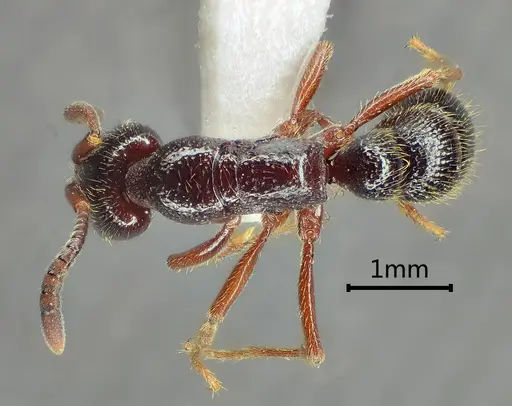
CASENT0713650
View on AntWeb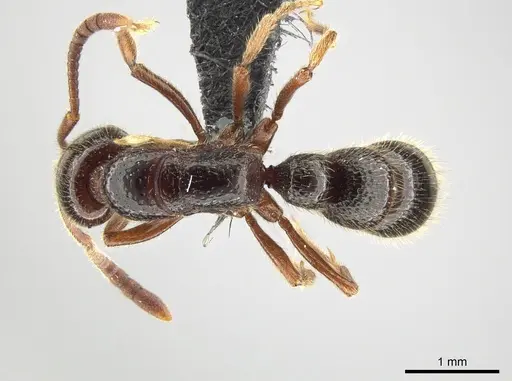
Literature
Loading distribution map...Loading products...