
Myopias darioi
- Sci. Name
- Myopias darioi
- Tribe
- Ponerini
- Subfamily
- Ponerinae
- Author
- Probst & Boudinot, 2015
- Distribution
- Found in 1 countries
Introduction
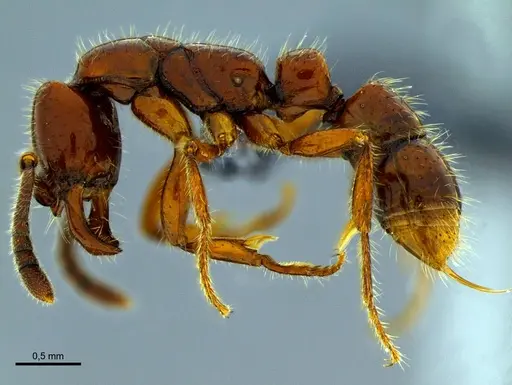
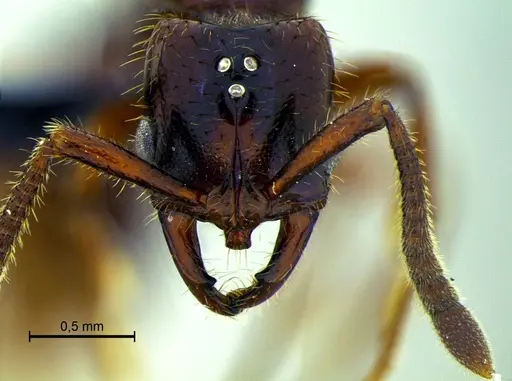
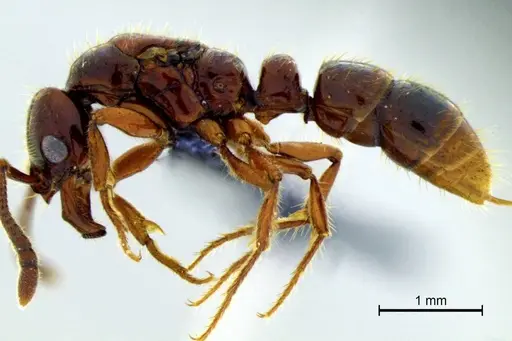
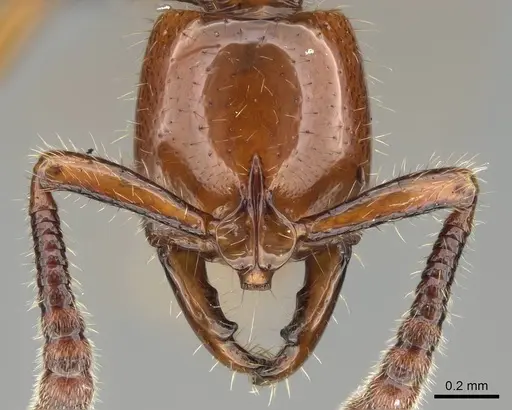
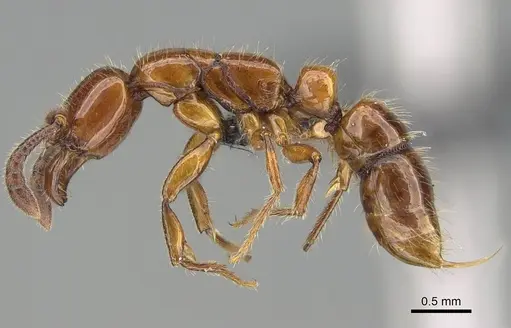
Myopias darioi is a small, reddish-brown predatory ant from the tropical rainforests of Sabah, Borneo. Workers are 4.3–5.4 mm long and queens about 6.1 mm . They have a smooth, shiny body, tiny eyes (just a single lens with 4–5 ommatidia), strong linear mandibles with four teeth, and a long, sharp sting that can extend up to 0.59 mm. Their most unusual trait is a highly specialized diet: they hunt and eat adult tenebrionid beetles, refusing nearly all other prey types . The species is known only from a single colony found in a damp, rotting log in the Maliau Basin, which contained two queens (making them polygynous),35 workers, and brood . Because of its very limited range and very specific feeding needs, this ant is extremely difficult to keep in captivity.
Quick Summary
- Difficulty: Expert
- Origin & Habitat: Maliau Basin, Sabah, Borneo, Malaysia, at 225 m elevation in tropical rainforest. Nests inside fallen, decomposed tree trunks that are completely damp, sometimes with water filling cavities [1][2].
- Colony Type: Polygynous – colonies naturally contain multiple queens. The type colony had two dealate queens along with 35 workers,4 males, and brood [1].
- Size & Growth:
- Queen: ~6.1 mm total length [1]
- Worker: 4.3–5.4 mm total length [1]
- Colony: Up to 35 workers observed in the wild, likely remains modest in captivity [1]
- Growth: Unknown – no captive breeding data available
- Development: Unknown – no direct observations. Based on related tropical Ponerinae, a rough guess is 2–4 months at 26–28°C. (Development timeline is unconfirmed. Expect slower growth than common temperate ants due to specialized feeding requirements.)
- Antkeeping:
- Temperature: Keep warm, about 24–28°C, mimicking tropical rainforest conditions. Use gentle heating if room temperature is cooler [1].
- Humidity: Very high humidity needed. The type nest was inside a completely damp log where water sometimes pooled. Keep nest substrate consistently moist but not waterlogged [1].
- Diapause: No – as a tropical species from Borneo, it does not need hibernation. Maintain stable warm conditions year-round.
- Nesting: Natural nesting in damp, decomposed fallen wood. In captivity, use a naturalistic setup with moist soil or a soil-sand mix in a formicarium, or a large test tube with high humidity. Provide narrow chambers scaled to their small size. The nest must retain moisture well.
- Behavior: Specialized predator that hunts adult tenebrionid beetles. Workers seize prey dorsally, sting it ventrally, and carry it with the beetle's belly facing upward to stop it from clinging [1]. Their eyes are tiny, so they rely on chemical and tactile cues. Not aggressive toward each other in polygynous colonies. Escape risk is moderate – they are small but not especially fast. They have a functional sting.
- Common Issues: specialized diet makes feeding extremely difficult – they will starve without live tenebrionid beetles (darkling beetles) and reject most other prey., very high humidity can cause mold growth if ventilation is poor., tropical species may decline without consistent warmth (24–28°C)., only known from one wild location, so captive stock is very rare and no established care protocols exist., if multiple queens are kept, all must stay together – removing some may stress the colony.
Housing and Nest Setup
Myopias darioi needs a high-humidity setup that mirrors the damp, rotting wood of their natural nests. Use a formicarium with moist soil or a soil-sand mix that holds moisture well – it should feel damp to the touch but not have standing water. Because workers are only 4–5 mm, keep chambers and tunnels small. A large test tube can work if you maintain the humidity, but a naturalistic setup is better for long-term moisture control. Make sure there is good airflow to prevent mold, while still keeping the humidity high. Provide a water source (like a reservoir) that you can refill without disturbing the colony. [1]
Feeding and Diet
This is the hardest part of keeping Myopias darioi. In lab tests, they strongly preferred adult tenebrionid beetles (like Platydema and Micropena) and ignored nearly everything else: other ants, isopods, millipedes, centipedes, springtails, crickets, termites, and even other kinds of beetles [1]. To keep them alive, you must culture or regularly source live darkling beetles. They likely won't eat sugary foods – this is a strict predator. Because of this extremely picky diet, long-term feeding is very challenging.
Temperature and Humidity
As a tropical rainforest ant from Sabah, they need warmth and high humidity. Keep temperatures between 24 and 28°C for normal activity. The type colony lived in a log that was completely damp, with water sometimes filling the cavities – so they need very high humidity [1]. Keep the nest substrate moist but not soaking. A gradient that lets workers choose their preferred spot is ideal. Room temperature in most homes may be too cool, use a gentle heat source like a heating cable on one side. Avoid temperature swings and drafts.
Colony Structure and Social Organization
Myopias darioi is polygynous – colonies naturally have multiple queens. The type colony had two dealate (wingless) queens,35 workers,4 males, and brood of all stages [1]. This means you should keep multiple queens together, isolating one queen may harm the colony. The nest had a 'kitchen midden' chamber with beetle remains, showing that they maintain a waste area like many ponerines. Workers and brood were scattered across two of three cavities, so they use space flexibly. The presence of callow (newly emerged) workers shows the colony was actively growing.
Defense and Venom
Myopias darioi belongs to the subfamily Ponerinae, which uses a sting as its main defense. The sting is long and sharp, able to extend up to 0.59 mm in workers [1]. In the lab, workers used it to sting beetles ventrally during hunting. For humans, the sting can probably penetrate skin, but given the ant's small size, the effect would be mild. Handle with care but don't worry about serious danger. Their mandibles are made for grabbing prey, not for aggressive biting.
Frequently Asked Questions
Can I keep Myopias darioi in a test tube?
Yes, but you must keep the humidity very high – the natural nest was extremely damp. However, the specialized diet makes long-term success hard regardless. A naturalistic setup with moist substrate is usually better.
What do Myopias darioi eat?
They are specialized predators that strongly prefer adult tenebrionid beetles (darkling beetles). In lab tests they ignored most other insects and arthropods [1]. You will need to culture or regularly buy live darkling beetles to keep them alive long-term.
How long does it take for the first workers to appear?
Unknown – no captive breeding data exists. Based on related Myopias and tropical Ponerinae, a rough estimate is 2–4 months from egg to worker at 26–28°C, but this is a guess.
Can I keep multiple queens together?
Yes, and you should. This species is polygynous – the type colony had two queens. Keeping them together is important for colony health.
How big do Myopias darioi colonies get?
The largest colony found had 35 workers. Given their specialized diet and habitat, they probably stay small even under good conditions. Don't expect the huge colonies of Lasius or Camponotus.
Are Myopias darioi good for beginners?
No. This is an Expert-level species because of their highly specialized diet (live tenebrionid beetles needed), extreme humidity needs, and the fact that they are only known from one wild location with no captive breeding protocols. Not recommended for anyone except very experienced keepers.
Do Myopias darioi need hibernation?
No. As a tropical species from Borneo, they do not hibernate. Keep them warm (24–28°C) all year.
Why are my Myopias darioi dying?
Most likely causes: wrong food (they starve without tenebrionid beetles), low humidity, or temperatures too cool. They are very sensitive and don't forgive mistakes.
When should I move them to a formicarium?
Move them when the test tube is no longer big enough or when you need better humidity control. There is no set worker count – just watch their space needs. A naturalistic setup with moist soil is better than an acrylic nest.
Report an Issue
The current care sheet is based fully on literature. See inconsistencies, or something that's incorrect? Please , it will be resolved after review from an admin. Contributing to the blogs tab also helps providing information, to make us be able to further improve the caresheets. Thank you for your support!
References

This caresheet is licensed under CC BY-SA 4.0 .
Community Blogs
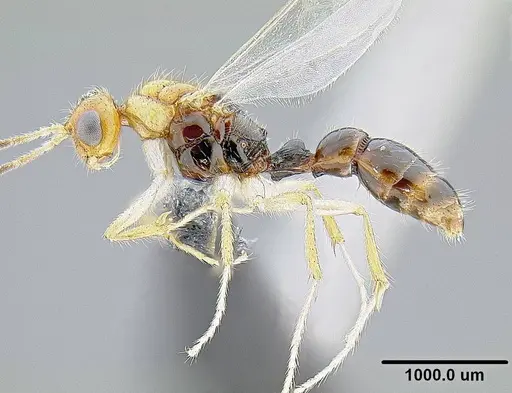
CASENT0810080
View on AntWeb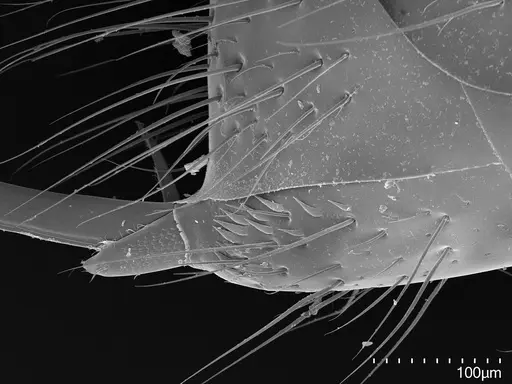
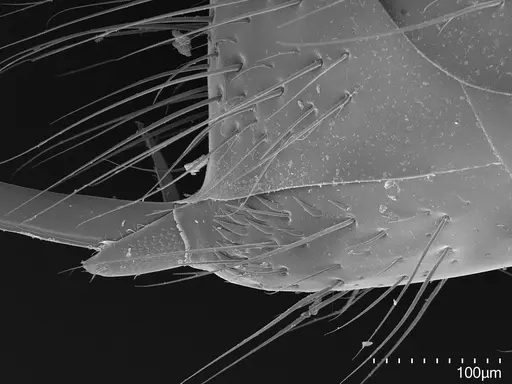
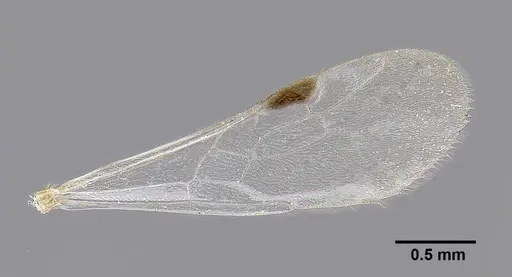
CASENT0844544
View on AntWeb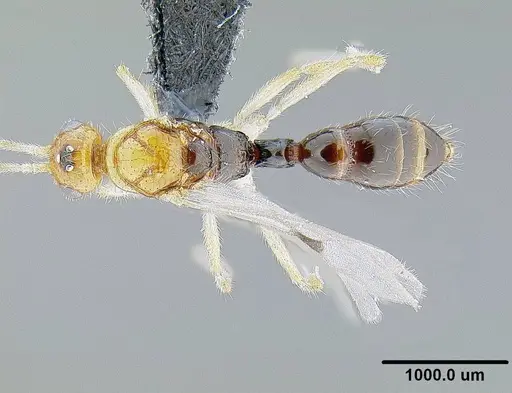
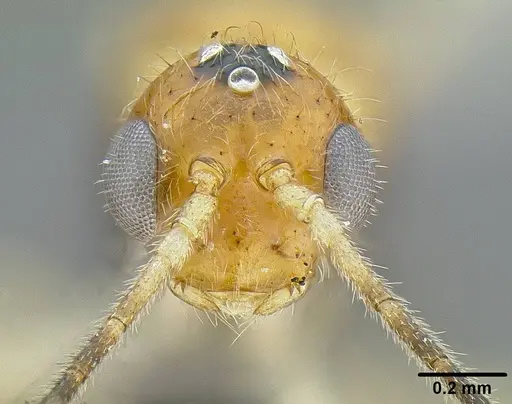
CASENT0845705
View on AntWeb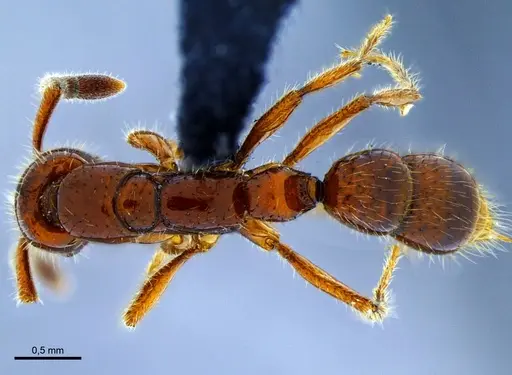
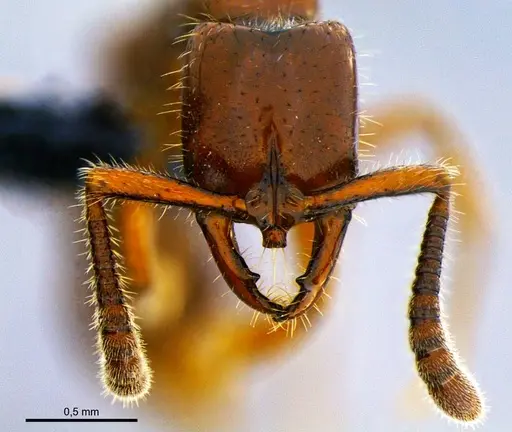
CASENT0845706
View on AntWeb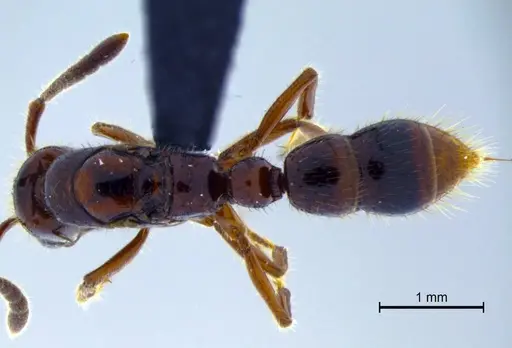
CASENT0915974
View on AntWeb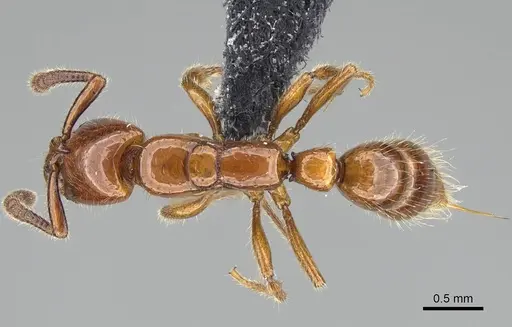
Literature
Loading distribution map...Loading products...