
Mycetomoellerius ruthae
- Sci. Name
- Mycetomoellerius ruthae
- Tribe
- Attini
- Subfamily
- Myrmicinae
- Author
- Weber, 1937
- Distribution
- Found in 2 countries
Introduction
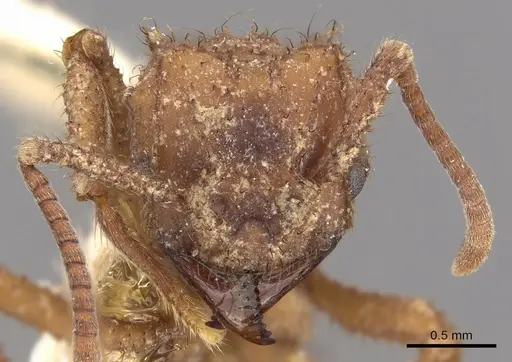
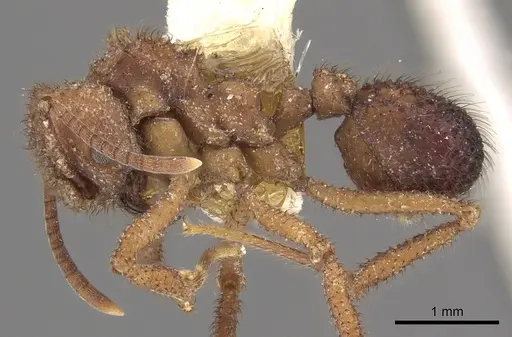
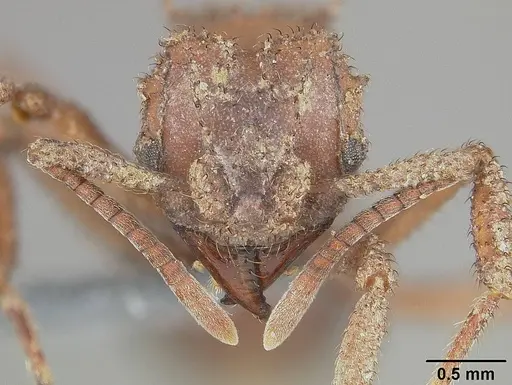
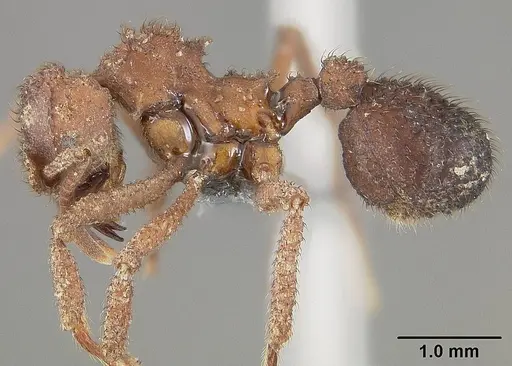
Mycetomoellerius ruthae is a small fungus-growing ant belonging to the tribe Attini. Workers measure approximately 4-5mm and feature distinctive morphological traits including strong lateral marginations on the first gastral tergite and reduced mesonotal projections . The species was originally described as Trachymyrmex ruthae by Weber in 1937 from Trinidad and has since been reclassified into the genus Mycetomoellerius . These ants are part of the 'Trachymyrmex symbiosis' incorporating derived leucocoprinaceous fungi and are known for their distinctive nest architecture featuring tall, slender chimney-like turret openings . Found in Ecuador and Trinidad and Tobago in the Neotropical region , they inhabit areas ranging from semideciduous forest to Brazilian Cerrado habitats .
Quick Summary
- Difficulty: Medium
- Origin & Habitat: Neotropical region, Ecuador and Trinidad and Tobago. Found in semideciduous forest (Maracá), Campo Cerrado, and Cerrado sensu stricto habitats [4][5].
- Colony Type: Single-queen colonies (monogyne). Female reproductives carry the fungal cultivar from parent nest to new nest during colony foundation [6].
- Size & Growth:
- Queen: Estimated 5-7mm, inferred from related Trachymyrmex species
- Worker: Approximately 4-5mm, inferred from related Trachymyrmex species [1]
- Colony: Likely several hundred workers, inferred from related Trachymyrmex species
- Growth: Moderate, typical for fungus-growing ants
- Development: Estimated 6-10 weeks at optimal temperature, inferred from related Trachymyrmex species (Development time is inferred from genus-level data as species-specific measurements are unavailable)
- Antkeeping:
- Temperature: Keep at 24-28°C. These are tropical ants requiring warm, stable conditions.
- Humidity: High humidity is essential, keep the nest substrate consistently moist but not waterlogged. Fungus-growing ants need damp conditions to support their fungal gardens.
- Diapause: No, being a tropical species, they do not require hibernation. Maintain year-round warm conditions.
- Nesting: Y-tong (AAC) nests or plaster nests work well. The nest must retain moisture to keep the fungal garden healthy.
- Behavior: Generally peaceful. Workers are small and slow-moving. They possess a stinger but rarely use it and pose minimal danger to keepers. As fungus growers, they spend most of their time tending to their fungal garden. Escape risk is moderate due to their small size, use standard barrier precautions.
- Common Issues: Fungal garden collapse is the primary killer, if the fungus dies, the colony will starve. Keep humidity stable and avoid contamination., Small size means escapes are possible, use fine mesh and tight-fitting lids on any outworld., Overfeeding can mold, remove uneaten organic matter promptly., Temperature drops below 20°C can slow or stop brood development and harm the fungal garden., Wild-caught colonies may carry Escovopsis fungal parasites that can devastate the garden [8][9].
The Fungus-Growing Lifestyle
Mycetomoellerius ruthae belongs to the Attini tribe, the famous fungus-growing ants that cultivate fungi for food. This is a mutualistic relationship where the ants provide protection and substrate for the fungus, while the fungus serves as the primary food source for larvae and a partial food source for adult workers [6]. The fungal cultivar is vertically transmitted, when a new queen leaves to found a colony, she carries a piece of the parent fungal garden in a special pouch called the infrabuccal pocket [6]. This species is part of the 'Trachymyrmex symbiosis' incorporating derived leucocoprinaceous fungi [7]. A critical concern in captivity is the Escovopsis fungal parasite, which has been documented infecting this species in the wild [8][9]. Watch for any signs of the garden turning dark, slimy, or developing unusual spores.
Feeding and Nutrition
Unlike most ants that eat insects and sugar, fungus-growing ants have a unique diet. The colony's fungal garden is their primary food source, workers feed the fungus with organic matter (typically dead plant material, caterpillar frass, or other detritus) and the fungus produces special structures called gongylidia that the ants eat. In captivity, you can feed small pieces of pre-chewed leaf matter, grain, or specialized ant food formulated for fungus growers. Some keepers offer tiny amounts of honey water or sugar water, but the main nutrition comes from the fungus. NEVER feed the ants directly, they must feed the fungus, which then feeds the colony. Avoid insect prey as a primary food source since these ants don't hunt. [6]
Nest Setup and Humidity
Fungus-growing ants require careful humidity management. The fungal garden needs consistent moisture to survive, too dry and the fungus dies, too wet and it drowns or molds. Y-tong (AAC) nests or plaster nests work well because they hold moisture better than acrylic. Keep the nest substrate damp but not dripping wet. A water tube attached to the nest helps maintain humidity. The distinctive chimney-like turret openings seen in wild nests [3] help with ventilation, in captivity, ensure some airflow to prevent stagnation while maintaining humidity. Monitor the fungal garden daily, it should look white and fluffy, not discolored or slimy.
Temperature Requirements
As a tropical species from Trinidad and Ecuador, Mycetomoellerius ruthae needs warm conditions. Keep the nest at 24-28°C for optimal brood development and fungal growth. Below 20°C, the fungus may stop growing and brood development slows dramatically. Use a low-wattage heating cable or heating mat on one side of the nest to create a gentle temperature gradient. Place the heating on TOP of the nest, not underneath, to avoid drying out the substrate too quickly. Room temperature may suffice in warm homes, but monitor with a thermometer.
Colony Foundation
When a newly mated queen starts a colony, she seals herself in a claustral chamber, this is typical for Attini ants. She carries a small piece of the parent fungal garden in her infrabuccal pocket and uses it to start a new garden [6]. The queen does not forage during founding, she lives off stored fat reserves while tending her tiny fungal garden. After the first workers (nanitics) emerge, they take over fungal garden maintenance and the colony grows gradually. This founding process takes several months, be patient. The first workers are typically smaller than mature workers.
Behavior and Temperament
Mycetomoellerius ruthae is a peaceful species. Workers are small, slow-moving, and unlikely to bite or sting. They spend most of their time tending the fungal garden rather than foraging aggressively. This makes them suitable for observation but less exciting than predatory ant species. They are not escape artists in the traditional sense, but their small size means they can slip through gaps that larger ants cannot. Standard barrier methods work well. The colony will expand gradually over several years.
Frequently Asked Questions
What do Mycetomoellerius ruthae ants eat?
They don't eat conventional ant food. These are fungus growers, the colony cultivates a fungal garden that serves as their exclusive food source. You provide organic matter (leaf fragments, grain, specialized fungus ant food) that the ants feed to the fungus. The fungus then produces gongylidia that the ants consume. Never feed them insects or sugar directly as a primary food.
How long does it take for first workers to appear?
Expect 6-10 weeks from egg to first worker at optimal temperature (24-28°C), based on related Trachymyrmex species. This is slower than many common ants because the queen must establish a fungal garden while raising brood.
Can I keep multiple queens together?
No. This is a monogyne species with single-queen colonies. Multiple unrelated queens will fight. Only keep one queen per colony.
What is the biggest danger to my colony?
Fungal garden collapse. If the fungus dies (from too dry, too wet, temperature extremes, or Escovopsis parasite), the colony will starve. Maintain stable humidity, avoid contamination, and monitor the garden daily. It should look white and fluffy.
Do they need hibernation?
No. Being a tropical species from Trinidad and Ecuador, they do not require diapause or winter cooling. Keep them warm year-round at 24-28°C.
What size colony do they reach?
Based on related Trachymyrmex species, colonies likely reach several hundred workers over several years. They are not among the largest Attini ants.
Are they good for beginners?
They are intermediate in difficulty. The fungus-growing requirement makes them more challenging than typical ants. You must understand how to maintain a healthy fungal garden. If you want an easier fungus-growing ant, consider starting with a more common species like a basic Trachymyrmex.
What nest type should I use?
Y-tong (AAC) or plaster nests work best because they hold moisture well. Acrylic nests dry out too quickly. The nest must maintain consistent humidity for the fungal garden.
Why is my fungal garden turning dark?
This is likely a fungal parasite (Escovopsis) infection, which has been documented in this species [8][9]. Unfortunately, such infections are often fatal. Quarantine the colony immediately and try to isolate any remaining healthy fungus. This is a known risk with wild-caught colonies.
Report an Issue
The current care sheet is based fully on literature. See inconsistencies, or something that's incorrect? Please , it will be resolved after review from an admin. Contributing to the blogs tab also helps providing information, to make us be able to further improve the caresheets. Thank you for your support!
References

This caresheet is licensed under CC BY-SA 4.0 .
Community Blogs
CASENT0901692
View on AntWeb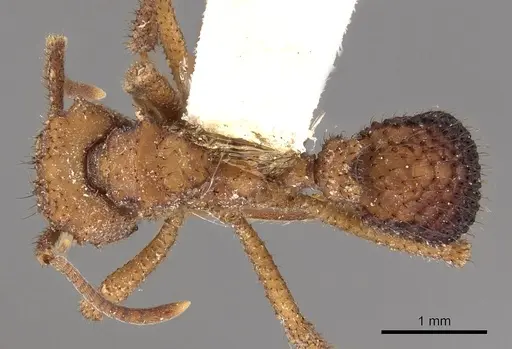
USNMENT01124317
View on AntWeb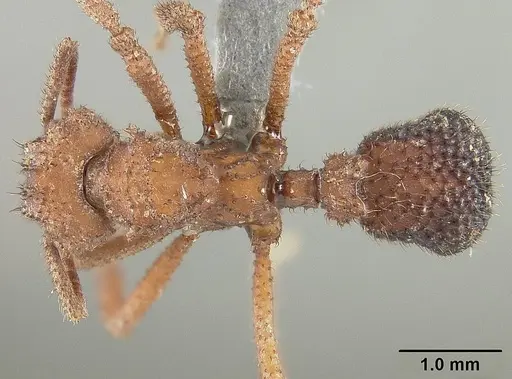
Literature
Loading distribution map...Loading products...