
Monomorium willowmorense
- Sci. Name
- Monomorium willowmorense
- Tribe
- Solenopsidini
- Subfamily
- Myrmicinae
- Author
- Bolton, 1987
- Distribution
- Found in 1 countries
Introduction
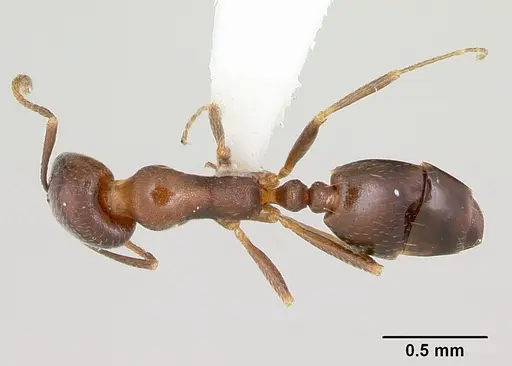
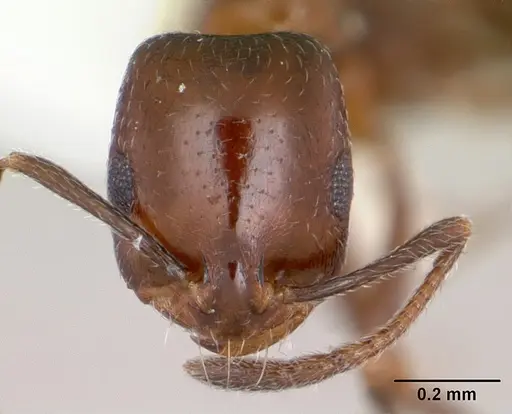
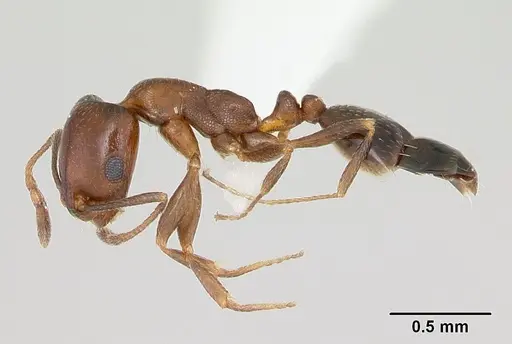
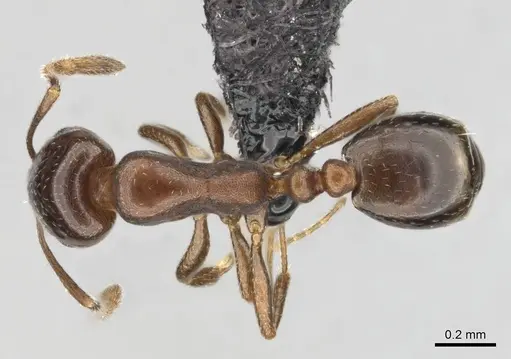
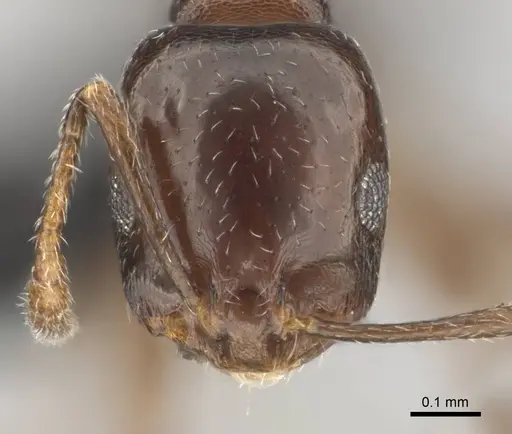
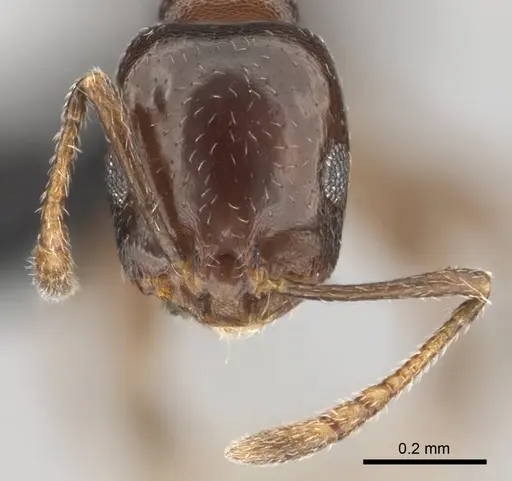
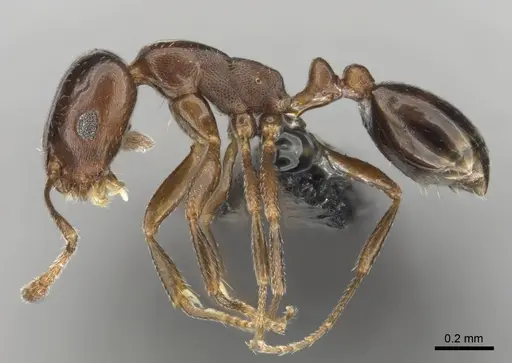
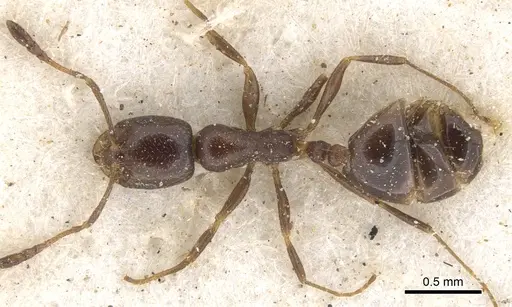
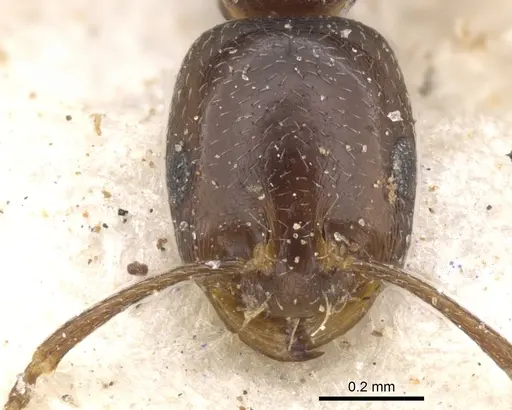
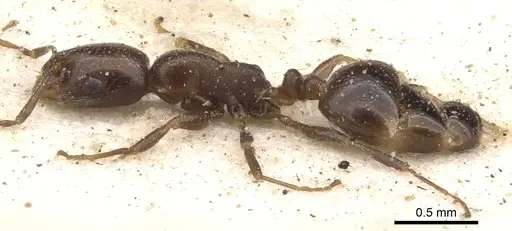
Monomorium willowmorense is a small reddish-brown ant belonging to the Monomorium salomonis species group. Workers have a rectangular head, large eyes,12 antennal segments with a 3-segmented club, and four mandibular teeth . The body is reddish-brown with a chocolate-colored gaster . This species is native to South Africa's Cape Province around Willowmore, with a single specimen also recorded from Toamasina Province in Madagascar . In its native Karoo habitat, it was the second most abundant ant species in road verge studies, indicating it thrives in semi-arid conditions as a scavenger .
Quick Summary
- Difficulty: Medium
- Origin & Habitat: South Africa (Cape Province, Willowmore) and Madagascar (Toamasina Province). This species inhabits the semi-arid Karoo region, characterized by hot summers, mild winters, and low rainfall. It is a scavenger that forages actively on ground surfaces, especially in disturbed areas like road verges [3][2][1].
- Colony Type: Unconfirmed. Colony structure has not been documented for this species. The worker caste is monomorphic, meaning all workers are the same size [1].
- Size & Growth:
- Queen: Size data unavailable, no measurements from literature. Inferred to be around 3-5 mm based on Monomorium genus patterns.
- Worker: Size data unavailable, no total length measurements from literature. Inferred to be around 1.5-2 mm based on Monomorium genus patterns.
- Colony: Unknown. No colony size data exists.
- Growth: Unknown.
- Development: Unknown. Based on typical Monomorium development, estimate 6-8 weeks at optimal temperature. (No species-specific development data exists. Estimates are rough approximations.)
- Antkeeping:
- Temperature: Keep warm, around 24-28°C. This species is native to the hot, semi-arid Karoo region and should tolerate higher temperatures well. A heating cable on one side of the nest can create a gradient.
- Humidity: Keep the nest substrate consistently moist but not waterlogged. The Karoo is dry, so this species likely tolerates drier conditions, but avoid overly damp conditions.
- Diapause: Unknown. No data exists on overwintering requirements. The Karoo has mild winters, so a short winter rest at 15-18°C for 2-3 months may be appropriate, but this is speculative.
- Nesting: No specific nesting data exists. Based on scavenger behavior and semi-arid habitat, this species likely nests in soil or under stones. In captivity, a test tube setup or Y-tong nest with moderate humidity works well. Excellent escape prevention is essential due to small size.
- Behavior: This is an active, surface-foraging scavenger species. It was abundant in road verge studies, indicating flexibility in disturbed areas [3]. Workers are small and can escape through tiny gaps, so excellent prevention is critical. As a member of Myrmicinae, Solenopsidini, they have a sting and use venom for defense. They are not aggressive and likely avoid confrontation with larger ants. As scavengers, they accept a wide variety of food including dead insects and sugar sources [3].
- Common Issues: workers are tiny and can escape through small gaps, ensure excellent escape prevention, no species-specific development data exists, growth may vary, requiring patience and observation, humidity requirements are unclear, start with moderate levels and adjust based on colony health to avoid desiccation or mold, wild-caught colonies may carry parasites that can devastate captive colonies, limited care information means keepers must be prepared to experiment with conditions
Natural History and Distribution
Monomorium willowmorense is native to South Africa's Cape Province, specifically the Willowmore area in the Karoo region. It was described by Bolton in 1987 from specimens collected in 1914 [2]. A single worker has been recorded from Toamasina Province in Madagascar, suggesting a possible wider distribution [1]. The Karoo is semi-arid with low rainfall and extreme temperatures, but this species thrives there as the second most abundant ant in ecological surveys [3]. It belongs to the scavenger guild, foraging for dead organic matter on the ground surface [3].
Identification and Morphology
Workers are small with a rectangular head, large eyes that are 1.5 times wider than the antennal scape,12 antennal segments with a 3-segmented club, and four mandibular teeth [1][2]. The promesonotum is shining and microreticulate, the metanotal groove is strongly impressed, and the propodeum is angulate with a blunt angle [1]. Coloration is reddish-brown with a chocolate-colored gaster, and the worker caste is monomorphic [1][2].
Housing and Nest Setup
Due to their small inferred size, excellent escape prevention is essential. Use fine mesh or barrier tape on all connections. For founding colonies, test tube setups work well. For established colonies, Y-tong or plaster nests are suitable. Provide a humidity gradient with a moist area but avoid flooding. A small outworld for foraging is recommended, with barriers like baby powder on rims to prevent escapes.
Feeding and Diet
As a scavenger species, they accept a varied diet including dead insects, sugar water, and organic debris [3]. Offer small protein items like fruit flies and constant sugar sources. Remove uneaten food after 24-48 hours to prevent mold. Food should be appropriately sized for small workers.
Temperature and Seasonal Care
Keep nest temperatures around 24-28°C, with a gradient using a heating cable. This species tolerates warm conditions well but may struggle below 15°C. A winter rest at 15-18°C for 2-3 months may be appropriate, but this is speculative due to lack of data.
Colony Development and Patience
No species-specific development data exists. Based on Monomorium patterns, founding colonies may remain small for months while the queen raises first workers. Claustral founding is likely, meaning the queen seals herself in without leaving. Do not overfeed founding colonies, and gradually increase food once workers emerge. Document observations to contribute to knowledge of this poorly studied species.
Frequently Asked Questions
How long does it take for Monomorium willowmorense to produce first workers?
The exact development time is unknown. Based on typical Monomorium development in warm conditions, estimate 6-8 weeks from egg to first worker.
What do Monomorium willowmorense ants eat?
As scavengers, they accept a varied diet including small dead insects, sugar water, and organic debris [3]. Offer appropriately sized food items and remove uneaten food promptly.
Are Monomorium willowmorense ants aggressive?
No, this is a small, non-aggressive scavenger species. Workers avoid confrontation with larger ants and pose no threat to humans.
Do Monomorium willowmorense ants need hibernation?
Unknown. No data exists on overwintering requirements. The Karoo has mild winters, so a short winter rest at 15-18°C for 2-3 months may be appropriate, but this is speculative.
How big do Monomorium willowmorense colonies get?
The maximum colony size is unknown. No colony size data exists for this species.
Can I keep multiple Monomorium willowmorense queens together?
Unknown. Colony structure has not been documented. It is not recommended to combine unrelated queens until more information is available.
What temperature do Monomorium willowmorense ants need?
Keep them warm, around 24-28°C. This species is native to the hot Karoo region and should tolerate higher temperatures well.
Why are my Monomorium willowmorense ants escaping?
This species is very small and an excellent escape artist. Use fine mesh barriers, tight-fitting lids, and barrier tape on rims to prevent escapes.
Is Monomorium willowmorense a good species for beginners?
This is a challenging species for beginners due to lack of captive care information and need for excellent escape prevention. It is better suited for experienced keepers comfortable with experimentation.
Where is Monomorium willowmorense native to?
This species is native to South Africa's Cape Province, specifically the Willowmore area in the semi-arid Karoo region. A single specimen has also been recorded from Toamasina Province in Madagascar [2][1].
Report an Issue
The current care sheet is based fully on literature. See inconsistencies, or something that's incorrect? Please , it will be resolved after review from an admin. Contributing to the blogs tab also helps providing information, to make us be able to further improve the caresheets. Thank you for your support!
References

This caresheet is licensed under CC BY-SA 4.0 .
Community Blogs
Literature
Loading distribution map...Loading products...