
Monomorium venustum
- Sci. Name
- Monomorium venustum
- Tribe
- Solenopsidini
- Subfamily
- Myrmicinae
- Author
- Smith, 1858
- Distribution
- Found in 3 countries
Introduction
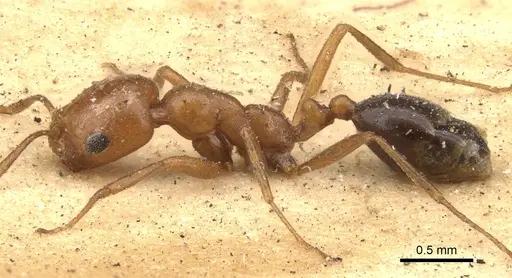
Monomorium venustum is a small ant native to the Middle East and surrounding regions. Workers have a distinctive bicolored appearance - the head, mesosoma, petiole, and postpetiole are reddish while the gaster (abdomen) is brown to black . This species is widely distributed across the Palaearctic and Afrotropical regions, including Saudi Arabia, Iran, Israel, Kuwait, Oman, Syria, Egypt, Jordan, Lebanon, and nearby countries . The species shows a strong preference for nesting in moist soil under stones and rocks, often found near vegetation in mountainous and desert edge habitats . It is one of the most dominant ant species in certain Egyptian locations like Mount Sinai, where it forages on the ground and has been observed carrying plant seeds and dead insects .
Quick Summary
- Difficulty: Medium
- Origin & Habitat: Middle Eastern species found across Saudi Arabia, Iran, Israel, Kuwait, Oman, Syria, Egypt, Jordan, Lebanon, Qatar, and nearby regions. It inhabits desert margins, mountainous areas, and coastal zones with preference for moist soil under stones and rocks near vegetation [4][7][3].
- Colony Type: Colony structure is unconfirmed. Based on related Monomorium species, likely monogyne (single queen) but requires further study. Ergatoid (wingless) queens have been documented in some Monomorium species [8].
- Size & Growth:
- Queen: Size data unavailable, no specific measurements documented for queens [9]
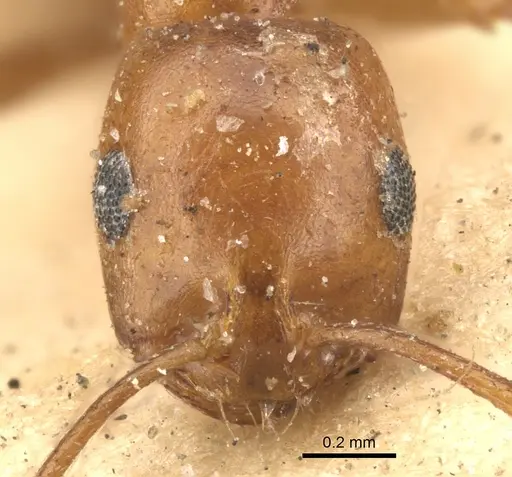
- Worker: Workers are small, head length 0.85-1.10mm, head width 0.70-0.88mm, scape length 0.75-0.95mm. Total body length data is unavailable [9]
- Colony: Unknown, no colony size data available
- Growth: Unknown, estimated moderate based on genus patterns
- Development: Unconfirmed, no direct development data exists for this species. (Development timeline is unconfirmed. Related Monomorium species typically develop in 6-8 weeks at optimal temperatures.)
- Antkeeping:
- Temperature: Based on its Middle Eastern distribution spanning warm temperate to subtropical regions, aim for 22-28°C with a gentle gradient. Avoid cold conditions below 18°C.
- Humidity: Prefers moist soil conditions, this species naturally nests in soil with high moisture content under stones [4]. Keep the nest substrate consistently damp but not waterlogged. Provide a moisture gradient so ants can choose their preferred humidity.
- Diapause: Unknown, likely a mild winter rest period given its range includes regions with cold winters (Syria, Iran). Consider providing a cool period around 15-18°C for 2-3 months during winter, but this is an estimate rather than confirmed requirement.
- Nesting: Natural nesting is in soil under stones and rocks. In captivity, a naturalistic setup with a soil chamber or a Y-tong/plaster nest works well. The key is providing moist substrate and keeping the nest under stones or a cover to maintain darkness and humidity. Avoid dry, arid setups.
- Behavior: Forages on the ground, known to carry plant seeds and dead insects [6]. Workers are small and can escape through tiny gaps, excellent escape prevention is essential. Attracted to protein sources in captivity. Likely not aggressive but may defend nest if disturbed. Based on its dominance in certain habitats, it is adaptable and competitive [5].
- Common Issues: escape prevention is critical due to tiny worker size, use fine mesh and tight-fitting lids, no direct development data exists, growth timelines are estimates based on genus patterns, colony structure (single vs multiple queens) is unconfirmed, observe your colony carefully, winter care requirements are unknown, use caution with cooling periods, may be outcompeted by larger ant species in multi-species setups
Natural History and Distribution
Monomorium venustum is native to the Middle East and surrounding regions, with a distribution spanning from Syria and Lebanon in the north to Egypt, Saudi Arabia, Oman, Qatar, and Iran [2][3][1]. This species shows a strong East Mediterranean zoogeographical affinity and is classified as a coast-desert association species [10][7]. In Israel, it is remarkably widespread, found across multiple regions from Upper Galilee to the southern Negev, making it one of the most common ants in the country [11]. The species prefers moist soil habitats and constructs nests directly under stones and rocks. In the southwestern mountains of Saudi Arabia, nests are often found next to Juniperus procera trees and Acacia species, in areas with dense ground vegetation including flowering grasses and mint plants [4]. This ant is opportunistic in its foraging, collecting both plant seeds and dead insects [6]. It has even been documented being attracted to animal carcasses in urban environments [12].
Housing and Nest Setup
In captivity, Monomorium venustum does best in setups that mimic its natural preference for moist soil under cover. A naturalistic setup with a soil chamber and flat stones on top works well, the stones help maintain darkness and humidity while allowing you to observe the colony. Alternatively, a Y-tong nest with a soil chamber or a plaster nest with good moisture retention provides the damp conditions this species prefers. The key requirement is consistent substrate moisture, these ants naturally nest in soil with high moisture content [4]. Avoid dry setups or nests that dry out quickly. A small water tube or reservoir connected to the nest helps maintain humidity. Since workers are tiny, escape prevention must be excellent, use tight-fitting lids and fine mesh on any ventilation holes.
Feeding and Diet
Based on field observations, Monomorium venustum is an opportunistic forager that collects both plant seeds and dead insects [6]. In captivity, offer a varied diet including small protein sources like fruit flies, small crickets, or other tiny insects. Sugar water or honey water should be available at all times, as with most Myrmicinae ants. The seeds observed being carried in the wild suggest they may also accept small seeds or grain, though this should be offered experimentally. Feed small amounts 2-3 times per week, removing uneaten food after 24-48 hours to prevent mold. Always ensure fresh water is available.
Temperature and Seasonal Care
Given its broad distribution across the Middle East, this species likely tolerates a wide temperature range but prefers warm conditions. Aim for 22-28°C in the nest area, with a gentle gradient allowing workers to move between warmer and cooler zones. The species is found in regions with hot summers and cool winters (Syria, Iran get cold in winter), so it likely benefits from a mild winter rest period. Consider providing temperatures around 15-18°C for 2-3 months during winter, but this is an estimate rather than a confirmed requirement since direct overwintering data does not exist for this species. Monitor colony activity, if they remain active and healthy year-round without cooling, they may not require diapause.
Behavior and Colony Dynamics
Monomorium venustum is a ground-nesting species that forages on soil surfaces, often under vegetation cover. Workers are small but numerous, this species is one of the most dominant ants in certain Egyptian habitats, indicating it forms large, competitive colonies [5]. The species is not known to be particularly aggressive but will defend the nest if threatened. In the wild, colonies often have myrmecophilous arthropods (small beetles, isopods, and millipedes) living inside their nests [4], which is normal and not a concern in captivity. Workers use chemical trails to recruit nestmates to food sources, a common behavior in the genus. The tiny worker size means they can easily slip through small gaps, always use excellent escape prevention.
Frequently Asked Questions
How long does it take for Monomorium venustum to produce first workers?
The egg-to-worker timeline is unconfirmed for this specific species. Based on typical Monomorium genus patterns, expect approximately 6-10 weeks from egg to first worker at optimal warm temperatures (24-28°C). This is an estimate since no direct development studies exist for M. venustum.
What size colony does Monomorium venustum reach?
Colony size is unknown, no published data exists on maximum colony size for this species. Based on its dominance in certain habitats and related species patterns, colonies likely reach several hundred to a few thousand workers over time.
Can I keep Monomorium venustum in a test tube setup?
Yes, test tubes can work for founding colonies and small groups. However, this species prefers moist soil conditions, so you may need to add a small soil chamber or ensure the test tube setup maintains humidity well. A test tube with a cotton ball providing water moisture is suitable for founding queens and small colonies.
What temperature is best for Monomorium venustum?
Aim for 22-28°C in the nest area. This species is native to warm Middle Eastern regions and likely tolerates higher temperatures well. Provide a gentle gradient so workers can self-regulate. Avoid temperatures below 15°C or above 35°C.
Does Monomorium venustum need hibernation?
Winter care is unconfirmed but likely beneficial given its range includes regions with cold winters (Syria, Iran). A mild cooling period around 15-18°C for 2-3 months may help, but this is an estimate. Some keepers successfully maintain this species year-round at room temperature without issues.
Is Monomorium venustum good for beginners?
This species is rated Medium difficulty. While not the easiest starter species, it is hardy and adaptable once established. The main challenges are escape prevention (tiny workers), lack of published care information, and uncertain winter requirements. Experienced antkeepers should have success with this species.
What do Monomorium venustum ants eat?
Based on field observations, they eat small insects and plant seeds. In captivity, offer small protein sources (fruit flies, small crickets, mealworms) and sugar water or honey water constantly. They may accept seeds experimentally but protein should be the primary food source.
How many queens does Monomorium venustum have?
Colony structure is unconfirmed for this species. Related Monomorium species are typically monogyne (single queen), but polygyny (multiple queens) has been documented in some genus members. Without specific research on M. venustum, we cannot confirm whether your colony has one queen or multiple.
Why are my Monomorium venustum escaping?
This species has very small workers that can squeeze through tiny gaps. Use excellent escape prevention including tight-fitting lids, fine mesh on ventilation, and barrier bands (fluon) around the nest opening. Check all seams and connections regularly.
Report an Issue
The current care sheet is based fully on literature. See inconsistencies, or something that's incorrect? Please , it will be resolved after review from an admin. Contributing to the blogs tab also helps providing information, to make us be able to further improve the caresheets. Thank you for your support!
References

This caresheet is licensed under CC BY-SA 4.0 .
Community Blogs
CASENT0902221
View on AntWeb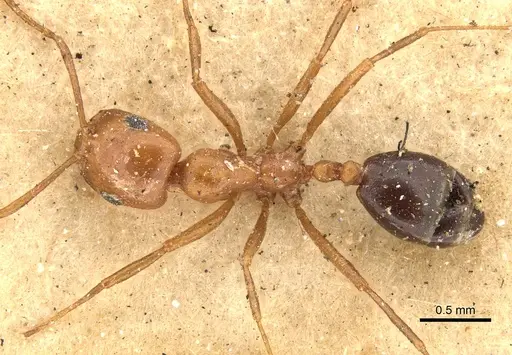
Literature
Loading distribution map...Loading products...