
Monomorium vaguum
- Sci. Name
- Monomorium vaguum
- Tribe
- Solenopsidini
- Subfamily
- Myrmicinae
- Author
- Santschi, 1930
- Distribution
- Found in 3 countries
Introduction
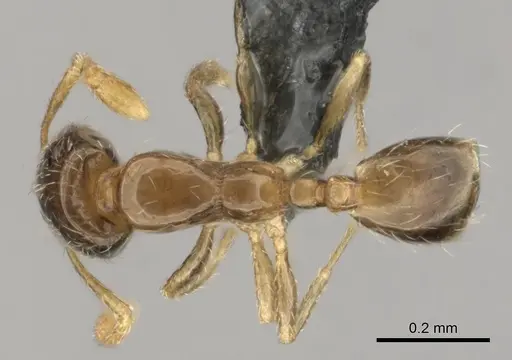
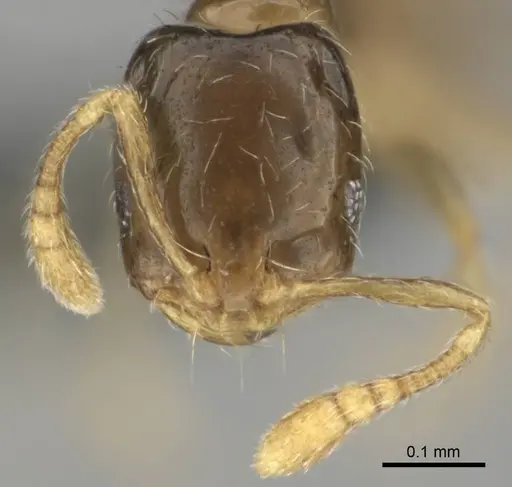
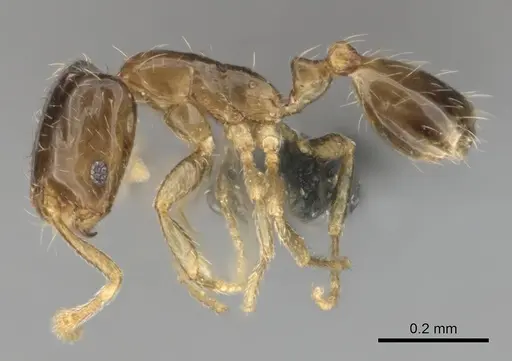
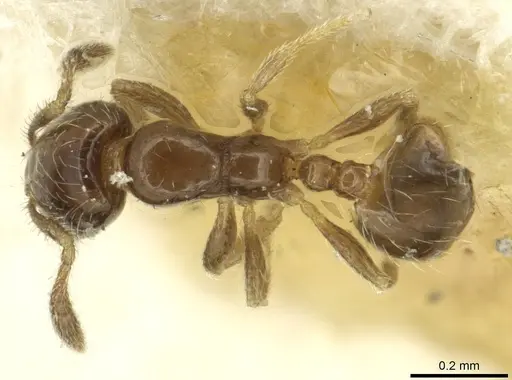
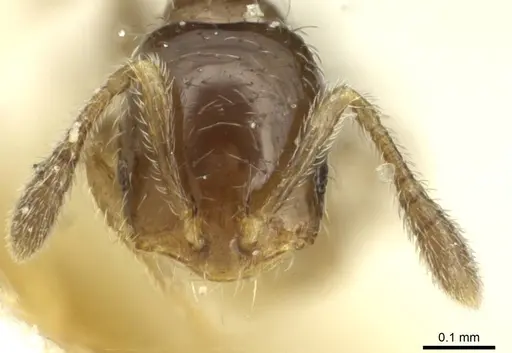
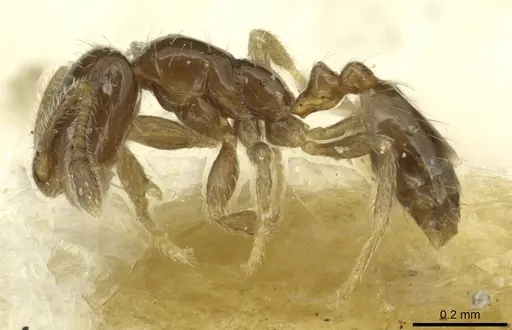
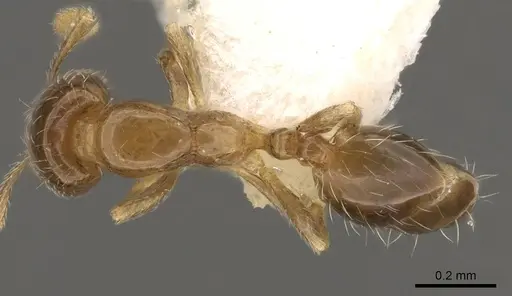
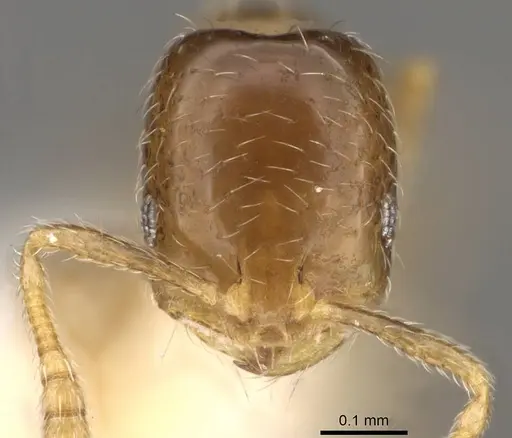
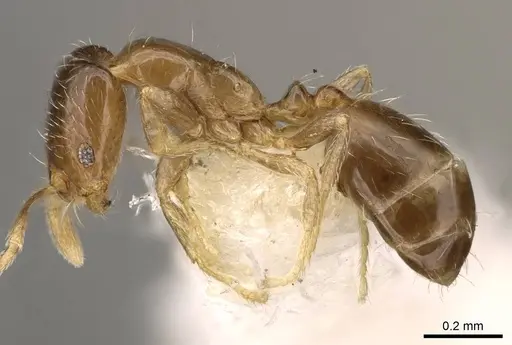
Monomorium vaguum is a tiny ant species native to the Afrotropical region, found across countries including South Africa, Kenya, Nigeria, Botswana, Democratic Republic of Congo, Rwanda, and Gabon . Workers measure 1.3-1.4mm in total length, making them among the smaller ant species you'll encounter . They range in color from dull yellow to medium brown, and can be identified by the distinctive clump of standing hairs on the front half of their pronotum - a feature that sets them apart from similar species . These ants belong to the Monomorium monomorium species group and prefer open and semi-open habitats in the wild . This species remains relatively poorly studied compared to some other Monomorium species, but it's been collected enough to understand its range and basic identification. As a tiny ground-nesting ant from tropical Africa, you'll need to pay close attention to escape prevention - their small size means they can slip through surprisingly small gaps. They have a sting but it's not particularly potent.
Quick Summary
- Difficulty: Medium
- Origin & Habitat: Afrotropical region, found in South Africa, Kenya, Nigeria, Botswana, Democratic Republic of Congo, Rwanda, and Gabon. Inhabits open and semi-open habitats [1][3][2].
- Colony Type: Unconfirmed, colony structure (single queen vs multiple queens) has not been documented in scientific literature.
- Size & Growth:
- Queen: Size data unavailable, the original description mentions a queen but specific measurements are not provided [3].
- Worker: 1.3-1.4mm [3].
- Colony: Unknown, no colony size data available for this species.
- Growth: Unknown, no development data exists for this species.
- Development: Unconfirmed, no direct development studies exist for this species. (Development timeline is unconfirmed for M. vaguum.)
- Antkeeping:
- Temperature: Aim for 22-26°C, these are tropical African ants that prefer warm conditions. Room temperature in most homes should work, but a heating cable on one side of the nest can provide a gentle gradient if needed.
- Humidity: Keep substrate moderately moist. These ants inhabit open and semi-open areas in the wild, so they prefer conditions that are damp but not waterlogged. Allow the substrate to dry slightly between waterings.
- Diapause: No, as a tropical species from central and southern Africa, they do not require hibernation. They remain active year-round at room temperature.
- Nesting: Natural nesting: ground-nesting in soil, often in open areas. In captivity, a test tube setup works well for founding colonies. For established colonies, a Y-tong or plaster nest with small chambers scaled to their tiny size is ideal. Avoid large, open spaces, they prefer tight, enclosed spaces.
- Behavior: These ants are small and generally non-aggressive. Workers forage individually for small prey and honeydew. Their tiny size makes them excellent escape artists, you must use excellent escape prevention with fine mesh and tight-fitting lids. They have a sting but it's weak and unlikely to penetrate human skin. Workers are likely to be active throughout the nest, exploring and foraging. Their small size also means they can be easily overlooked or lost if proper containment is not maintained.
- Common Issues: escape prevention is critical, their tiny size means they can slip through standard mesh and gaps in equipment, no development data exists, expect slower growth than more common species and be patient, humidity balance is tricky, they need moisture but can drown in water reservoirs that are too large, wild-caught colonies may have parasites or diseases that are difficult to treat in captivity, their small size makes them hard to observe and easy to accidentally lose during nest maintenance
Housing and Nest Setup
For founding colonies, a simple test tube setup works well. Fill the tube about one-third with water, plug with a cotton ball, then add the queen. The small size of these ants means you should use test tubes with a narrow diameter, standard small test tubes work perfectly. For established colonies with workers, a Y-tong or plaster nest with small chambers is ideal. The chambers should be appropriately scaled to their tiny worker size, avoid large, open spaces that may cause stress. A small outworld connected to the nest allows for feeding space. Cover all ventilation holes with fine mesh, these ants will escape through standard mesh that would hold back larger species. [1]
Feeding and Diet
In the wild, Monomorium species typically feed on small insects, honeydew from aphids, and other sweet substances. In captivity, offer small protein sources like fruit flies, pinhead crickets (cut to appropriate size), and other tiny arthropods. Sugar water or honey water should be offered regularly, these ants will readily accept sweet liquids. Feed protein prey 2-3 times per week, and keep a constant supply of sugar water available. Remove uneaten prey after 24-48 hours to prevent mold. Because of their tiny size, prey items should be appropriately sized, anything larger than their head is difficult for them to handle.
Temperature and Seasonal Care
As a tropical African species, Monomorium vaguum prefers warm conditions. Maintain temperatures between 22-26°C for optimal colony health and activity. Room temperature in most homes (around 20-24°C) should be suitable. If your home runs cooler, a small heating cable placed on one side of the nest can create a warm gradient. Place the heating on top of the nest material, not underneath, to avoid drying out the nest too quickly. These ants come from regions where temperatures remain fairly stable year-round, so avoid sudden temperature changes. No diapause is required, they remain active year-round at room temperature. [1]
Handling and Observation
These tiny ants require careful handling due to their size. When moving or observing them, work in a well-lit area where you can easily spot them. They are not aggressive and their sting is weak, making them safe to handle. However, their small size means they can easily fall from your hand or escape. Always work over a white surface to spot any escaped workers. Do not attempt to handle individual workers, observe them through the nest instead. Their distinctive hair clump on the pronotum can be seen with good magnification and serves as a good identification feature for curious keepers. [3]
Colony Establishment
Starting a colony from a wild-caught queen can be challenging since this species' founding behavior is not documented. The queen likely seals herself in a small chamber and raises her first workers alone. She will need peace and darkness during this period, do not disturb the founding setup. Expect several weeks for the first workers to emerge, though exact timing is unconfirmed. The queen may not lay eggs immediately after mating, give her time to settle. Once workers arrive, you can slowly introduce small prey items. Growth will likely be slower than more common pet species, so patience is essential.
Frequently Asked Questions
How long does it take for Monomorium vaguum to produce first workers?
The exact development time is unconfirmed for this species. Expect several weeks from egg to first worker at warm temperatures. The first workers will be smaller than mature workers.
Can I keep multiple Monomorium vaguum queens together?
Not recommended, colony structure has not been documented for this species, and combining unrelated queens carries the risk of fighting. Most Monomorium species are single-queen colonies. If you catch multiple founding queens, house them separately.
What do Monomorium vaguum ants eat?
They likely accept small protein sources like fruit flies, tiny crickets, and other small arthropods, plus sweet liquids like sugar water or honey water. Feed protein 2-3 times per week and keep sugar water constantly available.
Are Monomorium vaguum good for beginners?
This species is rated as Medium difficulty. While they are small and non-aggressive, their care requirements are not well-documented, and their tiny size makes escape prevention challenging. They are better suited for keepers with some experience who can provide proper containment.
What temperature do Monomorium vaguum ants need?
Keep them at 22-26°C. As tropical African ants, they prefer warm conditions. Room temperature in most homes is suitable, or use a small heating cable on one side of the nest for additional warmth.
How big do Monomorium vaguum colonies get?
Colony size is unknown, no scientific data exists on maximum colony size for this species.
Why are my Monomorium vaguum escaping?
Their tiny worker size means they can slip through standard mesh and tiny gaps. Use fine mesh (at least 0.5mm or smaller), ensure all lids fit tightly, and check all connections and ventilation holes. Even a small gap will allow escape.
Do Monomorium vaguum need hibernation?
No, as a tropical species from central and southern Africa, they do not require hibernation. They should remain active year-round at room temperature.
When should I move my colony to a formicarium?
Wait until the colony has a decent number of workers before moving to a formicarium. The nest chambers should be appropriately sized for their tiny workers. Moving too early can stress the colony. A Y-tong or plaster nest with small chambers works well.
Report an Issue
The current care sheet is based fully on literature. See inconsistencies, or something that's incorrect? Please , it will be resolved after review from an admin. Contributing to the blogs tab also helps providing information, to make us be able to further improve the caresheets. Thank you for your support!
References

This caresheet is licensed under CC BY-SA 4.0 .
Community Blogs
Literature
Loading distribution map...Loading products...