
Monomorium setuliferum
- Sci. Name
- Monomorium setuliferum
- Tribe
- Solenopsidini
- Subfamily
- Myrmicinae
- Author
- Forel, 1910
- Distribution
- Found in 4 countries
Introduction
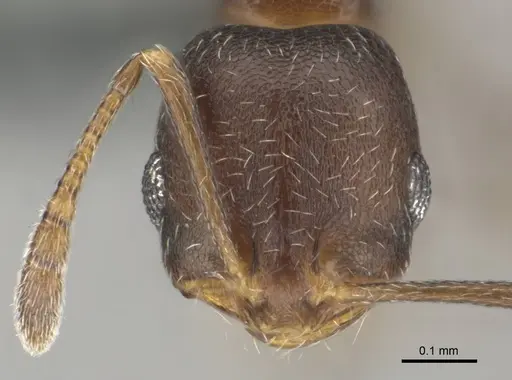
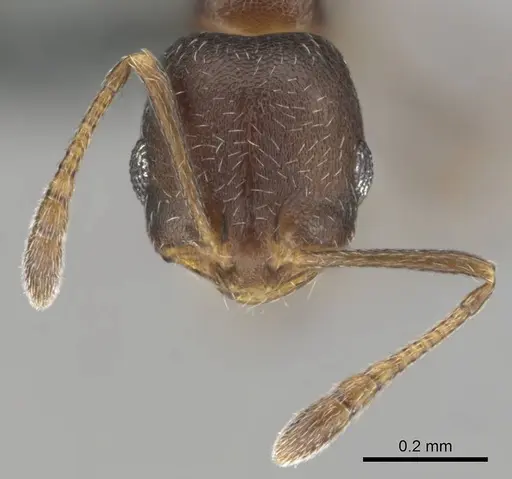
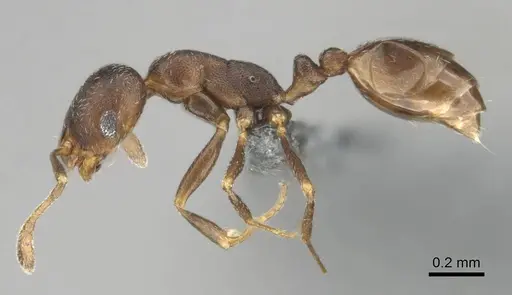
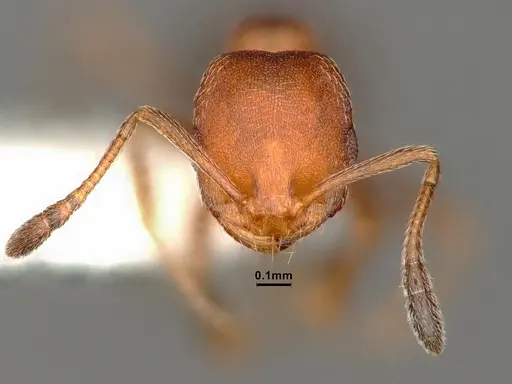
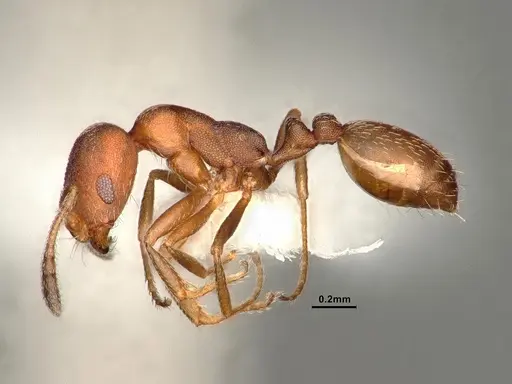
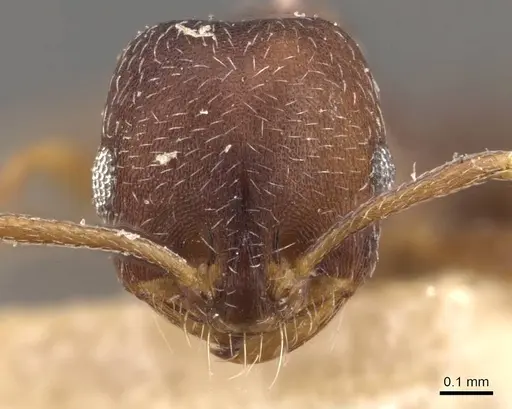
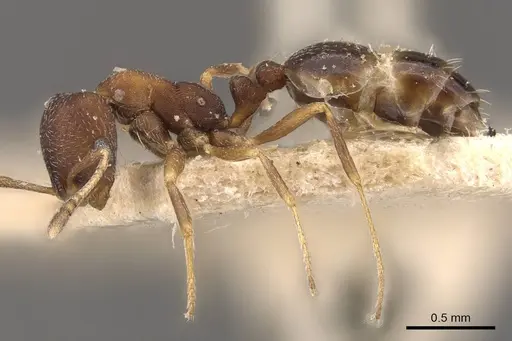
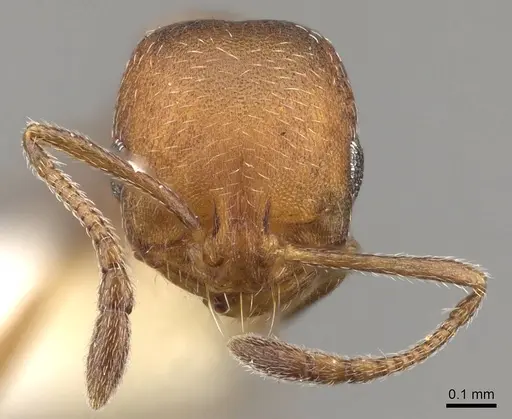
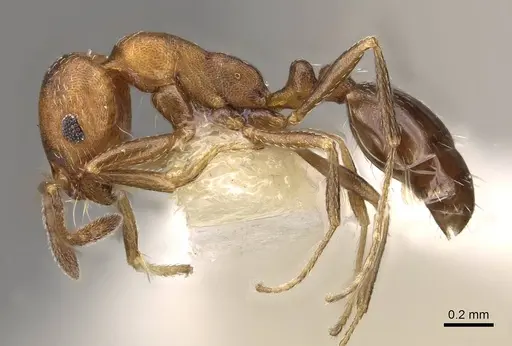
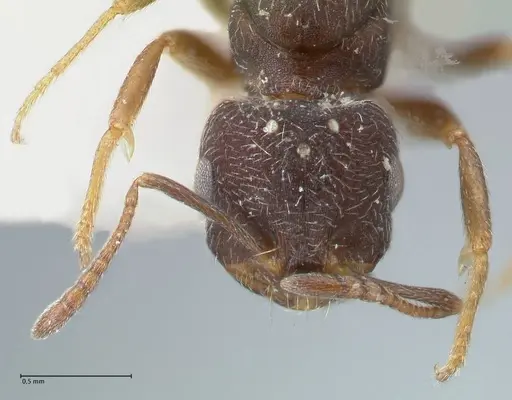
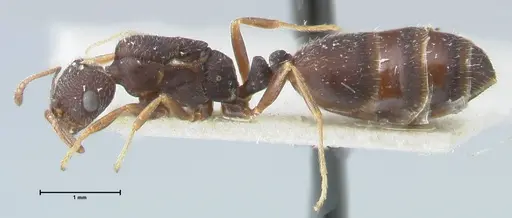
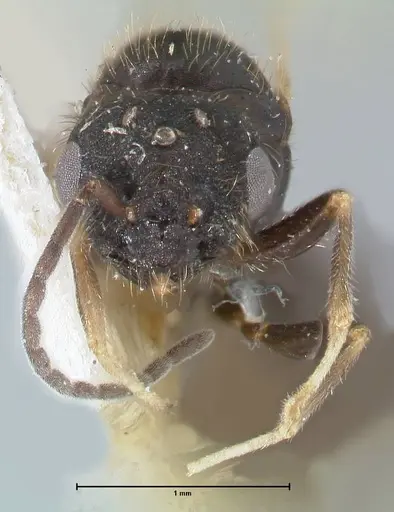
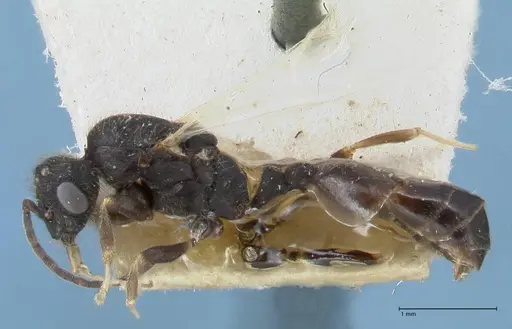
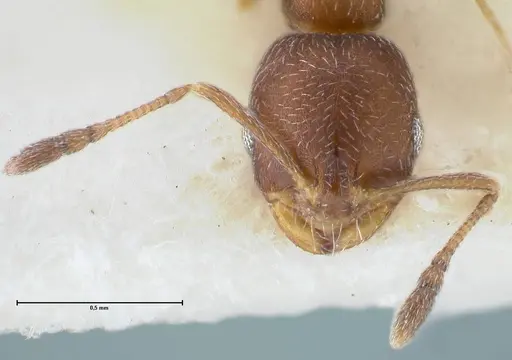
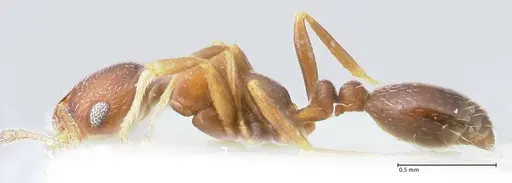
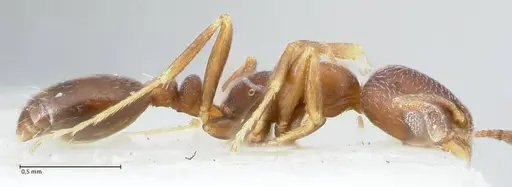
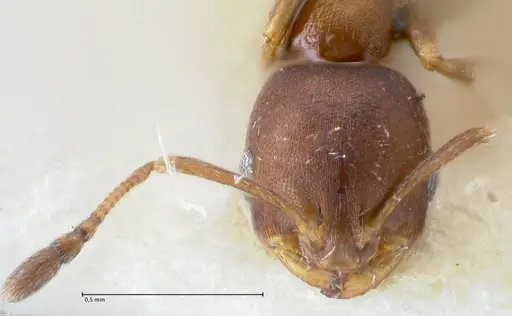
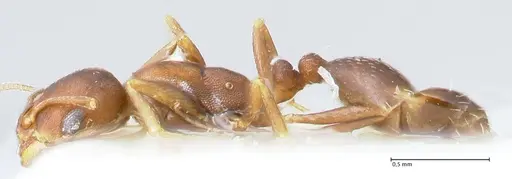
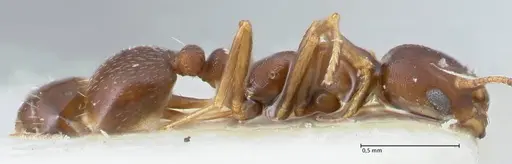
Monomorium setuliferum is a tiny ant species native to southern Africa, found in Botswana, Namibia, and Angola. Workers measure 2.5-2.7mm and are yellowish to dark brown in color, often with a darker gaster than the alitrunk. They belong to the Monomorium setuliferum species group and are distinguished by their conspicuously reniform (kidney-shaped) eyes positioned in front of the head sides. These ants inhabit open savanna, acacia woodland, and bushveld environments where they nest in the ground . This species shows exceptional foraging dominance. Research from Namibian saltpan habitats shows they monopolize 87.5% of food baits they discover - a high rate indicating strong competitive ability despite their tiny size. This behavioral dominance, combined with their ground-nesting habits in arid to semi-arid regions, makes them a fascinating species for antkeepers interested in observing efficient foragers .
Quick Summary
- Difficulty: Medium
- Origin & Habitat: Southern Africa (Botswana, Namibia, Angola), found in open savanna, acacia woodland, bushveld, and saltpan habitats [1][2]
- Colony Type: Colony structure (single-queen or multi-queen) has not been documented for this species
- Size & Growth:
- Antkeeping:
- Temperature: 24-28°C, aim for warm conditions based on their African savanna origin. A gentle heat gradient allows workers to regulate their temperature preference.
- Humidity: Low to moderate, these ants inhabit dry to semi-arid savanna and saltpan environments. Keep substrate moderately dry with occasional damp areas, avoiding constant moisture.
- Diapause: Likely minimal or no true diapause, being from subtropical Africa, they probably experience reduced activity rather than full hibernation. A cool period of 2-3 months at 15-18°C may be beneficial.
- Nesting: Ground-nesting species that would likely accept test tubes, Y-tong nests, or plaster nests with moderate humidity. Their tiny size means narrow passages and chambers work best.
- Behavior: These ants are highly active foragers with exceptional competitive dominance at food sources. They readily discover and monopolize baits, suggesting efficient recruitment behavior. Workers are small but numerous and will defend resources aggressively. Their tiny size means escape prevention requires fine mesh barriers, they can squeeze through standard gaps easily.
- Common Issues: tiny size means escapes are likely without fine mesh barriers, no colony size or growth rate data makes timing predictions difficult, humidity requirements are not well-documented, start moderate and observe colony behavior, limited availability in the antkeeping hobby, rarely traded or kept
Natural History and Distribution
Monomorium setuliferum is endemic to the Afrotropical region, specifically found in Botswana, Namibia, and Angola. Their natural habitat consists of open savanna, acacia woodland, and bushveld, environments characterized by warm temperatures and seasonal rainfall patterns. They've also been documented in saltpan habitats, which are typically flat, saline depressions in arid regions that experience periodic flooding and drying. This indicates adaptability to harsh, dry conditions with variable moisture availability [1].
The species was first described by Forel in 1910 from specimens collected in the Kalahari region of Botswana. It belongs to the Monomorium setuliferum species group, which is distinguished from related species primarily by eye morphology. The eyes are conspicuously reniform (kidney-shaped) in profile, with a maximum diameter of 0.29-0.33 times the head width. This eye shape is variable even within series from the same location [1].
Foraging Behavior and Ecology
Research conducted in Namibian habitats reveals details about M. setuliferum's ecological role. In saltpan environments, they were found in the ground stratum and showed high behavioral dominance, they were present at 8.9% of bait stations but monopolized 87.5% of those baits they discovered. Their behavioral dominance score of 33.3% indicates they are highly effective competitors despite their tiny size [2].
This dominance likely stems from efficient recruitment behavior and willingness to defend food resources aggressively. For antkeepers, this means you'll see active, persistent foragers that quickly mobilize workers when food is discovered. They appear to be generalist foragers adapting to whatever food sources are available in their arid environment.
Housing and Nesting
Given their natural habitat in African savanna and bushveld, these ants likely prefer nests that maintain moderate warmth and relatively dry conditions. In captivity, standard test tube setups work well for founding colonies, while Y-tong or plaster nests with small chambers suit their tiny worker size. The key is ensuring chambers and passages are appropriately scaled, passages should be narrow to match their 2.5mm body size.
Escape prevention is critical due to their small size. Standard test tube cotton can be insufficient, consider using fine mesh barriers or fluon on rim edges. They will explore any gap energetically, so inspect lid fit regularly. [1]
Feeding and Diet
While specific dietary studies are lacking for M. setuliferum, Monomorium species are typically generalists that readily accept sugar sources (honey, sugar water) and protein (small insects, mealworms). Their dominance at baits in the wild suggests they'll compete vigorously for sweet foods. Offer sugar water or honey regularly, along with small protein sources like fruit flies, pinhead crickets, or mealworm pieces. Their tiny size means prey items should be appropriately scaled. [1]
Temperature and Seasonal Care
As a species from subtropical southern Africa, M. setuliferum requires warm conditions. Aim for temperatures in the 24-28°C range during the active season. A heat gradient allows workers to self-regulate, position a heating cable on one side of the nest creating a warm zone of around 28°C with cooler areas around 22-24°C.
Regarding diapause or winter rest, their African origin suggests they don't require true hibernation. However, a cooler period (15-18°C for 2-3 months) during winter months may help simulate natural seasonal cycles and promote colony health. Reduce feeding during this cool period and expect lower activity levels. [1]
Frequently Asked Questions
How long does it take for Monomorium setuliferum to produce first workers?
The exact timeline is unknown as this species has not been studied in captivity. Based on typical Monomorium patterns in warm climates, expect around 4-8 weeks from egg to first worker at optimal temperatures (around 26°C).
What size colony does Monomorium setuliferum reach?
Colony size data is not available for this species. Given their small worker size and typical Monomorium patterns, colonies likely reach several hundred workers at maximum, but this is an estimate.
Are Monomorium setuliferum good for beginners?
This species is rated as Medium difficulty. While their care requirements are relatively straightforward (warm, dry conditions), their tiny size makes escape prevention challenging, and limited availability in the hobby means they're not ideal for complete beginners. Start with more common species first.
What temperature should I keep Monomorium setuliferum at?
Keep them warm at 24-28°C. A temperature gradient allowing workers to choose their preferred zone is ideal. A heating cable on part of the nest can achieve this.
Can I keep multiple queens together?
The colony structure (monogyne vs polygyne) has not been documented for this species. Until more information is available, it is not recommended to combine unrelated queens.
What do Monomorium setuliferum eat?
They likely accept a generalist diet similar to other Monomorium species: sugar sources (honey, sugar water) and small protein items (fruit flies, tiny crickets, mealworm pieces). Their aggressive foraging suggests they'll readily accept various foods.
When should I move my colony to a formicarium?
Move to a formicarium (like a Y-tong or plaster nest) once the colony reaches 20-30 workers and the test tube setup feels cramped. Ensure the new nest has appropriately sized chambers and passages for their tiny workers.
Do they need hibernation or diapause?
Full hibernation is likely not required given their African origin. A cooler period at 15-18°C for 2-3 months during winter may be beneficial but is probably optional.
Why are my Monomorium setuliferum escaping?
Their tiny size allows them to squeeze through gaps that seem sealed. Use fine mesh barriers, apply fluon to rim edges, and check all lid fits regularly. Escape prevention must be excellent for this species.
Report an Issue
The current care sheet is based fully on literature. See inconsistencies, or something that's incorrect? Please , it will be resolved after review from an admin. Contributing to the blogs tab also helps providing information, to make us be able to further improve the caresheets. Thank you for your support!
References

This caresheet is licensed under CC BY-SA 4.0 .
Community Blogs
CASENT0257351
View on AntWeb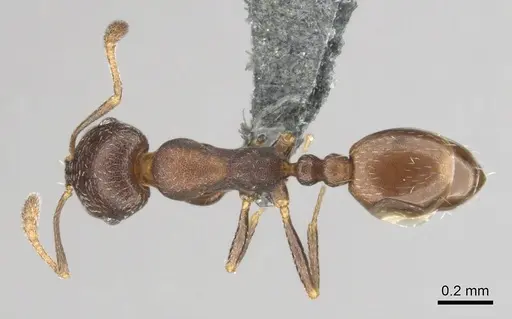
CASENT0884331
View on AntWeb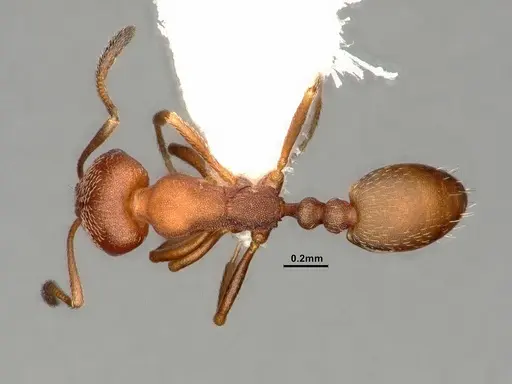
CASENT0908719
View on AntWeb
CASENT0914402
View on AntWeb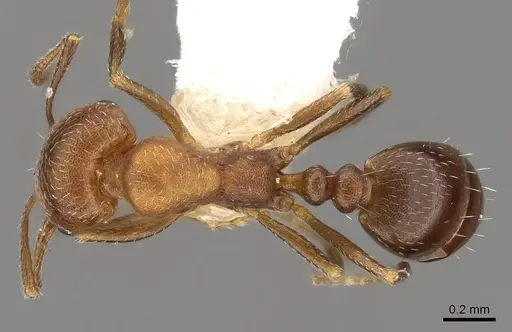
FOCOL1680
View on AntWeb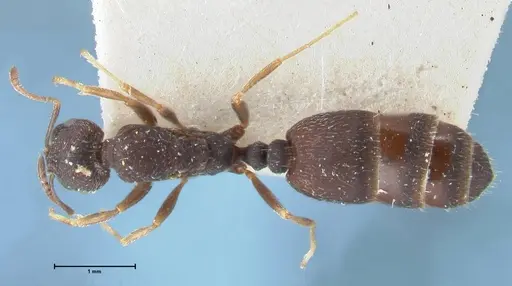
FOCOL1681
View on AntWeb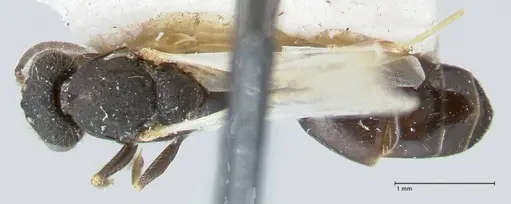
FOCOL1682
View on AntWeb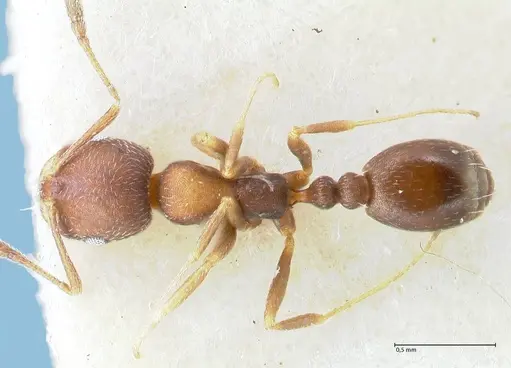
FOCOL1683
View on AntWeb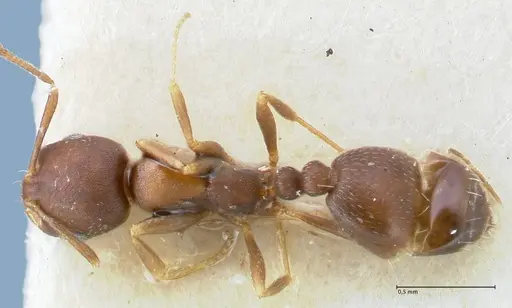
Literature
Loading distribution map...Loading products...