
Monomorium sakalavum
- Sci. Name
- Monomorium sakalavum
- Tribe
- Solenopsidini
- Subfamily
- Myrmicinae
- Author
- Santschi, 1928
- Distribution
- Found in 1 countries
Introduction
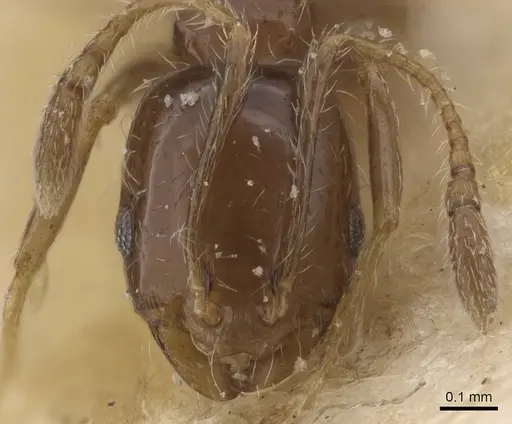
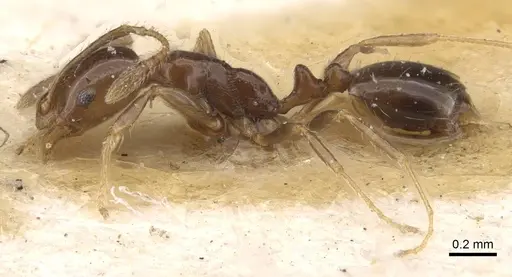
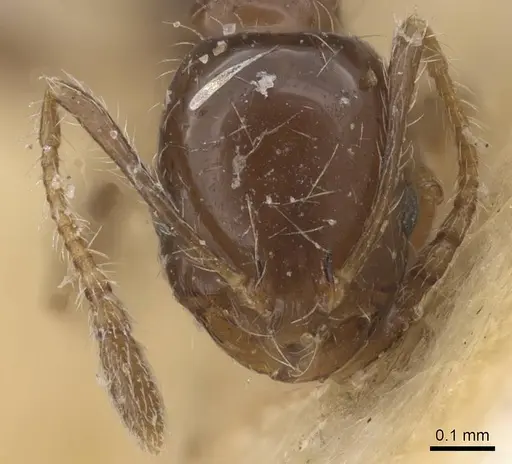
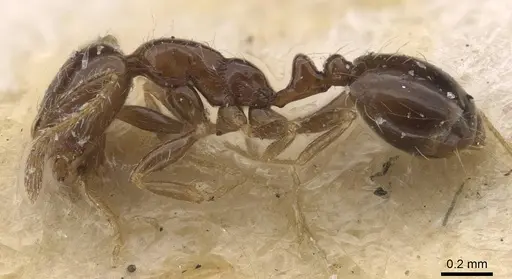
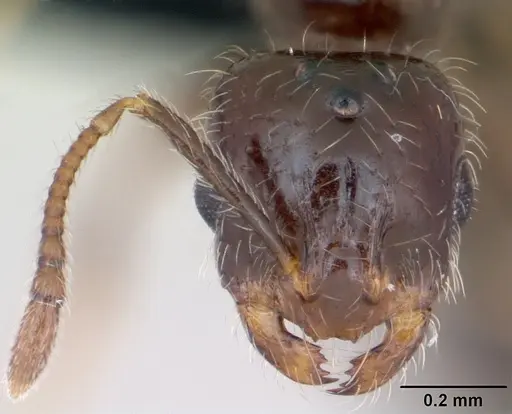
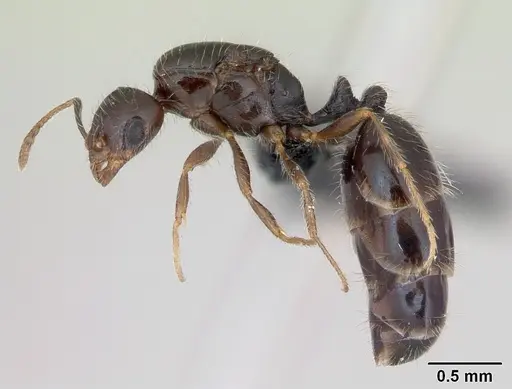
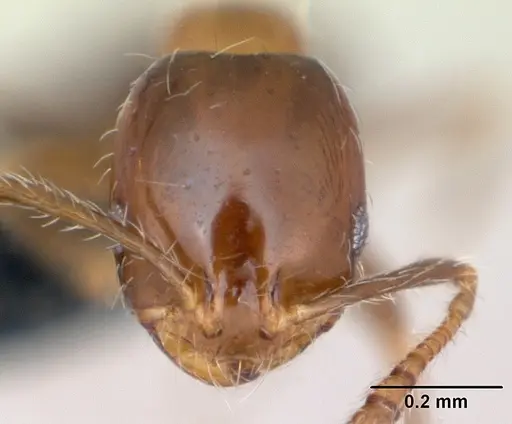
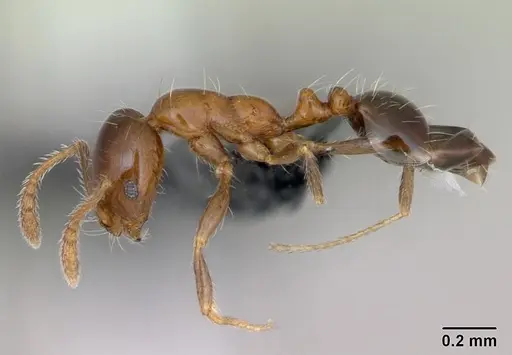
Monomorium sakalavum is a small ant species native to Madagascar, mainly found in drier forested areas across the island, especially the western regions. Workers are tiny - about 1.5 to 2 mm total body length, based on the genus - and are part of the 'rhopalocerum' complex. They are easy to spot thanks to their glassy, brick-red mesosoma that stands out against a lighter chocolate-brown head and brown gaster. Queens are bigger, reaching about 2.5-3 mm and appear blackish-red. They nest naturally in rotting twigs, sticks, and logs, sometimes on the ground and sometimes above it .
Quick Summary
- Difficulty: Medium
- Origin & Habitat: Endemic to Madagascar, mainly in western drier forests. They live in rotting wood (twigs, sticks, logs) both on the ground and above ground, and have been collected using a mix of methods in forested areas [1][2][3].
- Colony Type: Not directly studied. Based on related Monomorium species, likely monogyne (single queen), but this is unconfirmed.
- Size & Growth:
- Queen: Approximately 2.5-3 mm (inferred from genus, actual size not directly reported) [2]
- Worker: Approximately 1.5-2 mm (inferred from genus, exact total length not documented in research) [1][2]
- Colony: Unknown, no colony size data available
- Growth: Unknown, not studied
- Development: Estimated 6-8 weeks based on typical Monomorium patterns at around 24°C (No direct data, timeline is an estimate from related species.)
- Antkeeping:
- Temperature: 22-26°C, based on Madagascar's tropical drier forests. A gentle gradient is helpful. Room temperature is often fine, use a heating cable on one side if needed [1].
- Humidity: Moderate, aim for around 50-70%. Their natural habitat is not constantly wet, so let the substrate dry a little between waterings. They nest in rotting wood, which holds moisture but can vary [1][2].
- Diapause: Unknown. Madagascar has mild winters, so a true diapause may not be needed. A slight winter cooldown (18-20°C for 2-3 months) might help, but it's optional.
- Nesting: Mimic their natural rotting wood habitat: Y-tong (AAC) nests with narrow chambers, plaster nests, or setups with small rotting wood pieces work well. Test tubes are fine for founding. Keep chambers tight and small to match their tiny size.
- Behavior: Workers are small and active, not particularly aggressive. They have a sting (as a Solenopsidini species), but it is not a concern for keepers. Their tiny size means escape prevention is crucial, they can slip through gaps that larger ants can't. They are both arboreal and terricolous, so they can nest at different heights [4].
- Common Issues: escape prevention is critical due to their very small size, use fine mesh (at least 0.5mm) and tight seals., slow growth may test a keeper's patience, no development timeline is known., wild-caught colonies may carry parasites or diseases that are hard to treat., nest chambers must be scaled to their tiny size, large open spaces stress them., humidity must be balanced, too wet causes mold, too dry stops brood development.
Housing and Nest Setup
Because Monomorium sakalavum is so small, your nest must be scaled down. In the wild they nest in rotting twigs, sticks, and logs on the ground or above [1][2]. In captivity, Y-tong (AAC) nests with narrow chambers, plaster nests, or naturalistic setups with small rotting wood pieces work well. Avoid large open spaces, give them many small, tight chambers. Test tubes are ideal for founding colonies, the queen will stay sealed in the dark. As the colony grows you can connect a small formicarium. Add a water reservoir to keep the nest moderately moist, but don't soak it.
Feeding and Diet
Based on typical Monomorium habits, this species is omnivorous. They likely forage for small insects, honeydew, and other protein-rich items in the wild. In captivity, offer tiny live prey (fruit flies, pinhead crickets, small mealworms) and quality protein gels. Sugar water or honey water can supplement their diet. Since they are so small, give very small portions, a single fruit fly or a drop of sugar water per feeding. Change food every 2-3 days to avoid mold. Watch what they accept and adjust accordingly.
Temperature and Seasonal Care
These ants come from drier forests in Madagascar, so they prefer warmth. Keep temperatures around 22-26°C [1]. A heating cable on one side of the nest creates a gradient, letting them choose the perfect spot. Place the cable on top of the nest, not underneath, to avoid drying out the substrate too fast. A winter cooldown (18-20°C for 2-3 months) might be beneficial but is not proven necessary. If the colony slows down, bump the temperature back up.
Humidity Management
Monomorium sakalavum lives in drier forests, so they don't need constant high moisture. Aim for moderate humidity, the nest substrate should be slightly moist but not wet. Let the surface dry a bit between waterings. Their natural nests in rotting wood experience moisture variation, so they can handle some fluctuation. Keep an eye on condensation, too much suggests overwatering, while dryness will stress the colony and halt brood growth. A water reservoir in the nest provides steady moisture [1][2].
Colony Founding and Development
The founding method is not documented for this species. Based on typical Monomorium patterns, queens may be claustral, they seal themselves in a dark chamber and use stored fat to raise the first brood, but this is unconfirmed. The first workers (nanitics) are smaller than normal ones and may appear in about 6-8 weeks at 24°C (again, an estimate). The queen will not forage during founding. Once the first workers emerge, they take over foraging. Be patient and avoid disturbing the queen too much, as stress can cause her to eat the brood. Growth is probably slow, these are not a fast-building species.
Behavior and Temperament
Monomorium sakalavum is calm and not particularly aggressive. As a member of the Solenopsidini tribe, they have a sting, but it is unlikely to be noticeable to keepers, they are not a stinging hazard. Their small size makes them excellent escape artists: use very fine mesh and tight seals on all openings. They are both arboreal and terricolous, meaning they will nest at ground level or in elevated spots [4]. Colony communication is chemical, and they may use tandem running to guide nestmates, though this is not confirmed for this species.
Frequently Asked Questions
How long does it take for Monomorium sakalavum to produce first workers?
Not directly studied. An estimate of 6-8 weeks at 24°C comes from related species. The actual time may vary.
What is the best nest type for Monomorium sakalavum?
Y-tong (AAC) nests with narrow chambers, plaster nests, or setups with small rotting wood pieces all work. Test tubes are fine for founding. The key is small, tight chambers.
What do Monomorium sakalavum eat?
They are omnivorous. Offer small live prey (fruit flies, small mealworms), protein gels, and sugar water. Give tiny portions and change food every 2-3 days.
Are Monomorium sakalavum good for beginners?
This species is rated Medium difficulty. They are calm and not aggressive, but their tiny size makes escape prevention tricky, and their care is not well-documented. Not the easiest starter ant.
Do Monomorium sakalavum need hibernation?
Unknown. Madagascar has mild winters, so a full diapause is likely not required. A mild winter cooldown (18-20°C for 2-3 months) could be tried but is optional.
How big do Monomorium sakalavum colonies get?
No data is available. Based on the genus, probably several hundred workers at most, but this is speculation.
Can I keep multiple Monomorium sakalavum queens together?
Colony structure is unconfirmed. Likely monogyne (single queen). It is not recommended to keep multiple queens together as it could lead to fighting.
Why are my Monomorium sakalavum escaping?
Workers are tiny (about 1.5-2 mm). They can squeeze through incredibly small gaps. Use at least 0.5mm mesh, ensure all connections are airtight, and regularly check for cracks.
What temperature should I keep Monomorium sakalavum at?
Aim for 22-26°C. A gentle gradient is ideal. Room temperature is often sufficient, or a heating cable on one side of the nest.
Report an Issue
The current care sheet is based fully on literature. See inconsistencies, or something that's incorrect? Please , it will be resolved after review from an admin. Contributing to the blogs tab also helps providing information, to make us be able to further improve the caresheets. Thank you for your support!
References

This caresheet is licensed under CC BY-SA 4.0 .
Community Blogs
CASENT0010889
View on AntWeb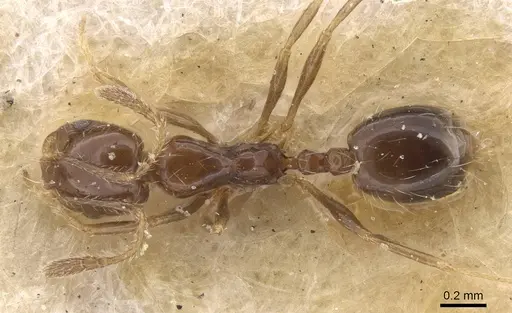
CASENT0010890
View on AntWeb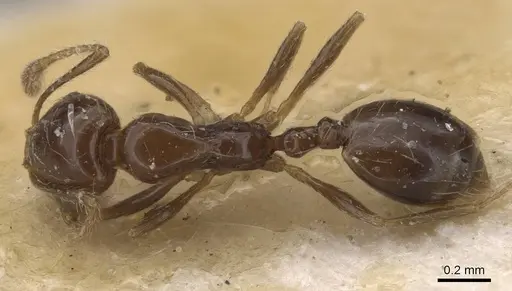
CASENT0475894
View on AntWeb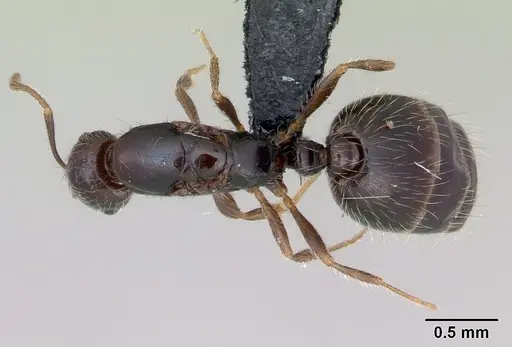
CASENT0475908
View on AntWeb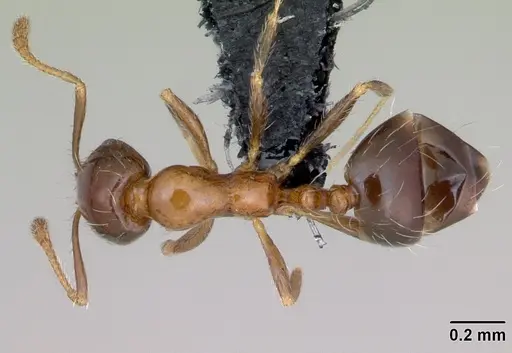
Literature
Loading distribution map...Loading products...