
Monomorium sagei
- Sci. Name
- Monomorium sagei
- Tribe
- Solenopsidini
- Subfamily
- Myrmicinae
- Author
- Forel, 1902
- Distribution
- Found in 2 countries
Introduction
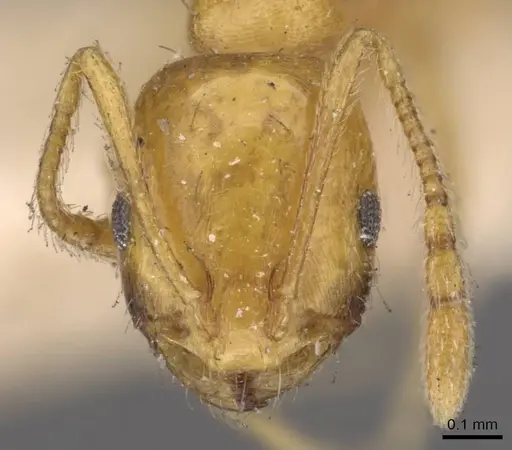
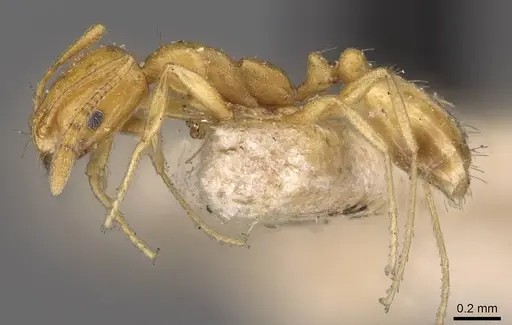
Monomorium sagei is a small ant native to South Asia. Workers measure 2.2-2.5mm in total length and are pale yellowish with a dark-tinted gaster. They have 12-segmented antennae with a 3-segmented club, and the scape extends slightly beyond the top of the head. The body is mostly smooth and shining with scattered erect hairs. This species is found across India, Pakistan, Afghanistan, and into southern China, typically in forested areas at elevations between 500-2000 meters. They are known to tend aphids and other sucking insects, foraging on plants like guava and night-blooming jasmine to collect honeydew .
Quick Summary
- Difficulty: Medium
- Origin & Habitat: Native to South Asia, India, Pakistan, Afghanistan, and southern China. Found in forested areas, often nesting in rotten wood, dead wood, tree bark, and soil at elevations from 500-2000 meters [1][2][4][5].
- Colony Type: Colony structure is unconfirmed. Workers have been collected in association with aphids, suggesting typical Myrmicinae colony organization.
- Size & Growth:
- Antkeeping:
- Temperature: Based on Himalayan and sub-Himalayan range (elevations 500-2000m), they likely prefer moderate temperatures around 20-26°C. Provide a temperature gradient allowing workers to select their preferred zone.
- Humidity: They nest in rotten wood and soil, suggesting they prefer moderate humidity. Keep nest substrate moist but not waterlogged.
- Diapause: Unknown, no specific diapause data. Given their Himalayan distribution at elevations up to 2000m, they may experience cooler winters.
- Nesting: In nature they nest in rotten wood, dead wood, tree bark, and soil [1]. In captivity, test tube setups work well for founding colonies, then they can be moved to Y-tong or plaster nests with moisture chambers. The small worker size means they need appropriately scaled chambers.
- Behavior: These are relatively calm ants that forage for honeydew from aphids. They are small (2.2-2.5mm) so escape prevention should be taken seriously, they can squeeze through small gaps. As members of the subfamily Myrmicinae, they possess a sting but are not aggressive toward keepers. They are opportunistic foragers that will accept both sugar and protein sources [1].
- Common Issues: small size makes escape likely without fine mesh barriers and tight-fitting lids, no specific development data means growth timelines are unknown, patience required, colony size potential is unknown, wild-caught colonies may carry parasites, humidity control is important, too dry and brood may fail to develop
Housing and Nest Setup
For founding colonies, a standard test tube setup works well. Fill the tube about one-third with water and plug with a cotton ball, this provides humidity while giving the queen a dark, enclosed space to lay eggs. Once workers emerge, you can continue in the test tube or transition to a small formicarium. Given their small size (2.2-2.5mm workers), ensure any formicarium has appropriately sized chambers and tunnels. Y-tong nests or plaster nests with moisture chambers both work well for this species. The key is maintaining consistent humidity without flooding. Because they naturally nest in rotting wood and soil, a naturalistic setup can also work, though it makes observing the colony more difficult. [1]
Feeding and Diet
In the wild, Monomorium sagei forages on plants like guava, night-blooming jasmine, black nightshade, and spinach, primarily to collect honeydew from aphids [1]. They were found in association with four aphid species: Greenidea psidii, Aphis gossypii, Aphis fabae, and Aphis fabae solanella. In captivity, offer sugar water or honey water as a constant energy source. For protein, they will accept small insects like fruit flies or small mealworms. Given their small size, prey items should be appropriately sized. Feed protein several times per week, and keep sugar water available at all times.
Temperature and Seasonal Care
Based on their range in the Himalayan foothills and surrounding regions (elevations 500-2000m), Monomorium sagei likely prefers moderate temperatures in the low-to-mid 20s Celsius. A temperature gradient of 20-26°C allows workers to self-regulate. In summer months, room temperature is likely adequate for most keepers. During winter, if your room temperature drops significantly, a mild hibernation period may be beneficial given their natural exposure to cooler Himalayan winters, though this is unconfirmed. [4][1]
Behavior and Handling
Monomorium sagei is a relatively calm species that does not show aggressive behavior toward keepers. Workers are small (2.2-2.5mm) and pale yellow with a darker gaster, making them easy to identify. As Myrmicinae, they possess a sting but are not aggressive and pose minimal danger to keepers. The main handling concern is their small size, they are excellent escape artists and can squeeze through remarkably small gaps. Use fine mesh on any ventilation, ensure lids fit tightly, and consider applying barrier paste to escape-proof your setup. [1]
Colony Development Expectations
Unfortunately, there is no specific data on colony development for Monomorium sagei. The first workers will emerge some weeks after the queen lays eggs, assuming optimal temperatures. Growth rate is unknown. The maximum colony size is unknown. Patience is key with this species, as the lack of specific data means you may need to adjust care based on observed colony behavior.
Where They Come From
Monomorium sagei was described by Forel in 1902 from specimens collected in Dharmsala, Himachal Pradesh, India [6]. The species is found across South Asia including India (Himachal Pradesh, Jammu & Kashmir, Karnataka, Rajasthan, Andaman Islands), Pakistan (Karakorum, Baltistan regions), Afghanistan, and into southern China [2][3][1]. They are considered part of the Generalized Myrmicinae functional group and have been recorded at elevations up to 2000m in the Himalayas [5][4].
Frequently Asked Questions
How long does it take for Monomorium sagei to produce first workers?
The exact timeline is unconfirmed for this species. There is no specific development data available.
What do Monomorium sagei ants eat?
They are omnivorous with a preference for sugar. In captivity, offer sugar water or honey water constantly, plus small protein sources like fruit flies or small mealworms. They naturally tend aphids for honeydew in the wild.
Are Monomorium sagei ants aggressive?
No, they are relatively calm and non-aggressive. They possess a sting but are not known to use it defensively toward keepers.
What temperature do Monomorium sagei ants need?
Based on their Himalayan distribution, they prefer moderate temperatures around 20-26°C. A temperature gradient allowing self-regulation is ideal. Room temperature is likely adequate for most keepers.
Do Monomorium sagei ants need hibernation?
This is unconfirmed, but given their range at elevations up to 2000m in the Himalayas, a mild winter rest may be beneficial. Monitor your colony's activity levels to decide.
How big do Monomorium sagei colonies get?
The maximum colony size is unknown, no specific data exists.
Can I keep Monomorium sagei in a test tube?
Yes, test tubes work well for founding colonies. Ensure the water reservoir is appropriately sized and the cotton is packed snugly to prevent flooding. Once the colony grows, consider transitioning to a small formicarium.
Are Monomorium sagei good for beginners?
They are rated as Medium difficulty. While relatively calm and easy to care for, the lack of specific development data and their small size means some experience is helpful.
What size are Monomorium sagei workers?
Workers are small at 2.2-2.5mm in total length. They are pale yellowish with a dark-tinted gaster. Their small size means escape prevention must be excellent.
Where is Monomorium sagei found naturally?
They are native to South Asia, found in India, Pakistan, Afghanistan, and southern China. They live in forested areas at elevations 500-2000m, typically nesting in rotten wood, dead wood, tree bark, and soil.
Report an Issue
The current care sheet is based fully on literature. See inconsistencies, or something that's incorrect? Please , it will be resolved after review from an admin. Contributing to the blogs tab also helps providing information, to make us be able to further improve the caresheets. Thank you for your support!
References

This caresheet is licensed under CC BY-SA 4.0 .
Community Blogs
CASENT0908733
View on AntWeb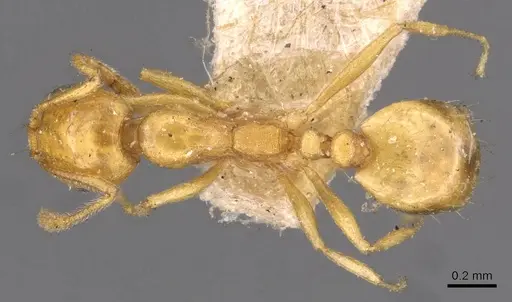
Literature
Loading distribution map...Loading products...