
Monomorium ocellatum
- Sci. Name
- Monomorium ocellatum
- Tribe
- Solenopsidini
- Subfamily
- Myrmicinae
- Author
- Arnold, 1920
- Distribution
- Found in 1 countries
Introduction
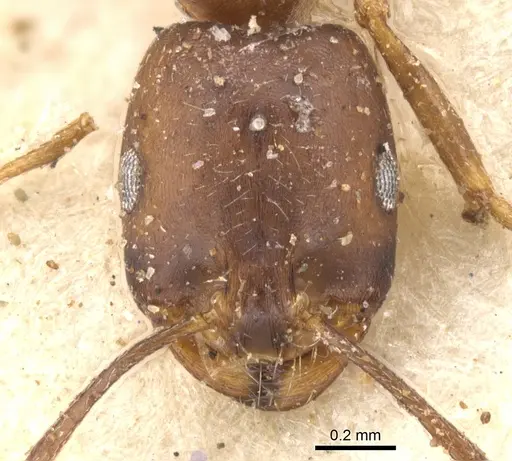
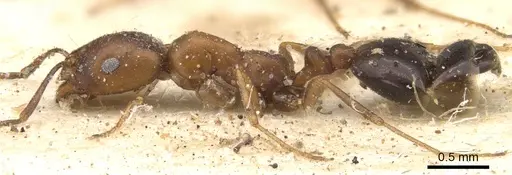
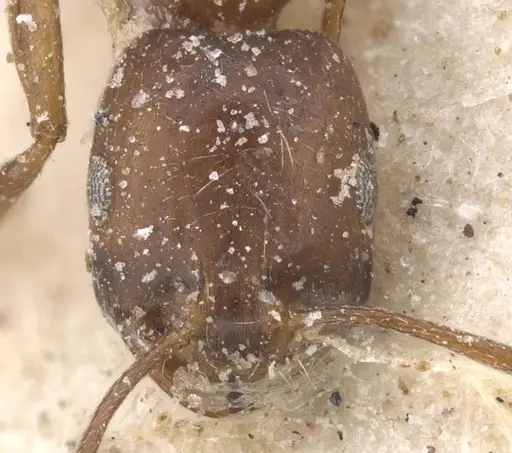
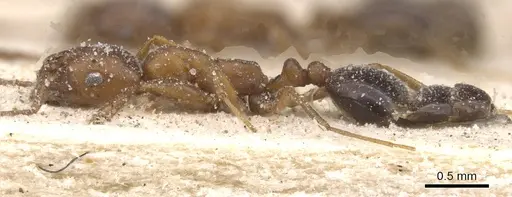
Monomorium ocellatum is a small ant native to the Cape Province of South Africa. Workers measure 3.1-3.7mm in total length with brown coloration and a distinctly darker gaster (abdomen). This species belongs to the Monomorium salomonis species group and is closely related to Monomorium subopacum, distinguished by denser pilosity and finer surface sculpture. A unique feature is the median ocellus (a small third eye) present in many workers, though this varies significantly - some workers have a well-developed ocellus while others have only a tiny vestige or none at all . This species is poorly studied in the wild with essentially no documented biological observations. The single ecological study found them more frequently in disturbed road verge areas than in natural rangeland in the semi-arid Karoo region, suggesting they may be adaptable to human-modified landscapes . They are classified as scavengers, meaning they forage for dead insects and organic matter rather than hunting live prey.
Quick Summary
- Difficulty: Unknown
- Origin & Habitat: South Africa (Cape Province), specifically recorded from the Willowmore area. They inhabit semi-arid Karoo regions, with evidence suggesting they prefer disturbed areas like road verges over natural rangeland [2][1].
- Colony Type: Unconfirmed. The colony structure of M. ocellatum has not been documented. Most Monomorium species are monogyne (single queen) but some can be polygyne. Without specific data, the colony type remains unknown.
- Size & Growth:
- Antkeeping:
- Temperature: Based on their South African origin and the semi-arid Karoo habitat, they likely tolerate warmer, drier conditions. Start around 22-26°C and observe colony activity.
- Humidity: Likely prefers drier conditions given the semi-arid Karoo origin. Keep nest substrate moderately dry to slightly moist, avoid saturated conditions.
- Diapause: Unknown, no data on overwintering requirements. South African ants from this latitude may not require strong hibernation, but a cool period (15-18°C) during winter months may be appropriate.
- Nesting: No specific nesting data exists. Based on their habitat in the Karoo and being in the salomonis group, they likely nest in soil or under stones in dry areas. A test tube setup or acrylic nest with moderate humidity would be a reasonable starting point.
- Behavior: The single ecological study classifies them as scavengers (guild S), meaning they forage for dead insects and organic debris rather than hunting live prey [2]. Their small size (3.1-3.7mm) means escape prevention should be taken seriously, use fine mesh barriers. Temperament is unknown but most small Monomorium are not aggressive. They may be more active in disturbed or edge habitats based on the road verge preference observed in the wild. This species has a sting, as is typical for the Solenopsidini tribe, though their small size makes any sting unlikely to penetrate human skin.
- Common Issues: lack of species-specific care data makes it difficult to provide precise recommendations, escape prevention is important given their small 3mm size, no documented founding behavior, uncertain whether queen is claustral or semi-claustral, unknown diapause requirements may lead to seasonal management challenges, no data on acceptable foods, feeding may require experimentation
Appearance and Identification
Monomorium ocellatum workers are small ants measuring 3.1-3.7mm in total length. They have a brown coloration with the gaster being distinctly darker than the alitrunk. The most distinctive feature is the median ocellus on the head of many workers, though this varies significantly between individuals, some workers have a well-developed ocellus while others show only a tiny vestige or none at all. They are covered in fine, dense hairs and have fine surface sculpture. The eyes are moderate in size. The occipital margin of the head shows a conspicuous indentation when viewed from the front. These identification features place them in the Monomorium salomonis species group, specifically the subopacum complex [1].
Natural Distribution and Habitat
This species is known only from the Cape Province of South Africa, with type specimens collected from the Willowmore area. The limited ecological data comes from a study in the semi-arid Karoo region, which found M. ocellatum trapped significantly more frequently and in larger numbers in road verge transects compared to natural rangeland transects [2]. This preference for disturbed areas suggests some adaptability to human-modified landscapes. The Karoo is a semi-arid to arid region with low rainfall, suggesting these ants are adapted to drier conditions than many other ant species. No specific microhabitat data exists in the scientific literature.
Feeding and Diet
The single ecological study classifies M. ocellatum as a scavenger (guild S), meaning they primarily consume dead insects and organic debris rather than hunting live prey [2]. This aligns with typical Monomorium behavior, which generally includes foraging for small insects, honeydew, and various organic matter. For captive care, offer small pieces of dead insects (fruit flies, small crickets, mealworms) along with sugar sources like honey water or sugar water. Given their small size, prey items should be appropriately sized. Since no specific feeding observations exist for this species, some experimentation may be needed to determine preferences.
Temperature and Seasonal Care
No specific temperature data exists for this species. However, their origin in the South African Karoo, a region with hot summers and mild winters, provides some guidance. Aim for temperatures in the low-to-mid 20s°C (22-26°C) as a starting point, with some variation allowed so the ants can select their preferred zone. A heating cable on one side of the nest can create a temperature gradient. The preference for road verge habitats over natural rangeland in the wild study suggests some tolerance for disturbed, warmer microclimates [2]. Regarding diapause or winter rest, no data exists. South African ants from this latitude may not require strong hibernation, but a cool period around 15-18°C during winter months may be appropriate if the colony shows reduced activity.
Nesting and Housing
No specific nesting data exists for M. ocellatum in the scientific literature. Based on their placement in the Monomorium salomonis group and the Karoo habitat, they likely nest in soil or under stones in relatively dry areas. For captive care, a standard test tube setup works well for founding colonies. The small worker size means chambers and passages should be appropriately scaled. An acrylic nest (like a Y-tong) or plaster nest with moderate humidity would be suitable for established colonies. Given the semi-arid origin, err on the side of drier rather than wetter conditions. Ensure escape prevention is adequate, small ants can squeeze through surprisingly small gaps.
Defense Mechanism
Monomorium ocellatum belongs to the subfamily Myrmicinae and tribe Solenopsidini. As is typical for this tribe, they possess a sting and inject venom composed mostly of piperidine alkaloids. This venom is used for hunting prey and defending the colony. However, their small size (3.1-3.7mm) means any sting is unlikely to penetrate human skin effectively.
Known Challenges and Limitations
This caresheet must be honest: M. ocellatum is one of the least studied ant species. Essentially no biological data exists, founding behavior, colony size, development time, exact temperature preferences, and social structure are all unknown. The care recommendations provided here are educated guesses based on genus-level patterns and the single ecological study. This species may not be ideal for beginners because of the lack of species-specific information. If you keep this species, your observations would be valuable to the antkeeping community. Consider documenting your colony's behavior, growth, and preferences carefully. [2]
Frequently Asked Questions
How long does it take for Monomorium ocellatum to produce first workers?
The egg-to-worker timeline is unconfirmed for this species, no scientific data exists. Your actual timeline may vary based on temperature and other conditions.
What do Monomorium ocellatum ants eat?
They are classified as scavengers in the wild, meaning they primarily consume dead insects and organic matter. In captivity, offer small dead insects (fruit flies, pinhead crickets, small mealworms) and sugar sources (honey water, sugar water). Their tiny size means prey should be appropriately small.
Are Monomorium ocellatum good for beginners?
This species is not ideal for beginners because almost no species-specific care data exists. The lack of documented biology means you will be relying on guesswork and genus-level assumptions. If you are experienced with Monomorium or want to contribute to knowledge of an understudied species, it can be rewarding.
What temperature should I keep Monomorium ocellatum at?
No specific temperature data exists. Based on their South African Karoo origin, start around 22-26°C. A temperature gradient allowing the ants to choose their preferred zone is ideal.
Do Monomorium ocellatum need hibernation?
Diapause requirements are unknown. South African ants from this latitude may not require strong hibernation, but a cool period (15-18°C) during winter months may be appropriate if your colony shows reduced activity.
How big do Monomorium ocellatum colonies get?
Colony size is unknown, no data exists on maximum colony size.
Can I keep multiple Monomorium ocellatum queens together?
Colony structure is unconfirmed. The number of queens (monogyne vs polygyne) has not been documented for this species. Without data, combining unrelated queens is not recommended.
What size nest should I use for Monomorium ocellatum?
Use a nest with small chambers scaled to their tiny 3-4mm worker size. Test tubes work well for founding colonies. For established colonies, acrylic nests with narrow passages or small-chambered setups are appropriate.
Why are my Monomorium ocellatum dying?
Without species-specific data, diagnosing problems is difficult. Common issues likely include: wrong humidity (they are from semi-arid conditions, too wet may be harmful), temperature stress, escape-related losses, or simply lack of established care protocols.
Report an Issue
The current care sheet is based fully on literature. See inconsistencies, or something that's incorrect? Please , it will be resolved after review from an admin. Contributing to the blogs tab also helps providing information, to make us be able to further improve the caresheets. Thank you for your support!
References

This caresheet is licensed under CC BY-SA 4.0 .
Community Blogs
CASENT0902198
View on AntWeb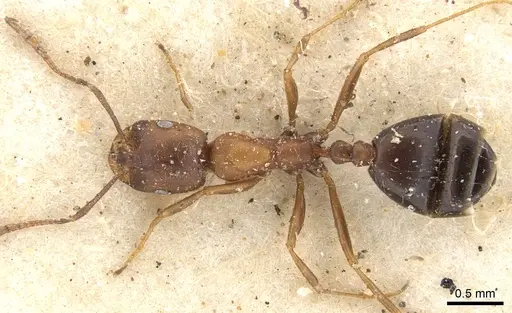
CASENT0913826
View on AntWeb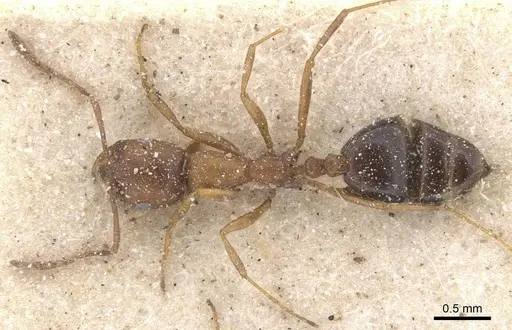
Literature
Loading distribution map...Loading products...