
Monomorium mohammedi
- Sci. Name
- Monomorium mohammedi
- Tribe
- Solenopsidini
- Subfamily
- Myrmicinae
- Author
- Sharaf & Hita Garcia, 2018
- Distribution
- Found in 1 countries
Introduction
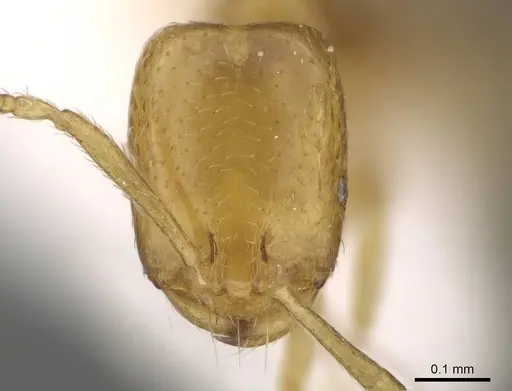
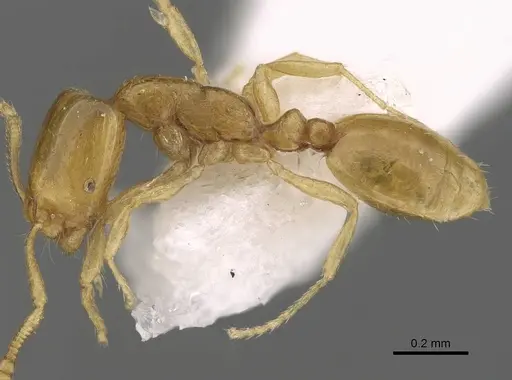
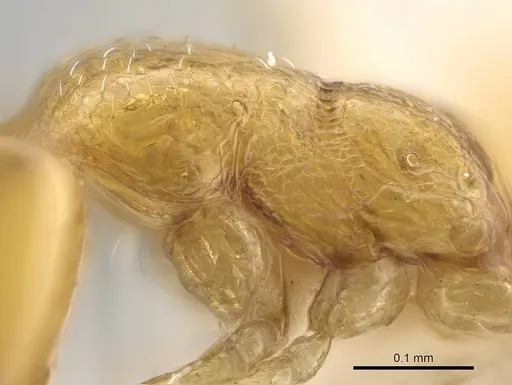
Monomorium mohammedi is a tiny yellow ant species, with workers measuring just 1.3–1.5 mm in total length, making it one of the smaller ants you can keep . It belongs to the Monomorium monomorium species-group and was described in 2018 from southwestern Saudi Arabia . Workers have very small eyes with only 5–6 ommatidia, a smooth and shiny body, and lack standing hairs on the mesosoma, petiole, and postpetiole . This species is endemic to Saudi Arabia, found only in the southwestern region around Jazan and Almajardah at elevations between 90 and 513 meters . In the wild, colonies nest in thin layers of clay soil above sandy soil, often under Mango or Hyphaene trees . The species was named after Mohammed Sharaf, the young son of the lead researcher who described it .
Quick Summary
- Difficulty: Medium
- Origin & Habitat: Endemic to southwestern Saudi Arabia, specifically the Jazan region and Wadi Khat area. Found in leaf litter under Hyphaene trees and nesting in clay soil above sandy soil under Mango trees at elevations of 90–513 meters [1][3].
- Colony Type: Colony structure is unconfirmed – this species was only described in 2018 and has not been extensively studied in the wild. Based on typical Monomorium patterns, likely single-queen colonies, but this needs confirmation.
- Size & Growth:
- Queen: Unknown – queen caste has not been described yet [1].
- Worker: 1.32–1.53 mm total length [1].
- Colony: Unknown – colony size has not been documented in scientific literature.
- Growth: Unknown – no development data exists for this species.
- Development: Unknown – no direct measurements exist. Based on typical Monomorium species and their small size, expect 4–8 weeks at warm temperatures, but this is an estimate. (Development timeline is unconfirmed. Related Monomorium species typically develop from egg to worker in 4–8 weeks at optimal temperatures.)
- Antkeeping:
- Temperature: Inferred warm conditions – this species comes from southwestern Saudi Arabia, a hot arid region. Start around 24–28 °C and observe colony activity. Provide a gentle temperature gradient so workers can self-regulate.
- Humidity: Low to moderate – from arid to semi-arid natural habitat. Keep nest substrate slightly moist but allow drying periods. Avoid overly damp conditions that could cause mold.
- Diapause: Unknown – no research on overwintering behavior. Saudi Arabia has mild winters, so this species may have minimal or no diapause requirement. Monitor colony activity and adjust accordingly.
- Nesting: Inferred from natural habitat – they nest in thin clay soil layers above sandy soil. A small test tube setup with compact cotton and minimal water reservoir works well. Given their tiny size, ensure chambers are appropriately scaled. A small plaster nest or Y-tong (AAC) nest with tight passages also works. Do not use acrylic nests – they don't provide adequate humidity control for soil-nesting species.
- Behavior: Behavior is not directly documented in scientific literature. Based on related species in the Monomorium genus, these ants are likely generalist foragers, collecting nectar, small insects, and honeydew. Their tiny size (1.3–1.5 mm workers) means escape prevention is critical – they can squeeze through remarkably small gaps. Use fine mesh barriers and ensure all openings are sealed. They are not known to be aggressive but may be timid due to their small size.
- Common Issues: escape prevention is critical due to their extremely small size – they can squeeze through gaps invisible to the naked eye., colonies may be slow to establish given their tiny size and likely small colony size., overheating risk is significant – despite being from a hot region, small colonies in test tubes can quickly dry out or overheat under direct heat., wild-caught colonies may be difficult to find due to their limited known distribution., mold growth from high humidity or uneaten food can quickly destroy a small colony., no established care guidelines exist since this is a newly described species – be prepared to experiment and adjust based on colony behavior.
Nest Preferences and Housing
Monomorium mohammedi is an extremely small ant species, with workers measuring just 1.3–1.5 mm. This tiny size requires special consideration when choosing housing. In the wild, they nest in thin layers of clay soil above sandy soil, often under trees like Mango and Hyphaene [1]. For captivity, a small test tube setup works well for founding colonies and small groups. The water reservoir should be small to prevent flooding, and the cotton should be packed firmly to prevent escape. Given their minute size, even standard test tube setups may need additional barrier measures. As the colony grows, you can transition to a small plaster nest or Y-tong (AAC) formicarium with appropriately scaled chambers and tunnels. The passages should be narrow to make the space feel secure for these tiny ants. Avoid large, open spaces that might cause them to feel exposed or stressed.
Feeding and Diet
The specific diet of Monomorium mohammedi has not been documented in scientific literature. However, based on typical behavior of related species in the Monomorium genus, they are likely generalist feeders that accept both sugar sources and protein. In the wild, they probably forage for nectar, honeydew from aphids, and small insects. For captivity, offer a sugar water solution (1:1 sugar to water) or honey water as a constant carbohydrate source. For protein, small live prey is ideal – fruit flies, pinhead crickets, or tiny insects are appropriate given their minute size. You may also try offering small pieces of mealworm or other protein sources. Feed small amounts initially and observe what the colony accepts. Remove any uneaten food after 24–48 hours to prevent mold. Given their tiny size, even very small food items are substantial to them.
Temperature and Environmental Control
This species comes from southwestern Saudi Arabia, a region with hot temperatures year-round. However, being small ants from leaf litter and shallow soil nests, they likely experience more moderate temperatures than the air temperature suggests. Start around 24–28 °C and observe your colony's behavior. If workers are consistently clustered near the cooler end of their setup, lower the temperature slightly. If they are spread out and active throughout, the temperature is likely appropriate. Provide a gentle temperature gradient by placing the nest at room temperature or using a very low-output heating cable on one side of the setup. Never place test tubes directly under heat lamps or heating mats without supervision – the small volume can quickly overheat and kill the colony. Room temperature in most homes (20–24 °C) may be suitable, but monitor colony activity for signs of sluggishness or excessive clustering. [1]
Humidity and Water Requirements
Based on the natural habitat in southwestern Saudi Arabia, this species likely prefers relatively dry conditions. The region is arid to semi-arid, and the ants nest in soil that drains well (clay over sandy soil). Keep the nest substrate slightly moist but allow it to dry out partially between waterings. For test tube setups, a small water reservoir is sufficient – you want some moisture available but not saturation. Monitor for condensation: a little is fine, but excessive condensation can indicate too much moisture. Mold is the main enemy – if you see mold developing, reduce watering and improve ventilation. The ants should have access to drinking water from the test tube reservoir, which they will use as needed. Given their tiny size, they obtain water primarily from droplet consumption and food moisture. [1]
Handling and Observation
Due to their extremely small size (1.3–1.5 mm workers), Monomorium mohammedi requires careful handling and excellent escape prevention. These ants can squeeze through gaps that seem impossibly small. When working with them, use a white paper or plastic sheet as a work surface so you can easily spot any escapees. Keep all tubes and containers sealed when not actively working with the colony. When observing, use good lighting and magnification if possible – these tiny ants are fascinating to watch, but their movements can be quick despite their size. They are not aggressive and unlikely to sting given their size. The workers will likely be shy and may retreat when disturbed. Be patient with observation – part of the appeal of keeping these tiny ants is watching their careful, deliberate movements and interactions. [1]
Colony Establishment and Growth Expectations
Monomorium mohammedi was only described in 2018,making it one of the newest ant species in the hobby. There is no established track record for keeping this species in captivity, so expect some experimentation. Colony establishment may be slow given the tiny size of the workers and likely small colony sizes. Do not expect rapid growth – these are very small ants, and their colonies probably never reach the massive sizes seen in species like Camponotus or Formica. Be patient with founding colonies. The queen (which has not yet been described in scientific literature) will need time to lay eggs and raise the first workers (nanitics). Once the first workers emerge, growth should continue but at a modest pace. Keep detailed notes on your colony's behavior and preferences – your observations could be valuable to the antkeeping community for establishing care guidelines for this rare species. [1]
Seasonal Care and Activity Patterns
The seasonal behavior of Monomorium mohammedi in captivity is unknown. In their native Saudi Arabia, temperatures remain warm year-round with only mild seasonal variation. This suggests the species may not require a true diapause or hibernation period. However, you may notice reduced activity during winter months if your room temperature drops. Monitor your colony's behavior – if they become less active but remain alive, this is normal seasonal adjustment. If they become very sluggish or cluster tightly, consider whether the temperature has dropped too low. There is no established winter care protocol for this species, so use your judgment based on colony behavior. Some antkeepers in temperate climates find that reducing temperatures slightly in winter (by 3–5 °C) helps simulate natural cycles, but this may not be necessary for a species from a consistently warm region.
Frequently Asked Questions
How long does it take for Monomorium mohammedi to produce first workers?
The egg-to-worker timeline is unconfirmed for this species. Based on typical Monomorium species and their very small size, expect approximately 4–8 weeks from egg to first worker at optimal warm temperatures (around 24–28 °C). However, this is an estimate since no specific development data exists for M. mohammedi.
What do Monomorium mohammedi ants eat?
Specific diet documentation does not exist for this species. Based on related Monomorium species, they likely accept sugar water or honey as a carbohydrate source and small protein prey like fruit flies or tiny insects. Offer a sugar source constantly and protein 2–3 times per week. Remove uneaten food after 24 hours.
Are Monomorium mohammedi ants suitable for beginners?
This species is not ideal for beginners. It was only described in 2018 and has no established care guidelines in the antkeeping hobby. Additionally, their extremely tiny size (1.3–1.5 mm) makes them challenging to house and observe. If you are experienced with other small Myrmicinae species and enjoy experimenting, this could be a rewarding species to keep.
What temperature do Monomorium mohammedi ants need?
Temperature requirements are not directly studied. Based on their origin in southwestern Saudi Arabia, aim for warm conditions around 24–28 °C. Provide a temperature gradient so the colony can self-regulate. Room temperature (20–24 °C) may be acceptable if the colony remains active.
How big do Monomorium mohammedi colonies get?
Colony size is unconfirmed. Given the extremely small worker size (1.3–1.5 mm), colonies likely remain relatively small – probably under a few hundred workers at most. This is typical for tiny ant species.
Can I keep multiple queens together?
Colony structure (monogyne vs polygyne) is unconfirmed for this species. No research documents whether multiple queens can be kept together successfully. Do not attempt combining unrelated foundress queens until more is known about their natural colony structure.
What is the best nest type for Monomorium mohammedi?
Based on their natural nesting in thin clay soil layers, a small test tube setup works well for founding colonies. For established colonies, a small plaster nest or Y-tong (AAC) formicarium with narrow passages scaled to their tiny size is appropriate. Ensure all passages and gaps are tight to prevent escape. Avoid acrylic nests.
Do Monomorium mohammedi ants need hibernation?
Diapause requirements are unknown. Saudi Arabia has mild winters, so this species may not need a true hibernation. If kept at room temperature year-round, they may remain active with reduced foraging. Some reduction in winter activity is normal.
Why are my Monomorium mohammedi ants dying?
Common causes include: escape (they are extremely small and may slip through tiny gaps), overheating from direct heat sources, excessive moisture causing mold, or starvation if food is not offered frequently enough. Review your setup for potential escape routes and ensure temperature and humidity are appropriate. Also ensure you are not overfeeding, as mold from decaying food is a common killer.
Where is Monomorium mohammedi native to?
This species is endemic to southwestern Saudi Arabia, specifically the Jazan region and Wadi Khat area. It is only known from a few collection sites at elevations between 90 and 513 meters. It was formally described in 2018.
How do I prevent Monomorium mohammedi from escaping?
Escape prevention is critical due to their extremely small size (1.3–1.5 mm). Use fine mesh barriers (standard ant mesh may not be fine enough), ensure all container lids fit tightly with no gaps, and work on a white surface to spot any escapees. Even seemingly sealed containers may need additional barrier measures like fluon applied to the rim.
Report an Issue
The current care sheet is based fully on literature. See inconsistencies, or something that's incorrect? Please , it will be resolved after review from an admin. Contributing to the blogs tab also helps providing information, to make us be able to further improve the caresheets. Thank you for your support!
References

This caresheet is licensed under CC BY-SA 4.0 .
Community Blogs
CASENT0922351
View on AntWeb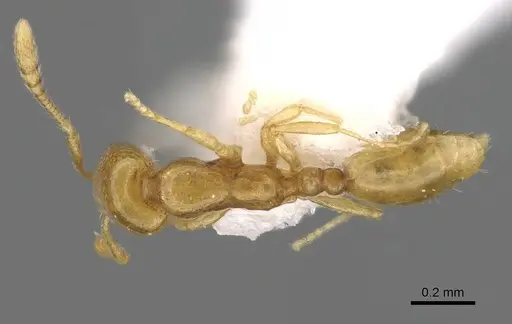
Literature
Loading distribution map...Loading products...