
Monomorium medinae
- Sci. Name
- Monomorium medinae
- Tribe
- Solenopsidini
- Subfamily
- Myrmicinae
- Author
- Forel, 1892
- Distribution
- Found in 1 countries
Introduction
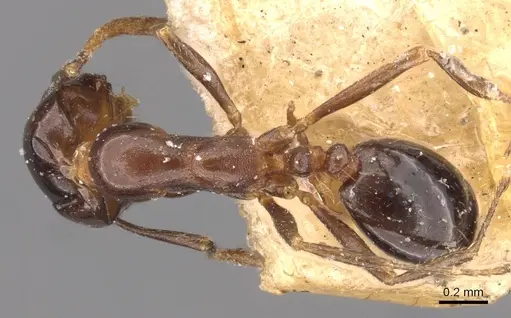
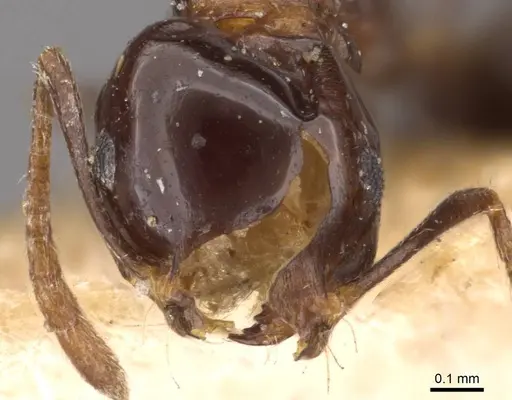
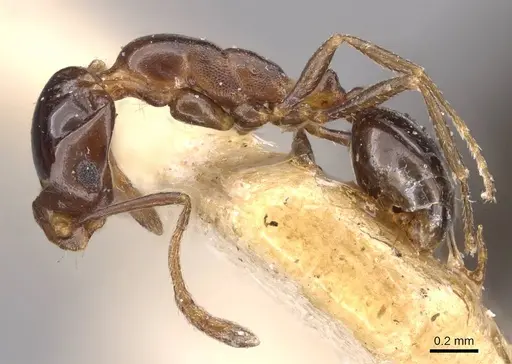
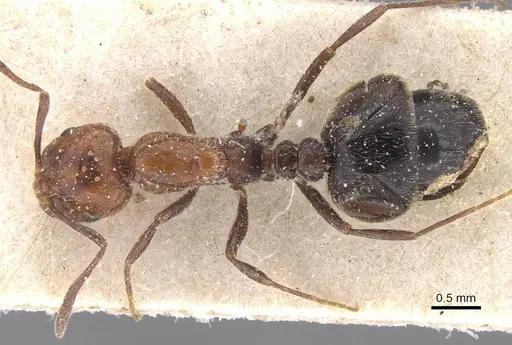
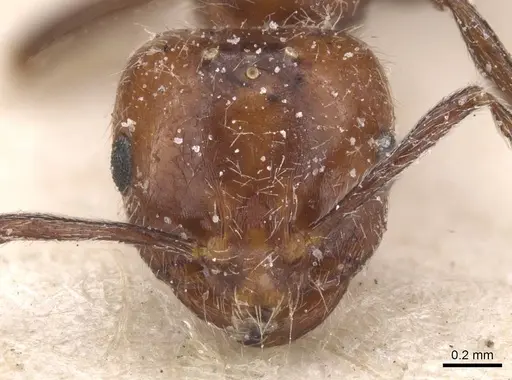
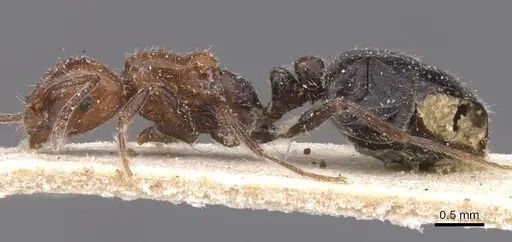
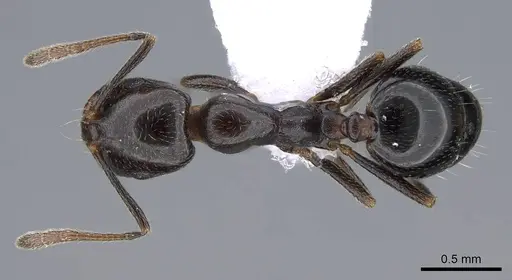
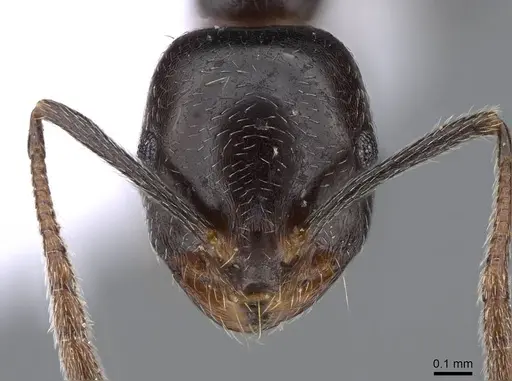
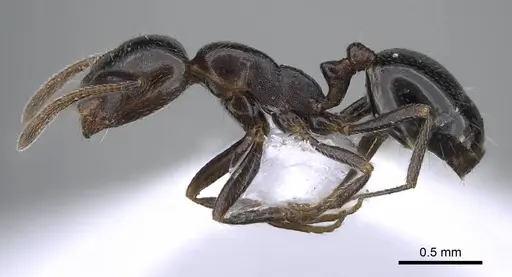
Monomorium medinae is a tiny dark ant endemic to the Canary Islands, specifically found on Tenerife . Workers are small, measuring around 2-3 mm, with a dark brown to black coloration typical of the genus. This species is notable for producing ergatoid queens – wingless queens that develop from worker larvae and remain in the nest rather than flying off to found new colonies . Originally, the queen was described as a separate species (Xenhyboma mystes) because of its unusual wingless form, but it was later confirmed to be the same ant . The ergatoid queen system allows colonies to produce replacement reproductives without swarming, a useful adaptation to island life.
Quick Summary
- Difficulty: Medium
- Origin & Habitat: Endemic to the Canary Islands, specifically Tenerife. Found in the Canary Islands archipelago off the coast of Spain, inhabiting drier coastal and mid-elevation volcanic terrain [1][2].
- Colony Type: Polygynous colonies with ergatoid (wingless) queens. Multiple egg-laying queens can coexist in the same nest, and new queens develop from worker larvae instead of flying away to start colonies independently [3][4].
- Size & Growth:
- Queen: ~3-4 mm (ergatoid queens, inferred from Monomorium genus) – no direct measurements available
- Worker: ~2-3 mm (inferred from Monomorium genus) – no direct measurements available
- Colony: Up to several hundred workers (inferred from related Monomorium species)
- Growth: Moderate – based on typical Monomorium development patterns
- Development: 6-8 weeks at 25°C (estimated from related Monomorium species) (Development times for ergatoid queens are not separately documented, but the egg-to-worker timeline is expected to be similar to that of other small Monomorium.)
- Antkeeping:
- Temperature: Keep at 24-28°C. The Canary Islands have a warm subtropical climate, so these ants prefer warmer conditions. A heating cable on one side of the nest creates a suitable gradient (inferred from habitat).
- Humidity: Moderate humidity – aim for a nest substrate that stays slightly moist but never waterlogged. These ants come from a relatively dry island environment, so avoid overly damp conditions (inferred from Canary Islands climate).
- Diapause: Unknown – a true diapause may not be required because Canary Islands winters are mild. A brief cool period (15-18°C for 2-3 months) might benefit colony health, but this is optional and unstudied.
- Nesting: In nature they likely nest in soil under stones or in small cavities in volcanic rock. In captivity, a small test tube setup or a Y-tong (AAC) nest with narrow chambers works well. Keep chambers appropriately scaled to their tiny size (about 2-3 mm).
- Behavior: These are small, docile ants that rarely sting. Their tiny size means they can slip through very small gaps – use fine mesh (0.5 mm or smaller) on all ventilation holes and apply fluon to container rims to prevent escapes. Workers likely forage for small insects and tend aphids for honeydew, similar to other Monomorium species (inferred from genus).
- Common Issues: tiny size – escapes are likely without fine mesh and tight seals, ergatoid queen system is unusual, new keepers may not recognise wingless queens as reproductives, wild-caught colonies may carry parasites specific to their island origin, overheating is a risk if the heating cable is too strong, given their warm habitat preferences, colonies may be slow to establish if the founding behaviour is not well understood
Housing and Nest Setup
Because Monomorium medinae is so tiny, your setup must account for their small size. A standard test tube with a water reservoir works well for founding. For established colonies, use a Y-tong (AAC) nest with narrow chambers or a small plaster nest. Avoid overly spacious chambers. Escape prevention is critical: even though they are not strong climbers, their 2-3 mm bodies can squeeze through gaps that seem impossibly small. Use fine mesh (0.5 mm or smaller) on ventilation holes and fluon on container rims. A thin layer of fluon on the rims of the outworld is also recommended [5].
Feeding and Diet
Like other Monomorium, these ants are omnivorous with a preference for protein. Offer small live prey such as fruit flies, pinhead crickets, or tiny mealworms. They will also take sugar sources – a small drop of honey water or sugar water is fine. In nature they likely forage for small insects and tend aphids for honeydew. Feed protein 2-3 times per week for active colonies, and keep a constant sugar source available. Remove uneaten prey after 24-48 hours to prevent mold. Scale prey items to their tiny size – nothing larger than their head.
Temperature and Seasonal Care
Monomorium medinae comes from the warm Canary Islands, so they prefer temperatures in the 24-28°C range. A heating cable on one side of the nest creates a gradient that lets the ants choose their preferred temperature. Avoid prolonged temperatures below 20°C. Because the Canary Islands have mild winters, a true hibernation period is likely not required. However, a brief cooling to 15-18°C for 2-3 months during winter may help maintain natural colony cycles – this is optional and not documented for this species. If workers become sluggish and cluster together, the temperature may be too low.
Understanding Ergatoid Queens
This species has an unusual reproductive system: instead of producing winged queens that fly away to start new colonies, Monomorium medinae produces ergatoid queens – wingless queens that develop from worker larvae and stay in the nest. These ergatoid queens are smaller than typical winged queens (around 3-4 mm) and may be hard to spot among large workers. The ergatoid system allows colonies to produce new reproductives without swarming, an advantage on isolated islands like Tenerife [3]. If your colony produces ergatoid queens, it is normal and indicates a healthy, mature colony. These replacement queens can take over egg-laying if the primary queen dies, making the colony more resilient. According to research, species with ergatoid queens are generally polygynous [4].
Colony Growth and Development
Colonies start small and grow gradually. A founding colony with an ergatoid queen may produce its first nanitic workers after 6-8 weeks at optimal temperature. Growth is moderate – expect several months to reach 30-50 workers, and a year or more to reach several hundred. Because the colony can have multiple egg-laying queens, growth can accelerate once established. Be patient with new colonies – avoid disturbing them too often. Once workers number in the dozens, you can increase feeding frequency. Based on related species, colony size likely caps at several hundred workers.
Frequently Asked Questions
Is Monomorium medinae a good beginner ant?
This species is suitable for beginners who are comfortable with small ants and can ensure strict escape prevention. The ergatoid queen system is unusual but not complicated. If you have experience keeping similar small ants, it can be a rewarding species.
How long does it take for Monomorium medinae to produce first workers?
Expect first workers (nanitics) about 6-8 weeks after the queen lays her first eggs, assuming temperatures around 25°C. This estimate is based on related Monomorium species.
Do Monomorium medinae queens have wings?
No, this species produces ergatoid queens – wingless queens that develop from worker larvae and remain in the nest. This is unusual compared to most ants and is an adaptation to their island habitat. Ergatoid queens are smaller than typical winged queens [3].
Can I keep multiple Monomorium medinae queens together?
Yes, this species is polygynous – colonies naturally have multiple egg-laying queens. Unlike many ants where multiple queens fight, Monomorium medinae can coexist with several ergatoid queens. However, introducing unrelated queens to an established colony may still cause aggression [4].
What temperature do Monomorium medinae need?
Keep them at 24-28°C. A heating cable on one side of the nest creates a gradient. They come from the warm Canary Islands and are not cold-tolerant. Avoid prolonged temperatures below 20°C.
How big do Monomorium medinae colonies get?
Colony size is not well documented, but based on related Monomorium species, they likely reach several hundred workers. The polygynous system can support moderate colony growth.
What do Monomorium medinae eat?
They are omnivorous with a preference for protein. Feed small live prey like fruit flies, tiny crickets, or mealworms. They will also accept sugar sources like honey water. Offer protein 2-3 times per week and keep sugar water available.
Why is my Monomorium medinae colony dying?
Common causes include: temperature too low (below 20°C), improper humidity (too wet or too dry), escape of the queen or workers through small gaps, or parasites from wild-caught colonies. Review your setup and ensure escape prevention is adequate.
Do Monomorium medinae need hibernation?
A true diapause is likely not required because of the mild Canary Islands climate. However, a brief cool period at 15-18°C for 2-3 months during winter might benefit colony health – this is optional and not documented for this species.
When should I move my colony to a formicarium?
Move the colony to a formicarium once it reaches 30-50 workers and the test tube becomes crowded. Use a Y-tong (AAC) nest with narrow chambers. Make sure the formicarium has proper humidity control and fine-mesh escape prevention.
Where is Monomorium medinae native to?
This species is endemic to the Canary Islands, specifically Tenerife. It is found nowhere else in the world naturally. The type locality is Laguna on Tenerife [1][2].
Report an Issue
The current care sheet is based fully on literature. See inconsistencies, or something that's incorrect? Please , it will be resolved after review from an admin. Contributing to the blogs tab also helps providing information, to make us be able to further improve the caresheets. Thank you for your support!
References

This caresheet is licensed under CC BY-SA 4.0 .
Community Blogs
Literature
Loading distribution map...Loading products...