
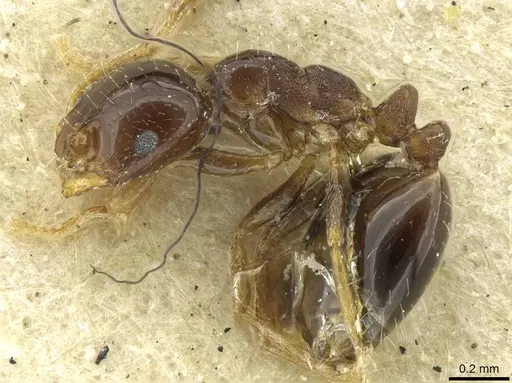
Monomorium malatu
- Sci. Name
- Monomorium malatu
- Tribe
- Solenopsidini
- Subfamily
- Myrmicinae
- Author
- Bolton, 1987
- Distribution
- Found in 4 countries
Introduction
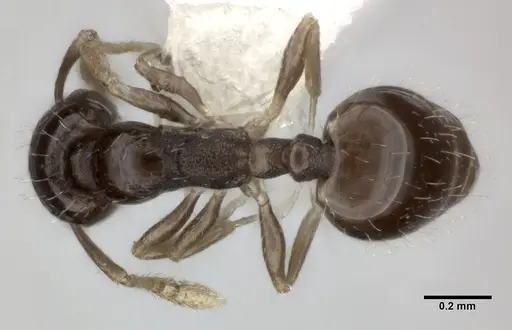
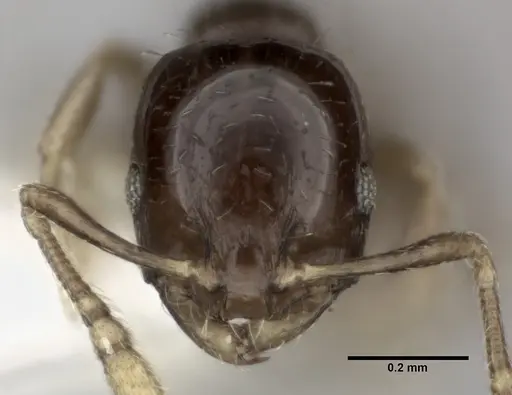
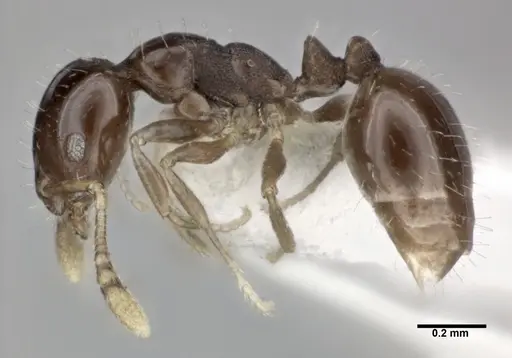
Monomorium malatu is an ant species native to Central Africa, documented in the Democratic Republic of Congo and Rwanda . Size data for this species is not available, but workers are typically small based on genus patterns. It was recorded in Akagera National Park in eastern Rwanda, a savanna and grassland ecosystem, suggesting it prefers open habitats . This species represents the first record in Rwanda, indicating its adaptation to warm, open environments.
Quick Summary
- Difficulty: Medium
- Origin & Habitat: Central Africa, Democratic Republic of Congo (BC Province) and eastern Rwanda (Akagera National Park). Found in savanna and grassland ecosystems [1][2].
- Colony Type: Unconfirmed, colony structure has not been documented for this species.
- Size & Growth:
- Queen: Approximately 5-7mm, inferred from Monomorium genus patterns
- Worker: Approximately 2-3mm, inferred from Monomorium genus patterns
- Colony: Up to several hundred workers, based on genus patterns
- Growth: Moderate, inferred from related species
- Development: Estimated 6-8 weeks, inferred from genus patterns (Development time is estimated based on typical Monomorium genus patterns.)
- Antkeeping:
- Temperature: Keep warm, roughly 24-28°C, based on tropical habitat, inferred
- Humidity: Keep substrate moderately moist with drier areas, inferred from genus patterns
- Diapause: Unknown, tropical species may not require diapause
- Nesting: In captivity, use test tube setup for founding, then Y-tong or plaster nests, inferred
- Behavior: This species is likely docile but escape-prone due to tiny size. Based on its subfamily Myrmicinae, it likely has a sting defense mechanism, but it is not dangerous to humans. Escape prevention is crucial due to small size.
- Common Issues: escape risk due to tiny size without proper barriers., limited natural history data requiring adaptation of care., warmth requirements may be challenging in cool rooms., slow colony growth tests keeper patience., wild-caught colonies may carry parasites.
Natural History and Distribution
Monomorium malatu is documented in two Central African locations: the BC Province in the Democratic Republic of Congo and Akagera National Park in eastern Rwanda [1][2]. The Akagera National Park collection represents the first record of this species in Rwanda [2]. The park features savanna and grassland ecosystems, suggesting this species prefers open, warm habitats rather than dense forest. The DRC location in BC Province also supports a tropical climate with distinct wet and dry seasons.
Housing and Nesting
For keeping Monomorium malatu in captivity, start with a standard test tube setup for the founding queen. Once the colony reaches a small size, transition to a small formicarium. Given their tiny size, chambers should be appropriately scaled to avoid large open spaces. A Y-tong or plaster nest works well. Ensure excellent escape prevention with fine mesh on ventilation holes.
Feeding and Diet
Based on typical Monomorium behavior, this species is likely omnivorous. Offer sugar water or honey as a constant carbohydrate source. For protein, provide small insects like fruit flies or pinhead crickets 2-3 times per week, adjusting based on colony consumption. Remove uneaten food promptly to prevent mold.
Temperature and Seasonal Care
As a tropical species, Monomorium malatu requires warm temperatures to thrive. Keep the nest area at roughly 24-28°C. Use a heating cable if needed to maintain warmth, especially in cooler rooms. Diapause is not required, but activity may reduce during cooler periods. Avoid sudden temperature swings for stable conditions.
Frequently Asked Questions
How long does it take for Monomorium malatu to produce first workers?
The exact timeline is not documented, but based on related Monomorium species, expect first workers around 6-8 weeks after the queen lays eggs, assuming optimal temperatures [3].
What temperature do Monomorium malatu ants need?
Keep them warm at roughly 24-28°C, based on their tropical habitat [3].
Can I keep multiple queens together?
The colony structure is unconfirmed. Without specific data, it is not recommended to combine unrelated foundress queens, as they may fight [3].
How big do Monomorium malatu colonies get?
Colony size data is unavailable, but based on genus patterns, colonies can reach up to several hundred workers [3].
What do I feed Monomorium malatu?
They are likely omnivorous. Offer sugar water or honey constantly, and protein like small insects 2-3 times per week [3].
Is Monomorium malatu a good species for beginners?
This species is rated as Medium difficulty. Limited natural history data means you may need to adapt care based on colony behavior [3].
Do Monomorium malatu need hibernation?
As a tropical species, they likely do not require true hibernation, but activity may reduce in cooler periods [3].
Why are my Monomorium malatu dying?
Common causes include temperature too cold, humidity issues, escape losses due to tiny size, or mold from uneaten food. Review these factors and adjust gradually [3].
When should I move from test tube to formicarium?
Move to a small formicarium once the colony has a small number of workers and the test tube is crowded. Ensure the new nest has appropriately sized chambers [3].
Report an Issue
The current care sheet is based fully on literature. See inconsistencies, or something that's incorrect? Please , it will be resolved after review from an admin. Contributing to the blogs tab also helps providing information, to make us be able to further improve the caresheets. Thank you for your support!
References

This caresheet is licensed under CC BY-SA 4.0 .
Community Blogs
Literature
Loading distribution map...Loading products...