
Monomorium macrops
- Sci. Name
- Monomorium macrops
- Tribe
- Solenopsidini
- Subfamily
- Myrmicinae
- Author
- Arnold, 1944
- Distribution
- Found in 1 countries
Introduction
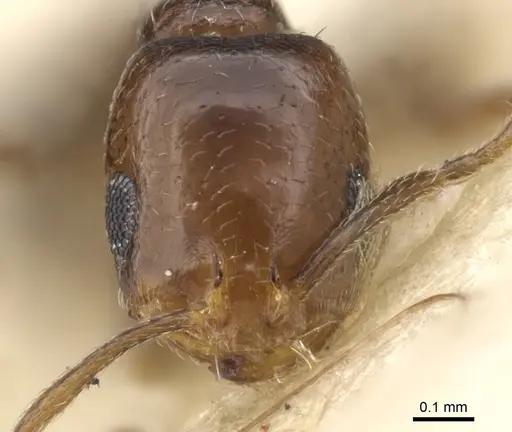
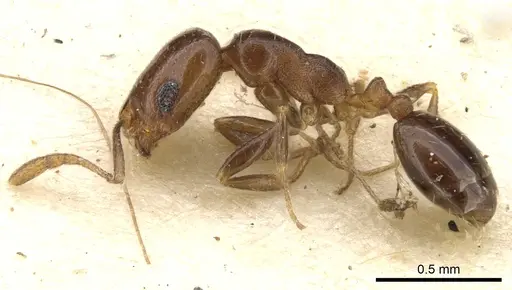
Monomorium macrops is a tiny ant species native to South Africa's Cape Province, measuring 2.0-2.1mm in total length. Workers have relatively large eyes (0.31-0.33 times head width) with 8-9 ommatidia in the longest row, and a light to medium brown coloration with the gaster slightly darker than the head and alitrunk. The species belongs to the Monomorium setuliferum species group and was originally described as a subspecies of M. mediocre before being elevated to species status. Found only in South Africa's Cape Province region, particularly the Victoria West area, this ant remains poorly studied with almost no documented biology.
Quick Summary
- Difficulty: Unknown
- Origin & Habitat: Native to South Africa's Cape Province, specifically recorded from the Victoria West region in the northern Cape Floristic Region. This semi-arid to Karoo environment features hot summers, mild winters, and low annual rainfall. The species has been recorded in both natural habitats and modified landscapes including road verges and vineyard areas [1][2].
- Colony Type: Colony structure is unconfirmed. No published data exists on queen number or colony organization for this species.
- Size & Growth:
- Queen: Unknown, no queen caste has been described in available literature
- Worker: 2.0-2.1mm total length
- Colony: Unknown, no colony size data available
- Growth: Unknown
- Development: Unknown (No development data exists for this species.)
- Antkeeping:
- Temperature: Unconfirmed, no specific thermal studies exist. Based on its South African distribution in the Cape region, it likely tolerates a range from roughly 18-28°C. Start in this range and observe colony activity.
- Humidity: Unconfirmed. The Cape region experiences semi-arid conditions with low humidity. Likely prefers drier conditions, aim for moderate humidity around 40-60%, with a dry area in the nest for workers to retreat to if needed.
- Diapause: Unknown, no published data on overwintering requirements. South African ants from temperate regions may experience reduced activity in winter months but likely do not require true hibernation. Monitor colony behavior during cooler months.
- Nesting: Natural nesting habits are unconfirmed. Related species in the salomonis-group often nest in soil or under stones in arid environments. A test tube setup or small nest with moderate moisture would be a reasonable starting point. The small worker size (2mm) means escape prevention must be excellent, use fine mesh barriers.
- Behavior: Temperament and behavior are unconfirmed. As a granivore species, it likely forages individually or in small groups rather than forming large raiding columns. The large eyes suggest it may rely more on visual cues than many ant species. No data exists on sting potency, but given its tiny size, any sting would be negligible to humans. Escape risk is significant due to its small size, always use tight-fitting lids and fine mesh.
- Common Issues: no documented captive care means all recommendations are estimates based on related species, tiny 2mm size makes escape prevention critical, they can squeeze through standard mesh, no data on accepted foods, start with sugar water and small protein sources like fruit flies, unknown founding behavior means introducing a queen to captivity is speculative, no information on colony founding success rates in captivity
Why Keep Monomorium macrops?
Monomorium macrops represents an unusual opportunity for advanced antkeepers interested in a poorly understood species. While most common ant species in the hobby have extensive care documentation, this South African native offers the chance to contribute to our understanding of an essentially unstudied ant. The species has a fascinating taxonomic history, originally described as a subspecies of M. mediocre, it was elevated to full species status due to its distinctive characteristics. Its large eyes and relatively long, narrow head set it apart from other members of the setuliferum group, and researchers have noted it appears to have evolved some features independently. For the dedicated antkeeper, establishing a thriving captive colony of this species could provide valuable observations that add to our limited knowledge of its biology.
Housing and Setup
Given the complete lack of captive care data for this species, you'll need to make educated guesses based on related Monomorium species and its natural habitat. The species is known from South Africa's semi-arid Karoo and Cape regions, suggesting it prefers drier conditions than many tropical ants. A small test tube setup works well for founding colonies, use a standard test tube with a water reservoir at one end, stopped with cotton. For a small colony, a small nest with chambers scaled to its tiny 2mm workers would be appropriate. The most critical aspect is escape prevention: at only 2mm, these ants can easily slip through standard mesh. Use fine mesh (at least 0.5mm gap or smaller) on all ventilation holes and ensure lid seals are tight. A thin barrier of fluon around the rim of the outworld can help prevent escapes.
Feeding and Diet
The limited research on this species indicates it is a granivore, meaning it eats seeds [1]. This is unusual among ants and suggests it may have specialized dietary requirements. In captivity, you could offer small seeds appropriate to its size (millet, grass seeds, or crushed bird seed), but also provide sugar water or honey as an energy source since many ants supplement their diet. Protein in the form of small live prey like fruit flies, pinhead crickets, or bloodworms would likely be accepted. Start with very small portions and observe what the workers actually take. Given that nothing is known about its specific dietary needs, be prepared to experiment with different food types and monitor what generates the most interest from your colony.
Field Research Context
Interestingly, M. macrops has been documented in ecological studies examining ant communities in invaded landscapes. Research in South Africa found this species in both invaded sites (where the invasive Argentine ant Linepithema humile was present) and non-invaded sites [3][4]. This suggests the species has some resilience to competitive pressure from invasive ants, though it was more abundant in non-invaded areas. This data comes from ant community surveys using pitfall traps, which gives us some idea of its relative abundance but tells us nothing about its nesting biology, colony size, or behavior in the wild. The fact that it's been recorded in vineyard areas [2] suggests it can tolerate some human-modified habitat, which may be useful information for approximating its adaptability to captive conditions.
What We Still Don't Know
Honesty requires admitting that almost nothing is scientifically documented about Monomorium macrops. We don't know how colonies are founded, whether queens are claustral (seal themselves in and live off stored fat) or semi-claustral (must leave to forage), what the queen looks like, how many workers a mature colony reaches, when nuptial flights occur, or how they behave defensively. This represents both a challenge and an opportunity for antkeepers. If you successfully maintain and propagate this species, your observations could genuinely contribute to scientific knowledge. Document your setup, feeding patterns, growth rates, and any interesting behaviors. Share your findings with the antkeeping community so others can learn from your experience with this enigmatic South African species.
Frequently Asked Questions
Can I keep Monomorium macrops in a test tube?
Yes, a test tube setup would be the most appropriate starting point for a founding colony. Use a standard test tube with a water reservoir, stopped with cotton, and ensure the opening has excellent escape prevention, these tiny ants can slip through surprisingly small gaps.
What do Monomorium macrops eat?
They are documented as granivores (seed-eaters) in the wild, but likely also accept protein and sugar sources. Offer small seeds, sugar water or honey, and small protein sources like fruit flies. Monitor what workers actually take and adjust accordingly.
How long does it take for Monomorium macrops to develop from egg to worker?
This is completely unknown, no development data exists for this species.
Are Monomorium macrops good for beginners?
No. This species has no documented captive care history, and almost nothing is known about its biology. It would be considered an advanced or experimental species suitable only for experienced antkeepers who want to contribute to understanding an essentially unstudied ant.
What temperature should I keep Monomorium macrops at?
No specific data exists. Based on its South African distribution, it likely tolerates 18-28°C. Starting around room temperature (20-24°C) would be reasonable. Observe your colony's activity levels and adjust accordingly.
How big do Monomorium macrops colonies get?
Unknown, no colony size data has been published.
Where is Monomorium macrops found in the wild?
Only known from South Africa's Cape Province, specifically the Victoria West region in the northern Cape Floristic Region. This is a semi-arid to Karoo environment.
Do Monomorium macrops need hibernation?
Unknown. South Africa's temperate climate may not require true hibernation, but the colony may show reduced activity during cooler winter months. Monitor behavior rather than forcing a specific diapause schedule.
Can I keep multiple Monomorium macrops queens together?
Unknown, no data exists on colony founding or queen behavior for this species. Without documented evidence, combining unrelated queens is not recommended.
Why are my Monomorium macrops escaping?
At only 2mm, these are extremely small ants that can squeeze through tiny gaps. Use fine mesh (0.5mm or smaller), ensure all lid seals are tight, and consider applying fluon barriers around the outworld rim. Escape prevention must be excellent.
Is Monomorium macrops invasive anywhere?
Not documented as invasive. The species is native to South Africa and has only been recorded there. It has been found in both invaded and non-invaded sites in ecological studies, suggesting some resilience to competitive pressure.
Report an Issue
The current care sheet is based fully on literature. See inconsistencies, or something that's incorrect? Please , it will be resolved after review from an admin. Contributing to the blogs tab also helps providing information, to make us be able to further improve the caresheets. Thank you for your support!
References

This caresheet is licensed under CC BY-SA 4.0 .
Community Blogs
CASENT0902186
View on AntWeb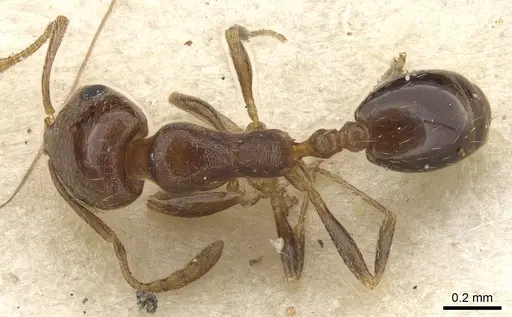
Literature
Loading distribution map...Loading products...