
Monomorium luteum
- Sci. Name
- Monomorium luteum
- Tribe
- Solenopsidini
- Subfamily
- Myrmicinae
- Author
- Emery, 1881
- Distribution
- Found in 3 countries
Introduction
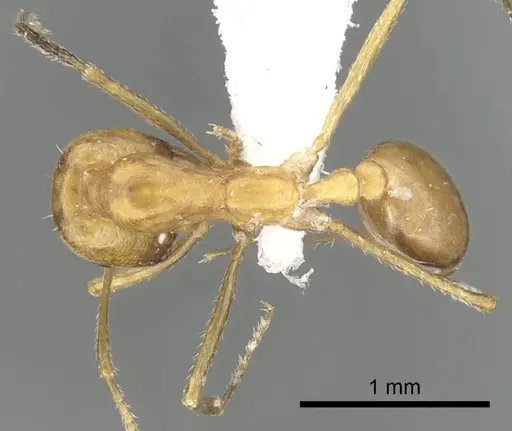
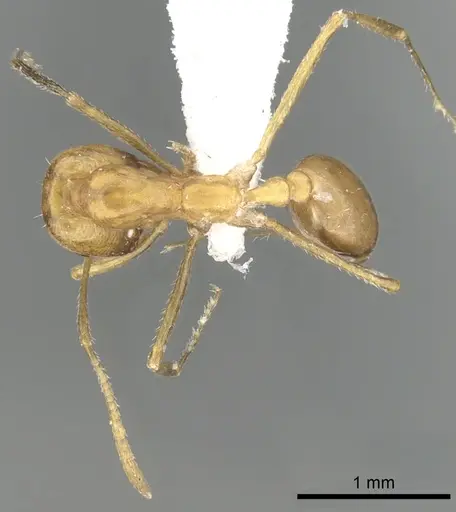
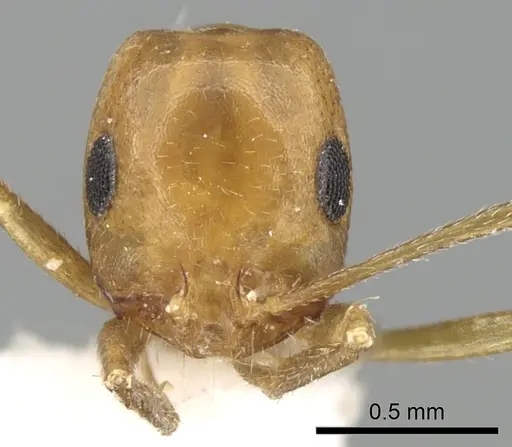
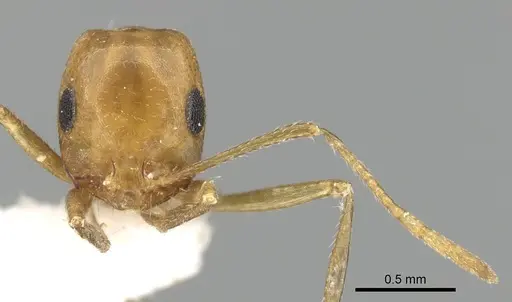
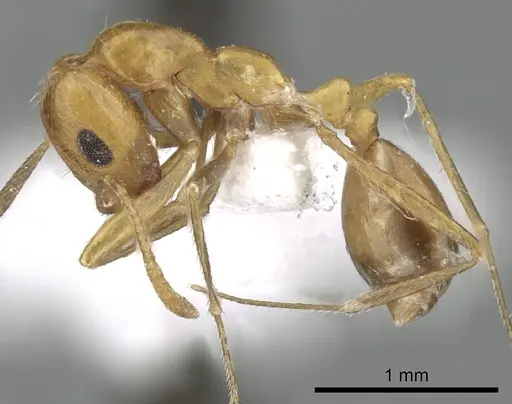
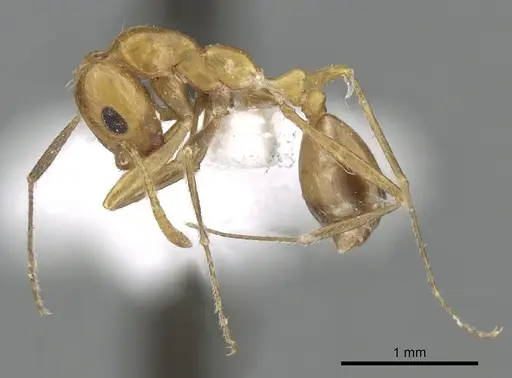
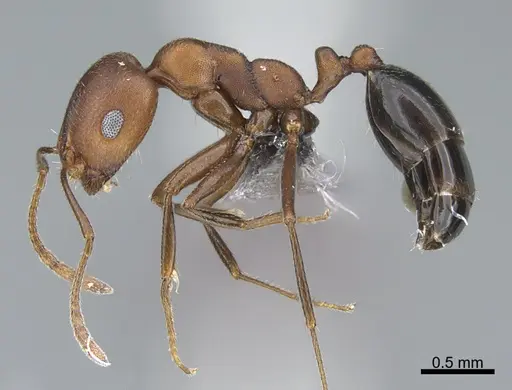
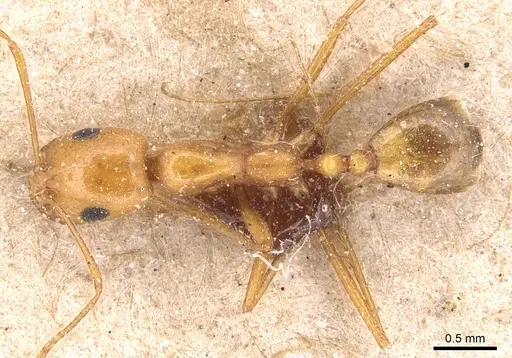
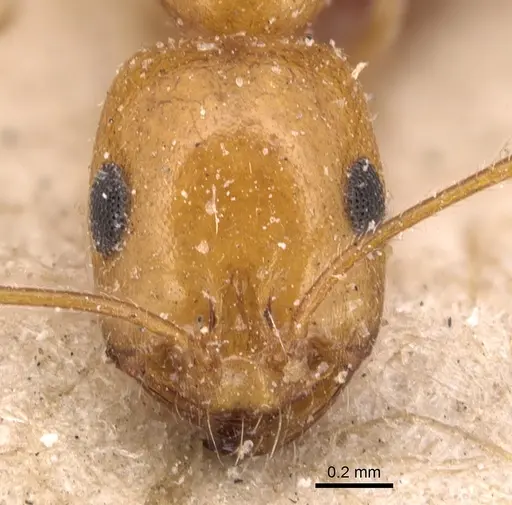
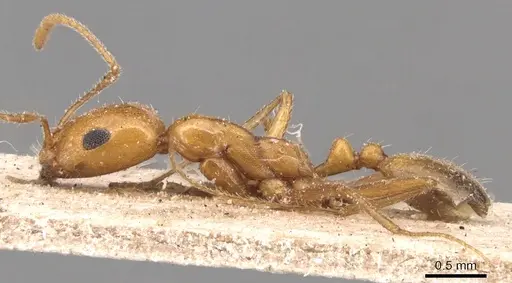
Monomorium luteum is a small yellowish ant native to the Middle East and Horn of Africa. Workers measure 4.0-4.2mm and are entirely pale brownish yellow in color, making them one of the larger species in the Monomorium genus found in Arabia . They have a distinctive long head and very long antennal scapes, with a flat mesosoma and shallow groove between the middle and rear body sections . This species inhabits hot, dry regions across Yemen, Eritrea, Egypt, Saudi Arabia, Oman, UAE, and Jordan, where they nest in the ground and forage in agricultural areas, roadside desert, and rocky washes with vegetation .
Quick Summary
- Difficulty: Medium
- Origin & Habitat: Hot, dry regions of the Middle East and Horn of Africa including Yemen, Eritrea, Egypt, Saudi Arabia, Oman, UAE, and Jordan. Found in agricultural areas with irrigated date and olive trees, roadside desert, and rocky washes with vegetation [2][3][4].
- Colony Type: Colony structure is unconfirmed. Based on typical Monomorium patterns, colonies likely have a single queen.
- Size & Growth:
- Queen: size data unavailable
- Worker: 4.0-4.2mm [1]
- Colony: Unknown, likely moderate sized colonies based on genus patterns
- Growth: Moderate, inferred from related species in genus
- Development: Estimated 6-8 weeks based on typical Monomorium development at warm temperatures (Development time is estimated as this species has not been specifically studied. Warm temperatures (25-30°C) will likely accelerate development.)
- Antkeeping:
- Temperature: Keep warm at 25-30°C. This species comes from hot desert and semi-arid regions, so higher temperatures are appropriate. A heating cable on one side of the nest creates a gradient allowing ants to regulate their temperature [2].
- Humidity: Low to moderate humidity. These ants inhabit dry regions, so keep the nest relatively dry with only slight moisture. Allow the substrate to dry between water additions. Avoid overly damp conditions that could cause mold [2].
- Diapause: Likely minimal or no true diapause, this species is adapted to hot climates where temperatures remain warm year-round. However, a slight reduction in temperature during winter months (cooling to around 20°C) may be beneficial if you want to simulate seasonal slowdown.
- Nesting: Ground-nesting species that prefers dry to moderately moist substrate. In captivity, a Y-tong (AAC) nest or test tube setup works well. Provide sand or soil-based substrate if using a naturalistic setup. They do well in formicariums with dry chambers and access to a water tube [2].
- Behavior: Workers are active foragers that search for food on the ground surface. Based on related species, they likely accept sugar sources and small protein foods. They are not aggressive toward keepers but small size means escape prevention is important, use fine mesh barriers and tight-fitting lids. Workers are fast-moving and may be skittish when the nest is disturbed [2].
- Common Issues: escape prevention is critical, tiny ants squeeze through small gaps, overheating is a risk, keep below 35°C despite preferring warmth, colonies may struggle if humidity is too high, these are desert-adapted ants, slow founding means foundress queens are vulnerable, keep disturbances minimal, limited information means trial and error is needed for optimal care
Natural History and Distribution
Monomorium luteum is native to the hot, arid regions of the Middle East and Horn of Africa. Originally described from Eritrea (Ras Doumeira) and Yemen (Aden) by Emery in 1881,the species has since been documented across Egypt, Saudi Arabia, Oman, United Arab Emirates, and most recently Jordan [5][3][4]. The type specimens were collected by G. Doria and O. Beccari in December 1879 and January 1880 [5]. This ant prefers dry to semi-arid habitats including agricultural areas with irrigated date and olive trees, roadside desert, and rocky washes with vegetation [2]. It is considered one of the larger Monomorium species in the Arabian Peninsula, with workers measuring 4.0-4.2mm total length [1]. The species was recently recorded as new to Jordan in 2020,expanding its known range northward [4][6].
Identification and Morphology
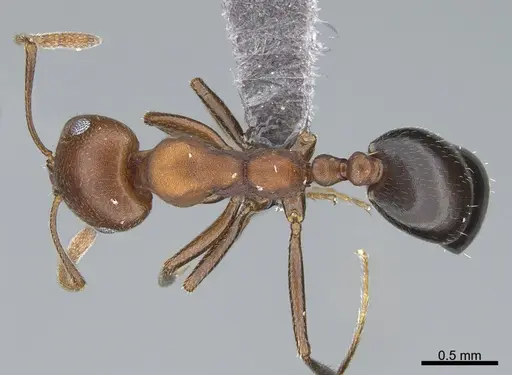
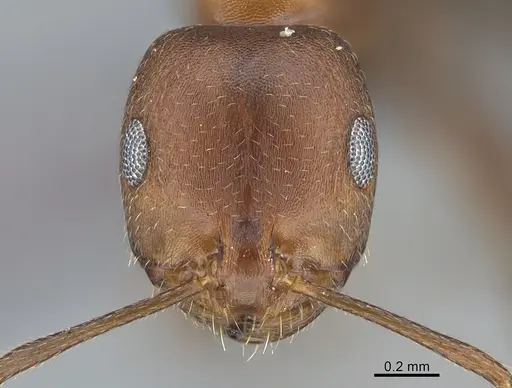
Workers of Monomorium luteum are entirely yellowish in color, making them relatively distinctive among Arabian Monomorium species [1]. They have a very long head and exceptionally long antennal scapes that extend well beyond the head. The mesosoma (middle body section) is rather flat with a shallow oblique metanotal groove separating the mesonotum from the propodeum. The petiole (the narrow waist segment) is low with a smoothly rounded dorsum. The body has a moderately shining appearance with superficial reticulate sculpture that becomes coarser on the propodeum. Workers possess several pairs of long hairs on the pronotum, mesonotum, petiole, postpetiole, and the first gaster segment [1]. This is the largest of the Arabian Monomorium species, with workers measuring 4.0-4.2mm total length [1].
Housing and Nest Setup
For keeping Monomorium luteum in captivity, a test tube setup works well for founding colonies. Use a standard test tube with a cotton plug creating a water reservoir on one side. The queen will seal herself in a chamber and remain there until her first workers emerge. For established colonies, a Y-tong (AAC) nest provides good visibility and easy maintenance. Since these ants come from dry regions, keep the nest relatively dry, allow the substrate to dry between water additions. A small water tube for drinking access is sufficient. Avoid overly humid conditions which can lead to mold problems and stress these desert-adapted ants. The nest should be kept warm, ideally with a temperature gradient of 25-30°C in the nest area. [2]
Feeding and Diet
Based on related Monomorium species, Monomorium luteum workers are likely omnivorous, accepting both sugar sources and protein. Offer sugar water or honey as a constant energy source. For protein, small insects such as fruit flies, small crickets, or mealworms are appropriate. Since workers are only about 4mm, prey items should be appropriately sized. Feed protein 2-3 times per week, removing any uneaten prey after 24 hours. Sugar water can be offered continuously via a cotton ball or small container, replaced every few days. Fresh water should always be available.
Temperature and Seasonal Care
Monomorium luteum originates from hot, desert and semi-arid regions, so they prefer warmer temperatures. Maintain the nest at 25-30°C for optimal activity and development. A heating cable placed on one side of the nest can create a temperature gradient, allowing ants to move to warmer or cooler areas as needed. Be careful not to overheat, temperatures above 35°C can be harmful. Regarding diapause, this species likely experiences minimal winter rest given its tropical/subtropical origin. However, you may reduce temperatures slightly during winter months (around 20°C) if you wish to simulate seasonal changes. Avoid keeping them too cold as they are not adapted to freezing temperatures. [2]
Behavior and Handling
Workers of Monomorium luteum are active foragers that search for food along the ground. They are not particularly aggressive and rarely sting, though some individuals may attempt it if threatened. Their small size makes them quick and sometimes skittish. When caring for this species, minimize disturbances to the nest, especially during the founding stage. Always use excellent escape prevention, these tiny ants can squeeze through remarkably small gaps. Use fine mesh on any ventilation holes and ensure all connections are tight-fitting. Despite their small size, they are relatively robust once established in captivity. [2]
Frequently Asked Questions
How long does it take for Monomorium luteum to raise first workers?
Based on typical Monomorium development, expect first workers (nanitics) in approximately 6-8 weeks from when the queen lays her first eggs, assuming temperatures around 25-30°C. This is an estimate as this specific species has not been studied for development timing.
What temperature do Monomorium luteum ants need?
Keep them warm at 25-30°C. These ants come from hot desert and semi-arid regions, so higher temperatures are appropriate. Use a heating cable on one side of the nest to create a gradient, but avoid exceeding 35°C.
What do Monomorium luteum ants eat?
Based on related species, they accept sugar sources (honey, sugar water) and small protein foods (fruit flies, small crickets, mealworms). Offer protein 2-3 times per week and keep sugar water available constantly.
Are Monomorium luteum good for beginners?
They are considered medium difficulty. They are small and require good escape prevention, but once established they are relatively hardy. The main challenge is providing appropriate warm, dry conditions and having patience during the slow founding stage.
How big do Monomorium luteum colonies get?
The exact maximum colony size is unknown, but based on related species in the genus, colonies likely reach several hundred workers. They are not among the largest Monomorium species.
Do Monomorium luteum need hibernation?
Likely no true hibernation is required. These ants come from hot climates where temperatures remain warm year-round. A slight temperature reduction in winter (to around 20°C) may be beneficial but is not necessary.
What humidity level do Monomorium luteum need?
Keep humidity low to moderate. These are desert-adapted ants that prefer dry conditions. Allow the nest substrate to dry between water additions and avoid overly damp conditions that could cause mold.
Can I keep multiple Monomorium luteum queens together?
The colony structure is not confirmed for this species. Based on typical Monomorium patterns, they are likely single-queen (monogyne) colonies. Combining unrelated queens is not recommended as it often leads to fighting.
When should I move Monomorium luteum to a formicarium?
Wait until the colony has at least 20-30 workers before moving from a test tube setup. The founding stage should occur in a simple test tube. Once the colony is established and growing, you can transfer to a formicarium if desired, but they can also thrive in test tube setups long-term.
Why are my Monomorium luteum dying?
Common causes include: too high humidity (they prefer dry conditions), temperatures too cold (need 25-30°C), escape issues, or stress from disturbances during founding. Review your setup and ensure the nest is appropriately warm and dry.
Is Monomorium luteum invasive anywhere?
Currently not documented as invasive. Their native range is the Middle East and Horn of Africa. There are no records of this species establishing invasive populations outside its native range.
Report an Issue
The current care sheet is based fully on literature. See inconsistencies, or something that's incorrect? Please , it will be resolved after review from an admin. Contributing to the blogs tab also helps providing information, to make us be able to further improve the caresheets. Thank you for your support!
References

This caresheet is licensed under CC BY-SA 4.0 .
Community Blogs
Literature
Loading distribution map...Loading products...