
Monomorium holothir
- Sci. Name
- Monomorium holothir
- Tribe
- Solenopsidini
- Subfamily
- Myrmicinae
- Author
- Bolton, 1987
- Distribution
- Found in 1 countries
Introduction
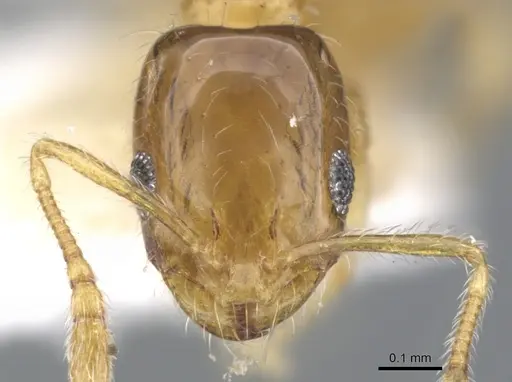
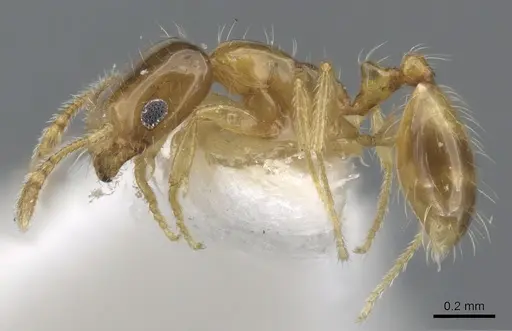
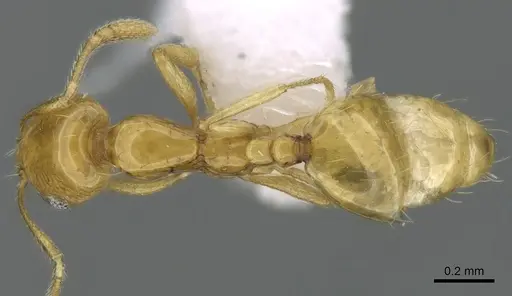
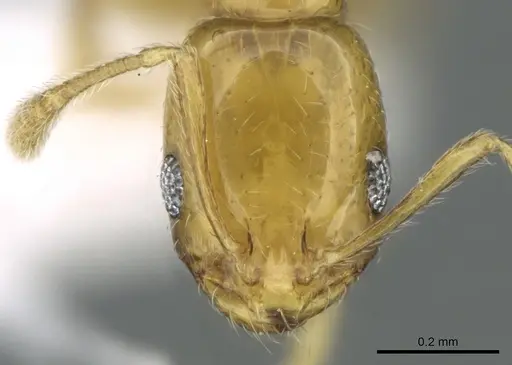
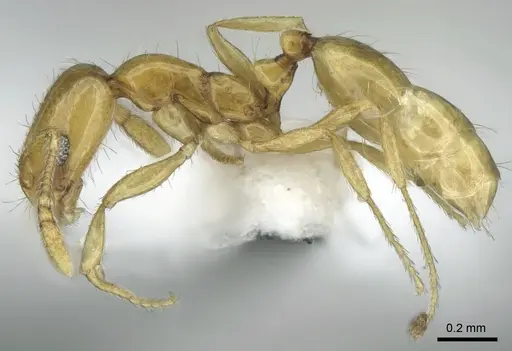
Monomorium holothir is a tiny yellow ant originally described from Kenya, now known to have been introduced to Saudi Arabia through imported produce. Workers measure just 1.8-1.9mm in total length and belong to the Monomorium monomorium species group, specifically the katir complex. This species is notable for its unusually large eyes relative to head width and its distinctly flattened head profile. The entire body is covered in long standing hairs, giving it a fuzzy appearance. These ants were discovered in Saudi Arabia nesting in thin clay soil above sandy soil and collected from leaf litter under trees, suggesting they prefer sheltered, humid microhabitats. The species is considered a rare introduction to the Arabian Peninsula, likely arriving on imported mangos from Kenya.
Quick Summary
- Difficulty: Medium
- Origin & Habitat: Originally described from Kenya in the Afrotropical region. In Saudi Arabia, found in leaf litter and thin clay soil above sandy soil under trees like Conocarpus. Likely introduced via imported mangos from Kenya [1][2][3].
- Colony Type: Colony structure is unconfirmed. Based on related species in the Monomorium genus, likely single-queen colonies but this requires confirmation.
- Size & Growth:
- Queen: Size data unavailable, no queen description exists in scientific literature.
- Worker: 1.8-1.9mm total length [4][1]
- Colony: Unknown, no colony size data available. Likely small colonies based on related species.
- Growth: Unknown, growth rate has not been documented.
- Development: Estimated 6-8 weeks based on related small Monomorium species. Temperature-dependent. (Development timeline is not directly studied for this species.)
- Antkeeping:
- Temperature: Keep at 24-28°C. Based on Kenyan origin and leaf litter habitat, they prefer warm, stable conditions. A heating cable on one side of the nest creates a suitable gradient.
- Humidity: Keep moderately humid. Their natural habitat in leaf litter and clay soil suggests they need moisture but not saturation. Aim for substrate that feels damp but not waterlogged, with some drier areas for workers to regulate.
- Diapause: Unknown, diapause requirements have not been studied. Given their African origin, they may not require a true hibernation but might slow down during cooler months.
- Nesting: These tiny ants do well in small test tubes or Y-tong nests with narrow chambers scaled to their minute size. The natural nesting in clay soil above sandy soil suggests they prefer a mix of moisture-retaining substrate with good drainage. Avoid large, open spaces.
- Behavior: Behavior is not well-documented, but related Monomorium species are generally non-aggressive and forage quietly. Their large eyes suggest they may rely more on visual cues than many ants. They are likely to be shy and not prone to stinging. Escape prevention is critical due to their very small size, they can squeeze through standard mesh barriers.
- Common Issues: escape prevention is critical due to their tiny 1.8mm size, use fine mesh and tight-fitting lids, slow growth means colonies develop slowly, do not overfeed or disturb frequently, wild-caught colonies may have parasites that kill them in captivity, humidity balance is tricky, too wet causes mold, too dry causes desiccation, lack of documented care means you are essentially pioneering husbandry for this species
Appearance and Identification
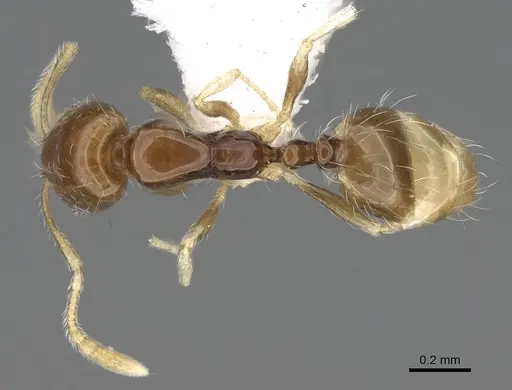
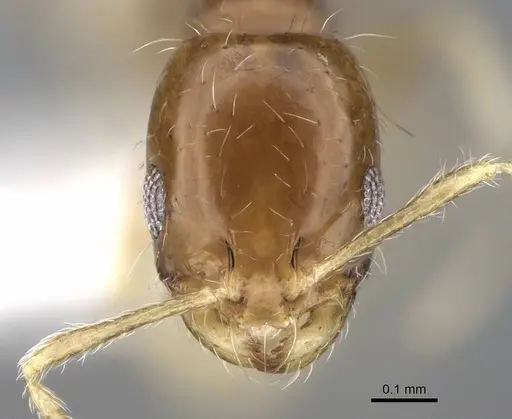
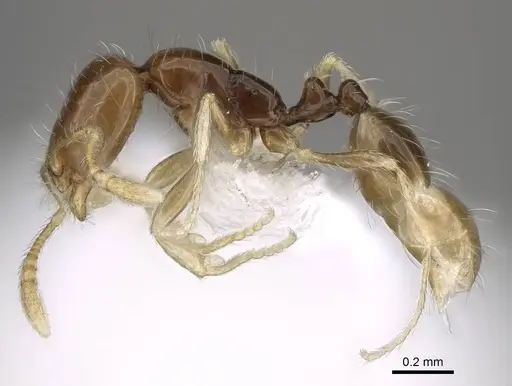
Monomorium holothir workers are tiny at just 1.8-1.9mm in total length, making them among the smaller ant species kept in captivity. They are yellow to light brownish-yellow in color, with a distinctly flattened head that is longer than broad. Their most striking feature is their large eyes, which contain 8-9 ommatidia in the longest row. The entire body is covered in long standing hairs, giving them a fuzzy or hairy appearance compared to many smooth-bodied ants. The clypeus (the face area above the mandibles) has sharply developed carinae (ridge-like structures) that are elevated and crest-like. The petiolar node is high and narrowly subconical. These morphological features distinguish them from closely related species like M. dryhimi, which has smaller eyes and fewer body hairs. [4][1][2]
Natural History and Origin
This species was originally described from Kenya by Bolton in 1987,making it an Afrotropical species. It was subsequently found in Saudi Arabia, representing a new record for the country. The Saudi Arabian specimens were collected from imported mangos originating from Kenya, and additional specimens were found in leaf litter next to Calotropis procera plants and under Conocarpus trees. Workers were also discovered nesting in a thin layer of clay soil above sandy soil. This collection pattern suggests they prefer shaded, humid microhabitats with some soil cover. The presence in Saudi Arabia is considered a likely introduction through the plant import trade, rather than a natural range expansion. In their native Kenya range, specimens have been found in shrubland and savanna habitats. [1][2][3]
Housing and Nest Setup
Due to their very small size of 1.8mm, Monomorium holothir requires careful housing. Test tube setups work well for founding colonies, with the water reservoir kept small to prevent flooding. For established colonies, Y-tong nests with narrow chambers scaled to their tiny size are ideal. Avoid tall, open spaces that these small ants cannot effectively patrol. The natural nesting in clay soil above sandy soil suggests a preference for substrate that retains some moisture while allowing drainage. A thin layer of moist cotton or small water chamber in test tubes mimics their natural conditions. Because of their minute size, escape prevention must be excellent, standard cotton stoppers and standard mesh may not contain them. Use tight-fitting lids and consider fluon barriers on the rim of any setup. [1][3]
Feeding and Diet
The diet of Monomorium holothir has not been directly studied, but based on related species in the genus, they likely are omnivorous with a preference for small soft-bodied prey and sugar sources. In captivity, offer small live prey such as springtails, fruit flies, or tiny crickets. They will likely accept sugar water, honey, or diluted syrup. Given their small size, prey items should be appropriately sized, nothing larger than a fruit fly for newly established colonies. Feed small amounts of protein 2-3 times per week and keep a sugar source available at all times. Remove uneaten prey after 24-48 hours to prevent mold issues in the small nest spaces.
Temperature and Seasonal Care
Based on their Kenyan origin and collection from leaf litter habitats, Monomorium holothir prefers warm conditions. Aim for 24-28°C in the nest area. A heating cable placed on one side of the nest creates a temperature gradient allowing workers to regulate their position. Avoid temperatures below 20°C for extended periods. The lack of documented diapause requirements means winter care is uncertain, you may experiment with slight cooling (around 18-20°C) during winter months to see if the colony slows naturally, but do not force hibernation. Monitor colony activity and adjust temperatures based on their behavior, workers that cluster near the heat source indicate a need for more warmth. [1]
Challenges and Common Problems
Keeping Monomorium holothir presents several challenges. First, their extremely small size makes escape prevention critical, they can squeeze through gaps that other ants cannot. Use fine mesh, fluon barriers, and check all connections regularly. Second, their care requirements are not well-documented in scientific literature, meaning you are essentially pioneering husbandry for this species in captivity. Third, wild-caught colonies may carry parasites that can decimate the colony in captivity, quarantine and observe new colonies carefully. Fourth, humidity balance is tricky in such small setups, too much moisture causes mold that can quickly overwhelm tiny colonies, while too little causes desiccation. Finally, growth is likely slow, which can test keeper patience, resist the urge to overfeed or frequently disturb the colony.
Frequently Asked Questions
How long does it take for Monomorium holothir to produce first workers?
The exact timeline is unknown, but based on related small Monomorium species, expect 6-8 weeks from egg to worker at optimal temperature (24-28°C). This is an estimate based on genus-level data, as no species-specific development studies exist.
What do Monomorium holothir ants eat?
While not directly studied, they likely accept small soft-bodied prey like springtails and fruit flies, plus sugar sources. Feed appropriately sized live prey 2-3 times weekly and provide constant access to sugar water or honey.
Can I keep Monomorium holothir in a test tube?
Yes, test tubes work well for founding colonies. Use a small water reservoir to prevent flooding, and ensure excellent escape prevention due to their tiny 1.8mm size.
What temperature do Monomorium holothir need?
Keep them warm at 24-28°C. A heating cable on one side of the nest creates a suitable gradient. Avoid temperatures below 20°C for extended periods.
Are Monomorium holothir good for beginners?
No, this species is not recommended for beginners. Their care is poorly documented, they are extremely small (escape risk is high), and they require careful humidity management. They are best suited for experienced antkeepers interested in pioneering husbandry for rare species.
How big do Monomorium holothir colonies get?
Colony size is not documented, but based on related species, likely small colonies. They appear to be a rare species even in the wild.
Do Monomorium holothir need hibernation?
Diapause requirements are unknown. Given their Kenyan origin, they likely do not require true hibernation. You may experiment with slight cooling (18-20°C) in winter to see if the colony slows naturally, but do not force hibernation.
Why are my Monomorium holothir dying?
Common causes include: escape (check for tiny gaps), desiccation from too-dry conditions, mold from too-wet conditions, parasites from wild-caught colonies, or disturbance from over-handling. Review humidity, escape prevention, and whether the colony was wild-caught.
When should I move Monomorium holothir to a formicarium?
Wait until the colony reaches at least 20-30 workers and the test tube shows signs of space constraints. For this small species, a small Y-tong or acrylic nest with appropriately scaled chambers works well.
Report an Issue
The current care sheet is based fully on literature. See inconsistencies, or something that's incorrect? Please , it will be resolved after review from an admin. Contributing to the blogs tab also helps providing information, to make us be able to further improve the caresheets. Thank you for your support!
References

This caresheet is licensed under CC BY-SA 4.0 .
Community Blogs
Literature
Loading distribution map...Loading products...