
Monomorium hesperium
- Sci. Name
- Monomorium hesperium
- Tribe
- Solenopsidini
- Subfamily
- Myrmicinae
- Author
- Emery, 1895
- Distribution
- Found in 1 countries
Introduction
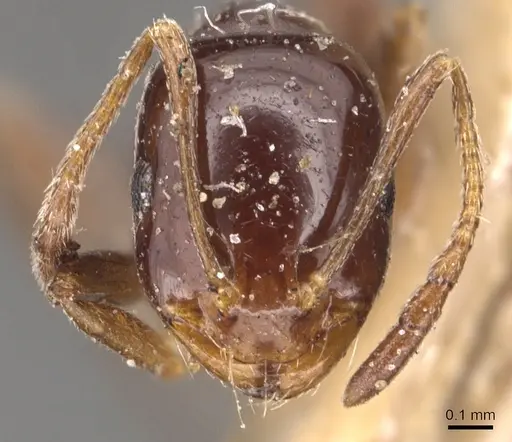
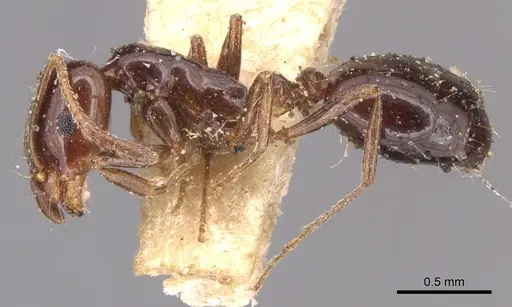
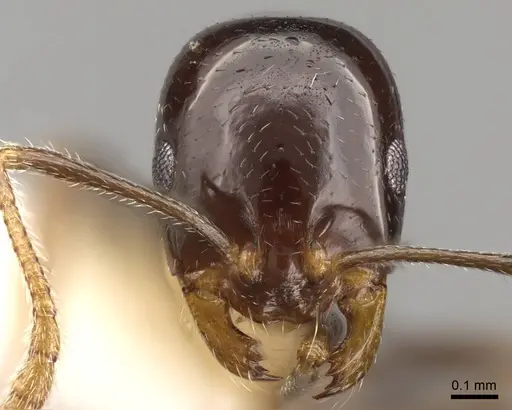
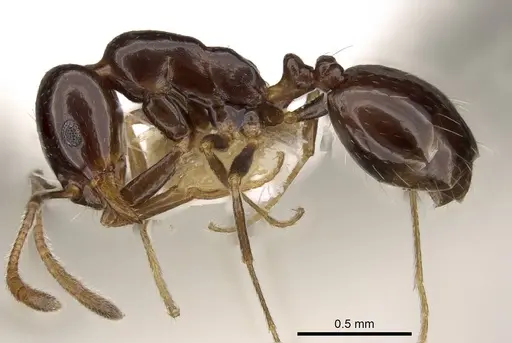
Monomorium hesperium is a small, dark ant species native to the Canary Islands, Spain. Workers are typically dark brown to black. This species belongs to the Monomorium salomonis-group and is notable for having ergatoid queens - wingless females that develop from workers rather than typical winged reproductive forms . The ergatoid queens have a slightly simplified thorax, earning them the description of 'apterous queens' in scientific literature . Colonies are polygynous, meaning they contain multiple reproductive queens working together .
Quick Summary
- Difficulty: Medium
- Origin & Habitat: Native to the Canary Islands, Spain (Palaearctic Region) [4]. This species inhabits the warm, subtropical environment of these volcanic islands. In their natural habitat, they likely nest in soil, under stones, or in decaying wood in arid to semi-arid coastal and hillside areas.
- Colony Type: Polygynous, colonies contain multiple ergatoid (wingless) queens that reproduce together [3]. Unlike many ant species with winged queens, M. hesperium reproduces using only ergatoid queens, which are born wingless and develop from the worker caste [1].
- Size & Growth:
- Queen: Size data unavailable, ergatoid queens are wingless and smaller than typical winged queens [1].
- Worker: ~2-4mm, inferred from genus typical size [2].
- Colony: Up to several hundred workers, inferred from related polygynous Monomorium species.
- Growth: Moderate
- Development: 6-10 weeks, estimated based on related Monomorium species. (Development time is not directly documented for this species.)
- Antkeeping:
- Temperature: Keep at 22-28°C. The warm Canary Islands origin suggests they prefer temperatures in the mid-to-upper 20s°C range.
- Humidity: Low to moderate. Canary Islands have a semi-arid climate. Keep nest substrate moderately moist but allow portions to dry between waterings.
- Diapause: No true diapause required. The subtropical climate of the Canary Islands does not experience cold winters, so this species remains active year-round.
- Nesting: Provide a nest with chambers scaled to their small size. Y-tong (AAC) nests, plaster nests, or test tube setups work well. They likely prefer nesting in protected, dark spaces with some moisture retention.
- Behavior: This is a relatively docile, small ant species. Workers are active foragers that likely scavenge for small insects, nectar, and honeydew. They possess a stinger but due to their very small size, the sting is typically not noticeable to humans. Their tiny size means escape prevention requires fine mesh barriers and tight-fitting lids. Colonies are polygynous, so multiple queens coexist peacefully.
- Common Issues: escape prevention is critical due to their very small size, use fine mesh and check for tiny gaps regularly., overheating risk, despite needing warmth, direct heat sources can quickly desiccate small colonies., mold from excessive moisture, keep ventilation adequate and avoid waterlogging the nest., slow founding phase, ergatoid queen colonies may take longer to establish than typical claustral species., limited availability, this species is rarely available in the antkeeping hobby due to its restricted native range.
Understanding Ergatoid Queens
Monomorium hesperium has a unique reproductive system. Instead of typical winged queens that fly away to found new colonies, this species produces ergatoid queens, wingless females that develop from worker larvae and remain in the nest [1]. These ergatoid queens have a slightly simplified thorax, which is why researchers described them as 'apterous queens' (meaning wingless) [2]. This is a derived trait within the Monomorium genus, specifically noted in the M. salomonis-group to which this species belongs. For antkeepers, this means your colony will have queens that look similar to large workers but are reproductive and cannot fly. Colonies are polygynous, meaning multiple ergatoid queens coexist and all contribute to egg-laying [3].
Housing and Nest Setup
Because of their very small size, M. hesperium requires careful attention to escape prevention. Use test tubes with cotton plugs, Y-tong (AAC) nests, or plaster nests with tight-fitting barriers. The nest should have chambers appropriately sized for tiny ants, avoid large, open spaces where they may feel exposed. A hydration system that maintains gentle moisture in part of the nest works well, but allow some dry areas for the ants to self-regulate. Given their Canary Islands origin, they prefer warmth but not extreme heat. Room temperature in the low-to-mid 20s°C is typically suitable. Use fine mesh on any outworld access points.
Feeding and Diet
Like other Monomorium species, M. hesperium is omnivorous, accepting both sugar sources and protein. Offer sugar water, honey, or diluted nectar regularly as an energy source. For protein, provide small insects like fruit flies, pinhead crickets, or small mealworms. Given their tiny worker size, prey items should be appropriately small. Feed small amounts every 2-3 days and remove uneaten food to prevent mold.
Colony Care and Maintenance
This species is best suited for intermediate antkeepers. The main challenges include their small size (requiring excellent escape prevention), the need for warm but stable temperatures, and the fact that they are rarely available in the hobby due to their restricted native range to the Canary Islands. Colonies are polygynous, so you may receive multiple ergatoid queens when establishing a colony. Do not attempt to combine unrelated foundress queens, this species' social structure is complex. Monitor for mold, maintain proper humidity without overwatering, and ensure ventilation prevents stagnant air.
Frequently Asked Questions
What is Monomorium hesperium?
Monomorium hesperium is a small dark ant species native to the Canary Islands, Spain. It belongs to the Myrmicinae subfamily and is known for having ergatoid (wingless) queens instead of typical winged queens. Colonies are polygynous, containing multiple reproductive queens.
How big do Monomorium hesperium colonies get?
Exact colony size is not documented in available literature. Based on related polygynous Monomorium species, colonies likely reach several hundred workers. Workers measure approximately 2-4mm.
What temperature do Monomorium hesperium ants need?
Keep them at 22-28°C. The warm Canary Islands origin suggests they prefer temperatures in the mid-to-upper 20s°C range. Avoid direct heat sources that could cause drying or overheating.
Are Monomorium hesperium good for beginners?
This species is rated as Medium difficulty and is better suited for intermediate antkeepers. Their very small size requires excellent escape prevention, and they are rarely available in the hobby due to their restricted native range.
How long does it take for Monomorium hesperium to produce first workers?
Exact development time is not documented for this species. Based on related Monomorium species, expect approximately 6-10 weeks from egg to first worker at optimal temperature.
Can I keep multiple queens together in Monomorium hesperium?
Yes, this species is naturally polygynous, meaning colonies contain multiple ergatoid (wingless) queens that coexist and reproduce together. This is their normal colony structure in the wild.
What do Monomorium hesperium ants eat?
They are omnivorous like other Monomorium species. Offer sugar water, honey, or nectar for energy, and small insects like fruit flies or small mealworms for protein.
Do Monomorium hesperium need hibernation?
No true hibernation required. The Canary Islands have a subtropical climate without cold winters. The ants remain active year-round.
Why are my Monomorium hesperium escaping?
This species is very small and can squeeze through extremely tiny gaps. Use fine mesh on all access points, check lid seals regularly, and ensure any tubing connections are secure. Escape prevention is critical with this species.
Report an Issue
The current care sheet is based fully on literature. See inconsistencies, or something that's incorrect? Please , it will be resolved after review from an admin. Contributing to the blogs tab also helps providing information, to make us be able to further improve the caresheets. Thank you for your support!
References

This caresheet is licensed under CC BY-SA 4.0 .
Community Blogs
CASENT0904604
View on AntWeb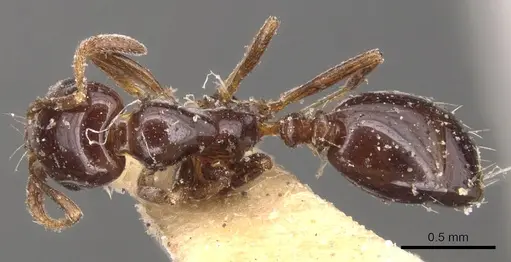
CASENT0914314
View on AntWeb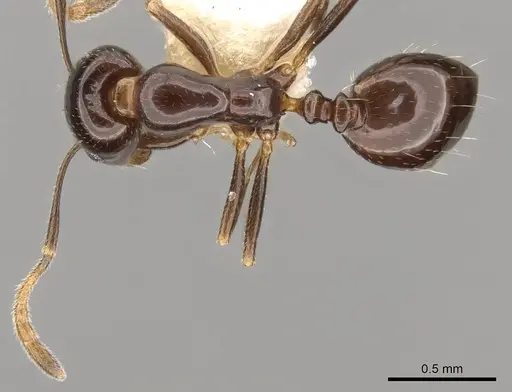
Literature
Loading distribution map...Loading products...