
Monomorium harithe
- Sci. Name
- Monomorium harithe
- Tribe
- Solenopsidini
- Subfamily
- Myrmicinae
- Author
- Collingwood & Agosti, 1996
- Distribution
- Found in 1 countries
Introduction
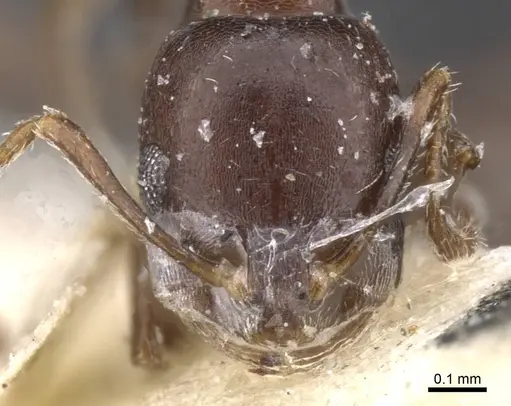
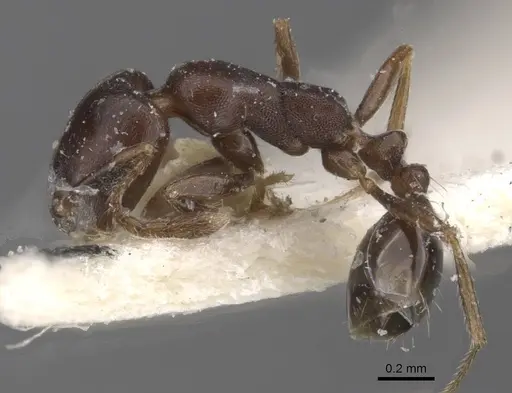
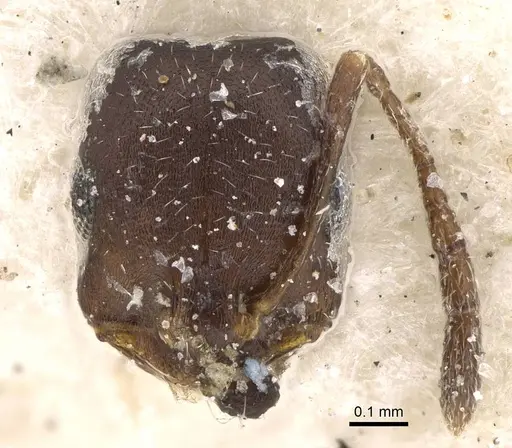
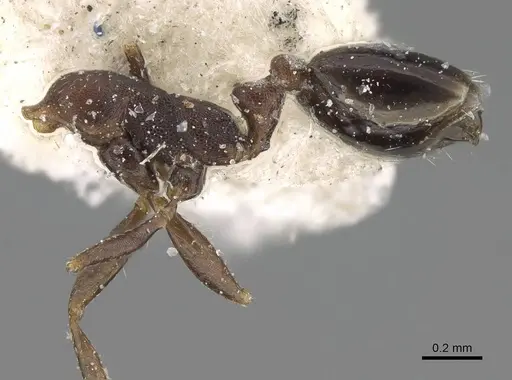
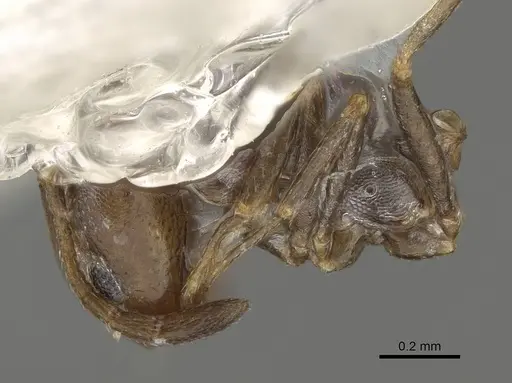
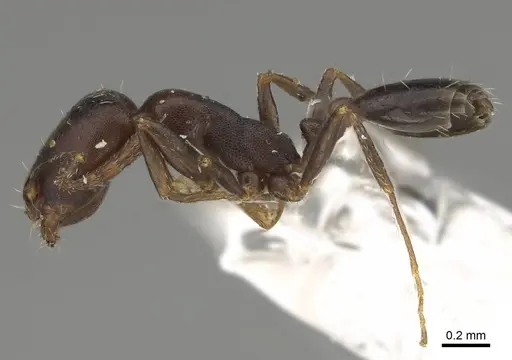
Monomorium harithe is a small brown ant endemic to the Arabian Peninsula, found in Saudi Arabia, Yemen, and Oman. Workers measure 2.2-2.75mm total length, making them a relatively large species within the genus Monomorium. They have a dark reddish-brown coloration with a somewhat shining appearance, distinctive standing hairs on the petiole, postpetiole, and first gastral segment, and a deeply impressed metanotal groove. This species was previously known as Monomorium najrane before being synonymized in 2021 . Nothing is known about their biology in the wild .
Quick Summary
- Difficulty: Unknown
- Origin & Habitat: Endemic to the Arabian Peninsula, found in Saudi Arabia, Yemen, and Oman, in desert and arid habitats [3][1].
- Colony Type: Unconfirmed, colony structure has not been documented in scientific literature.
- Size & Growth:
- Queen: Undocumented, only a paratype queen was mentioned in the original description without measurements [2].
- Worker: 2.2-2.75mm total length [1].
- Colony: Unknown, no colony size data exists.
- Growth: Unknown, no development data available.
- Development: Unconfirmed, no development data exists for this species. (Development timeline is completely unknown for this species.)
- Antkeeping:
- Temperature: Likely warm-adapted given Arabian Peninsula origin, suggest starting around 24-28°C and observing colony activity. No direct temperature data exists.
- Humidity: Likely prefers drier conditions typical of desert species, aim for moderate humidity with some dry areas in the nest. No direct humidity data exists.
- Diapause: Unknown, desert species may have reduced activity during extreme heat rather than cold diapause.
- Nesting: No nesting data exists. Most Monomorium species nest in soil or under stones. A test tube setup or Y-tong nest with moderate moisture would be a reasonable starting point.
- Behavior: Behavior is completely unstudied. The species has been noted for having trail pheromones derived from poison gland secretions rather than Dufour glands, suggesting active foraging trails [4]. Their small size means escape prevention should be taken seriously, they can slip through tiny gaps. Temperament is unknown. As a member of the subfamily Myrmicinae tribe Solenopsidini, they possess a sting with piperidine alkaloids, though their small size likely makes any sting negligible to humans.
- Common Issues: completely unknown biology means trial-and-error care is required, no development data makes it hard to know if the colony is progressing normally, desert origin may make them sensitive to overwatering or high humidity, escape prevention is important given their small 2-3mm size, lack of species-specific information means keepers must rely on genus-level assumptions
Species Overview
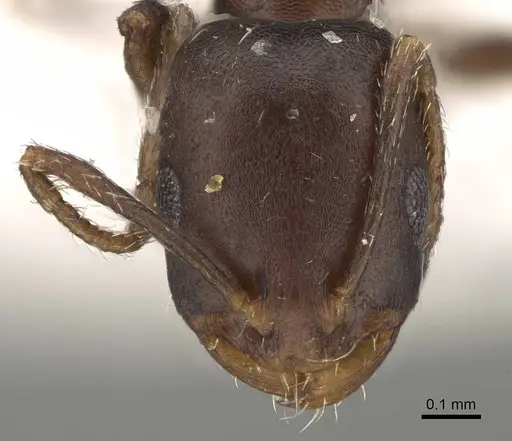
Monomorium harithe is one of the more obscure ant species kept by enthusiasts, primarily because almost nothing is known about its biology. Originally described in 1996 from Saudi Arabia and Yemen, it was later synonymized with Monomorium harithe in 2021 when researchers determined they were the same species [1]. The ant is considered a large brown species within the genus Monomorium, measuring 2.2-2.75mm in total length. It features distinctive standing hairs on the petiole, postpetiole, and gaster, with a deeply impressed metanotal groove that helps distinguish it from similar species. The head and alitrunk have scattered punctures within a superficial reticulum, giving it a somewhat shining appearance rather than being dull.
Distribution and Habitat
This species is endemic to the Arabian Peninsula, specifically found in Saudi Arabia, Yemen, and Oman [3][1]. The type specimens were collected from multiple locations including Harithi in Saudi Arabia (April 1985), Riyadh (January 1980), and Taiz-Aden in Yemen (March 1993). These collection dates suggest the ants are active during the cooler months in their native range, January and March in Yemen, April in Saudi Arabia. The desert and arid environments of the Arabian Peninsula indicate this species is adapted to warm, relatively dry conditions. However, the specific microhabitats they prefer (under stones, in soil, in rotting wood) remain undocumented.
Defense Mechanism
As a member of the subfamily Myrmicinae and tribe Solenopsidini, Monomorium harithe possesses a sting as its primary defense mechanism. The venom contains piperidine alkaloids, which are used both for hunting prey and defending the colony. However, given their tiny 2-3mm size, any sting would likely be negligible to humans.
Trail Pheromone Chemistry
One of the few documented aspects of Monomorium harithe is their trail pheromone chemistry. Research has shown that unlike many ants that use Dufour glands for trail pheromones, this species uses compounds from their poison gland [4]. The venom glands contain mixtures of alkyl- and alkenyl-pyrrolidines and pyrrolines. Studies found the optimum trail concentration was 1.0 gland equivalent per 30cm of trail, with trails lasting about 1 hour before fading [4]. This chemical specificity is interesting from a research perspective but has limited practical application for keepers beyond understanding they are likely active foragers that establish persistent trails to food sources.
Care Approach
Because nothing is known about the biology of Monomorium harithe, keepers must approach their care with informed guesswork based on genus-level patterns. Start with a standard test tube setup, a water reservoir with a cotton plug on one end provides humidity control. Keep temperatures warm, roughly 24-28°C, which aligns with their Arabian desert origin. Since desert species typically prefer drier conditions, err on the side of moderate humidity rather than creating a wet environment. Feed them standard ant foods like sugar water or honey for carbohydrates and small protein sources like fruit flies or mealworm pieces. Observe your colony closely, their behavior will tell you if conditions need adjustment. If they cluster near the heat source, increase temperature slightly, if they avoid the moist end, reduce humidity.
Challenges and Considerations
The biggest challenge in keeping Monomorium harithe is the complete lack of species-specific biological data. You won't find information on how long eggs take to develop, what triggers nuptial flights, or how large colonies typically grow. This makes it difficult to diagnose problems, is your colony growing slowly because of poor care, or is this normal for the species? The best approach is to keep detailed records of your colony's progress and connect with other keepers attempting this species. Their small size (under 3mm) means escape prevention matters, use fine mesh and check for gaps in your setup. Given their origin from a hot, arid region, they likely tolerate warmer temperatures better than most temperate species but may struggle if conditions become too humid or cold.
Frequently Asked Questions
How long does it take for Monomorium harithe to produce first workers?
Unknown, no development data exists for this species. You will need to observe your own colony to establish a timeline.
What do Monomorium harithe ants eat?
No specific diet data exists for this species. Based on genus patterns, they likely accept sugar sources (honey, sugar water) and small protein items (fruit flies, mealworms, other small insects). Start with standard ant foods and observe what they accept.
Are Monomorium harithe good for beginners?
Unknown, this is difficult to assess since we know almost nothing about their care requirements. They are not recommended for beginners precisely because no care information exists. If you're experienced with other Monomorium species, you may have success applying genus-level knowledge.
What temperature should I keep Monomorium harithe at?
No specific temperature data exists. Based on their Arabian Peninsula origin, suggest starting around 24-28°C. Observe your colony, if they cluster together and show low activity, try warming slightly, if they seem stressed, provide a temperature gradient.
How big do Monomorium harithe colonies get?
Unknown, no colony size data exists for this species. Most Monomorium colonies reach several hundred to a few thousand workers, but this is just a rough genus-level estimate.
Can I keep multiple queens together?
Not documented, colony structure (monogyne vs polygyne) has not been studied for this species. Without data, combining unrelated queens is not recommended as it may result in aggression.
Do Monomorium harithe need hibernation?
Unknown, desert species from the Arabian Peninsula may not require traditional hibernation. They might reduce activity during extreme heat rather than cold. Monitor your colony's activity levels and adjust care seasonally.
What nest type is best for Monomorium harithe?
No nesting data exists for this species. Most Monomorium nest in soil or under stones in the wild. A test tube setup works well for founding colonies, for established colonies, a Y-tong or plaster nest with moderate moisture would be appropriate.
Why is my Monomorium harithe colony not growing?
Without species-specific benchmarks, it's impossible to know if slow growth is normal. Ensure basic needs are met: warm temperature (24-28°C), access to protein and sugar, and appropriate humidity. If workers are dying, check for mold, dehydration, or escape issues. Consider that this species may simply have different requirements than common pet species.
Report an Issue
The current care sheet is based fully on literature. See inconsistencies, or something that's incorrect? Please , it will be resolved after review from an admin. Contributing to the blogs tab also helps providing information, to make us be able to further improve the caresheets. Thank you for your support!
References

This caresheet is licensed under CC BY-SA 4.0 .
Community Blogs
CASENT0913802
View on AntWeb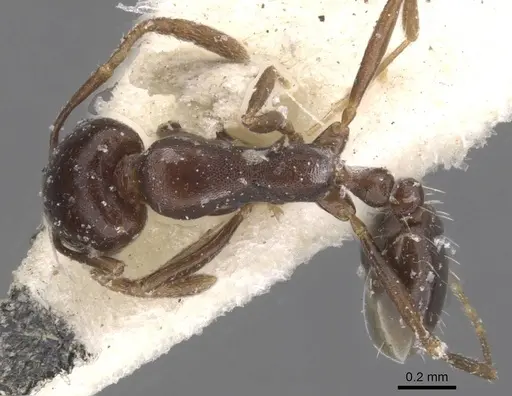
CASENT0922335
View on AntWeb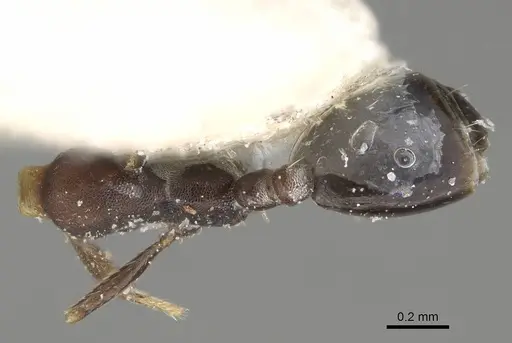
CASENT0922345
View on AntWeb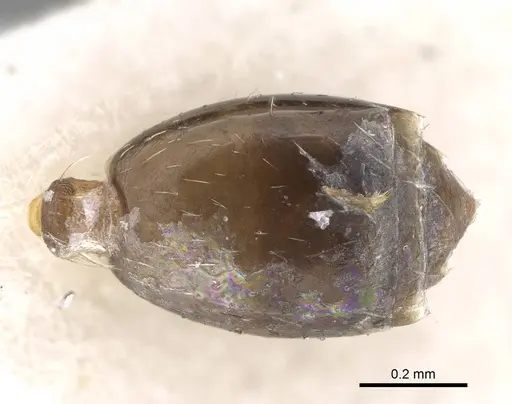
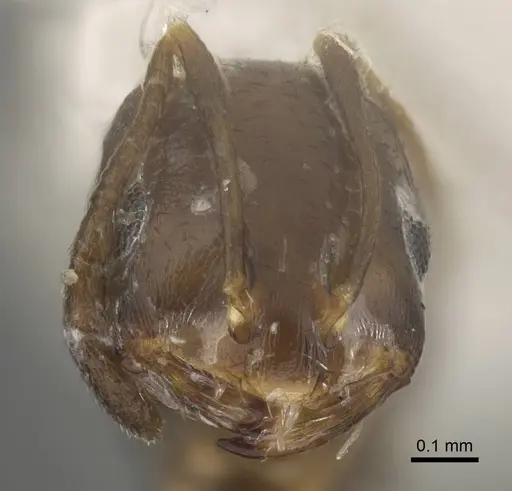
CASENT0922346
View on AntWeb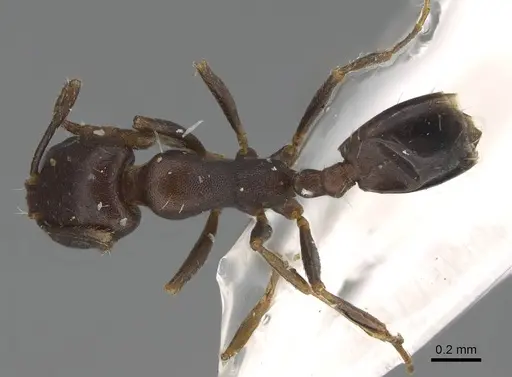
Literature
Loading distribution map...Loading products...