
Monomorium guineense
- Sci. Name
- Monomorium guineense
- Tribe
- Solenopsidini
- Subfamily
- Myrmicinae
- Author
- Bernard, 1953
- Distribution
- Found in 2 countries
Introduction
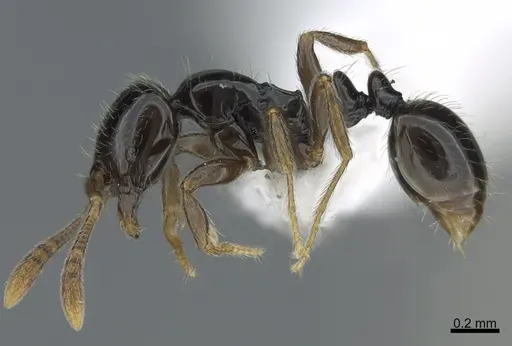
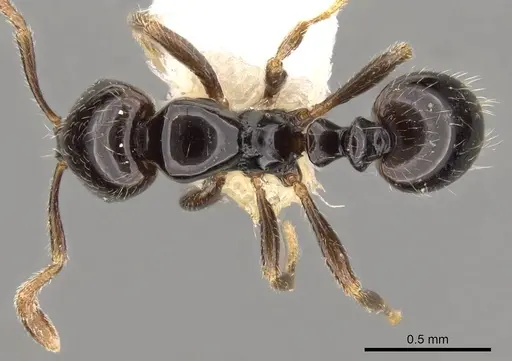
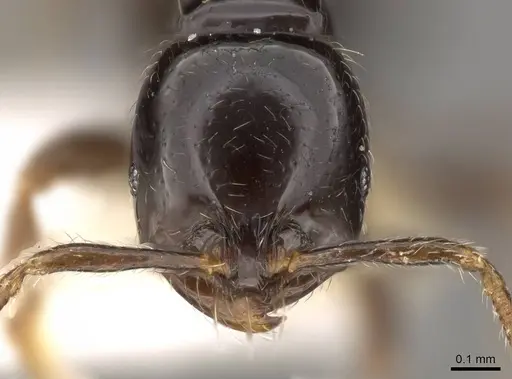
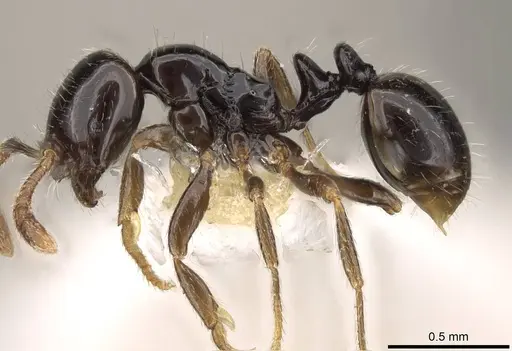
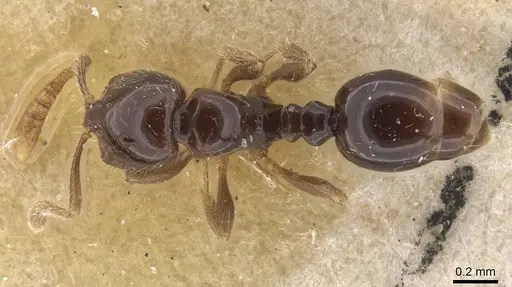
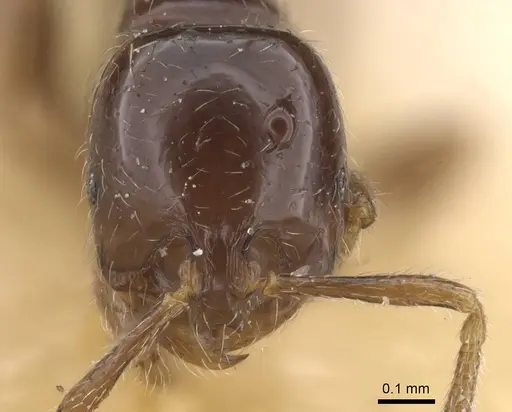
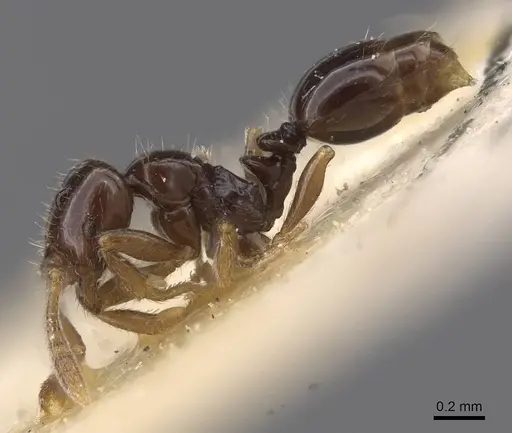
Monomorium guineense is a tiny rainforest ant native to West Africa, measuring just 2.3mm in total length . Workers are uniformly dark brown with distinctive highly compressed, scale-like petiole and postpetiole nodes that appear narrow and tall in profile. This species belongs to the Monomorium hanneli species group and is closely related to M. invidium, differing most notably in having smaller eyes. The propodeum meets the declivity in prominent angles, giving them a slightly angular appearance when viewed from the side. These ants live in leaf-litter environments in rainforests and primary forests across Guinea, Cameroon, and Gabon.
Quick Summary
- Difficulty: Medium
- Origin & Habitat: West African rainforests and primary forests. Found in leaf-litter samples from Monts Doudou in Gabon at 110m elevation and in forest habitats across Guinea and Cameroon [2][1].
- Colony Type: Colony structure is not well documented. The species belongs to a group known for developing apterous (wingless) or ergatoid (worker-like) females, which may serve as replacement reproductives if the primary queen dies [1].
- Size & Growth:
- Queen: Unknown, no queen description available in primary literature
- Worker: 2.3mm total length [1]
- Colony: Unknown, likely small colonies typical of leaf-litter Monomorium species
- Growth: Unknown, estimated moderate based on typical genus patterns
- Development: Unconfirmed, likely 6-8 weeks based on related Monomorium species at warm temperatures (Development timeline has not been directly studied for this species.)
- Antkeeping:
- Temperature: Keep at 24-28°C, these are tropical rainforest ants that need warm conditions. A gentle heat gradient allows thermoregulation.
- Humidity: Keep moderately humid, around 60-80%. These leaf-litter ants prefer damp conditions but not waterlogged substrate. Provide a moisture gradient so workers can choose their preferred zone.
- Diapause: No, as a tropical species, they do not require hibernation. Keep temperatures stable year-round.
- Nesting: Use a small nest with tight chambers scaled to their tiny size. Y-tong (AAC) nests or small setups work well. Provide connections to a humid outworld. Naturalistic setups with leaf litter and small passages mimic their natural environment.
- Behavior: These are small, generally peaceful ants that forage in leaf-litter environments. They are not aggressive and likely form small colonies. Their tiny size makes them excellent escape artists, they can squeeze through remarkably small gaps. Workers are modest foragers, collecting small prey and honeydew. Handle with care as their small size makes them fragile.
- Common Issues: escape prevention is critical due to their very small size, use fine mesh and tight-fitting barriers, small colony size means they are sensitive to disturbance, avoid frequent nest inspections, tropical humidity requirements can lead to mold issues if ventilation is poor, wild-caught colonies may contain parasites that can devastate captive colonies
Housing and Nest Setup
Monomorium guineense requires a small-scale setup due to their tiny worker size of just 2.3mm. A Y-tong (AAC) nest with narrow chambers or a small formicarium works well. The chambers should be appropriately scaled, these are very small ants that can become stressed in overly large spaces. Connect the nest to a humid outworld where foragers can search for food. Because they come from leaf-litter environments in African rainforests, adding some dried leaf litter or small debris to the outworld can help them feel at home. Escape prevention is critical, their small size allows them to squeeze through gaps that would hold larger ants. Use fine mesh on all openings and ensure any connections are tightly sealed. A test tube setup can work for founding colonies, but be prepared to move them to a proper nest once the colony reaches 20-30 workers. [1]
Feeding and Diet
Like most Monomorium species, these ants are likely omnivorous with a preference for small protein sources and sugar. Offer small live prey such as fruit flies, pinhead crickets, or tiny insects appropriate to their size. They will likely accept sugar water, honey, or diluted honeydew. In their natural rainforest leaf-litter habitat, they would forage for small arthropods and likely tend aphids or scale insects for honeydew. Feed small amounts of protein 2-3 times per week, removing any uneaten prey after 24 hours to prevent mold. Sugar water or honey should be available continuously in a small container that won't drown these tiny workers. Their small size means even modest portions are meaningful to the colony.
Temperature and Humidity
As a tropical West African species, Monomorium guineense requires warm and humid conditions. Keep the nest area at 24-28°C, which is typical for rainforest species. A heating cable on one side of the nest can create a gentle temperature gradient, allowing workers to thermoregulate. Place the heating element on top of the nest rather than underneath to avoid excessive drying. Maintain humidity around 60-80% in the nest area, these ants come from damp forest floor environments. Use a water reservoir in your formicarium or regularly add water to maintain substrate moisture. However, balance humidity with adequate ventilation to prevent mold, which can quickly kill small colonies. The outworld can be slightly drier than the nest area, providing a moisture gradient. [2]
Colony Development and Growth
Monomorium guineense colonies likely start with a single claustral queen who seals herself in to raise the first brood. The founding process probably takes 4-8 weeks, with the first workers being smaller than mature workers. Based on typical Monomorium patterns, expect 6-10 weeks from egg to first worker at optimal temperatures. Colonies likely remain small, probably under a few hundred workers at maturity. Growth rate is probably moderate. The presence of ergatoid (wingless) females in related species suggests this species may have replacement reproductive options if the queen dies, but this has not been confirmed for M. guineense specifically. Be patient with founding colonies, small species often take time to establish. [1]
Behavior and Temperament
Monomorium guineense is likely a docile, non-aggressive species typical of many small Monomorium ants. Workers probably forage individually or in small groups rather than forming large raiding parties. Their small size and docile nature means they are unlikely to pose any sting risk to keepers, while most Myrmicinae have stingers, these tiny ants are too small to penetrate human skin effectively. They are probably crepuscular or nocturnal foragers, avoiding the heat of the day in their natural rainforest habitat. Their tiny size makes them vulnerable to predation and stress, so minimize disturbances to the nest, especially in early colony stages. They are unlikely to be escape artists in terms of climbing smooth surfaces, but their small size means they can slip through tiny gaps that larger ants cannot. [1]
Frequently Asked Questions
How long does it take for Monomorium guineense to produce first workers?
The exact timeline is unconfirmed, but based on related Monomorium species, expect 6-10 weeks from egg to first worker at optimal temperatures of 24-28°C. Founding queens seal themselves in and raise the first brood alone.
What do Monomorium guineense ants eat?
They likely accept small protein sources like fruit flies, tiny crickets, and other small insects. They probably also consume sugar sources like honeydew, honey, or sugar water. Feed small protein prey 2-3 times per week with sugar available continuously.
Are Monomorium guineense ants difficult to keep?
They are rated as medium difficulty. The main challenges are their tiny size requiring excellent escape prevention, their need for warm humid conditions, and their small colony sizes making them sensitive to disturbance. They are not recommended for complete beginners.
What temperature should I keep Monomorium guineense at?
Keep them at 24-28°C. As tropical rainforest ants from West Africa, they need warm conditions. A gentle heat gradient allows workers to regulate their temperature.
How big do Monomorium guineense colonies get?
Colony size is not well documented, but based on their small worker size and leaf-litter habitat, colonies likely reach a few hundred workers at most. They are not large colony builders.
Do Monomorium guineense need hibernation?
No. As a tropical African species, they do not require hibernation or winter cooling. Keep temperatures stable year-round in the 24-28°C range.
What size nest should I use for Monomorium guineense?
Use a small nest with tight chambers scaled to their tiny 2.3mm worker size. Y-tong (AAC) nests or small formicariums work well. Avoid large, open spaces that would stress these small ants.
Can I keep multiple Monomorium guineense queens together?
Colony structure is not well documented for this species. Combining unrelated queens has not been studied and is not recommended. If the species is monogyne, multiple queens would fight. If polygyne, they might tolerate each other, but this is unknown.
Why are my Monomorium guineense dying?
Common causes include: escape through tiny gaps check all mesh and seals, excessive drying they need humidity, mold from poor ventilation, disturbance to the nest, or parasites from wild-caught colonies. Their small size makes them vulnerable to multiple stressors.
Report an Issue
The current care sheet is based fully on literature. See inconsistencies, or something that's incorrect? Please , it will be resolved after review from an admin. Contributing to the blogs tab also helps providing information, to make us be able to further improve the caresheets. Thank you for your support!
References

This caresheet is licensed under CC BY-SA 4.0 .
Community Blogs
Literature
Loading distribution map...Loading products...