
Monomorium flavimembra
- Sci. Name
- Monomorium flavimembra
- Tribe
- Solenopsidini
- Subfamily
- Myrmicinae
- Author
- Heterick, 2006
- Distribution
- Found in 1 countries
Introduction
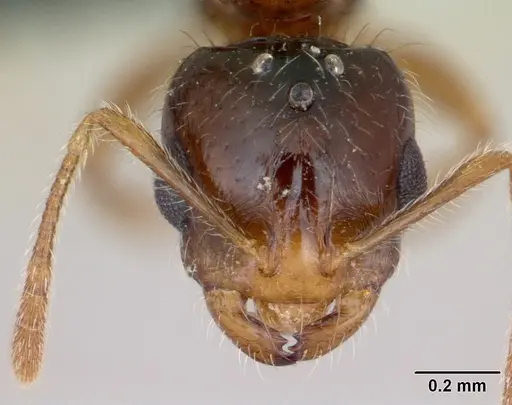
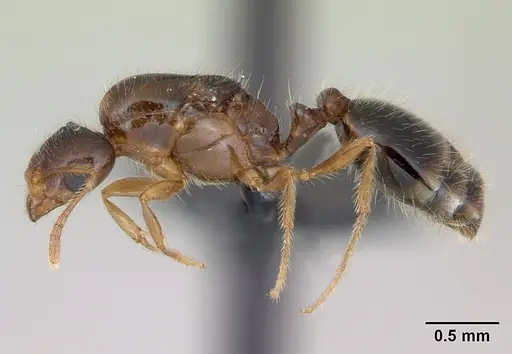
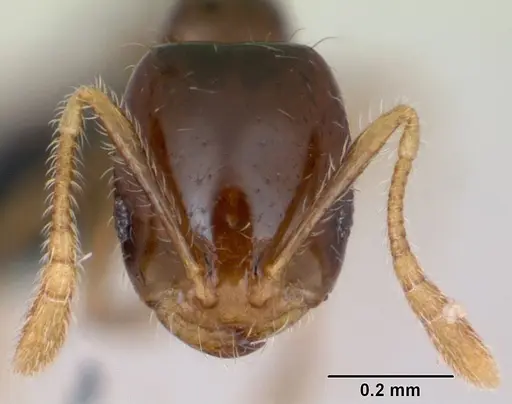
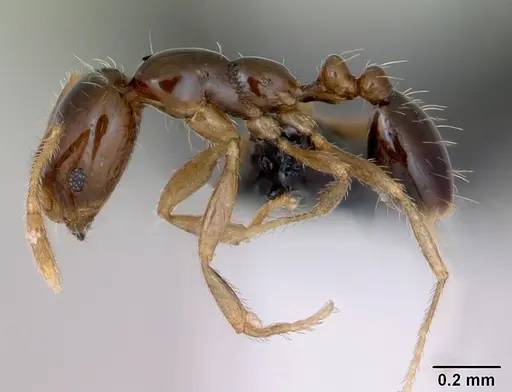
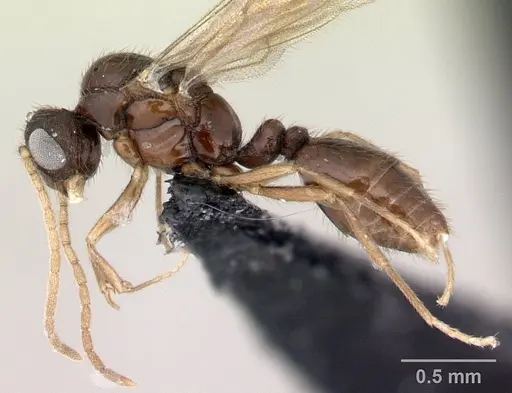
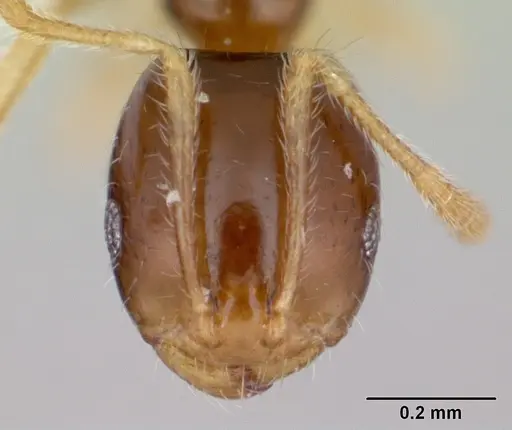
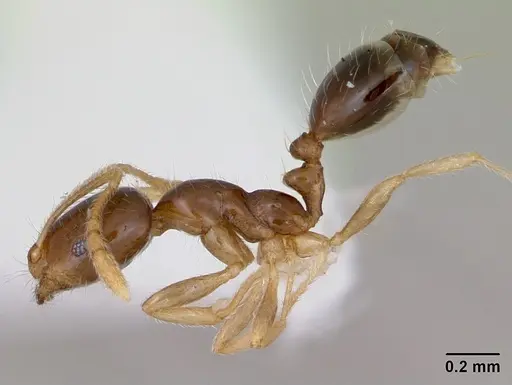
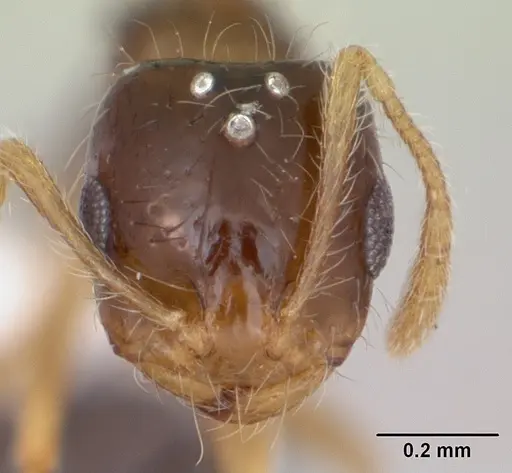
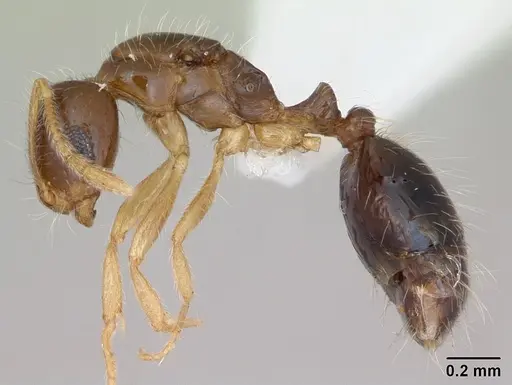
Monomorium flavimembra is a tiny ant species endemic to the tropical dry forests of far northern Madagascar. Workers measure approximately 2mm in total length, making them among the smaller ants you can keep . They have a distinctive appearance with a rich reddish-brown color on the head and mesosoma that contrasts sharply with their bright yellow clypeus, mandibles, and legs . This species belongs to the Monomorium monomorphum species group and was only formally described in 2006,meaning captive husbandry is largely uncharted territory . The queens are particularly unusual - they are very small, ergatoid (wingless), and worker-like in appearance rather than having the typical bulky queen morphology .
Quick Summary
- Difficulty: Expert
- Origin & Habitat: Monomorium flavimembra is known only from the Antsiranana Province in far northern Madagascar, specifically the Réserve Spéciale Ambre region at around 325m elevation [1][2]. They inhabit tropical dry forest where they nest in rotting logs, twigs, and root mats, and forage on the ground in sifted litter [1][2].
- Colony Type: Colonies appear to be small with ergatoid (wingless) queens that are very small and worker-like in appearance [2]. The colony structure in the wild has not been extensively documented.
- Size & Growth:
- Queen: approximately 2.5mm, inferred from Monomorium genus patterns (very small, ergatoid) [2]
- Worker: approximately 2mm, inferred from Monomorium genus patterns [1][2]
- Colony: Unknown, likely small colonies based on related species
- Growth: Unknown
- Development: Unknown, development timeline unconfirmed for this species (No direct development data exists for this species.)
- Antkeeping:
- Temperature: Keep around 24-28°C, mimicking warm tropical dry forest conditions. A gentle gradient allowing warmer and cooler areas is ideal.
- Humidity: Moderate to high humidity. These ants nest in rotting wood and root mats in forest environments, so keep the nest substrate moist but not waterlogged. Provide some drier areas for them to choose.
- Diapause: Unknown, likely no true diapause given the tropical habitat, but this is unconfirmed.
- Nesting: They naturally nest in rotting wood, logs, and root mats. In captivity, they do well in small naturalistic setups with wood pieces, or small plaster nests with tight chambers scaled to their tiny size. Their very small size means they need appropriately scaled housing.
- Behavior: This species is ground-nesting and forages in leaf litter. They are likely docile and non-aggressive based on typical Monomorium behavior. Their tiny size means excellent escape prevention is critical, they can squeeze through remarkably small gaps. Workers are monomorphic (all the same size) [1].
- Common Issues: their extremely small size makes escape prevention challenging, use fine mesh and tight-fitting barriers, limited availability since this species was only described in 2006 and is not commonly available in the antkeeping hobby, no captive breeding data means establishing colonies may require wild-caught queens, their specialized habitat (rotting wood in dry forest) may be difficult to replicate precisely, slow colony growth is typical for tiny ants, patience is essential
Housing and Nest Setup
Because Monomorium flavimembra is among the smallest ants in the hobby, housing must be carefully scaled. They naturally nest in rotting wood, twigs, and root mats in tropical dry forest [1], so a naturalistic setup with small wood pieces works well. Alternatively, a small plaster nest with tight chambers and narrow passages prevents them from getting lost in oversized spaces. Test tubes can work for founding colonies but may be too large, consider using very small containers. Escape prevention is critical: their tiny size allows them to squeeze through gaps that would hold larger ants. Use fine mesh on any ventilation and ensure all connections are sealed.
Feeding and Diet
While specific dietary studies do not exist for this species, Monomorium ants typically are omnivorous and will accept sugar sources (honey, sugar water) and protein (small insects, mealworms). Their small size means prey items should be appropriately sized, tiny fruit flies, pinhead crickets, or other small arthropods work better than large feeder insects. In their natural habitat, they forage in leaf litter where they likely consume small insects, honeydew from aphids, and other organic matter. Feed small amounts of sugar water constantly and offer protein prey 2-3 times per week, adjusting based on colony consumption.
Temperature and Humidity
As a species from tropical northern Madagascar, these ants prefer warm conditions around 24-28°C. The Reserve Spéciale Ambre where they are found experiences a warm, seasonal climate. Provide a temperature gradient so workers can choose their preferred warmth. For humidity, aim for moderate to high levels, their natural habitat in rotting wood and root mats indicates they prefer moist conditions. Keep the nest substrate consistently damp but not saturated, and provide some drier areas within the setup for the ants to self-regulate. Avoid cold conditions, as this species has no documented cold tolerance. [1][2]
Colony Structure and Founding
This species has unusual queen morphology, the known queens are all dealated (wingless) and ergatoid-like, meaning they resemble workers more than typical queens [2]. This suggests founding behavior may differ from claustral species that seal themselves away. The ergatoid form means queens may not have the fat reserves to survive entirely without foraging, suggesting semi-claustral founding behavior is possible. However, this is speculative since founding behavior has not been directly documented. Colony sizes in the wild appear to be small based on collection data, likely under a few hundred workers. Multiple queens in a colony (polygyny) has not been documented but cannot be ruled out.
Challenges and Considerations
Monomorium flavimembra represents a true expert-level species for several reasons. First, it was only described in 2006,meaning biological data is extremely limited and captive husbandry is largely unproven [2]. Second, their extreme small size creates practical challenges in housing, feeding, and escape prevention. Third, they are not commonly available in the antkeeping hobby since their range is restricted to a small area of northern Madagascar. If you obtain this species, expect a learning curve and be prepared to experiment with care conditions. Document your observations carefully, any captive breeding success would be valuable for the antkeeping community.
Frequently Asked Questions
How long does it take for Monomorium flavimembra to produce first workers?
The egg-to-worker timeline is unconfirmed for this species. Development data does not exist for this recently described species. Patience is essential as colony growth will likely be slow.
What do Monomorium flavimembra ants eat?
While not specifically studied, Monomorium ants are omnivorous. Offer small sugar sources like honey or sugar water, and appropriately sized protein like tiny fruit flies, springtails, or small mealworm pieces. Their tiny size means prey should be no larger than their head width.
Can I keep multiple Monomorium flavimembra queens together?
Colony structure is unconfirmed for this species. The known queens are ergatoid (wingless) and very small, but whether they form multi-queen colonies is unknown. Do not combine unrelated foundresses without documented evidence of tolerance.
What temperature do Monomorium flavimembra ants need?
Keep them warm at 24-28°C, mimicking their tropical dry forest habitat in northern Madagascar. A temperature gradient allowing warmer and cooler areas is ideal. Avoid temperatures below 20°C.
Are Monomorium flavimembra ants good for beginners?
No. This is an expert-level species due to their extremely small size, limited availability, and lack of captive husbandry data. They were only described in 2006 and remain rare in the hobby. Only experienced antkeepers should attempt this species.
Do Monomorium flavimembra ants sting?
This species belongs to the subfamily Myrmicinae which has a sting mechanism. However, their tiny size means they are unlikely to be a significant stinging threat to humans.
How big do Monomorium flavimembra colonies get?
Colony size is not documented, but based on related species and their tiny size, colonies likely remain small, probably under a few hundred workers. They are not likely to become large, impressive colonies.
What type of nest does Monomorium flavimembra need?
In nature they nest in rotting wood, twigs, and root mats. In captivity, use small naturalistic setups with wood pieces or small plaster nests with tight chambers scaled to their tiny size. Avoid large, open spaces.
Where is Monomorium flavimembra found in the wild?
This species is endemic to the Antsiranana Province in far northern Madagascar, specifically the Réserve Spéciale Ambre region at about 325m elevation. Their range is extremely limited.
Why are Monomorium flavimembra queens so small?
The queens are ergatoid, meaning they are wingless and worker-like in appearance rather than having the typical bulky queen morphology. This is an unusual trait where queens resemble workers more closely. The evolutionary reason is unclear but may relate to their restricted habitat and colony founding strategy.
Report an Issue
The current care sheet is based fully on literature. See inconsistencies, or something that's incorrect? Please , it will be resolved after review from an admin. Contributing to the blogs tab also helps providing information, to make us be able to further improve the caresheets. Thank you for your support!
References

This caresheet is licensed under CC BY-SA 4.0 .
Community Blogs
CASENT0041582
View on AntWeb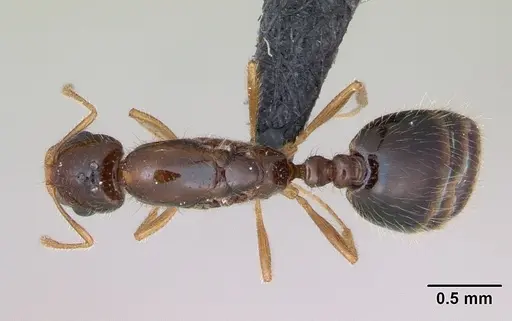
CASENT0041614
View on AntWeb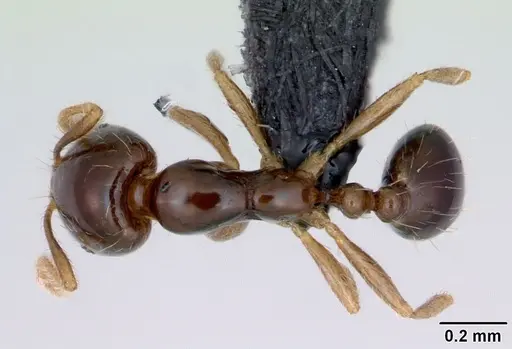
CASENT0178896
View on AntWeb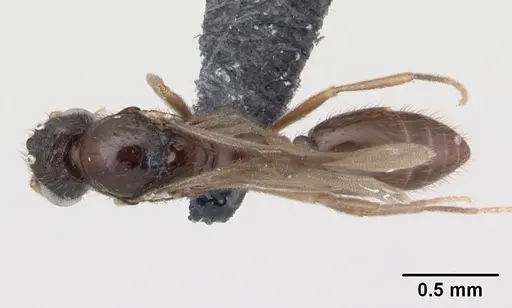
CASENT0401520
View on AntWeb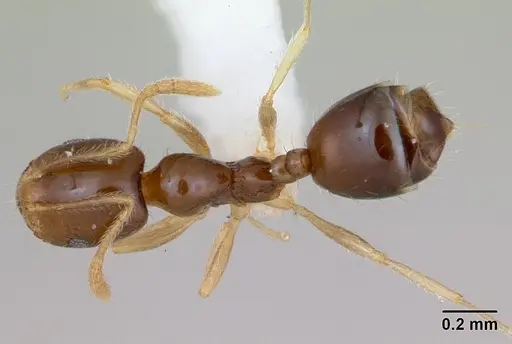
CASENT0416057
View on AntWeb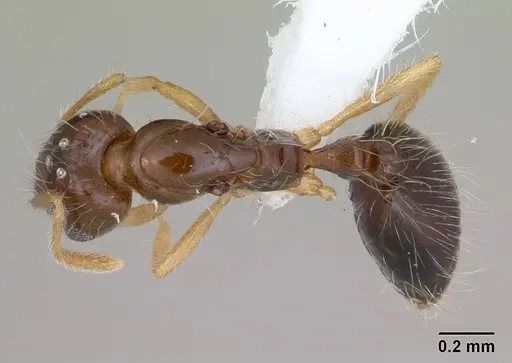
Literature
Loading distribution map...Loading products...