
Monomorium fastidium
- Sci. Name
- Monomorium fastidium
- Tribe
- Solenopsidini
- Subfamily
- Myrmicinae
- Author
- Bolton, 1987
- Distribution
- Found in 1 countries
Introduction
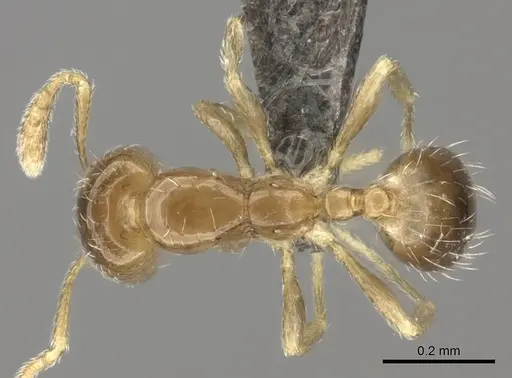
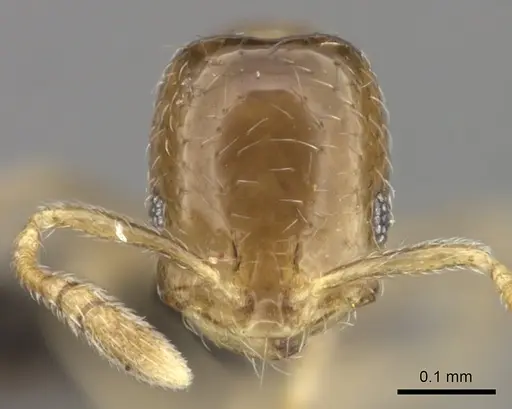
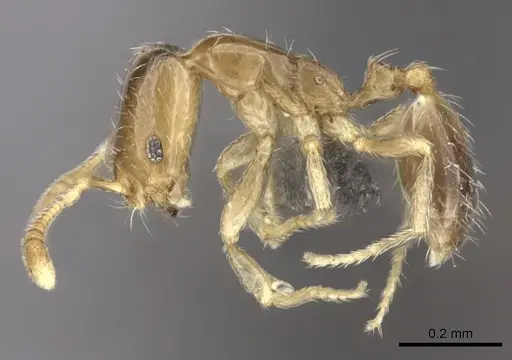
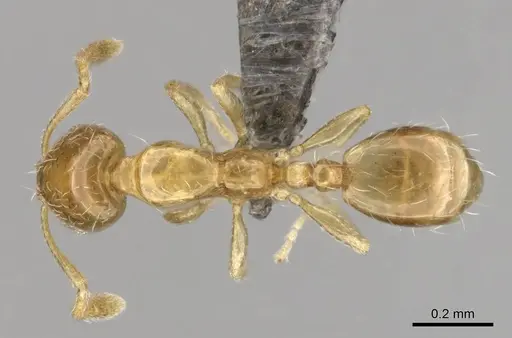
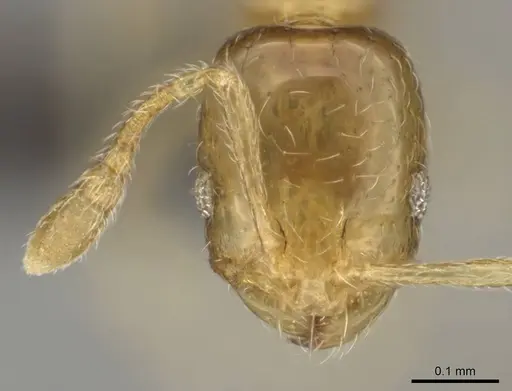
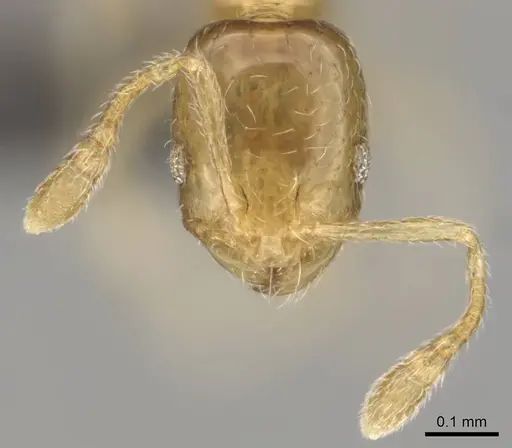
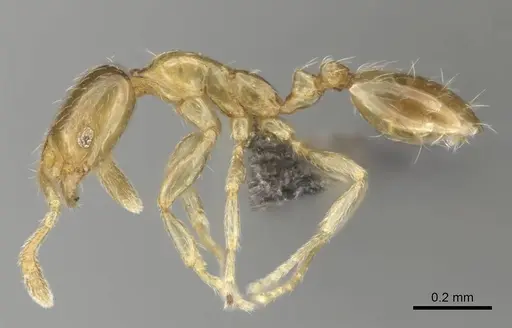
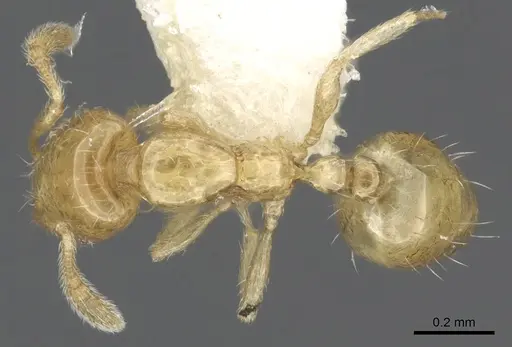
Monomorium fastidium is an exceptionally tiny yellow ant species native to South Africa, measuring just 1.4mm in total length . Workers are a uniform dull pale yellow color with 11 antennal segments, belonging to the Monomorium monorium species group, specifically the boerorum complex . The species was described by Bolton in 1987 from specimens collected in eucalyptus litter near Port Elizabeth, though subsequent collections have primarily come from grassland habitats . This species shows interesting elevation preferences, being a positive indicator taxon that increases in abundance above 1400m elevation in Afromontane habitats . Workers possess a sting for defense, injecting venom composed of piperidine alkaloids, typical of the Solenopsidini tribe.
Quick Summary
- Difficulty: Medium
- Origin & Habitat: South Africa (Eastern Cape Province). Found in grassland habitats and originally collected from eucalyptus litter near Port Elizabeth [1]. Shows positive correlation with elevation in Afromontane regions, increasing in abundance above 1400m [2].
- Colony Type: Colony structure is unconfirmed. No specific data on queen number or colony organization is available.
- Size & Growth:
- Antkeeping:
- Temperature: Keep around 20-24°C. The elevation preference data suggests they can tolerate cooler conditions, but avoid extremes [2].
- Humidity: Moderate humidity around 50-70%. The eucalyptus litter origin suggests they prefer some moisture but not saturated conditions [1].
- Diapause: Unknown, South African species may have reduced activity in cooler months but diapause requirements are unstudied.
- Nesting: Natural nesting occurs in soil and leaf litter. In captivity, a test tube setup works well. Keep nesting material slightly moist but not waterlogged.
- Behavior: Workers are tiny and very active. Due to their minute size (1.4mm), escape prevention is critical, they can squeeze through extremely small gaps. Workers possess a sting for defense, though due to their tiny size the effect is minimal. Temperament appears peaceful based on genus patterns.
- Common Issues: escape prevention is critical due to their extremely small 1.4mm size, use fine mesh and tight-fitting barriers, limited available information means care is based on genus inference rather than species-specific studies, very small workers can easily drown in water sources, ensure hydration methods are safe, sensitive to habitat disturbance, absent from rehabilitated areas in studies
Appearance and Identification
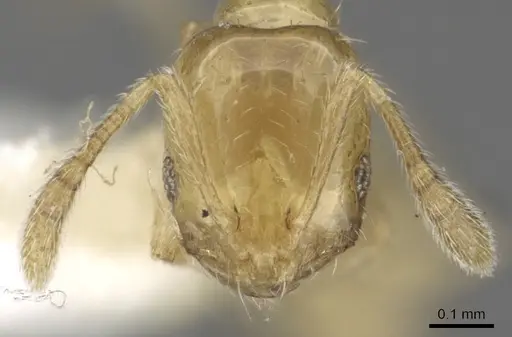
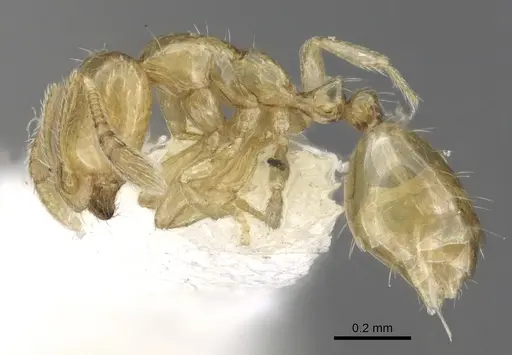
Monomorium fastidium is one of the smaller ant species you can keep, with workers measuring just 1.4mm in total length [1]. They have a uniform dull pale yellow coloration throughout their body, making them appear almost translucent in certain lighting. Workers have 11 antennal segments, and when viewed from above, the head is broadest toward the back and narrows toward the front [1]. The eyes are relatively large for their body size and positioned toward the front of the head. This species belongs to the Monomorium monorium species group, specifically the boerorum complex, which distinguishes it from similar tiny yellow ants like M. mictilis [1]. Queens are larger than workers but specific measurements are not documented.
Natural Habitat and Distribution
This species is endemic to South Africa, specifically the Eastern Cape Province around Port Elizabeth [1]. The original type specimens were collected from eucalyptus litter, suggesting they can tolerate some modified habitats [1]. However, subsequent collections have primarily come from grassland habitats, indicating a preference for open grassy areas [1]. Research in Afromontane regions shows M. fastidium is a positive indicator species that increases in abundance at higher elevations, with a change point around 1400m [2]. This elevation preference suggests they may prefer cooler conditions than many other African ants. In rehabilitation studies, they were found in control (undisturbed) grassland sites but nearly absent from rehabilitated areas, indicating sensitivity to habitat disturbance [3].
Housing and Nest Setup
Due to their extremely small size of 1.4mm, escape prevention is your biggest concern when housing Monomorium fastidium [1]. Use test tubes with cotton plugs that are packed tightly, and consider adding a barrier like fluon to the rim. If using any formicarium or outworld, ensure all connections are sealed and use fine mesh on any ventilation. A small test tube setup works well for founding colonies, fill it about 1/3 with water and use cotton to create a water reservoir. For established colonies, a small ytong nest with chambers scaled to their tiny size works best. Keep the nest material slightly moist, they originated from litter habitats so some moisture is appreciated but avoid waterlogging.
Feeding and Diet
Like other Monomorium species, these ants are likely omnivorous with a preference for sweet liquids and protein. Offer sugar water or honey diluted with water at all times as a constant energy source. For protein, offer very small prey items, their tiny 1.4mm workers cannot tackle large insects. Small fruit flies, pinhead crickets, or other micro-arthropods work well. Given their small size, prey items should be no larger than they can manage. You may also see them tending aphids for honeydew if you have plants in their outworld. Feed protein roughly twice weekly, and remove any uneaten prey after 24 hours to prevent mold issues.
Temperature and Seasonal Care
Based on their elevation preference (increasing above 1400m), Monomorium fastidium likely prefers cooler conditions than typical tropical ants [2]. Aim for temperatures in the range of 20-24°C. Room temperature in many homes should fall within this range. Avoid placing their nest near direct heat sources that could cause drying. South Africa has seasonal variation, so they may experience cooler periods naturally. While specific diapause requirements are unknown, reducing temperatures slightly during winter months may be appropriate. Monitor colony activity, if workers become sluggish, temperatures may be too low.
Colony Development and Growth
Monomorium fastidium colonies will likely remain relatively small compared to some other ant species. The founding process has not been documented for this species. Development from egg to worker is unstudied. The first workers will be smaller than normal workers (nanitics) and the colony will grow gradually as more workers develop. Be patient with founding colonies, they are vulnerable and should be disturbed as little as possible.
Frequently Asked Questions
How long does it take for Monomorium fastidium to produce first workers?
The exact timeline is not documented for this species. Based on related Monomorium species, expect several weeks from egg to first worker emergence under optimal temperatures around 22°C. The queen will typically remain sealed in her founding chamber until nanitics (first workers) hatch.
What do Monomorium fastidium ants eat?
They are omnivorous like other Monomorium species. Offer constant sugar water or diluted honey for energy, and small protein sources like fruit flies, micro-arthropods, or appropriately sized cricket pieces twice weekly. Their tiny 1.4mm workers need very small prey items.
Are Monomorium fastidium ants difficult to keep?
They are rated Medium difficulty primarily due to their extremely small size requiring excellent escape prevention. They are otherwise relatively straightforward once you prevent escapes.
What temperature do Monomorium fastidium ants need?
Keep them around 20-24°C. Their elevation preference in the wild (increasing above 1400m) suggests they tolerate cooler conditions than many ants. Room temperature is often suitable.
How big do Monomorium fastidium colonies get?
Colony size has not been documented for this species. Based on typical Monomorium genus patterns, colonies likely remain relatively small. Exact maximum is unknown as this species has not been extensively studied in captivity.
Can I keep multiple Monomorium fastidium queens together?
Colony structure (monogyne vs polygyne) has not been documented for this species. Unless you have specific information, it is not recommended to combine unrelated foundress queens as they may fight.
Why are my Monomorium fastidium ants escaping?
Their extremely small 1.4mm size means they can squeeze through gaps invisible to the naked eye. Check all connections, use tight-fitting lids, apply fluon to barrier surfaces, and use fine mesh on any ventilation. Escape prevention must be excellent.
Do Monomorium fastidium ants need hibernation?
Specific diapause requirements are unknown. South African species experience seasonal variation, so a slight temperature reduction during winter months may be appropriate, but true cold hibernation is likely not required.
What type of nest should I use for Monomorium fastidium?
A small test tube setup works well for founding colonies. For established colonies, use a small ytong nest with chambers scaled to their tiny 1.4mm worker size. Keep the nest material slightly moist but not waterlogged.
Report an Issue
The current care sheet is based fully on literature. See inconsistencies, or something that's incorrect? Please , it will be resolved after review from an admin. Contributing to the blogs tab also helps providing information, to make us be able to further improve the caresheets. Thank you for your support!
References

This caresheet is licensed under CC BY-SA 4.0 .
Community Blogs
Literature
Loading distribution map...Loading products...