
Caribbean Trailing Ant
Monomorium ebeninum
- Sci. Name
- Monomorium ebeninum
- Tribe
- Solenopsidini
- Subfamily
- Myrmicinae
- Author
- Forel, 1891
- Common Name
- Caribbean Trailing Ant
- Distribution
- Found in 19 countries
Introduction
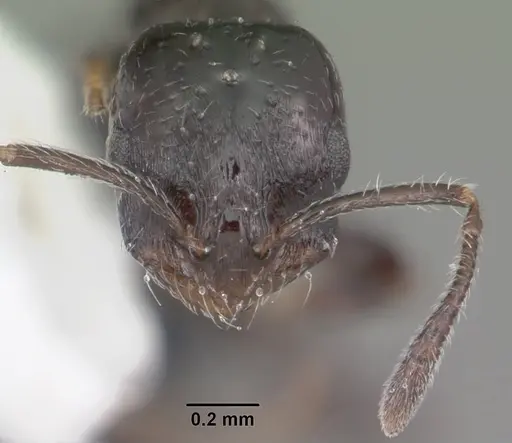
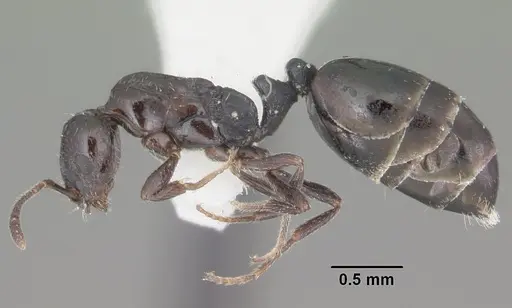
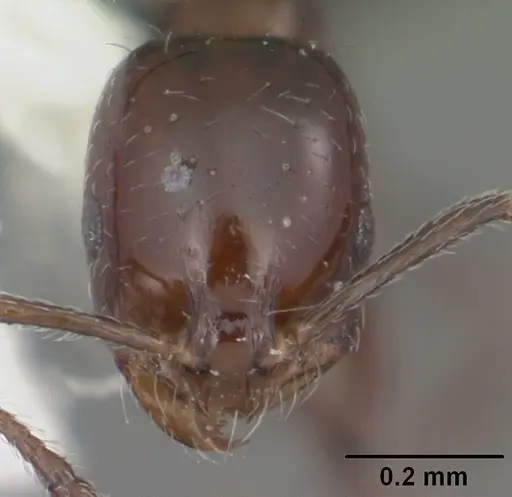
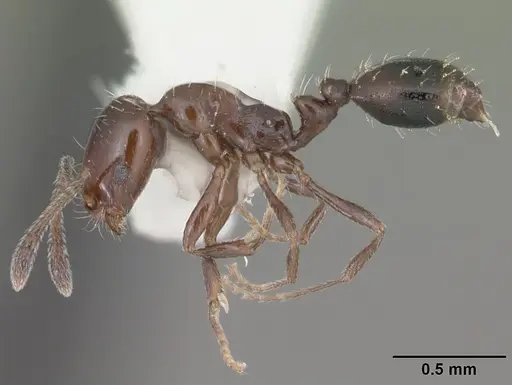
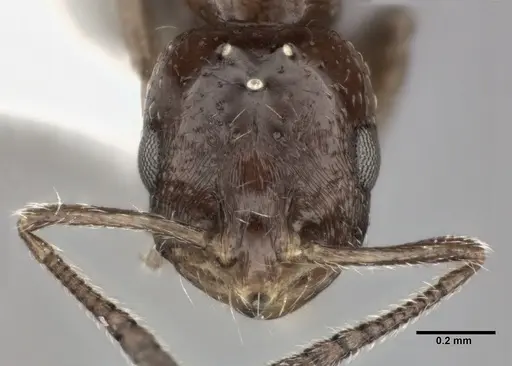
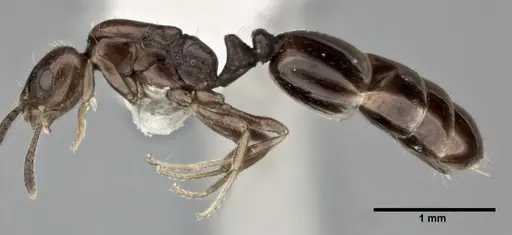
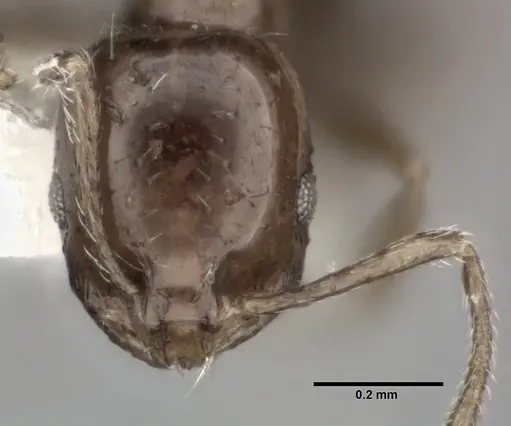
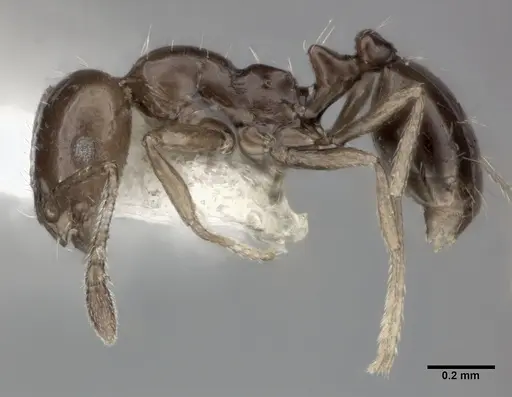
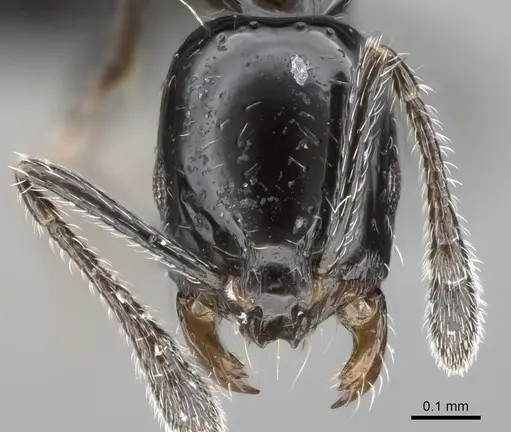
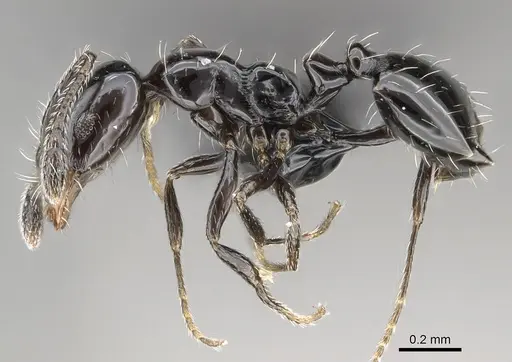
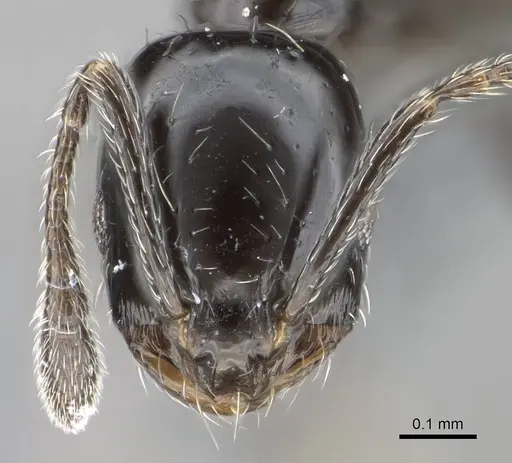
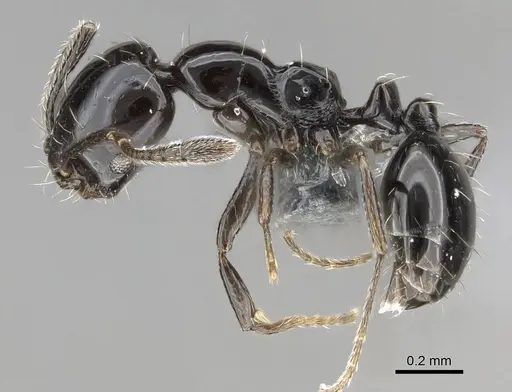
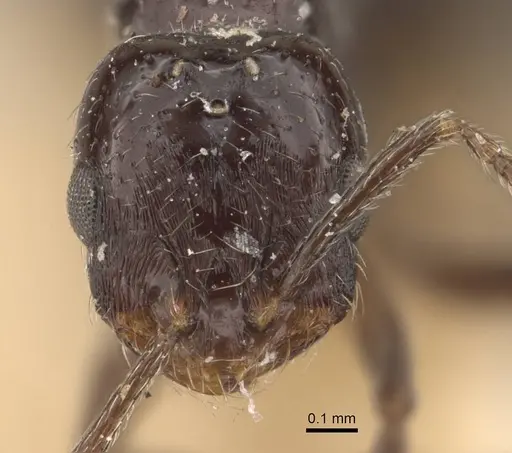
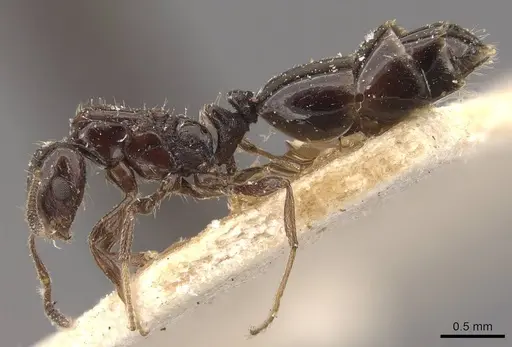
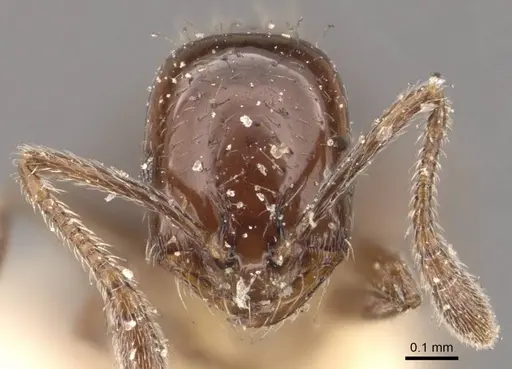
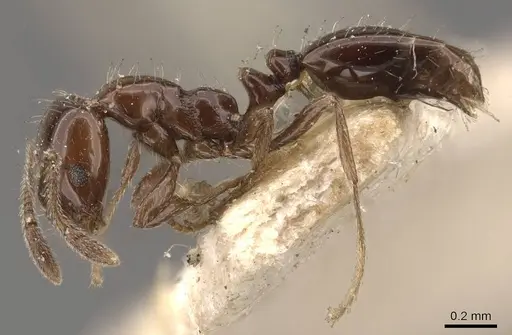
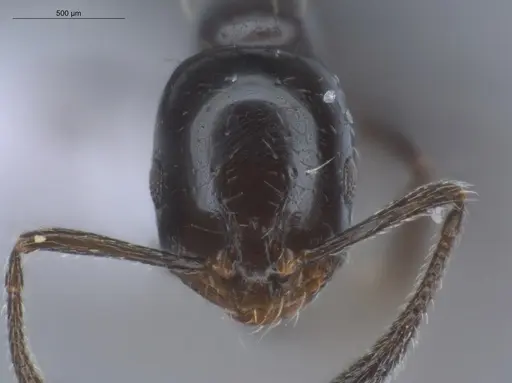
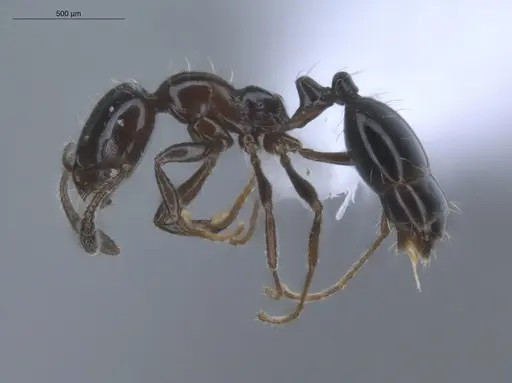
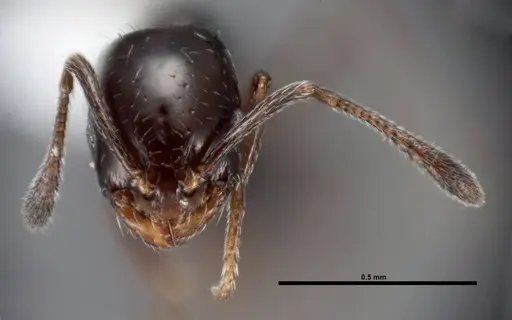
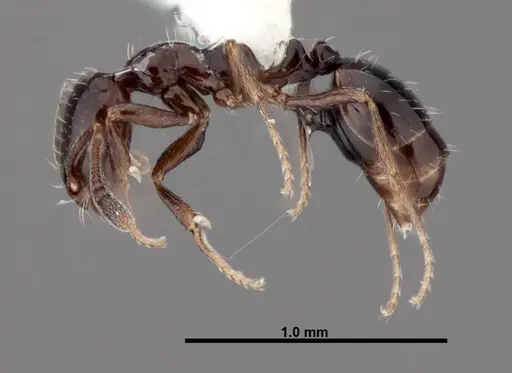
Monomorium ebeninum is a tiny black ant native to the Caribbean islands, Central America, and southern Florida. Workers measure about 1.8 to 2 mm total length, with a dark brown to jet black body that's smooth and shiny . The metanotal groove (the waist between the middle and rear body sections) is very deep, and the propodeum is sharply angled . This species is one of the most common ants in coastal areas of the West Indies and is remarkably adaptable – colonies nest under stones, in dead branches, inside Tillandsia bromeliads, in cabbage heads, banana leaf sheaths, and even in the fruits of roselle . What makes Monomorium ebeninum special is its colony structure. These ants are polygynous – colonies can have multiple queens, sometimes up to 12 in a single nest . The queens are completely wingless (ergatoid), so they never fly. Instead, males and queens mate on the ground near the nest entrance. The species is a generalist forager that loves honeydew from aphids and scale insects, but it also actively hunts small prey, including the eggs of the sugarcane moth borer .
Quick Summary
- Difficulty: Easy
- Origin & Habitat: Caribbean islands (Barbados, Cuba, Dominican Republic, Puerto Rico, Virgin Islands, Grenada, St. Vincent, St. Thomas), Central America (Guatemala, Honduras, Costa Rica, Nicaragua), Mexico, and the Florida Keys. Found in coastal areas, disturbed dry forest, xeromorphic scrub, and agricultural land. Elevations from sea level up to 1,500 m [4][5][6][7].
- Colony Type: Polygynous (multiple queens per colony, up to 12 documented) with ergatoid (wingless) queens. This is a native, non-parasitic species [3][4].
- Size & Growth:
- Queen: Queens are wingless (ergatoid), total length about 4 to 5 mm – inferred from the genus Monomorium since direct measurements are not available [2].
- Worker: Workers are very small, about 1.8 to 2 mm total length [1].
- Colony: Colonies become populous – exact maximum worker counts are unconfirmed, but estimated to reach several hundred to over a thousand workers in long-established colonies.
- Growth: Moderate (faster than temperate species, but slower than some tropical tramp ants)
- Development: Estimated 4 to 6 weeks at warm tropical temperatures (25–28°C), based on typical Monomorium development patterns. Direct measurements are not available. (Tropical species – faster development expected at higher temperatures. Ergatoid queens do not fly, so colony foundation may be slower than for claustral flying queens.)
- Antkeeping:
- Temperature: Keep at 24–28°C (75–82°F). This tropical species thrives in warmth and shows high temperature tolerance (nearly 3 hours at 45°C in studies). A heating cable on one side of the nest creates a comfortable gradient [8]. Avoid cold drafts.
- Humidity: Provide a humidity gradient: keep one part of the nest substrate slightly moist (not waterlogged) and allow other areas to dry out. This matches their natural nesting diversity – from dry twigs to damp soil. A test tube with a water reservoir works well for small colonies.
- Diapause: No – as a tropical species from the Caribbean and Central America, they do not require hibernation. Keep them warm year-round.
- Nesting: Use small, tight-fitting nests scaled to their tiny size. Test tubes work well for founding. For larger colonies, use Y-tong (AAC) or plaster nests with small, ready-made chambers – they prefer pre-formed cavities, not extensive digging substrates. Do NOT use acrylic nests.
- Behavior: These ants are diurnal and very active foragers. They are aggressive scavengers and predators, readily attacking prey and defending food sources [9]. Workers are small but bold, and they accept a wide variety of foods including sugars, proteins, and small insects. Because of their tiny size, escape prevention is critical – they can squeeze through gaps smaller than 1 mm. Use fine mesh barriers, tight-fitting lids, and wet Fluon coating in the outworld. They are not aggressive toward humans and rarely sting. Colonies are adaptable and thrive in both natural and disturbed habitats [6][2].
- Common Issues: tiny workers – escapes are likely without fine mesh barriers and tight seals, cold temperatures can stress these tropical ants – always keep them above 22°C, ergatoid queens don't fly, so you can't catch them by standard flight-attraction methods, polygynous colonies may have brief territorial disputes when combining queens, separate if aggression continues, wild-caught colonies may carry parasites – isolate new acquisitions and watch for sick workers
Housing and Setup
Monomorium ebeninum is tiny, so your housing must match their size. Test tubes work perfectly for founding colonies – the small diameter gives a secure, enclosed space that mimics their natural cavities in twigs and plant stems. For larger colonies, use Y-tong (AAC) nests or small plaster nests with narrow chambers. Avoid large, open spaces that make these small ants feel exposed.
Escape prevention is critical. Workers are only about 2 mm and can squeeze through gaps you would never expect. Use tight-fitting lids, apply Fluon to barrier zones, and seal all connections between the outworld and nest. A small outworld works best – too much space makes it hard for them to find food and can lead to scattered colonies.
These ants do not need elaborate digging setups. In nature, they nest in pre-made cavities like hollow twigs, under stones, and in plant cavities [4][3]. They will readily occupy test tubes, plaster nests, or Y-tong nests with ready-made chambers. Do not use acrylic nests.
Feeding and Diet
Monomorium ebeninum is a generalist omnivore, which makes feeding easy. They accept sugar sources like honey water, sugar water, or diluted maple syrup. Offer a drop every few days and refresh it before it ferments.
For protein, offer small prey such as fruit flies, pinhead crickets, or small mealworms. In the wild, they are strong predators and even hunt eggs of the sugarcane moth borer [3]. They also tend aphids and scale insects for honeydew [2].
Feed protein two to three times per week, adjusting based on colony size. Remove uneaten prey after 24 hours to prevent mold. Because they are tiny, portion sizes should be very small – a few drops of sugar water and prey items smaller than their head.
Temperature and Seasonal Care
Keep your colony warm year-round. Monomorium ebeninum is a tropical Caribbean ant, so it thrives at 24–28°C (75–82°F). Room temperature in most homes is fine, but you may need a heating cable in cooler climates or during winter. Place the heating cable on top of the nest material, not underneath, to avoid drying the nest too quickly.
Unlike temperate species, they do not need hibernation. Cold temperatures stress them and slow colony growth. Studies show they can tolerate high temperatures (nearly three hours at 45°C), but their preference is for consistent warmth [8]. Avoid placing the nest near air-conditioning vents or cold windows.
Maintain stable conditions rather than dramatic swings. A slight temperature gradient (warm on one side, cooler on the other) lets the ants choose their preferred zone.
Colony Structure and Queens
One of the most interesting aspects of Monomorium ebeninum is its colony structure. Unlike most ants with a single queen, this species is polygynous – colonies commonly have multiple reproductive queens, sometimes up to 12 in a single nest [3]. The queens are also unique: they are completely wingless (ergatoid) and never fly.
Because queens are ergatoid, nuptial flights do not happen the way they do for flying ants. Males and wingless queens mate on the ground or near the nest entrance instead. If you keep multiple ergatoid queens together, they usually coexist peacefully. However, monitor for aggression when first combining queens – polygynous colonies can sometimes have brief territorial disputes.
Wingless queens means you cannot catch them with flight traps or light sheets. You must obtain them from a breeder or collect them directly from an existing colony.
Behavior and Foraging
Monomorium ebeninum is an active, diurnal forager. Workers search for food during the day and quickly discover and exploit food sources. They are aggressive little ants that defend food resources and can displace other small ant species at baits [9].
Their foraging style is generalist – they take sugars, proteins, and small prey. In studies, they were classified as arboreal omnivores and ground-dwellers, showing flexibility in where they search for food [10][11]. They are known to be diurnal in grassland and agricultural land, and their activity is reduced on cloudy days [9].
These ants are not aggressive toward humans and rarely sting. Their small size means even if they try, the sting barely penetrates skin. The main concern for keepers is escape – use excellent barrier prevention because they are tiny.
Frequently Asked Questions
How long does it take for Monomorium ebeninum to go from egg to worker?
Exact development times are unconfirmed for this species, but based on typical Monomorium patterns and their tropical origin, expect 4 to 6 weeks at optimal warm temperatures (25–28°C). Development slows at cooler temperatures.
Can I keep multiple Monomorium ebeninum queens together?
Yes – this species is naturally polygynous, with up to 12 queens documented in a single nest [3]. Multiple ergatoid (wingless) queens can be kept together and will usually coexist peacefully. Monitor for any aggression when first combining queens.
What do Monomorium ebeninum eat?
They are generalist omnivores. Offer sugar water or honey as a constant energy source, and protein prey like fruit flies, small crickets, or mealworms two to three times weekly. They also tend aphids and scale insects for honeydew [3][2].
Do Monomorium ebeninum need hibernation?
No – they are a tropical Caribbean species and do not require hibernation. Keep them warm year-round at 24–28°C. Cold temperatures can stress them and slow colony growth.
Are Monomorium ebeninum good for beginners?
Yes – they are relatively easy to keep due to their adaptability and generalist diet. The main challenges are their tiny size (requires excellent escape prevention) and keeping them warm. They are not aggressive and rarely sting.
When should I move my Monomorium ebeninum to a formicarium?
Start them in a test tube setup for founding. Once the colony reaches about 20 to 30 workers and you regularly see brood, you can transition to a small formicarium like a Y-tong or plaster nest with narrow chambers. Only move when the new nest is pre-heated and humidified.
Why are my Monomorium ebeninum queens wingless?
This is normal – Monomorium ebeninum has ergatoid queens, meaning they are born without wings. This is a species characteristic, not a health issue. Instead of flying to find mates, wingless queens mate near the nest entrance [3][2].
How big do Monomorium ebeninum colonies get?
Colonies can become populous with multiple queens (up to 12 documented). The exact maximum worker count is unconfirmed, but based on related species, expect several hundred to over 1,000 workers in mature colonies [3].
Report an Issue
The current care sheet is based fully on literature. See inconsistencies, or something that's incorrect? Please , it will be resolved after review from an admin. Contributing to the blogs tab also helps providing information, to make us be able to further improve the caresheets. Thank you for your support!
References

This caresheet is licensed under CC BY-SA 4.0 .
Community Blogs
CASENT0104082
View on AntWeb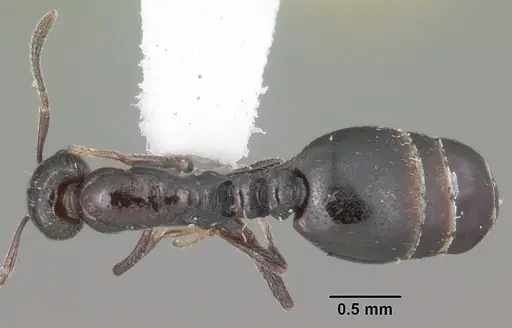
CASENT0104083
View on AntWeb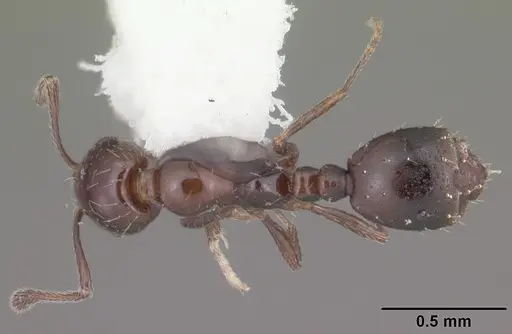
CASENT0246063
View on AntWeb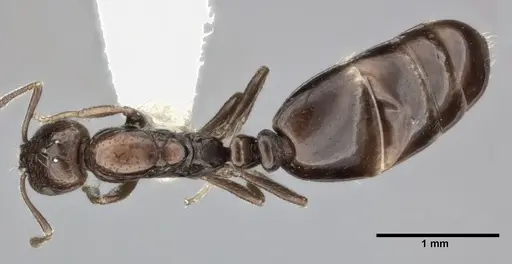
CASENT0246064
View on AntWeb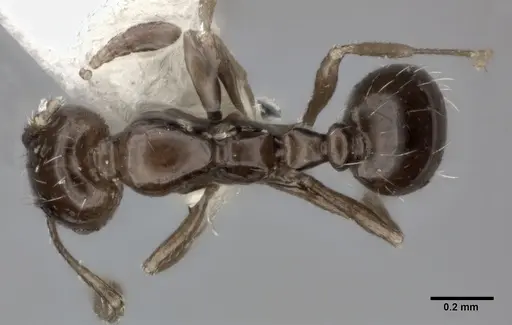
CASENT0318457
View on AntWeb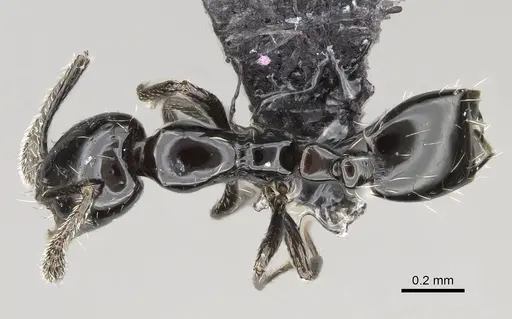
CASENT0729633
View on AntWeb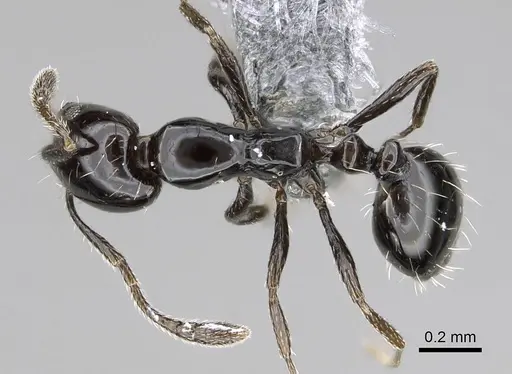
CASENT0908695
View on AntWeb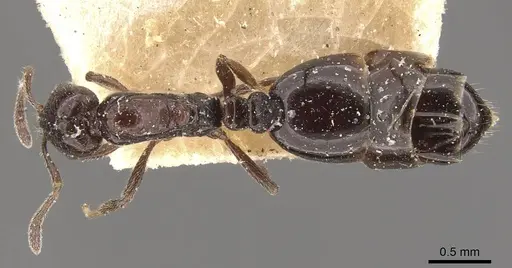
CASENT0908696
View on AntWeb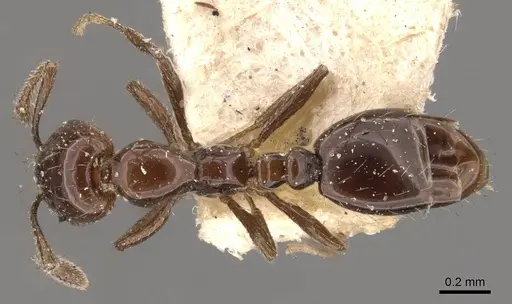
ECOFOG-BOUM-0507-01
View on AntWeb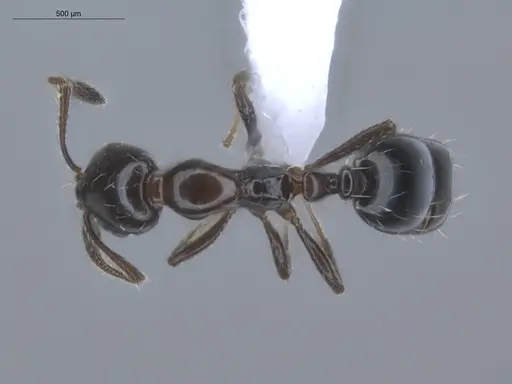
FMNHINS0000088660
View on AntWeb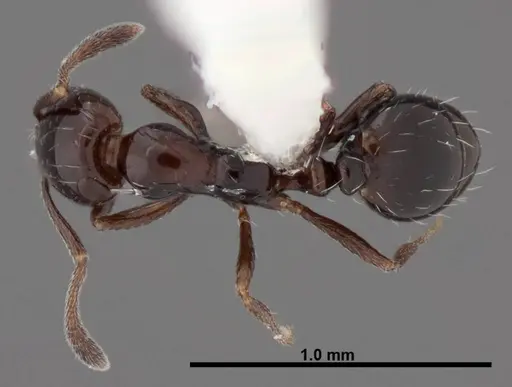
Literature
Loading distribution map...Loading products...