
Monomorium draxocum
- Sci. Name
- Monomorium draxocum
- Tribe
- Solenopsidini
- Subfamily
- Myrmicinae
- Author
- Bolton, 1987
- Distribution
- Found in 6 countries
Introduction
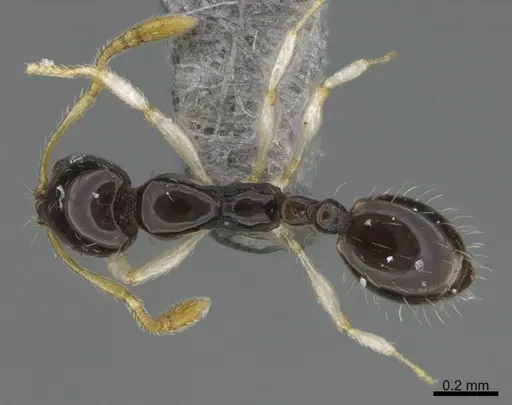
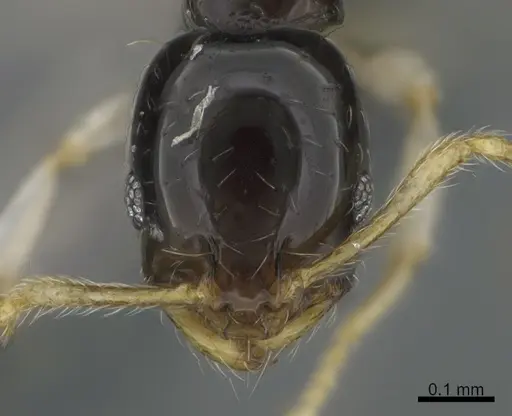
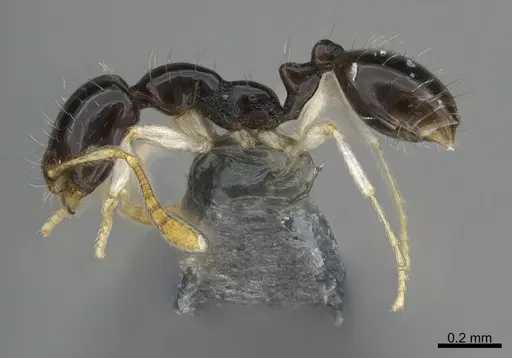
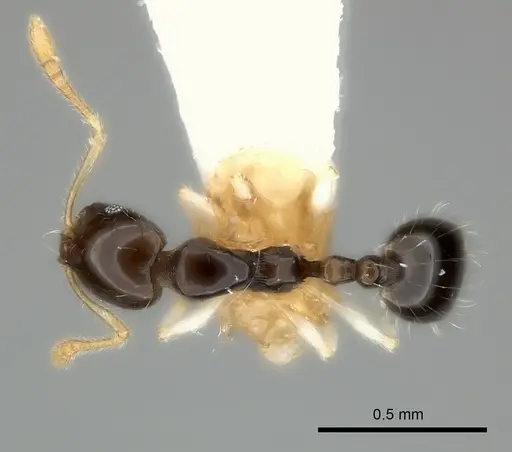
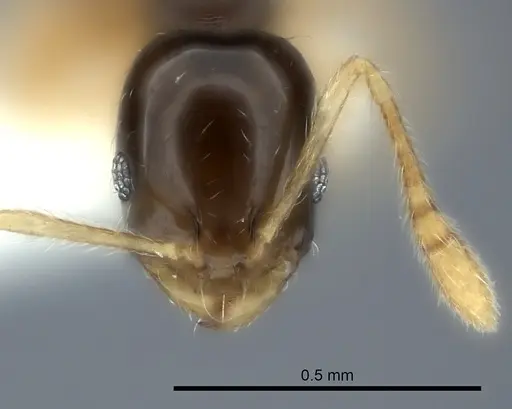
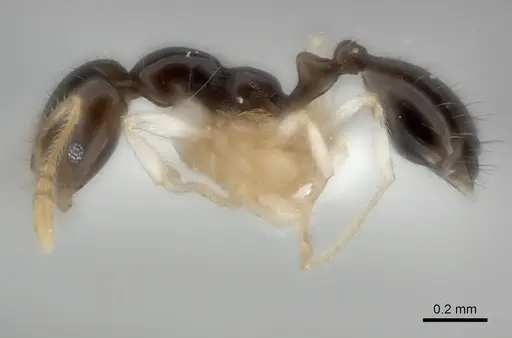
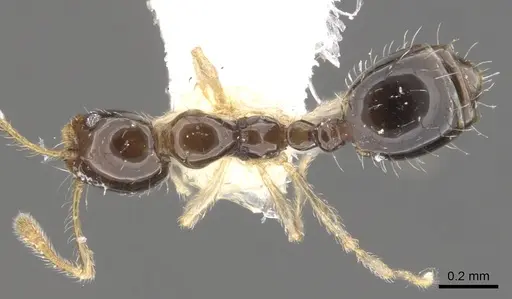
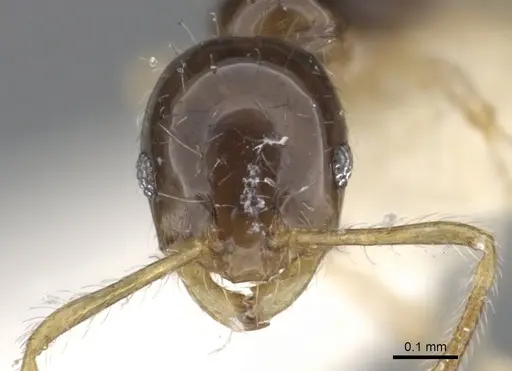
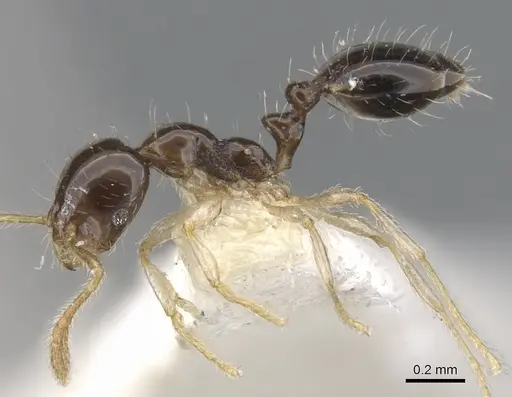
Monomorium draxocum is a tiny ant species from the Afrotropical region, measuring just 1.7-1.9mm in total length . Workers have a dark brown head and alitrunk, a black gaster, and conspicuously pale yellow legs that stand out against their darker body . They belong to the Monomorium monorium species group and are closely related to M. noxitum, M. gabrielense, and M. strangulatum - so similar that M. draxocum and M. noxitum may eventually prove to be the same species when more specimens are studied . These ants inhabit mesic forests across central to east Africa, including Cameroon, Gabon, Angola, and Kenya, where they live in leaf litter at elevations between 375-640m . This is a rarely kept species in the antkeeping hobby. Very little captive care information exists. As a tiny leaf-litter ant from African forests, they likely prefer stable, humid conditions with small prey items. Their small size makes them challenging to house and feed.
Quick Summary
- Difficulty: Expert
- Origin & Habitat: Afrotropical region, Cameroon, Gabon, Angola, and Kenya. Inhabits mesic forests at elevations of 375-640m, living in leaf litter [2][1].
- Colony Type: Colony structure is unconfirmed for this species.
- Size & Growth:
- Queen: Undocumented, no queen description is available [1].
- Worker: 1.7-1.9mm total length [1].
- Colony: Likely small colonies based on typical patterns for tiny Monomorium species.
- Growth: Unknown, no development data exists for this species.
- Development: Unconfirmed, no direct measurements exist. (Development timeline has not been studied.)
- Antkeeping:
- Temperature: Unconfirmed, no thermal studies exist for this species. Based on their African forest habitat, they likely prefer warm conditions around 24-26°C. Start in this range and observe colony activity for guidance.
- Humidity: Based on mesic forest habitat, they require moderate to high humidity. Keep the nest substrate consistently moist but not waterlogged. Provide a humidity gradient so ants can self-regulate.
- Diapause: Unlikely, as a tropical species from central Africa, they probably do not require a diapause period. No seasonal data exists to confirm this.
- Nesting: In nature they live in leaf litter and rotting wood in forest habitats. In captivity, a small naturalistic setup with fine substrate or a small Y-tong/plaster nest with tight chambers works well. Their tiny size means chambers must be appropriately scaled.
- Behavior: Behavior is poorly documented. As a tiny leaf-litter ant, they are likely secretive and slow-spreading. Their small size makes escape prevention critical, they can squeeze through extremely small gaps. Likely non-aggressive and unlikely to sting humans due to their minute size. Foraging style is unknown but they likely scavenge for small prey and honeydew.
- Common Issues: tiny size makes them escape risks, use fine mesh and tight-fitting barriers., lack of documented care information means keepers must experiment with conditions., slow colony growth may frustrate beginners, patience is required., wild-caught colonies may have parasites that are difficult to treat., feeding small prey to such tiny ants requires specialized very small food items.
Housing and Escape Prevention
Monomorium draxocum is an extremely small ant species, with workers measuring just 1.7-1.9mm [1]. This tiny size is the single most important factor in housing decisions, they can squeeze through gaps that seem impossible. You must use excellent escape prevention including fine mesh, tight-fitting lids, and reliable barrier methods like Fluon on test tube rims or nest edges. A test tube setup works well for founding colonies, but ensure the cotton is packed tightly. For established colonies, a small naturalistic setup with a fine substrate or a small Y-tong/plaster nest with appropriately sized chambers works best. The chambers should be small and tight, avoid large, open spaces that can stress these tiny ants.
Feeding and Diet
Diet for this species is not documented, but based on typical Monomorium genus patterns and their tiny size, they likely scavenge for small arthropods and honeydew. You should offer small live prey items appropriate to their size. Instead, offer fruit flies, newly hatched mealworms cut into tiny pieces, springtails, or other micro-arthropods. Sugar sources may be accepted, you can offer a small drop of sugar water or honey, but monitor to see if they accept it. Feed small amounts of protein a few times per week, removing any uneaten prey after 24-48 hours. Due to their tiny size, even a single fruit fly is a significant meal for them.
Temperature and Humidity
No specific thermal or humidity data exists for this species, so keepers must make educated inferences from their natural habitat. They come from mesic forests in central Africa at elevations of 375-640m [2]. This suggests they prefer stable, warm, and moderately humid conditions. Start with temperatures around 24-26°C and humidity in the 60-80% range. Use a moisture gradient in the nest so ants can self-regulate, some areas slightly damp, others slightly drier. Avoid temperature extremes or sudden fluctuations.
Colony Establishment and Growth
Very little is known about colony founding and growth for this species. The queen has not been described, so we do not know her size or founding method [1]. Colony growth is likely slow due to their tiny size, expect small numbers of workers initially. Colonies probably remain small based on patterns seen in other small Monomorium species. Patience is essential with this species, do not expect rapid growth. Keep founding colonies in dark, quiet locations and minimize disturbances until the first workers appear.
Behavior and Temperament
As a tiny leaf-litter ant from African forests, M. draxocum is likely secretive and not particularly aggressive. Their small size means they are not capable of stinging humans in any meaningful way. They probably forage individually or in small groups rather than forming large raiding columns. Workers are characterized by their distinctive appearance: dark brown head and alitrunk, black gaster, and conspicuously pale yellow legs [1]. They have prominent standing hairs on the head and body [1]. Their eyes are relatively large compared to many ants, which may indicate active foraging with good vision.
Frequently Asked Questions
How long does it take for Monomorium draxocum to go from egg to worker?
The development timeline has not been documented for this species. You will need to be patient and document your own observations.
What do I feed Monomorium draxocum?
Due to their tiny size, they need very small prey items. Offer fruit flies, tiny springtails, or small pieces of newly hatched mealworms. Sugar water or honey may be accepted. Remove uneaten prey within 24-48 hours.
Are Monomorium draxocum good for beginners?
No. This is an expert-level species due to their tiny size, lack of documented care information, and likely slow colony growth. Beginners should start with more common species.
How big do Monomorium draxocum colonies get?
Colony size is not documented, but based on typical patterns for tiny Monomorium species, colonies likely remain small.
What temperature do Monomorium draxocum need?
No specific temperature requirements are documented. Based on their African forest habitat, aim for 24-26°C. Use a temperature gradient so they can self-regulate.
Do Monomorium draxocum need hibernation?
Unlikely. As a tropical species from central Africa, they probably do not require a diapause or hibernation period.
How do I prevent Monomorium draxocum from escaping?
Escape prevention is critical due to their tiny size. Use fine mesh, tight-fitting lids, and apply barrier substances like Fluon to all edges. Even the smallest gap is a potential escape route for these ants.
Can I keep multiple Monomorium draxocum queens together?
The colony structure has not been documented for this species. Until more information is available, it is not recommended to combine unrelated queens. Keep single-queen colonies.
When should I move Monomorium draxocum to a formicarium?
Move them when the colony reaches a few dozen workers and the test tube becomes crowded. However, given their tiny size and preference for leaf-litter habitats, a naturalistic setup with fine substrate may be more appropriate than a traditional nest.
Report an Issue
The current care sheet is based fully on literature. See inconsistencies, or something that's incorrect? Please , it will be resolved after review from an admin. Contributing to the blogs tab also helps providing information, to make us be able to further improve the caresheets. Thank you for your support!
References

This caresheet is licensed under CC BY-SA 4.0 .
Community Blogs
Literature
Loading distribution map...Loading products...