
Monomorium denticulatum
- Sci. Name
- Monomorium denticulatum
- Tribe
- Solenopsidini
- Subfamily
- Myrmicinae
- Author
- Mayr, 1887
- Distribution
- Found in 2 countries
Introduction
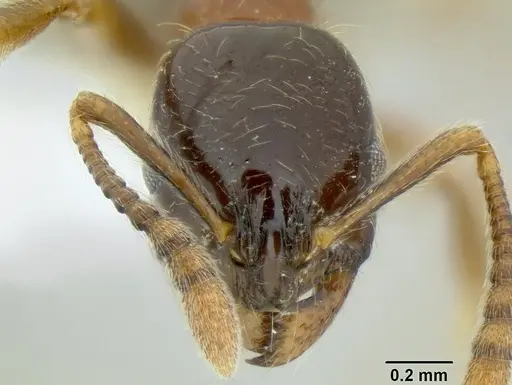
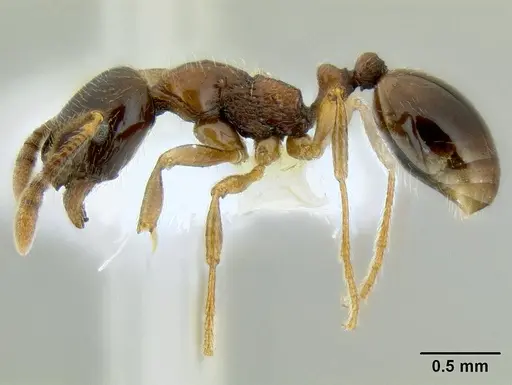
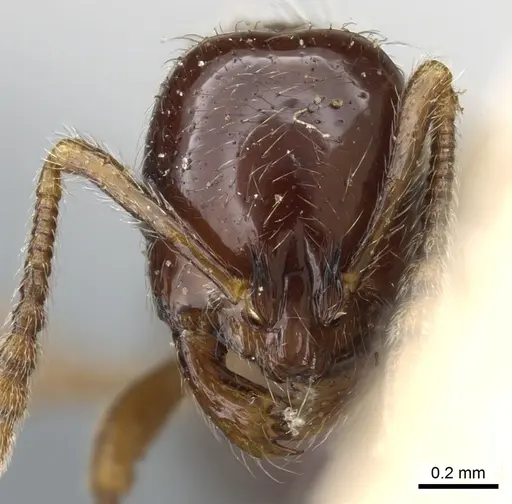
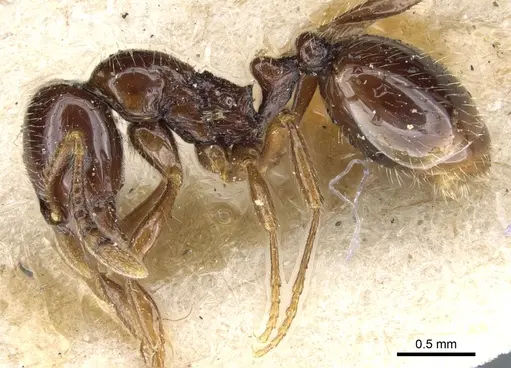
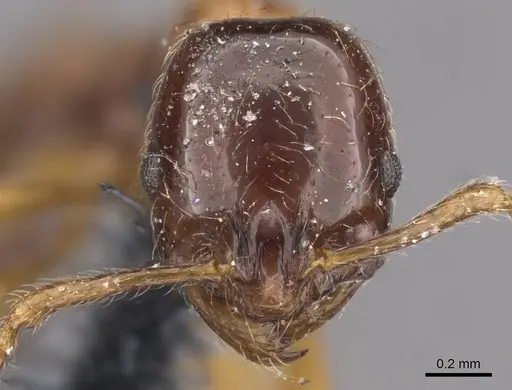
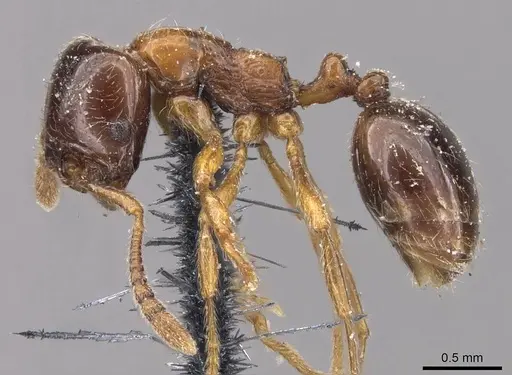
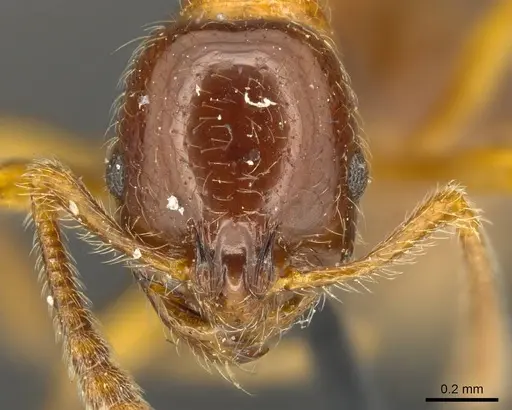
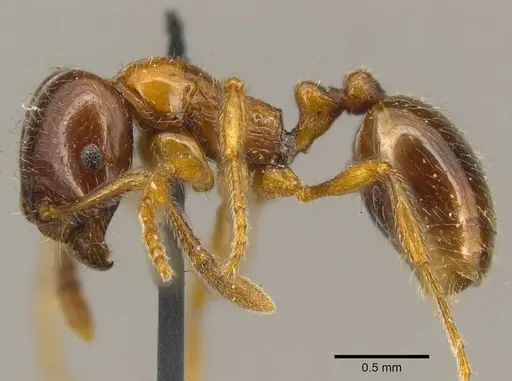
Monomorium denticulatum is a small ant species native to southern South America, found throughout Chile from Santiago to Magallanes and into Argentina, including the Tierra del Fuego region . Workers measure approximately 3mm in total length, with a distinctive yellow body and brown head . The species has undergone several taxonomic reclassifications, having been moved between genera including Monomorium, Notomyrmex, Nothidris, and Antichthonidris before being returned to Monomorium . This ant belongs to the Solenopsidini tribe and forms a phylogenetic clade with the genus Oxyepoecus . The clypeus is bicarinate (has two ridges), and the mandibles have 5 teeth . The propodeum may be unarmed or have small spines or angles . This species is notable for being one of the southernmost ant species in the world, inhabiting the cool temperate to subantarctic regions of Patagonia and Tierra del Fuego, areas with climates similar to the Falkland Islands . This makes it a particularly interesting species for antkeepers interested in keeping ants that require cooler conditions than most tropical species.
Quick Summary
- Difficulty: Hard
- Origin & Habitat: Native to southern South America, specifically Chile (from Santiago to Magallanes) and Argentina, including Tierra del Fuego [1][2][5]. The species inhabits the Patagonian region, which has a cool temperate to subantarctic climate.
- Colony Type: Colony structure is unconfirmed. The species has not been studied for queen number or colony organization.
- Size & Growth:
- Queen: Unconfirmed, no specific measurements found in available research
- Worker: Approximately 3mm in total length [2]
- Colony: Unknown, no colony size data available
- Growth: Unknown
- Development: Unknown, no development data exists for this species. (Development timeline has not been directly studied.)
- Antkeeping:
- Temperature: No specific temperature data exists for this species. However, being from the cool temperate Patagonia region (including Tierra del Fuego), these ants likely prefer cooler conditions than most ants. Start at room temperature (around 18-20°C) and observe colony activity. Avoid overheating.
- Humidity: No specific humidity data exists. The Patagonian region has moderate humidity. Keep nest substrate moderately moist but not waterlogged, with some drier areas available for the ants to choose.
- Diapause: Likely yes, being a Patagonian species from high latitudes, they almost certainly require a winter rest period (diapause). Expect 3-4 months of reduced activity at cool temperatures (5-10°C) during the winter.
- Nesting: Natural nesting behavior is unconfirmed. Based on related Monomorium species, they likely nest in soil or under stones. For captivity, a test tube setup works well for founding colonies, with a Y-tong or plaster nest for established colonies.
- Behavior: Behavior is poorly documented. Based on the genus, these are likely generalist foragers that scavenge and may tend aphids for honeydew. They are small ants, so escape prevention is critical, they can squeeze through very small gaps. This species has a functional sting but due to its small size, it may not penetrate human skin effectively. However, handle with care as individual sensitivity varies.
- Common Issues: escape prevention is critical due to their tiny 3mm size, use fine mesh barriers and tight-fitting lids, no captive care information exists, keepers will need to experiment with conditions, winter diapause appears necessary but specific requirements are unknown, must be approximated from habitat, slow growth is typical for cool-climate species, patience is required, wild-caught colonies may have parasites or diseases since the species has not been studied in captivity
Origin and Distribution
Monomorium denticulatum is found throughout southern South America, from Santiago in central Chile all the way to the Magallanes region in the far south, including Tierra del Fuego [2][5]. In Argentina, the species has been recorded in the Caldenal district and in the Neuquén province [6]. The type locality is Valdivia, Chile, where the species was first described by Mayr in 1887 [1]. This makes it one of the southernmost ant species in the world, with populations reaching latitudes similar to the Falkland Islands [5]. The Patagonian region where these ants live has a cool temperate to subantarctic climate, with cold winters and mild summers.
Identification and Morphology
Workers of Monomorium denticulatum are small, measuring approximately 3mm in total length [2]. They have a distinctive yellow body with a brown head, giving them a two-toned appearance [2]. The clypeus (the plate covering the face above the mandibles) is bicarinate, meaning it has two distinct ridges or carinae running along its length [1]. The mandibles have 5 teeth each [1]. The propodeum (the rear portion of the mesosoma) may be either unarmed or have small spines or angles [1]. The species has undergone several taxonomic changes since its description, having been placed in various genera including Notomyrmex, Nothidris, and Antichthonidris before being returned to Monomorium [1].
Temperature and Seasonal Care
This is perhaps the most important aspect of keeping Monomorium denticulatum, and also the least understood. Being from Patagonia and Tierra del Fuego, these ants are adapted to cool conditions. Unlike most ant species that thrive at 24-29°C, these ants likely prefer temperatures in the 15-22°C range. The key principle is to keep them cooler than you would most ants. A room-temperature setup (around 18-20°C) is likely a good starting point. Watch for colony behavior, if workers are clustered together and less active, they may be too cold, if they avoid the heated side of the nest, it's too warm. During the winter, a diapause period is almost certainly required given their high-latitude habitat. Provide 3-4 months at cool temperatures (5-10°C) in a refrigerator or cold garage.
Feeding and Diet
Feeding requirements for Monomorium denticulatum have not been specifically studied. Based on typical Monomorium genus behavior, they are likely generalist feeders that will accept both sugar sources (honey, sugar water) and protein sources (insects, small prey). In the wild, they probably scavenge for small insects and may tend aphids for honeydew, similar to other small Myrmicinae ants. Start with offering sugar water or honey diluted with water, along with small protein sources like fruit flies, small mealworms, or other tiny insects. Remove uneaten food after 24-48 hours to prevent mold.
Nesting and Housing
Natural nesting behavior is unconfirmed for this species. Based on related Monomorium species and the Patagonian habitat, they likely nest in soil or under stones in the wild. For captive care, start with a simple test tube setup for founding colonies, a water reservoir with a cotton plug provides the humidity they need. Once the colony establishes (reaches 20-30 workers), you can move them to a more elaborate setup like a Y-tong or plaster nest. The key is to provide a nest that maintains moderate, stable humidity without drying out. Because these ants are tiny (3mm), ensure that any connections between the nest and outworld are narrow enough to prevent escapes, but also use fluon or other barriers on the rim of the outworld.
Challenges and Unknowns
Monomorium denticulatum presents significant challenges for antkeepers because it is essentially unstudied in captivity. There is no established care protocol, no documented development timeline, and no information on colony structure or founding behavior. Everything about keeping this species will be learned through experimentation. This makes it a species for advanced antkeepers who are comfortable adapting and learning from their colonies. The major uncertainties include: exact temperature requirements (we only know they prefer cool conditions), whether they are monogyne or polygyne, exact founding behavior, diapause requirements, and accepted foods.
Frequently Asked Questions
How long does it take for Monomorium denticulatum to develop from egg to worker?
The development timeline has not been documented for this species. The cool-climate adaptation of this species may make development slower than tropical species.
What temperature should I keep Monomorium denticulatum at?
No specific temperature data exists, but being from Patagonia (cool temperate to subantarctic), they prefer cooler conditions than most ants. Start around 18-20°C (room temperature) and adjust based on colony behavior. Avoid overheating, if workers avoid the warm side, reduce temperature. They will need a winter diapause period.
Do Monomorium denticulatum ants need hibernation?
Yes, almost certainly. Being from the high-latitude Patagonian region including Tierra del Fuego, these ants almost certainly require a winter rest period. Provide 3-4 months at cool temperatures (5-10°C) during winter.
What do Monomorium denticulatum ants eat?
Diet is unconfirmed, but based on typical Monomorium behavior, they likely accept sugar sources (honey, sugar water) and small protein sources (tiny insects). Start with diluted honey or sugar water and small prey like fruit flies. Remove uneaten food promptly.
Are Monomorium denticulatum good for beginners?
No. This species has never been documented in captive care and all conditions must be learned through experimentation. The lack of any established care protocol makes it unsuitable for beginners. Advanced antkeepers interested in unique cool-climate species may find the challenge rewarding.
How big do Monomorium denticulatum colonies get?
Colony size is unknown, no data exists on maximum colony size for this species.
Can I keep multiple Monomorium denticulatum queens together?
Colony structure is unconfirmed, we don't know if this species is monogyne (single queen) or polygyne (multiple queens). Combining unrelated queens has not been documented. Do not attempt to combine foundress queens unless you are prepared to lose them.
When will I see the first workers in my Monomorium denticulatum colony?
Unknown, founding behavior has not been documented. Most Monomorium species are claustral (queen seals herself in and raises first workers alone from stored fat), but this is not confirmed for this species.
Is Monomorium denticulatum available in the antkeeping hobby?
This species is extremely rare in the antkeeping hobby. It is not commonly kept and you would likely need to find a specialized breeder or collect from the wild in its native range (Chile/Argentina). Wild collection requires appropriate permits and knowledge of local regulations.
Report an Issue
The current care sheet is based fully on literature. See inconsistencies, or something that's incorrect? Please , it will be resolved after review from an admin. Contributing to the blogs tab also helps providing information, to make us be able to further improve the caresheets. Thank you for your support!
References

This caresheet is licensed under CC BY-SA 4.0 .
Community Blogs
CASENT0106208
View on AntWeb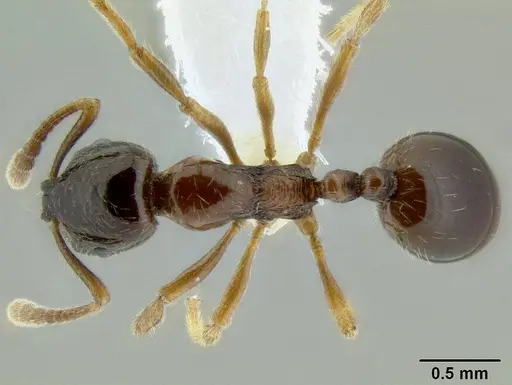
CASENT0904574
View on AntWeb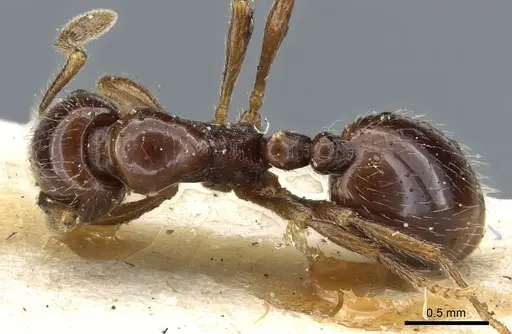
CASENT0908670
View on AntWeb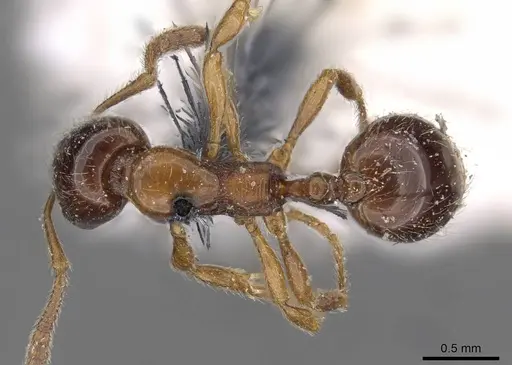
CASENT0916022
View on AntWeb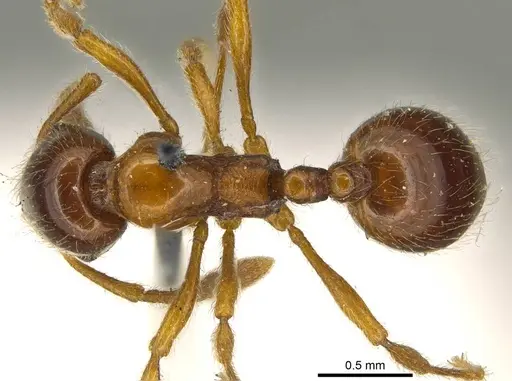
Literature
Loading distribution map...Loading products...