
Monomorium chinense
- Sci. Name
- Monomorium chinense
- Tribe
- Solenopsidini
- Subfamily
- Myrmicinae
- Author
- Santschi, 1925
- Distribution
- Found in 7 countries
Introduction
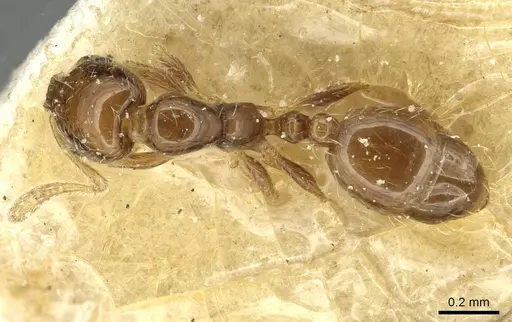
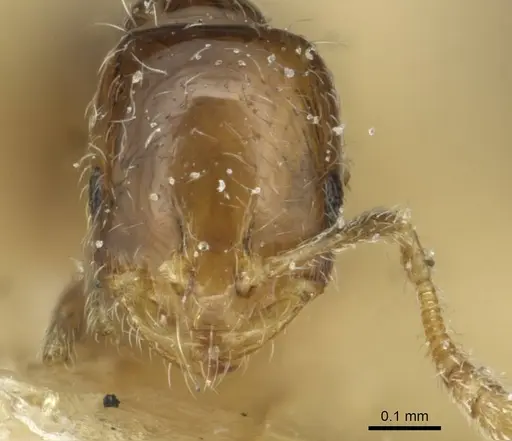
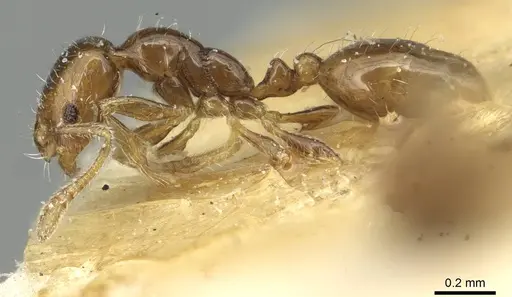
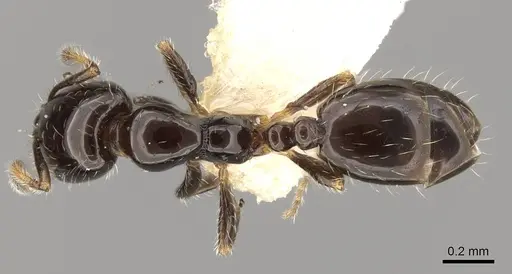
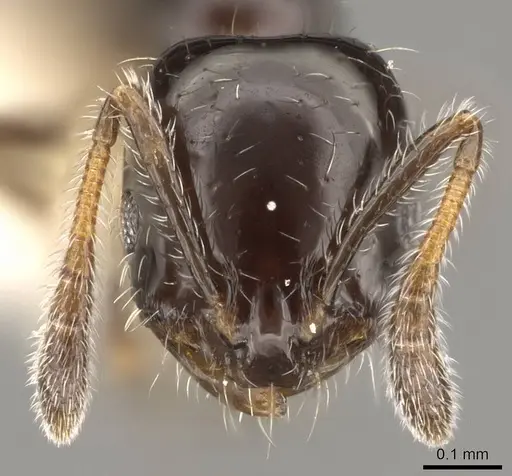
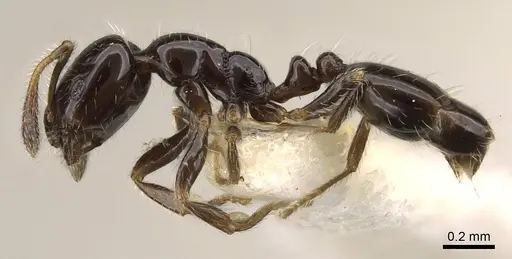
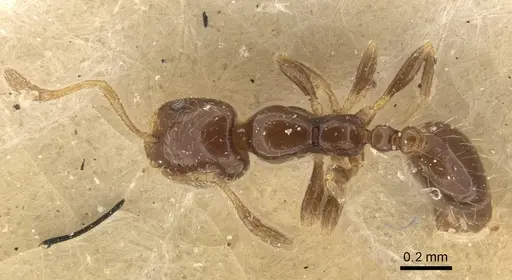
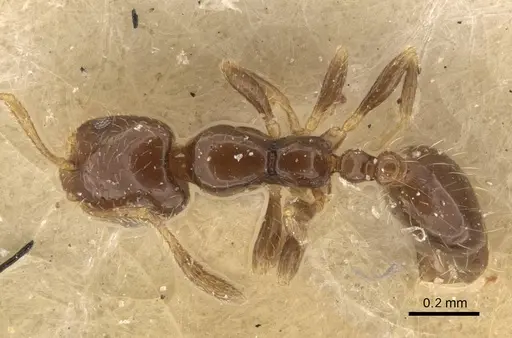
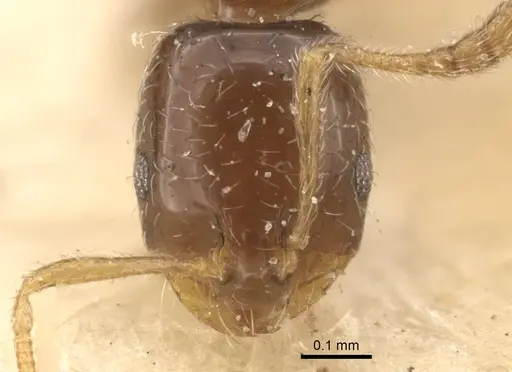
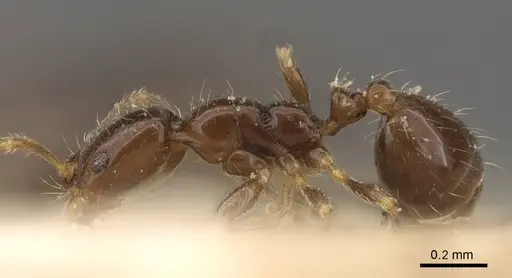
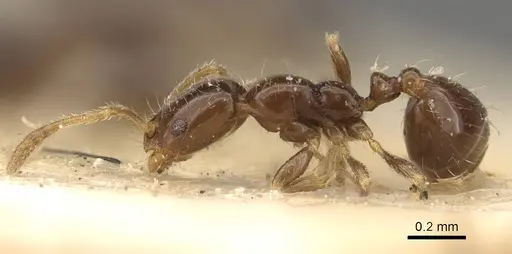
Monomorium chinense is a tiny, dark ant native to East Asia. Workers measure 1.3-1.6mm and are uniformly dark brown to black with a shiny appearance. Their antennae and legs are lighter reddish-brown. These ants are ground-nesters, typically establishing colonies in soil near the bases of plants in woodland margins and grassland . This species is notable for its remarkable chemical defense system. Research shows M. chinense produces 21 different volatile terpenes and terpenoids - one of the most prolific terpene producers among insects. Workers store these chemicals primarily in their poison and Dufour's glands for defense and communication. Queens produce neocembrene as their dominant terpene, which is suspected to act as a queen pheromone .
Quick Summary
- Difficulty: Easy
- Origin & Habitat: Native to East Asia, found in China, Japan, Korea, Taiwan, Thailand, and Micronesia. In Japan, they inhabit woodland margins and grassland, nesting in soil near plant bases [2][1].
- Colony Type: Unconfirmed. As a tramp species, they thrive in disturbed human environments and port areas, suggesting flexible colony organization.
- Size & Growth:
- Queen: size data unavailable
- Worker: 1.3-1.6mm [1]
- Colony: up to several hundred workers, estimated based on typical tramp ant patterns
- Growth: Moderate, estimated from related species
- Development: estimated 5-7 weeks (Development timeline is not directly studied for this species. Estimates based on genus-level patterns for small Myrmicinae ants. Warmer temperatures speed development.)
- Antkeeping:
- Temperature: Keep at room temperature, roughly 20-26°C. They are adaptable and found in both temperate Japan and tropical regions [4].
- Humidity: Moderate humidity. In nature they nest in soil near plant bases, so keep substrate moderately moist but not waterlogged.
- Diapause: Yes, in Japan they are active from April to November and likely enter winter dormancy during colder months [4]. Provide a cool period around 10-15°C for 2-3 months.
- Nesting: Ground-nesting species. A naturalistic setup with soil or a Y-tong/plaster nest works well. They accept test tube setups for founding colonies. Provide a moist substrate for brood chambers.
- Behavior: These are generalized foragers and harvesters that actively search for food. They are attracted to both sweet baits (honey) and protein sources (cheese, insects). They rely on chemical defenses rather than aggression, when threatened, they can release terpenes from their poison and Dufour's glands. They are mass-recruiting foragers, quickly mobilizing many workers to food sources through chemical trails. Their small size means escape prevention is important, use fine mesh barriers. They coexist with other ant species and can persist even when invasive Argentine ants are present [5].
- Common Issues: tiny size means escapes are likely without fine mesh barriers, colonies may be slow to establish initially, as a tramp species, they may be harder to source from suppliers, can be outcompeted by more aggressive ant species at food sources
Housing and Nest Setup
Monomorium chinense is a small ground-nesting ant that adapts well to various captive setups. Test tube setups work well for founding colonies, simply provide a water-filled chamber with a cotton plug and a foraging area. As the colony grows, you can move them to a Y-tong or plaster nest or a naturalistic setup with soil. Since they nest in soil near plant bases in the wild, a moist substrate in the nest chamber helps them feel at home. They are not picky about nest materials but do best with some moisture retention. A small outworld for foraging completes the setup. Because workers are only 1.3-1.6mm, ensure your formicarium has appropriately sized chambers and passages. [2]
Feeding and Diet
These ants are generalized foragers and will accept a variety of foods. In captivity, offer sugar water or honey as a constant energy source. They also readily take protein sources like small insects (fruit flies, pinhead crickets, mealworms) and will scavenge on dead insects. Field studies show they are attracted to both honey and cheese baits, confirming their omnivorous nature [4][6]. Feed protein 2-3 times per week and keep sugar water available at all times. Remove uneaten food after 24 hours to prevent mold. Their small size means even tiny food items are acceptable.
Temperature and Seasonal Care
Monomorium chinense is adaptable to a range of temperatures. In their native Japan, they are active from late April through November, becoming dormant during winter [4]. Keep them at room temperature (20-26°C) for normal colony activity. During winter in temperate regions, provide a cool diapause period around 10-15°C for 2-3 months to mimic their natural cycle. This helps maintain colony health and may trigger reproductive behavior in spring. They can tolerate warmer conditions but avoid temperatures above 30°C for extended periods.
Behavior and Defense
This species is not particularly aggressive but has developed sophisticated chemical defenses. Research shows they produce at least 21 different terpenes and terpenoids, primarily stored in their poison gland, Dufour's gland, and mandibular glands [3]. When threatened, workers can release these chemicals as a defensive spray. They are mass-recruiting foragers, meaning they can quickly mobilize many workers to food sources through chemical trails. In competitive situations with other ants, they will retreat from more aggressive species but can persist in the environment through their adaptability. Their small size and ability to use tiny crevices helps them avoid larger predators.
Escape Prevention
With workers measuring only 1.3-1.6mm, escape prevention is critical. These tiny ants can squeeze through gaps that larger species cannot. Use fine mesh on any ventilation holes, and ensure all connections between the nest and outworld are tight-fitting. Fluon or similar barrier gels applied to the edges of the setup help prevent escapes. Check for any gaps in silicone seals regularly. Despite their small size, they are active foragers and will explore any potential escape routes, especially when the colony grows larger and food demands increase. [1]
Frequently Asked Questions
How long does it take for Monomorium chinense to produce first workers?
Based on typical Monomorium development patterns, expect first workers in about 5-7 weeks after the queen lays eggs. This timeline is an estimate since specific development data for this species is not available. The exact duration depends on temperature, warmer conditions around 24-26°C speed development, while cooler temperatures slow it down.
Can I keep multiple queens together?
The colony structure of this species is not well-documented. Based on typical Monomorium patterns, they likely form single-queen colonies. Combining unrelated queens is not recommended since this has not been studied for this specific species. If you obtain a wild-caught colony, it likely has one founding queen.
Are Monomorium chinense good for beginners?
Yes, they are considered an easy species to keep. They are small, adaptable, and accept a wide variety of foods. They do not require specialized equipment and can be kept at room temperature. The main challenges are their tiny size requiring good escape prevention and potentially slower colony establishment compared to faster-growing species.
What do Monomorium chinense eat?
They are generalized omnivores. Offer sugar water or honey constantly for energy, and protein sources like small insects 2-3 times per week. They will also scavenge on dead insects. Field studies show they are attracted to both sweet and protein baits.
Do they need hibernation?
Yes, in temperate regions they require a winter dormancy period. In Japan, they are active from April through November [4]. Provide a cool period around 10-15°C for 2-3 months during winter. This mimics their natural cycle and helps maintain colony health.
How big do colonies get?
Colony size is not directly documented, but as a tramp species, they likely reach several hundred workers. Related Monomorium species typically form colonies of several hundred to a few thousand individuals. Growth rate is moderate, expect several months to a year to establish a mature colony.
Why are my ants dying?
Common causes include escape-related losses (check for tiny gaps), dehydration (ensure substrate has some moisture), temperature stress (avoid extremes above 30°C or below 15°C), and competition from other ants if housed in shared spaces. Also ensure food is being consumed, uneaten food can mold and harm the colony.
When should I move them to a formicarium?
You can keep them in test tubes for the founding stage. Move to a larger nest once the colony reaches 30-50 workers or when the test tube becomes crowded. They adapt well to various nest types as they are ground-nesters that prefer some moisture in their brood chambers.
Report an Issue
The current care sheet is based fully on literature. See inconsistencies, or something that's incorrect? Please , it will be resolved after review from an admin. Contributing to the blogs tab also helps providing information, to make us be able to further improve the caresheets. Thank you for your support!
References

This caresheet is licensed under CC BY-SA 4.0 .
Community Blogs
Literature
Loading distribution map...Loading products...