
Monomorium buettikeri
- Sci. Name
- Monomorium buettikeri
- Tribe
- Solenopsidini
- Subfamily
- Myrmicinae
- Author
- Collingwood & Agosti, 1996
- Distribution
- Found in 0 countries
Introduction
Monomorium buettikeri is a small dark ant endemic to Kuwait, making it one of the rarest ant species in the world. Workers measure approximately 3.2mm in total length with a distinctive black body and brownish appendages that pale towards their extremities. The species has relatively large eyes and short antennae that just reach the back of the head. The head and body have a shiny, sculptured appearance while the abdomen is brilliantly smooth and glossy. This species belongs to the Monomorium salomonis group and was described from specimens collected on Anwha Island in Kuwait . Nothing is known about the biology, colony structure, or captive care requirements of this species in the scientific literature. Based on its placement in the salomonis group and Kuwait's arid desert climate, it likely inhabits dry environments with typical Monomorium colony structures. This makes it an unusual and challenging species to keep, suitable only for experienced antkeepers who enjoy working with poorly documented species.
Quick Summary
- Difficulty: Expert
- Origin & Habitat: Endemic to Kuwait in the Palaearctic region. The type locality is Anwha Island (29°22'N,48°25'E), a small island off the coast of Kuwait in the Persian Gulf [1][2]. The climate of Kuwait is arid desert with very hot summers and mild winters.
- Colony Type: Unknown, colony structure has not been documented for this species.
- Size & Growth:
- Antkeeping:
- Temperature: Likely prefers warm conditions based on Kuwait's arid climate. Provide a temperature gradient (24-30°C) allowing workers to self-regulate.
- Humidity: Low to moderate. Kuwait has an arid climate, so keep the nest relatively dry with minimal moisture zones.
- Diapause: Unconfirmed, no data on diapause requirements for this species.
- Nesting: Natural nesting is undocumented. Likely nests in soil or under stones in arid ground. In captivity, a dry Y-tong or plaster nest with minimal moisture chambers would be appropriate.
- Behavior: Behavior is undocumented. Based on genus patterns, they are likely generalist foragers that accept a variety of food sources. Escape risk is moderate given their small size, standard barrier methods should suffice. Temperament is unknown.
- Common Issues: completely unstudied biology means all care is speculative, no confirmed colony structure, single or multiple queens unknown, no development data makes growth tracking impossible, risk of keeping conditions wrong due to lack of baseline information, endemic status means wild colonies are not available for comparison
Discovery and Taxonomy
Monomorium buettikeri was described in 1996 by Collingwood and Agosti from specimens collected on Anwha Island in Kuwait during March 1988. The species was named after W. Büttiker, who collected the type series. It belongs to the Monomorium salomonis species group, which contains several similar-looking dark ants distributed across Africa, the Middle East, and Asia. The species closely resembles Monomorium abeillei but can be distinguished by its larger size, more sculptured head, more rounded propodeal profile, larger eyes, longer antennae, and absence of hairs on the pronotum. This ant remains known only from Kuwait and represents one of the most restricted ant species in the world [1][2].
Natural Habitat and Distribution
Monomorium buettikeri is endemic to Kuwait, meaning it is found nowhere else in the world [2]. The type locality is Anwha Island, a small island off the coast of Kuwait in the Persian Gulf. This coastal location suggests the species may tolerate some humidity, though Kuwait generally has an arid desert climate. The island habitat differs from the typical desert interior locations where many Monomorium species are found. Nothing is known about its nest sites, foraging behavior, or ecological role in its native habitat. The entire global range of this species consists of a single country, making any conservation concerns particularly relevant should wild populations ever be studied.
Morphology and Identification
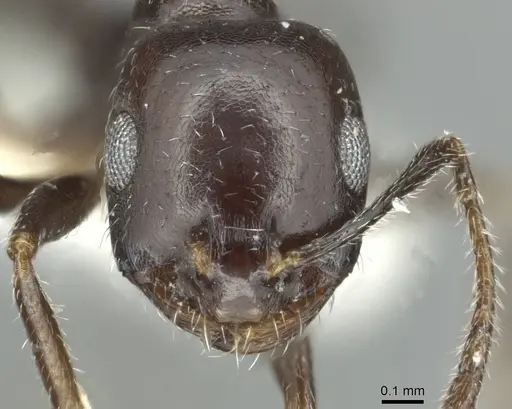
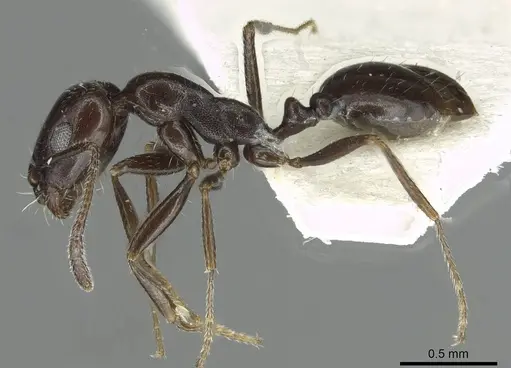
Workers of Monomorium buettikeri measure approximately 3.2mm in total length, making them small but not tiny ants [1]. The head is slightly longer than wide, and the antennae are distinctly short, surpassing the compound eye posterior margins by only about the length of the first funicular segment [2]. The eyes are relatively large with 11-12 ommatidia in the longest row. The propodeum has a distinctly rounded declivous face. The body is black with brownish appendages that become paler toward their tips. The head and alitrunk have a reticulopunctate sculpture giving a shining appearance, while the gaster is brilliantly smooth. Key identifying features include the lack of standing hairs on the pronotum, the large eyes, and the short antennae.
Keeping an Unstudied Species
Because absolutely nothing has been published about the biology of Monomorium buettikeri, keeping this species requires significant extrapolation from related species and careful observation. Start with conditions typical of the Monomorium salomonis group: a warm, relatively dry nest with access to both protein and sugar foods. Monitor colony behavior closely. If workers cluster near moisture, increase humidity. If they avoid heated areas, reduce temperature. Be prepared to adjust significantly as you learn what this species prefers. The lack of documented care information means you are essentially pioneering the husbandry of this species. Only attempt this species if you have experience with other Monomorium species and are comfortable with experimental husbandry.
Feeding and Diet
The natural diet of Monomorium buettikeri is completely unstudied. Based on typical Monomorium behavior and the salomonis group, they are likely generalist omnivores that forage for small insects, nectar, and honeydew. In captivity, offer a varied diet including sugar water or honey as a constant energy source, and protein sources such as small crickets, mealworms, or other small insects. Start with modest portions and observe acceptance. Given their small worker size, prey items should be appropriately sized. Remove uneaten food promptly to prevent mold.
Nesting Requirements
No information exists on the natural nesting preferences of Monomorium buettikeri. Based on the arid Kuwaiti climate and membership in the salomonis group, they likely prefer relatively dry conditions. In captivity, a Y-tong or plaster nest with low-to-moderate humidity zones would be appropriate. Provide a small water chamber but allow significant dry area. The species is small so chambers and passages should be appropriately scaled. A test tube setup can work for founding colonies, but monitor for mold given the likely preference for drier conditions. Ensure escape prevention is adequate.
Frequently Asked Questions
How do I care for Monomorium buettikeri ants?
Caring for Monomorium buettikeri is challenging because no published care information exists. Start with warm, relatively dry conditions and offer both sugar and protein foods. Monitor your colony closely and adjust based on their behavior. This is an experimental species, you will be pioneering its husbandry.
What do Monomorium buettikeri eat?
Their natural diet is completely unstudied. Based on related species, they likely accept sugar water, honey, and small insects. Offer a varied diet and observe what they accept. Remove uneaten food promptly.
How big do Monomorium buettikeri colonies get?
Colony size is unknown. No documented colony sizes exist for this species. It is extremely rare in the wild with limited documentation.
What temperature do Monomorium buettikeri need?
Temperature requirements are unconfirmed. Based on the Kuwaiti climate, they likely prefer warm conditions around 24-30°C. Provide a gradient so workers can self-regulate their temperature preference.
Do Monomorium buettikeri need hibernation?
Diapause requirements are unknown. No data exists on whether this species requires a cool period. Consider a mild cool period if the colony shows signs of slowing, but this is speculative.
Is Monomorium buettikeri a good species for beginners?
No. This is an expert-level species due to the complete lack of documented care information. Only experienced antkeepers should attempt this species, and only those comfortable with experimental husbandry.
Where is Monomorium buettikeri found?
This species is endemic to Kuwait, meaning it is found nowhere else in the world. The type locality is Anwha Island off the coast of Kuwait in the Persian Gulf [1][2].
How long does it take for Monomorium buettikeri to develop from egg to worker?
Development time is completely unstudied. No data exists for this species.
Can I keep multiple Monomorium buettikeri queens together?
Colony structure is unconfirmed. The number of queens is unknown for this species. Do not attempt combining unrelated queens without documented evidence that they will accept each other.
Report an Issue
The current care sheet is based fully on literature. See inconsistencies, or something that's incorrect? Please , it will be resolved after review from an admin. Contributing to the blogs tab also helps providing information, to make us be able to further improve the caresheets. Thank you for your support!
References

This caresheet is licensed under CC BY-SA 4.0 .
Community Blogs
CASENT0913565
View on AntWeb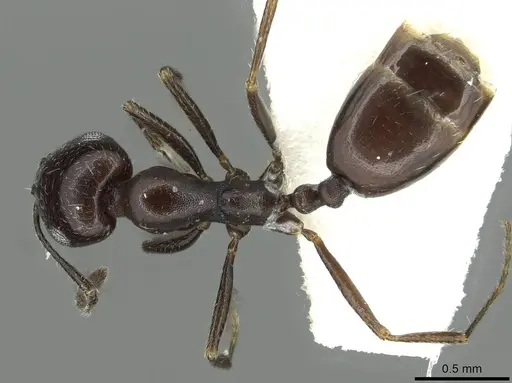
Literature
Loading distribution map...Loading products...