
Monomorium biroi
- Sci. Name
- Monomorium biroi
- Tribe
- Solenopsidini
- Subfamily
- Myrmicinae
- Author
- Forel, 1907
- Distribution
- Found in 0 countries
Introduction
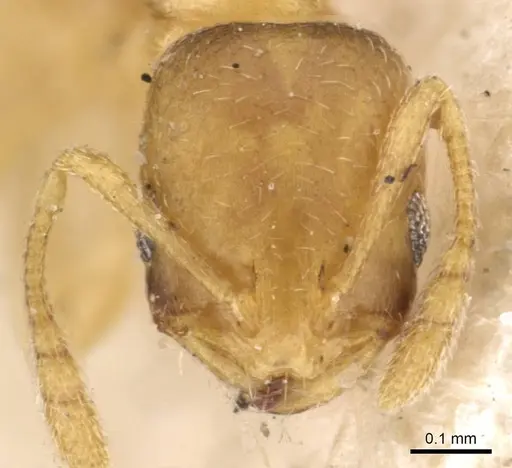
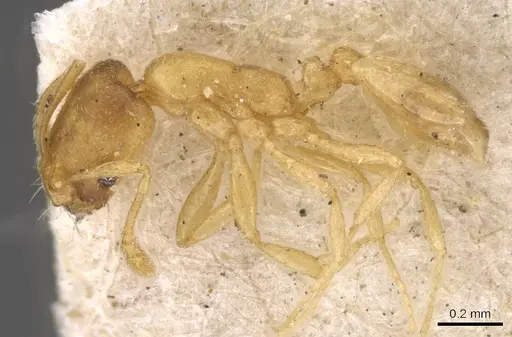
Monomorium biroi is a tiny ant species native to India, specifically endemic to the Tamil Nadu region . Workers are small, with size inferred from the Monomorium genus to be around 2-3mm. This species belongs to the Solenopsidini tribe within Myrmicinae. What makes M. biroi unique is its queen system: it has ergatoid (wingless) queens only, which serve as replacement reproductives within the colony . This means colonies do not have winged queens and reproduction happens internally.
Quick Summary
- Difficulty: Medium
- Origin & Habitat: Native to India, specifically recorded from Tamil Nadu [1]. Based on tropical distribution, likely inhabits forest edges, open grasslands, or disturbed areas.
- Colony Type: Colonies have ergatoid (wingless) queens only, serving as replacement reproductives [2]. This is different from polygyny, as ergatoids are internal replacements.
- Size & Growth:
- Queen: Size data unavailable for ergatoid queens, inferred from Monomorium genus to be around 4-5mm.
- Worker: Size data unavailable, inferred from Monomorium genus to be around 2-3mm.
- Colony: Unknown for this species, estimated from related Monomorium species to reach up to several hundred workers.
- Growth: Moderate, inferred from genus patterns.
- Development: Estimated 6-8 weeks at optimal temperature based on related Monomorium species [3]. (Direct development data not available, estimates based on genus-level patterns.)
- Antkeeping:
- Temperature: Keep warm, around 24-28°C, inferred from tropical distribution [3].
- Humidity: Keep substrate consistently moist but not waterlogged, inferred from tropical habitat [3].
- Diapause: No, tropical species do not require hibernation [3].
- Nesting: Use test tubes for founding, then Y-tong or plaster nests scaled to small size [3].
- Behavior: Workers are non-aggressive and small, with high escape risk due to size. They forage actively and may sting as per Myrmicinae defense, but no specific data on aggression.
- Common Issues: escape prevention is critical due to small size, use fine mesh barriers., tropical species need warm temperatures above 24°C., limited care information may slow colony establishment., wild-caught colonies may carry parasites., overfeeding can cause mold in small nests.
Temperature and Care
Monomorium biroi comes from tropical India, so keep them warm. Aim for temperatures between 24-28°C to support normal activity and brood development. A heating cable on one side of the nest creates a gradient for ants to choose their preferred temperature. Room temperature alone may be too cool, especially in air-conditioned spaces [3].
Housing and Nesting
For such tiny ants, use appropriately scaled housing. Test tubes work well for founding colonies, fill one end with water and plug with cotton, then cover for darkness. Once the colony grows, use Y-tong or small plaster nests with tight chambers scaled to their size. Excellent escape prevention is essential due to their small size [3].
Feeding and Diet
Offer sugar sources like honey or sugar water constantly, and protein prey such as fruit flies or small crickets 2-3 times per week. Portion sizes should be tiny, a few drops of sugar water and prey smaller than their heads. Remove uneaten food after 24 hours to prevent mold [3].
Colony Structure and Reproduction
This species has ergatoid queens only, which are wingless replacement reproductives. Colonies likely start with a single founding queen, and ergatoids develop internally as backups. No nuptial flights occur, reproduction happens within the colony [2].
Behavior and Temperament
Workers are small, active foragers that are not aggressive. They may use chemical trails for recruitment and are primarily ground-nesting. Their tiny size makes them vulnerable in outworlds, so avoid housing with larger species. Escape prevention is critical due to their ability to slip through small gaps [3].
Frequently Asked Questions
How long does it take for Monomorium biroi to produce first workers?
The exact timeline is unknown, but based on related Monomorium species, expect around 6-8 weeks from egg to first worker at optimal temperature (24-28°C) [3].
Do Monomorium biroi ants need hibernation?
No, this is a tropical species from India and does not require hibernation. Keep them at warm temperatures year-round [3].
Can I keep multiple queens together in Monomorium biroi?
This species has ergatoid queens that serve as internal replacements, but it is not the same as polygyny. Combining unrelated foundress queens is not recommended, start with a single queen [2].
What do Monomorium biroi eat?
They accept sugar sources like honey and small protein prey such as fruit flies. Feed sugar water constantly and protein 2-3 times per week, removing uneaten food promptly [3].
Are Monomorium biroi good for beginners?
This species is rated Medium difficulty due to limited care information and small size, requiring warm temperatures and excellent escape prevention [3].
How big do Monomorium biroi colonies get?
The exact maximum colony size is unknown, but estimated to reach up to several hundred workers based on related species [3].
Why are my Monomorium biroi dying?
Common causes include temperatures below 24°C, poor escape prevention, mold from overfeeding, parasites from wild-caught colonies, or stress from too-large housing [3].
When should I move my Monomorium biroi to a formicarium?
Wait until the colony has at least 20-30 workers before moving from a test tube setup. Use Y-tong or plaster nests with appropriate humidity and escape-proof outworld [3].
Report an Issue
The current care sheet is based fully on literature. See inconsistencies, or something that's incorrect? Please , it will be resolved after review from an admin. Contributing to the blogs tab also helps providing information, to make us be able to further improve the caresheets. Thank you for your support!
References

This caresheet is licensed under CC BY-SA 4.0 .
Community Blogs
CASENT0908691
View on AntWeb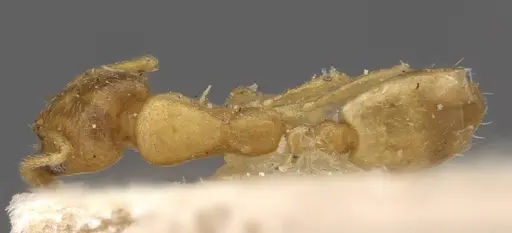
Literature
Loading distribution map...Loading products...