
Monomorium areniphilum
- Sci. Name
- Monomorium areniphilum
- Tribe
- Solenopsidini
- Subfamily
- Myrmicinae
- Author
- Santschi, 1911
- Distribution
- Found in 9 countries
Introduction
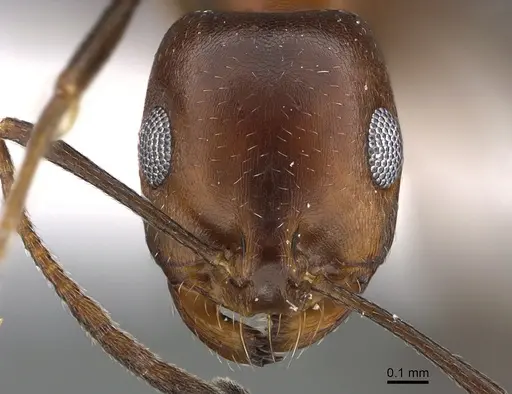
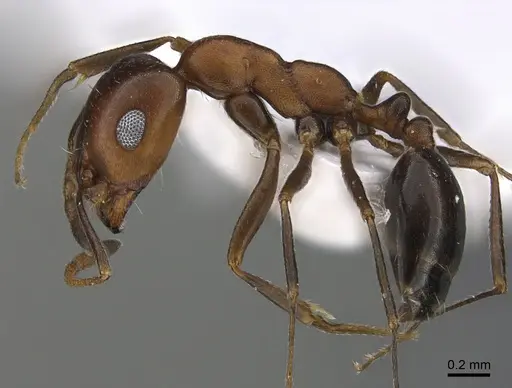
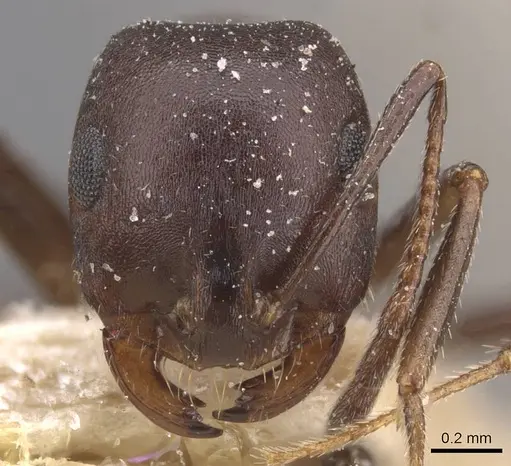
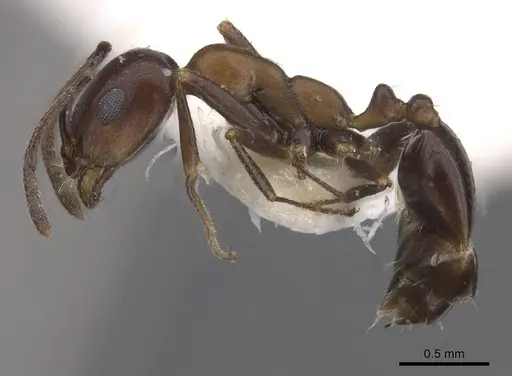
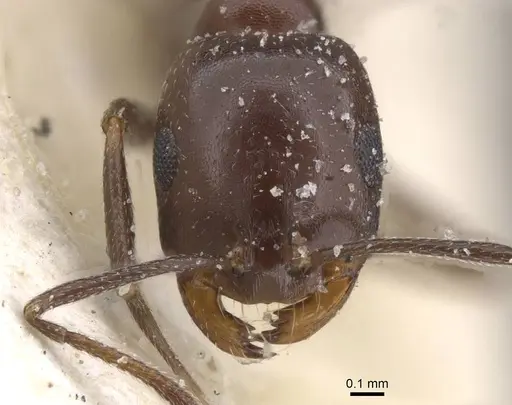
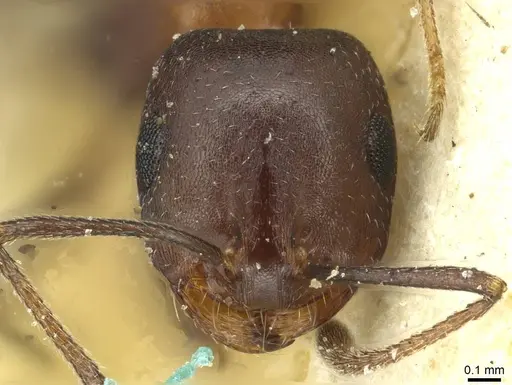
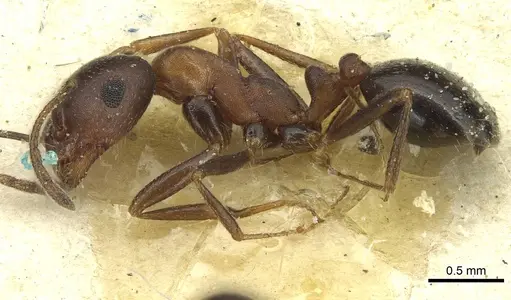
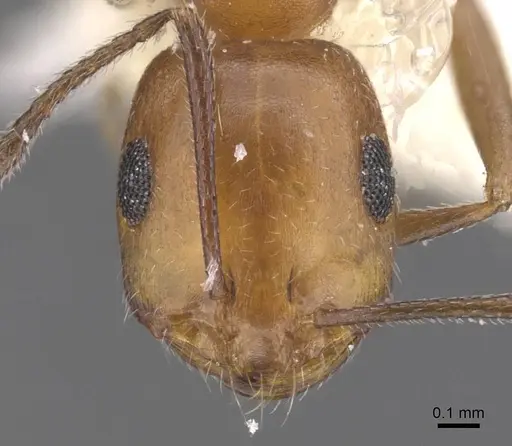
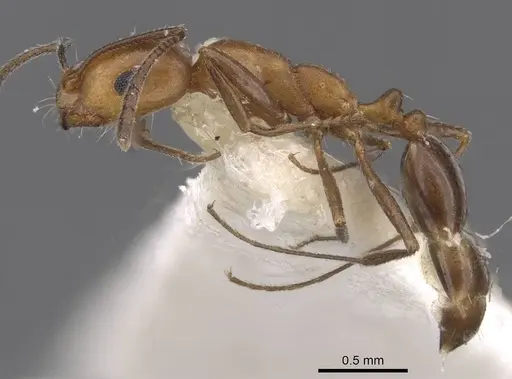
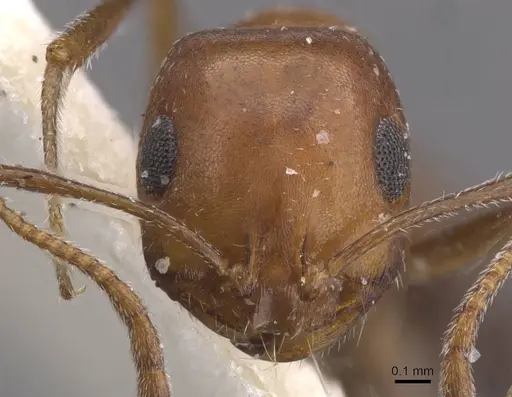
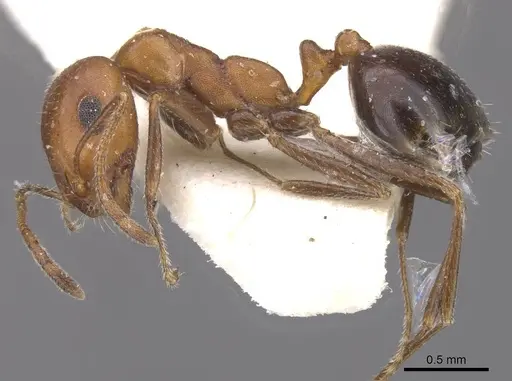
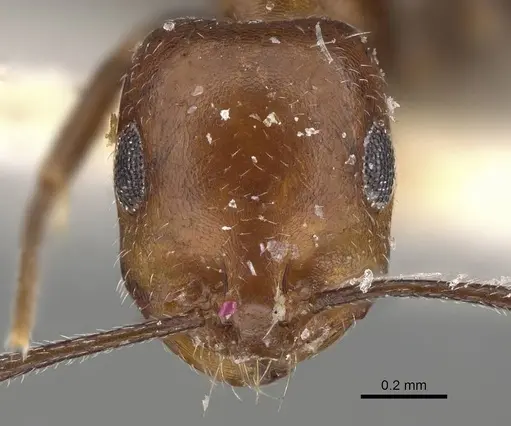
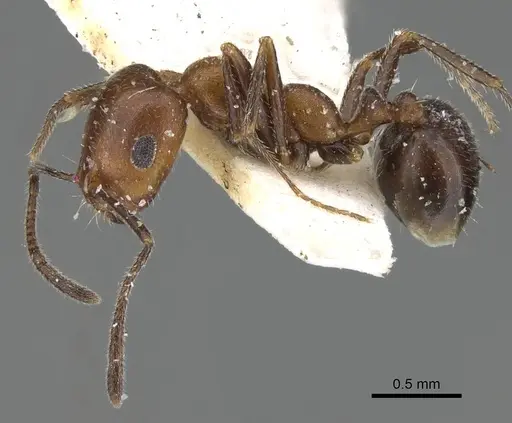
Monomorium areniphilum is a small ant species native to the Saharan region and surrounding areas across North Africa and the Middle East. Workers measure 3.1-4.3mm in total length with a robust build, large eyes, and typically a dark gaster that contrasts with a lighter mesosoma. They belong to the Monomorium salomonis species group and are known for their very reduced dorsal pilosity - the mesosoma is almost completely hairless. This species has been recorded across a vast range from Senegal east to Sudan and Egypt, north to Tunisia and Algeria, and east through the Arabian Peninsula to Iran . What makes M. areniphilum interesting is its remarkable adaptability to extreme environments. Found throughout Saharan and sub-Saharan Africa, this species thrives in some of the hottest and driest regions on Earth. It nests in soil, constructing small nest mounds with multiple entrances, and has been recorded in agricultural areas like rice fields in northern Iran . The species shows significant color variation across its range - some populations are nearly uniform brown while others have a nearly black head and gaster contrasting with a reddish mesosoma .
Quick Summary
- Difficulty: Easy
- Origin & Habitat: Native to the Saharan region and surrounding areas, found across North Africa (Algeria, Tunisia, Egypt, Libya, Morocco, Mali, Niger, Senegal, Sudan, Mauritania), the Middle East (Kuwait, Oman, Saudi Arabia, UAE, Yemen, Lebanon), and Iran. This is a savanna and desert species that nests in soil, often in dry to semi-arid environments [1][4][6].
- Colony Type: Colony structure is not well documented in scientific literature. Likely single-queen (monogyne) colonies based on patterns in related species, though this requires confirmation for this specific species.
- Size & Growth:
- Queen: Size data unavailable, no specific measurements for queens have been documented in the literature.
- Worker: 3.1-4.3mm total length [7][8]
- Colony: Colony size data unavailable, no specific studies document maximum colony size for this species.
- Growth: Moderate
- Development: 5-8 weeks (estimated based on typical Monomorium development at warm temperatures) (Development time is estimated, no specific studies on M. areniphilum development exist. Warm temperatures (24-28°C) will likely accelerate development.)
- Antkeeping:
- Temperature: Keep at 24-28°C. This species originates from hot Saharan and subtropical regions, so warmth is beneficial. A heating cable on one side of the nest creates a gradient allowing workers to self-regulate. Room temperature (around 22-24°C) is acceptable, but warmer conditions will support more active foraging and faster brood development.
- Humidity: Low to moderate. This is a desert/savanna species adapted to dry conditions. Keep the nest substrate lightly moist but allow it to dry out partially between waterings. Provide a water tube but avoid excessive moisture. The outworld can be kept relatively dry.
- Diapause: Likely minimal or none. This species comes from hot climates where year-round activity is possible. However, a slight winter slowdown at room temperature (around 18-20°C) may be beneficial if colony activity decreases.
- Nesting: Soil-nesting species. In captivity, a naturalistic setup with a sand/soil mixture works well, or a Y-tong/plaster nest with moderate humidity. They excavate their own chambers, so provide enough depth. Test tube setups work for founding colonies but may need transitioning to larger setups as the colony grows.
- Behavior: Workers are active foragers, likely collecting nectar, honeydew, and small prey. They have large eyes which may aid in visual navigation. The species is not particularly aggressive and typically avoids conflict. Escape risk is moderate due to their small size (3-4mm), use standard barrier methods like fluon on test tube rims. They are not known to be stingers of concern to humans.
- Common Issues: colonies may fail if kept too wet, this is a desert species adapted to dry conditions, small size means escapes are possible without proper barrier prevention, slow founding phase, queens may seal themselves in and take months before first workers emerge, wild-caught colonies may have parasites that cause problems in captivity, limited information means some care aspects are estimated rather than confirmed
Nest Preferences and Housing
Monomorium areniphilum is a soil-nesting species that naturally excavates chambers in the ground. In the wild, they create small nest mounds with multiple entrances, as observed in Mali where workers were excavating a nest in soil at the edge of tarmac with nest mounds about 15 by 10 cm and two entrances about 20 cm apart [4]. For captive care, a naturalistic setup with a sand/soil mixture works well, use a ratio of about 3:1 sand to soil to mimic their desert/savanna nesting conditions. Alternatively, Y-tong or plaster nests provide good visibility and humidity control. For founding colonies, a standard test tube setup works fine, the queen will seal herself into a chamber and remain there until her first workers emerge. As the colony grows, consider transitioning to a larger formicarium with deeper substrate for excavation. Because they are a small species, ensure chambers and tunnels are appropriately scaled, too-large chambers can cause stress.
Feeding and Diet
Like other members of the Monomorium salomonis group, M. areniphilum is likely a generalist forager that collects nectar, honeydew, and small insects. In captivity, offer a varied diet: sugar water or honey as an energy source, and protein sources like small crickets, mealworms, or fruit flies. Since they are small ants (3-4mm), prey items should be appropriately sized, tiny insects or pre-killed arthropods work well. They likely have moderate sugar requirements, so providing a constant source of sugar water or honey is recommended. For the founding queen, no feeding is needed during claustral founding, she relies on stored fat reserves. Once workers emerge, begin offering small amounts of sugar water and tiny protein items. Feed every 2-3 days, removing uneaten food to prevent mold.
Temperature and Seasonal Care
This species originates from hot Saharan and subtropical regions, so warmth is beneficial for their care. Keep the nest area at 24-28°C for optimal activity and brood development. A heating cable placed on one side of the nest creates a temperature gradient, allowing workers to move to warmer or cooler areas as needed. This is especially useful in cooler climates or during winter. Room temperature (22-24°C) is acceptable but may result in slower activity and development. Regarding diapause, this species likely requires minimal to no winter rest given its hot climate origin. However, if you notice colony activity decreasing during winter months, a slight reduction to around 18-20°C for 4-6 weeks may be appropriate. Avoid keeping them too cold, they are not adapted to cold temperatures. The species has been found in rice fields in northern Iran, suggesting some tolerance to agricultural environments, but this does not indicate need for high humidity. [3]
Behavior and Colony Dynamics
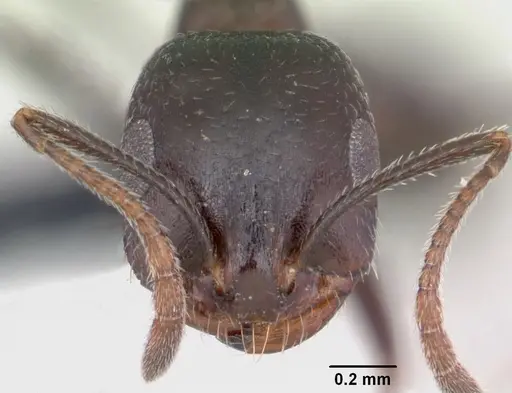
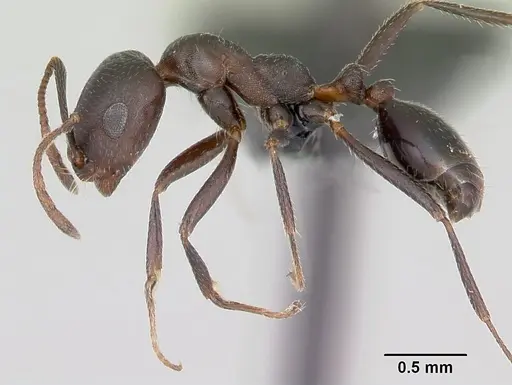
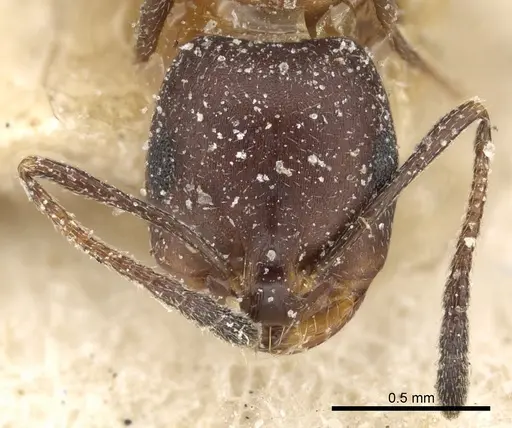
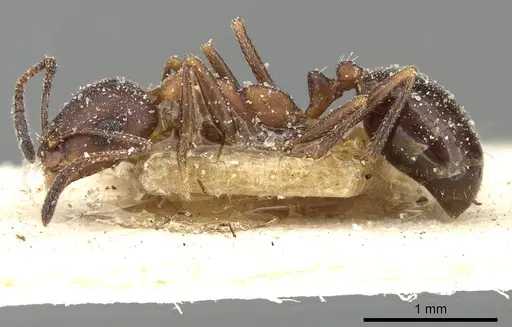
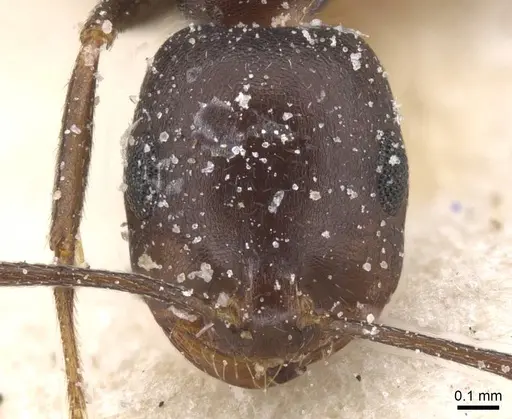
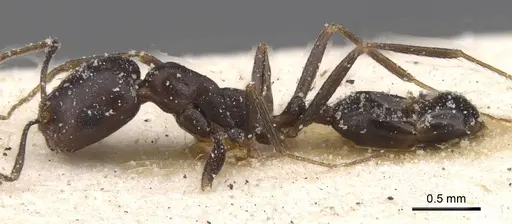
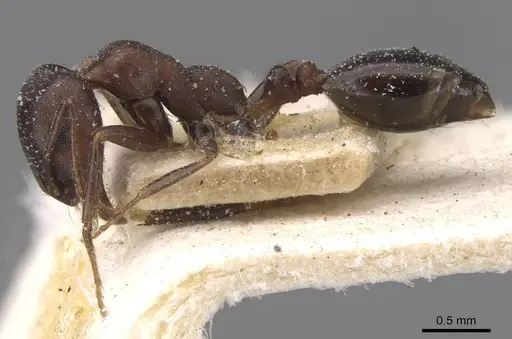
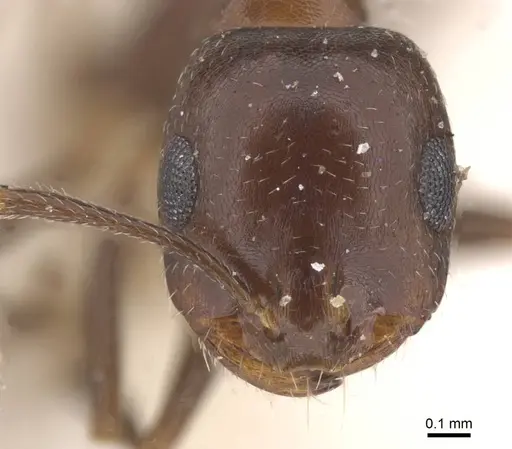
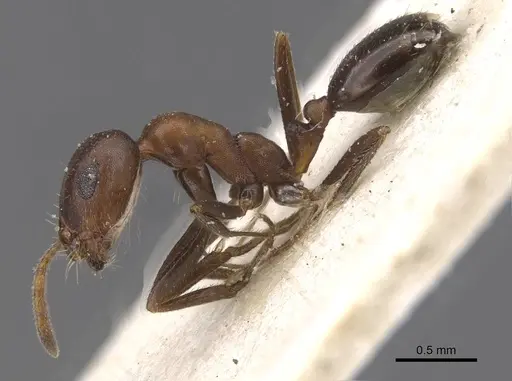
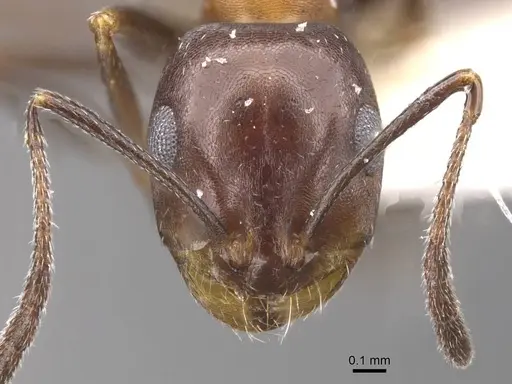
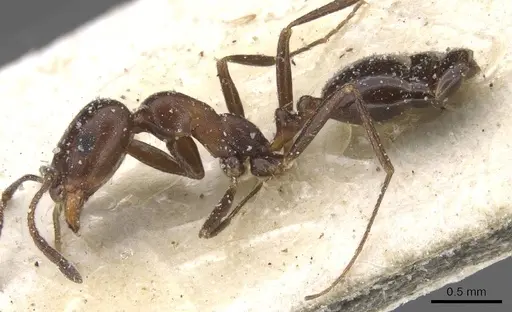
Monomorium areniphilum workers are active foragers with notably large eyes relative to their head width. This suggests they may rely more on visual cues than some other ant species [7]. They have very reduced dorsal pilosity, the mesosoma is almost completely hairless, which is a distinguishing characteristic of this species within the salomonis group [7]. Workers have a distinctive profile with a deeply impressed metanotal groove creating a sharp angle in the mesosoma. The postpetiole has 2-3 pairs of backward directed hairs [7][8]. The species shows significant color variation across its range: specimens from Qatar are uniformly dark brown with paler tarsi, while specimens from Morocco have a nearly black head and gaster contrasting with a light red mesosoma [2][5]. Colony structure is not well documented, likely single-queen based on patterns in related species. Workers are not aggressive and typically flee rather than engage when threatened. Their small size (3-4mm) means they can squeeze through small gaps, use fluon or other barriers on any openings.
Growth and Development
Workers measure 3.1-4.3mm total length, making this a small but robust ant species [7][8]. Queen size data is unavailable, specific measurements for M. areniphilum queens are not documented in the literature. Development from egg to worker is estimated at 5-8 weeks at optimal warm temperatures (around 26-28°C), based on typical Monomorium development patterns. The first workers (nanitics) will be smaller than mature workers but should quickly be replaced by normally-sized workers as the colony grows. Growth rate is moderate, expect several months from founding to a colony of 50+ workers. Colony size data is unavailable for this species. The deep metanotal groove and large eyes are present even in minor workers, making identification relatively straightforward.
Handling and Interaction
Monomorium areniphilum is not considered dangerous to humans. Their small size means any potential sting would be negligible, these ants are far too small to penetrate human skin effectively. They are not aggressive and typically retreat when disturbed. For colony maintenance, use gentle techniques when moving nests or tubes, avoid shaking or disturbing the queen chamber. When transferring to a new setup, allow workers to acclimate before major changes. Escape prevention is important due to their small size, apply fluon to test tube rims and ensure any connections between outworld and nest are secure. These ants are good for observation as workers are active and foragers will readily explore the outworld for food. Their large eyes and distinctive mesosoma profile make them an interesting species to watch.
Frequently Asked Questions
How long does it take for Monomorium areniphilum to have first workers?
Based on typical Monomorium development, expect first workers (nanitics) to emerge in about 5-8 weeks after the queen lays her first eggs, assuming warm temperatures (24-28°C). The exact timeline is estimated since specific development studies for this species do not exist.
What do Monomorium areniphilum ants eat?
They are generalist foragers. Offer sugar water or honey as a constant energy source, and protein like small crickets, mealworms, or fruit flies every few days. Prey should be appropriately sized for their tiny workers (3-4mm).
What temperature do Monomorium areniphilum need?
Keep them at 24-28°C. This Saharan species prefers warmth. A heating cable on one side of the nest creates a gradient. Room temperature (22-24°C) is acceptable but may slow activity.
Are Monomorium areniphilum good for beginners?
Yes, this is a good species for beginners. They are small, docile, and do not require complex care. The main challenges are escape prevention due to their small size and avoiding over-moisture since they are a desert species.
How big do Monomorium areniphilum colonies get?
Colony size data is unavailable for this species. No specific studies document maximum colony size.
Do Monomorium areniphilum need hibernation?
Likely no significant hibernation needed. This species comes from hot Saharan regions where year-round activity is possible. A slight winter slowdown at room temperature may occur but is not required.
Can I keep Monomorium areniphilum in a test tube?
Yes, test tubes work well for founding colonies. Use a standard test tube setup with a water reservoir. Ensure proper escape prevention, their small size means they can squeeze through tiny gaps. Apply fluon to the rim.
What humidity do Monomorium areniphilum require?
Low to moderate. This is a desert/savanna species adapted to dry conditions. Keep the nest substrate lightly moist but allow it to partially dry between waterings. Avoid excessive humidity which can kill this species.
Why is my Monomorium areniphilum colony dying?
The most common causes are excessive moisture (this is a desert species that rots easily in wet conditions), temperatures that are too cold, or stress from disturbance during the founding phase. Ensure dry to moderately moist conditions and minimal disturbance.
What type of colony is Monomorium areniphilum?
Colony type is unconfirmed, colony structure has not been specifically documented for this species. Likely single-queen based on patterns in related species.
When should I move my Monomorium areniphilum to a formicarium?
Transition to a larger setup when the test tube becomes crowded or the colony reaches around 50-100 workers. A naturalistic setup with soil works well, or a Y-tong/plaster nest. They like to excavate so provide adequate substrate depth.
Report an Issue
The current care sheet is based fully on literature. See inconsistencies, or something that's incorrect? Please , it will be resolved after review from an admin. Contributing to the blogs tab also helps providing information, to make us be able to further improve the caresheets. Thank you for your support!
References

This caresheet is licensed under CC BY-SA 4.0 .
Community Blogs
ANTWEB1041893
View on AntWeb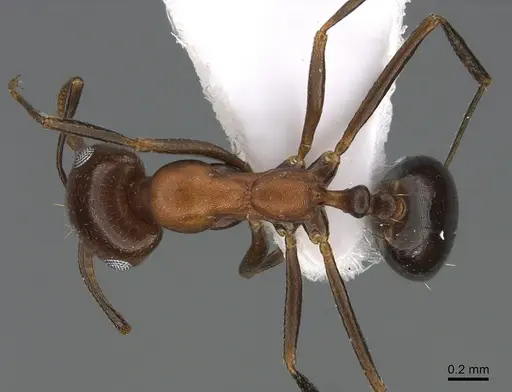
CASENT0048600
View on AntWeb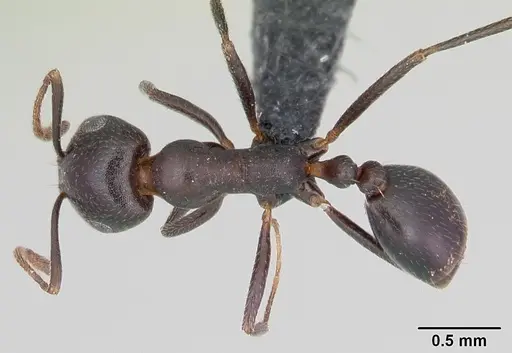
CASENT0249829
View on AntWeb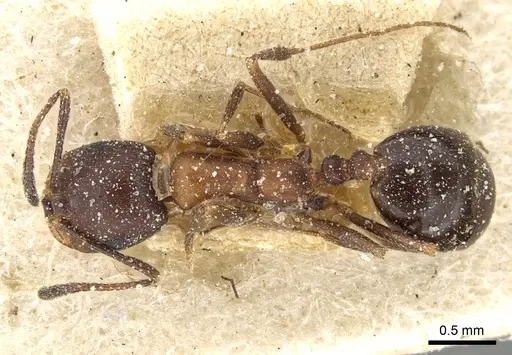
CASENT0913554
View on AntWeb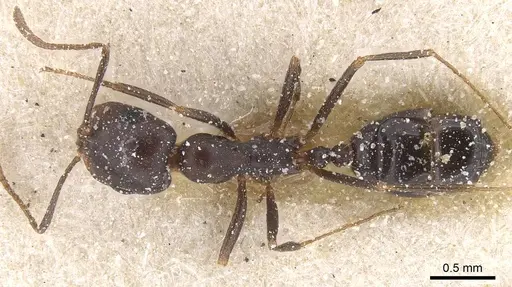
CASENT0913555
View on AntWeb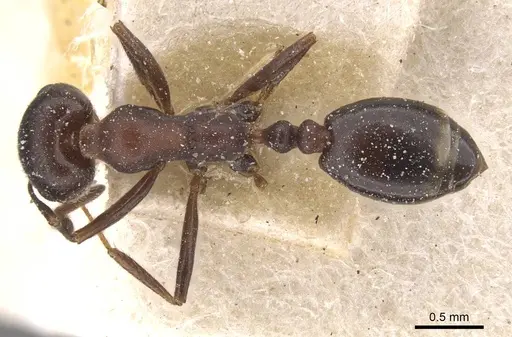
CASENT0913556
View on AntWeb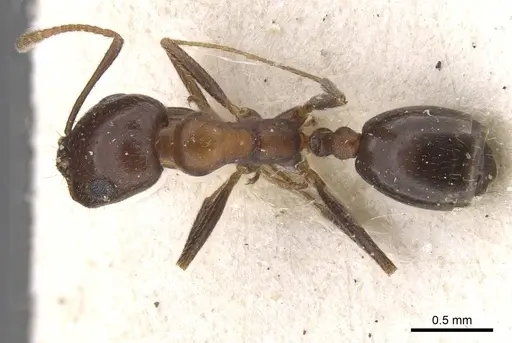
CASENT0913557
View on AntWeb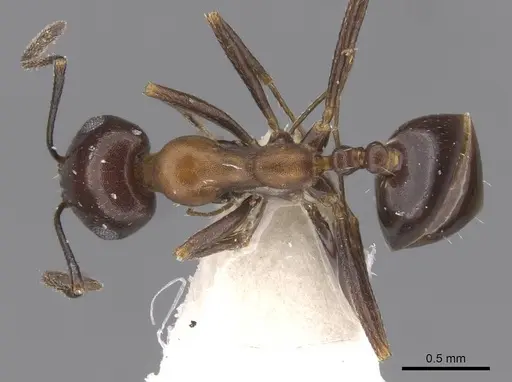
CASENT0913558
View on AntWeb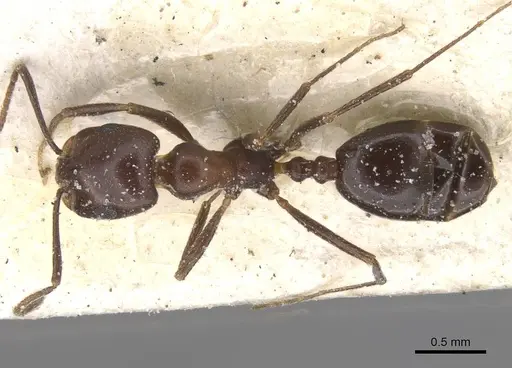
CASENT0913559
View on AntWeb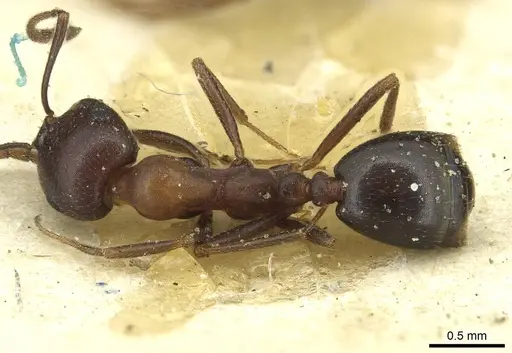
CASENT0913800
View on AntWeb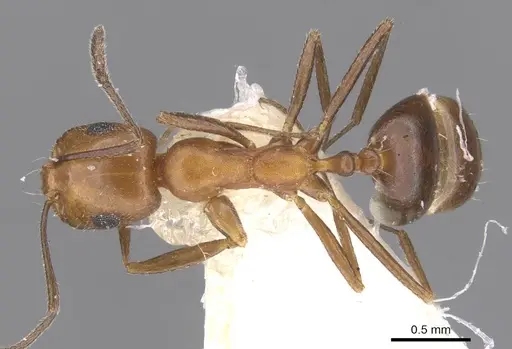
CASENT0913824
View on AntWeb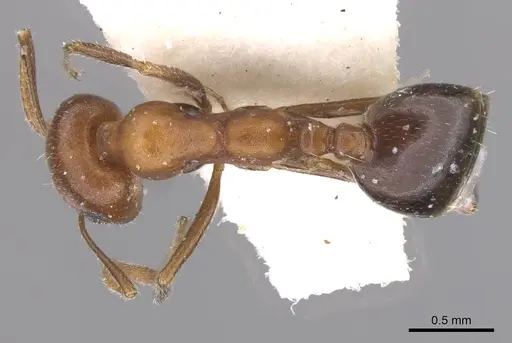
CASENT0922316
View on AntWeb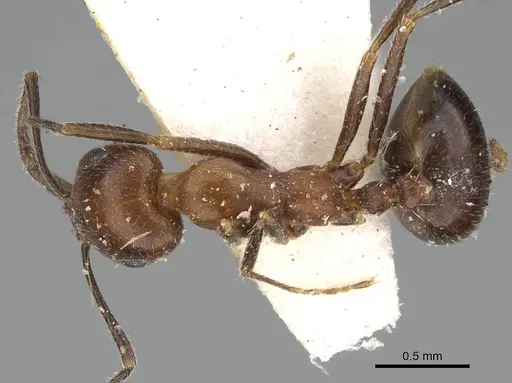
Literature
Loading distribution map...Loading products...