
Monomorium abeillei
- Sci. Name
- Monomorium abeillei
- Tribe
- Solenopsidini
- Subfamily
- Myrmicinae
- Author
- André, 1881
- Distribution
- Found in 4 countries
Introduction
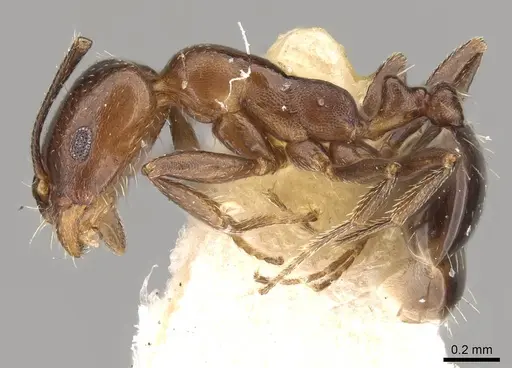
Monomorium abeillei is a tiny desert-adapted ant native to the Middle East, measuring 2.4-2.75mm in total length . Workers are a uniform dark brown to black with reddish leg joints, pale antennae, and shiny gasters . This species was previously known as Monomorium wahibiense before taxonomic revision confirmed it as the same species . It thrives across an incredible range of environments, from coastal sand dunes to mountain heights over 2200m in Saudi Arabia's Asir mountains . In the UAE, this ant is one of the most common desert species, dominating sandy dune ecosystems . Like all Myrmicinae ants in the Solenopsidini tribe, they defend themselves with a sting.
Quick Summary
- Difficulty: Medium
- Origin & Habitat: Wide-ranging Middle Eastern species found across Arabia, Iran, Israel, Jordan, and neighboring countries. True desert-adapted species found in sandy deserts, coastal areas, and high mountains [1][3][4].
- Colony Type: Colony structure is not documented in scientific literature. Based on genus patterns, likely single-queen colonies but this is unconfirmed.
- Size & Growth:
- Queen: Size data unavailable, no queen measurements exist in scientific literature. Inferred from small Monomorium genus patterns to be approximately 4-5mm.
- Worker: 2.4-2.75mm [1]
- Colony: Unknown, no colony size data available in scientific literature
- Growth: Unknown, no species-specific growth data available
- Development: Unknown, development time has not been studied for this species (Development timeline is unconfirmed. Related desert Monomorium species typically develop from egg to worker in 5-8 weeks at warm temperatures.)
- Antkeeping:
- Temperature: Keep warm and stable, roughly 24-28°C. Provide a temperature gradient allowing workers to self-regulate.
- Humidity: Low to moderate, desert species adapted to dry conditions. Keep nest substrate slightly moist but allow to dry between waterings. Avoid overly damp conditions.
- Diapause: Unlikely, desert species from warm Middle Eastern climate. May reduce activity during extreme heat but does not enter true dormancy.
- Nesting: In nature, nests in sandy soil near roots [4]. For captivity, a Y-tong (AAC) or plaster nest works well. Keep nest relatively dry with a small water chamber for humidity control.
- Behavior: Workers are small and active foragers. Generalist diet including small insects and honeydew. Their tiny size (under 3mm) means escape prevention must be excellent, use fine mesh barriers and tight-fitting lids. Has a sting but is too small to effectively penetrate human skin. Not aggressive but may sting if threatened.
- Common Issues: tiny size makes escape likely without fine mesh barriers, desert species prone to dying from excessive humidity, limited research means care is based on genus knowledge rather than species-specific studies, colony development timeline is unconfirmed
Natural History and Distribution
Monomorium abeillei is a true desert specialist found throughout the Middle East, from coastal lowlands in the UAE and Oman to mountain heights exceeding 2200m in Saudi Arabia [1]. Originally described from Israel (then Palestine) in 1881,the species has since been recorded across a vast range including Egypt, Sudan, Iran, Kuwait, Jordan, Lebanon, Syria, Qatar, Yemen, and Afghanistan [5][6]. The species was formerly known as M. wahibiense, described from Oman's Wahiba Sands, but taxonomic revision confirmed it as the same species [2]. In the UAE, Heatwole (1990) found this species to be the most numerous ant in desert sand dune ecosystems, demonstrating its remarkable adaptation to arid conditions [3]. The ant prefers sandy habitats and has been found nesting in sand near roots along coastlines [4].
Identification and Morphology
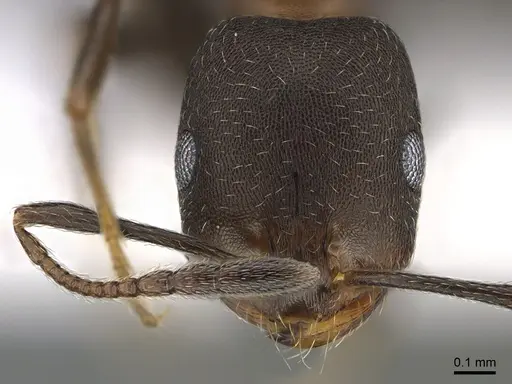
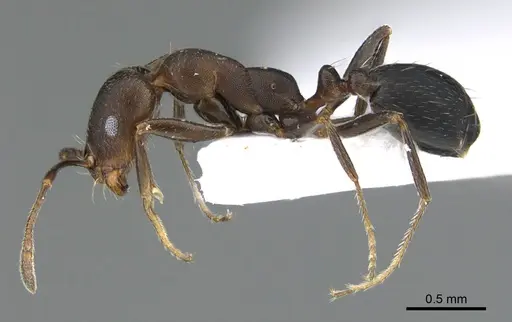
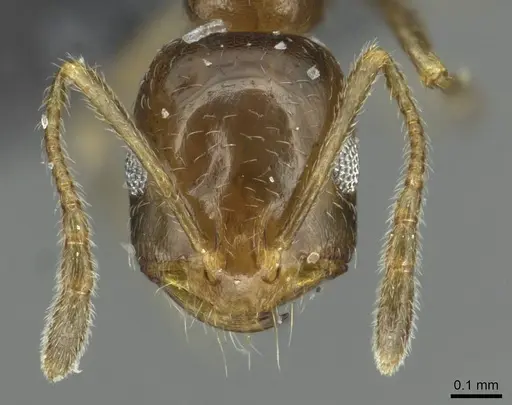
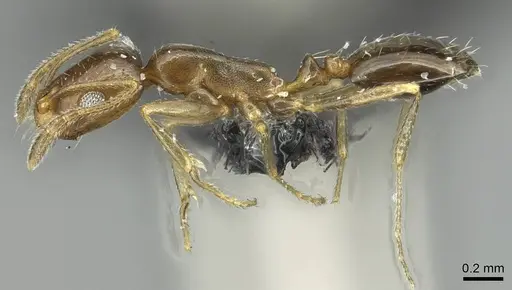
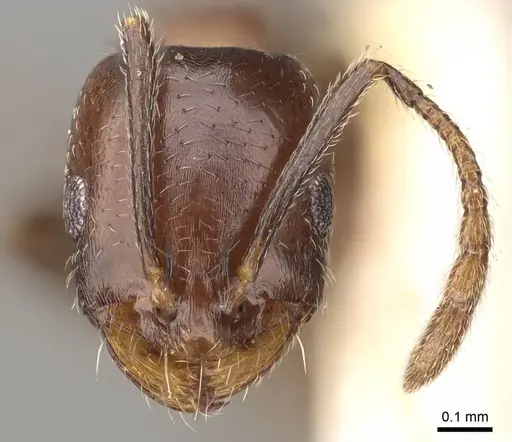
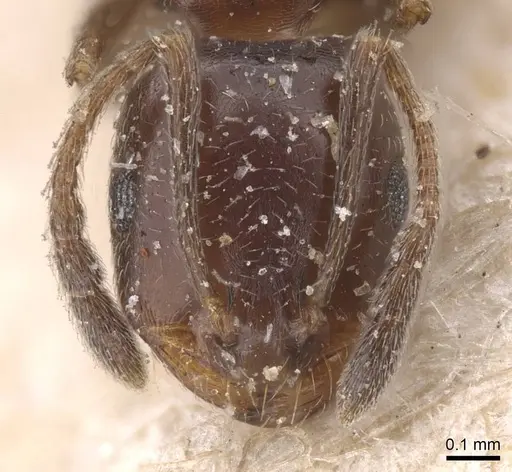
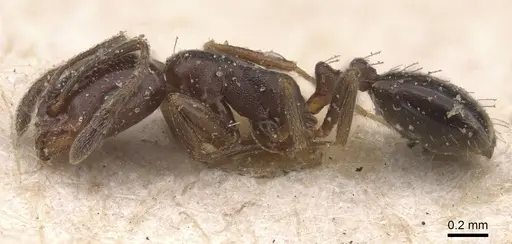
Workers are tiny at just 2.4-2.75mm total length, making them one of the smaller ant species kept in captivity [1]. They have a distinctive appearance: uniformly dark brown to black body with reddish leg joints, pale antennae (funiculi), and pale mandibles [1]. The head has a slightly concave clypeus margin and moderately large eyes with about 10 ommatidia. The propodeum has a characteristic longitudinal V-shaped furrow that helps distinguish it from similar species [1]. The petiole appears as a high, rounded triangle when viewed from the side. This species belongs to the Monomorium salomonis species group, which contains several similar desert-adapted ants [2].
Housing and Nest Setup
Given their small size and desert origin, these ants need careful attention to escape prevention and humidity control. Use a Y-tong (AAC) or plaster nest, which allows you to better manage moisture levels compared to fully naturalistic setups. Keep the nest relatively dry, desert species suffer from excess moisture that can lead to fungal growth and colony death. Include a small water chamber but avoid saturating the nest material. For the outworld, a simple setup works well since they are small and not particularly active climbers. However, their tiny size means they can squeeze through remarkably small gaps, use fine mesh on any ventilation and ensure all connections are sealed. A test tube setup works for founding colonies, but monitor humidity carefully as condensation can accumulate and drown small colonies.
Feeding and Diet
Like most Monomorium species, these ants are generalist feeders typical of desert foragers. Offer small protein sources such as fruit flies, small mealworms, or other tiny insects. Sugar sources like diluted honey or sugar water are likely accepted, especially during founding when the queen needs energy. In the wild, desert ants often scavenge and hunt small invertebrates, and may tend aphids for honeydew. Feed small amounts every few days and remove uneaten prey to prevent mold. Since workers are tiny, prey items should be appropriately sized.
Temperature and Seasonal Care
As a desert species from the Middle East, Monomorium abeillei prefers warm conditions but can tolerate a range. In their native habitat, temperatures fluctuate dramatically between day and night, and seasonally from scorching summers to mild winters. Provide a temperature gradient in the nest, roughly 24-30°C, allowing workers to choose their preferred zone. A heating cable on one side of the nest can create this gradient. Unlike temperate species, they do not require true hibernation. Instead, they may reduce activity during extreme summer heat. In captivity, stable room temperature in the low-to-mid 20s°C range typically works well. Avoid temperatures below 18°C for extended periods.
Colony Development and Growth
Colony growth in captivity is expected to be slow, typical for small ant species. The queen will lay eggs after mating and seal herself in a claustral chamber to raise the first workers (nanitics) entirely on her stored energy reserves. First workers will be smaller than mature workers, this is normal. Once the first nanitics emerge, the colony begins foraging for food to support further growth. Based on similar Monomorium species, expect several weeks from egg to first worker at optimal temperature. Colonies likely remain relatively small. Patience is key, small desert species often grow more slowly than larger tropical ants. Avoid overfeeding, as excess food mold poses a serious threat to small colonies.
Frequently Asked Questions
How long does it take for Monomorium abeillei to get their first workers?
Development time is unconfirmed for this species. Based on related Monomorium species, expect 5-8 weeks from egg to first worker at optimal temperature (around 26°C). The first workers (nanitics) will be smaller than mature workers, which is normal.
What do Monomorium abeillei ants eat?
They likely accept small insects like fruit flies, tiny mealworms, and other micro-prey. Sugar sources like diluted honey or sugar water are probably accepted. Feed small amounts every few days and remove uneaten prey.
Are Monomorium abeillei good for beginners?
They are rated as medium difficulty. Their small size makes escape prevention critical, and they require careful humidity management since they are adapted to desert conditions. Not the best choice for a first ant, but manageable for those with some experience.
What temperature do Monomorium abeillei need?
Keep them warm, around 24-28°C. A temperature gradient allowing workers to choose their preferred zone is ideal. Avoid temperatures below 18°C for extended periods.
How big do Monomorium abeillei colonies get?
Colony size is unconfirmed, no scientific data exists on maximum colony size for this species. Based on similar desert Monomorium, colonies likely remain relatively small.
Do Monomorium abeillei need hibernation?
No true hibernation required, they are a desert species adapted to year-round warmth. They may reduce activity during extreme temperatures but do not enter dormancy like temperate species.
Can I keep multiple Monomorium abeillei queens together?
Not recommended, colony structure is unconfirmed for this species. In the wild, colonies are likely single-queen. Start with one founding queen for best success.
Why are my Monomorium abeillei dying?
The most common causes are excessive humidity (desert species rot easily), escape through tiny gaps, and mold from overfeeding. Ensure the nest is dry, use fine mesh barriers, and remove uneaten prey promptly.
When should I move Monomorium abeillei to a formicarium?
Wait until the colony has at least 20-30 workers before considering a formicarium. Test tubes work well for founding and small colonies. Move only if the test tube becomes overcrowded or dries out too quickly.
Report an Issue
The current care sheet is based fully on literature. See inconsistencies, or something that's incorrect? Please , it will be resolved after review from an admin. Contributing to the blogs tab also helps providing information, to make us be able to further improve the caresheets. Thank you for your support!
References

This caresheet is licensed under CC BY-SA 4.0 .
Community Blogs
ANTWEB1041890
View on AntWeb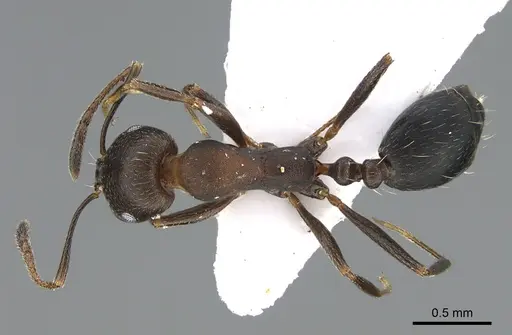
CASENT0913864
View on AntWeb
CASENT0914317
View on AntWeb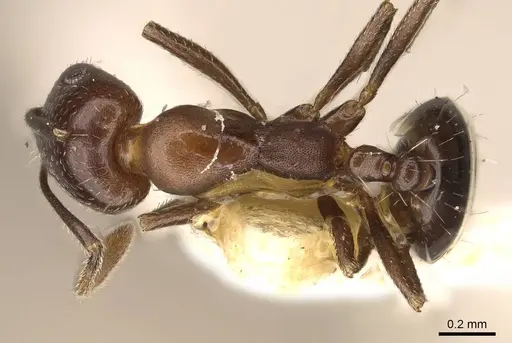
CASENT0915411
View on AntWeb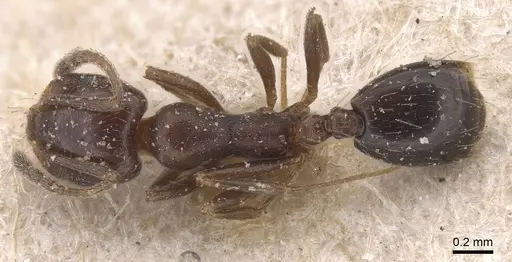
Literature
Loading distribution map...Loading products...