
Metapone vincimus
- Sci. Name
- Metapone vincimus
- Tribe
- Crematogastrini
- Subfamily
- Myrmicinae
- Author
- Alpert, 2007
- Distribution
- Found in 1 countries
Introduction
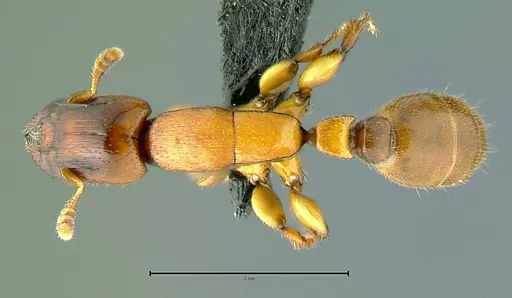
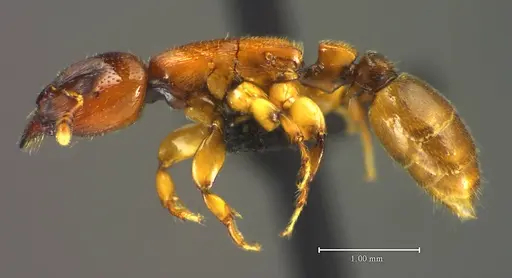
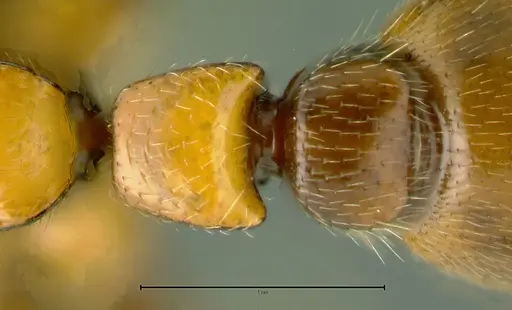
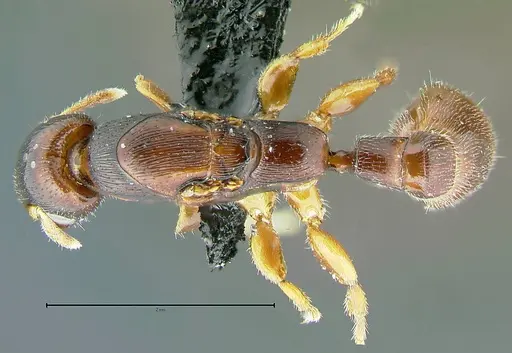
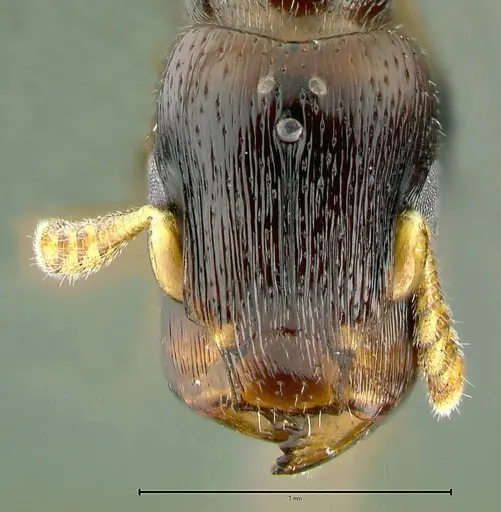
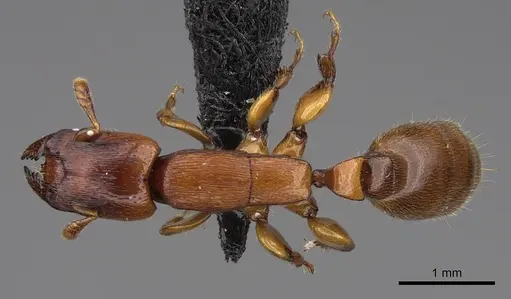
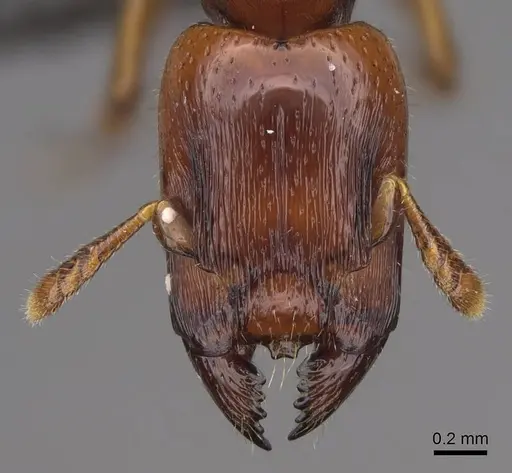
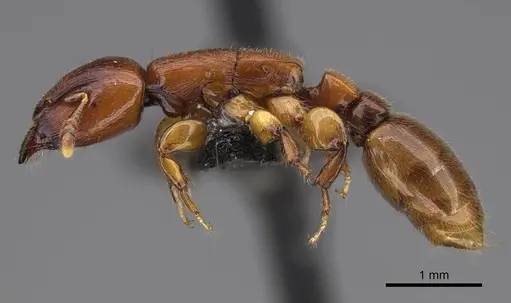
Metapone vincimus is a rare myrmicine ant from Madagascar, first described in 2007. Workers are tiny, measuring approximately 3-4mm total length, with a distinctive elongated head, very small eyes (only about 6 ommatidia), and 11-segmented antennae . Their body is dark reddish brown to light brown, with a smooth and shiny appearance. These ants are known only from secondary lowland rainforests in northern Madagascar, where they nest in rotting logs in close association with Cryptotermes termites . The species name 'vincimus' means 'we succeed' - named after the difficult search that finally uncovered these ants hidden in extremely hard logs . What makes M. vincimus truly special is their social structure. Like other Metapone species, they have gamergates - workers that can become reproductive and lay eggs if the queen dies . This is rare among ants and means colonies can survive without a queen. They also live in unusually small colonies with fewer than 20 workers and around 40 larvae - one of the smallest colony sizes known for any ant species .
Quick Summary
- Difficulty: Expert
- Origin & Habitat: Northern Madagascar (30km north of Antalaha), secondary lowland rainforest at 50m elevation. They nest in rotting logs just below the surface, in close association with Cryptotermes termites [1].
- Colony Type: Small colonies with gamergates, workers can become reproductive after the queen dies. Multiple colonies can exist in the same log but are aggressive toward each other.
- Size & Growth:
- Queen: Approximately 3-4mm total length, inferred from head and mesosoma measurements [1]. Queens are dealate (wingless) and uniformly black when found [1].
- Worker: Approximately 3-4mm total length, inferred from head and mesosoma measurements [1].
- Colony: Fewer than 20 workers and about 40 larvae per colony [1]. This is unusually small for ants.
- Growth: Unknown, no development data available.
- Development: Unknown, no direct observations documented. (Development timeline has not been studied.)
- Antkeeping:
- Temperature: Unknown for this species. Based on their Madagascar rainforest origin, aim for warm, stable conditions around 24-28°C. Monitor colony activity to adjust.
- Humidity: High humidity required. In nature they live in rotting wood in rainforest conditions. Keep nest substrate consistently moist but not waterlogged.
- Diapause: Unknown, no data on seasonal requirements. As a tropical species from Madagascar, they likely do not require formal hibernation but may slow during cooler periods.
- Nesting: Rotten wood nesting. In captivity, they need a naturalistic setup with rotting wood or a well-moistened plaster nest. They nest just below the log surface, so shallow chambers may be preferred.
- Behavior: Very small ants with reduced eyes, they are likely not strong foragers and may rely more on chemical cues. Workers are aggressive toward members of other colonies of the same species, even when found just meters apart in the same tree [1]. This suggests they are highly territorial. Escape prevention is critical due to their tiny size, they can squeeze through the smallest gaps. No sting is documented. Their defense mechanism is smear-type (spatulate stinger), typical of Myrmicinae.
- Common Issues: tiny size means escapes are likely without fine mesh barriers, very small colony size makes them vulnerable to stress and disturbance, aggressive toward other colonies, do not combine unrelated queens or colonies, humidity requirements are critical, drying out likely fatal, no documented care requirements means experimental approach needed, gamergate system means colonies can survive queen loss but this is untested in captivity
Natural History and Distribution
Metapone vincimus is known only from northern Madagascar, specifically from a secondary lowland rainforest near Antalaha [1]. This is one of the rarest ant species in captivity, with virtually no established husbandry protocols. In the wild, they live in rotting logs where they nest in chambers just beneath the log surface. Critically, they are always found in close association with Cryptotermes termites, the same logs contain termite chambers, and the ants appear to live alongside them [1]. This association may be optional (using the same log) or potentially more intimate. The two known colonies were separated by over 5 meters along the same fallen tree, showing they can tolerate proximity to others of their kind as long as there's some distance [1]. However, when workers from different colonies were placed together in a foraging arena, they attacked and killed each other, indicating strong colony boundaries [1].
Colony Structure and Gamergates
One of the most fascinating aspects of M. vincimus is their gamergate system. A queen mesosoma was found in a refuse chamber alongside worker remains, suggesting the primary queen died [1]. Yet the colony was still producing workers, this is only possible because workers (gamergates) can become reproductive and lay eggs to sustain the colony [1]. This is documented in other Metapone species as well. For antkeepers, this means your colony could potentially survive queen loss, which is unusual. However, this has never been tested in captivity, and the practical implications are unknown. Colony size is remarkably small, fewer than 20 workers and about 40 larvae represents one of the smallest active ant colonies ever documented [1]. This suggests they are either a naturally rare species or that the known specimens simply represent a portion of a larger colony structure.
Housing and Nesting
There is no established husbandry protocol for Metapone vincimus. Based on their natural history, you should provide a naturalistic setup that mimics rotting log conditions. They nest in chambers just below the log surface, so a shallow naturalistic setup with small chambers or a well-moistened plaster nest would be most appropriate [1]. The key challenge is humidity, these are rainforest ants that need consistently high moisture levels. Rotting wood pieces in a naturalistic terrarium would be ideal if you can source appropriate materials. Test tube setups are likely too small and dry for this species. Given their association with termites in the wild, consider including some termite-friendly wood material in the setup. Due to their tiny size (workers are approximately 3-4mm total length), escape prevention must be excellent, use fine mesh and check for any gaps.
Feeding and Diet
Feeding requirements are completely unstudied for this species. In the wild, they live alongside termites, but it's unclear if they prey on them or simply share the same log. Based on related Metapone species and their small size, they likely are omnivorous or predatory on small invertebrates. Start with small live prey like springtails or fruit flies, and observe acceptance. Sugar water may or may not be accepted, offer it occasionally but do not rely on it as a primary food source. Given the tiny colony size, feed very small amounts and remove uneaten prey to prevent mold. The association with termites is interesting, some ant species that live with termites either prey on them or are protected by them, while others simply share nesting space. Do not assume M. vincimus preys on termites without evidence.
Temperature and Seasonal Care
As a tropical species from Madagascar, Metapone vincimus requires warm conditions. While specific temperature requirements are unknown, aim for 24-28°C based on their rainforest origin. Use a heating cable on one side of the nest to create a gradient, allowing the ants to choose their preferred temperature. Monitor colony activity, if workers cluster together, they may need it warmer, if they avoid the heated area, reduce temperature. Whether they require any seasonal cooling (diapause) is completely unknown. As a tropical species from near sea level in Madagascar, they likely do not need hibernation, but may slow during cooler periods. Err on the side of stable warmth rather than attempting any cooling cycle without evidence.
Behavior and Temperament
Metapone vincimus workers are aggressive toward members of other colonies, when two colonies from the same tree were put together, they fought to the death [1]. This means you should never combine unrelated colonies or attempt multi-queen setups. The very small eyes (only about 6 ommatidia) suggest they rely less on vision and more on chemical communication, which is typical for nest-invading ants. They are not documented as stinging and given their tiny size would be harmless to humans. Escape risk is high due to their minute size, even standard test tube setups may allow escapes. Excellent escape prevention using fine mesh barriers is essential.
Frequently Asked Questions
How long does it take for Metapone vincimus to develop from egg to worker?
The development timeline is completely unknown, no observations have been documented. Based on their very small size, expect several months. This is an experimental species where development will need to be learned through captive breeding.
Can I keep multiple Metapone vincimus queens together?
Not recommended. In the wild, colonies separated by over 5 meters attacked each other when placed together [1]. There is no evidence that multiple unrelated queens can found a colony together, and combining colonies would likely result in fighting.
What do Metapone vincimus eat?
Diet is unconfirmed. Based on related species and their small size, they likely accept small live prey like springtails or fruit flies. Sugar sources may or may not be accepted. Start with small live prey and observe acceptance, removing uneaten food promptly.
Are Metapone vincimus good for beginners?
No. This is an expert-level species with no established husbandry protocols. There is no captive breeding history, and all care requirements must be learned experimentally. Only experienced antkeepers should attempt this species.
Do Metapone vincimus need hibernation?
Unknown. As a tropical species from Madagascar, they likely do not require formal hibernation. However, they may slow during cooler periods. Do not attempt forced hibernation without evidence this species can survive it.
How big do Metapone vincimus colonies get?
Wild colonies contain fewer than 20 workers and about 40 larvae [1]. This is unusually small for ants. It is unknown if colonies can grow larger in captivity or what their maximum size might be.
What nest type is best for Metapone vincimus?
A naturalistic setup with rotting wood or a well-moistened plaster nest with small, shallow chambers. They nest just below log surfaces in the wild [1]. High humidity is critical.
Do Metapone vincimus ants sting?
Not documented, and given their tiny size, any sting would be imperceptible to humans. They are not considered dangerous.
Why are my Metapone vincimus dying?
Without established protocols, colony failure is likely. Common causes likely include: drying out (they require high humidity), inappropriate temperature, stress from disturbance, or starvation. This species is extremely difficult to maintain and should be considered experimental.
Can Metapone vincimus survive without a queen?
Possibly yes. This species has gamergates, workers that can become reproductive if the queen dies [1]. This is documented in the wild where a queenless colony was still producing workers. However, this has never been tested in captivity.
Report an Issue
The current care sheet is based fully on literature. See inconsistencies, or something that's incorrect? Please , it will be resolved after review from an admin. Contributing to the blogs tab also helps providing information, to make us be able to further improve the caresheets. Thank you for your support!
References

This caresheet is licensed under CC BY-SA 4.0 .
Community Blogs
Literature
Loading distribution map...Loading products...