
Messor vaucheri
- Sci. Name
- Messor vaucheri
- Tribe
- Stenammini
- Subfamily
- Myrmicinae
- Author
- Emery, 1908
- Distribution
- Found in 1 countries
Introduction
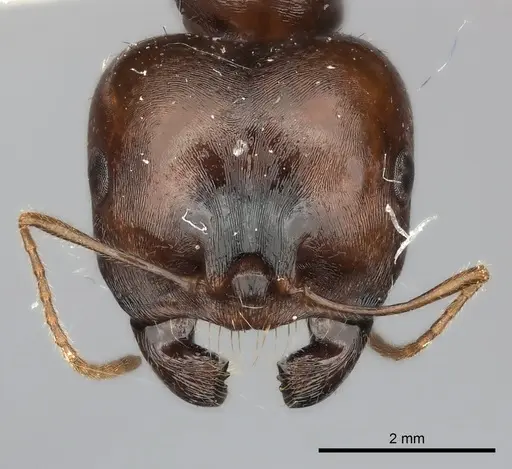
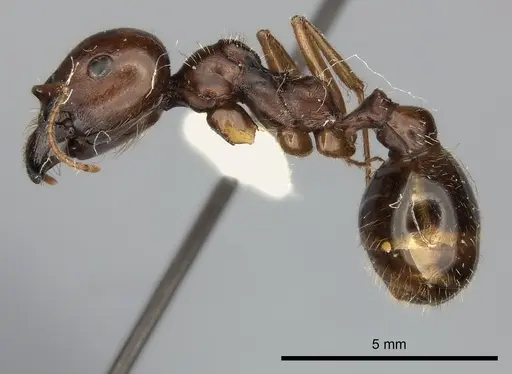
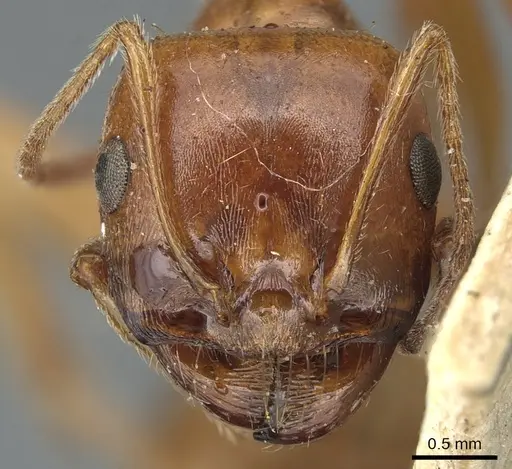
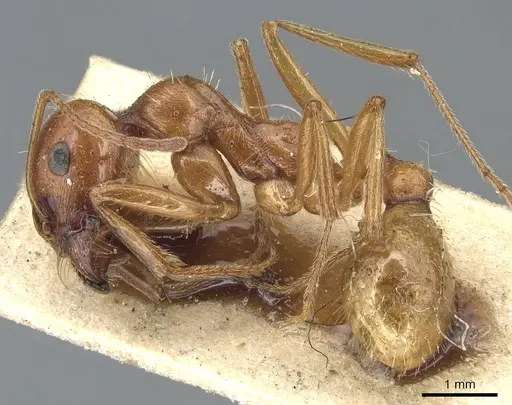
Messor vaucheri is a medium-sized harvester ant endemic to Morocco. Workers have a total length of 4.6-11.5 mm , with majors displaying yellowish-brown to reddish-brown coloring and minors being more yellow . This species is found only along Morocco's Atlantic coastal dunes, from Agadir to Laayoune . Like all Messor ants, they collect and store seeds as their primary food source .
Quick Summary
- Difficulty: Medium
- Origin & Habitat: Morocco, endemic to coastal dunes and sandy areas from Agadir to Laayoune [2][1].
- Colony Type: Based on Messor genus patterns, likely monogyne (single queen).
- Size & Growth:
- Queen: size data unavailable
- Worker: 4.6-11.5 mm [1]
- Colony: Estimated up to several hundred workers based on Messor genus patterns.
- Growth: Moderate
- Development: Estimated 8-12 weeks based on genus patterns. (Development time is inferred from related Messor species since no species-specific data exists.)
- Antkeeping:
- Temperature: Keep around 22-26°C with a gentle gradient. Inferred from warm coastal habitat.
- Humidity: Low to moderate, keep nest substrate dry but with a small water reservoir. Inferred from coastal dune habitat [2][1].
- Diapause: Yes, provide 2-3 months at 10-15°C during winter. Inferred from extratropical distribution [5].
- Nesting: Prefers dry, sandy substrate. Use Y-tong, plaster, or soil nests with sand. Inferred from habitat [2][1].
- Behavior: Workers are moderately aggressive and will defend the colony. Escape risk is moderate due to size. Inferred from genus patterns.
- Common Issues: colonies often fail if kept too humid, these are dry-climate ants [2][1]., slow growth can lead to overfeeding, resist the urge to overfeed., winter diapause is often skipped by keepers, leading to colony decline over time., wild-caught colonies may have parasites specific to this endemic species., seed storage can mold if humidity is too high, proper ventilation is essential.
Nest Preferences and Housing
Messor vaucheri naturally nests in sandy coastal dunes in Morocco [2][1]. In captivity, provide a dry, sandy substrate that allows tunneling. Use Y-tong, plaster, or soil nests with sand-filled chambers. Ensure the nest is dry with a small water reservoir to maintain low humidity.
Feeding and Diet
As harvester ants, they primarily eat seeds. Offer grass seeds, millet, cracked sunflower seeds, and commercial ant seed mixes. They also accept small insects and sugar water occasionally [4].
Temperature and Seasonal Care
Keep temperatures around 22-26°C with a gradient. During winter, provide diapause at 10-15°C for 2-3 months [5]. Reduce feeding during diapause but keep water available.
Behavior and Colony Dynamics
Workers forage for seeds and store them in the nest. Major workers help crack seeds and defend the colony. They are moderately aggressive toward threats. Growth is moderate from founding queen to several hundred workers.
Frequently Asked Questions
How long does it take for Messor vaucheri to produce first workers?
Expect 8-12 weeks from egg to first worker at optimal temperature (around 24°C). This is inferred from genus patterns [4].
What do Messor vaucheri ants eat?
They are seed-harvesters. Offer a variety of seeds as their primary food, with occasional insects or sugar water [4].
Do Messor vaucheri ants need hibernation?
Yes, likely. Provide a winter rest period of 2-3 months at 10-15°C, inferred from their extratropical distribution [5].
How big do Messor vaucheri colonies get?
Colony size is not documented, but estimated up to several hundred workers based on Messor genus patterns.
Can I keep Messor vaucheri in a test tube?
Test tubes work for founding colonies, but transfer to a spacious nest with seed storage once the colony reaches 20-30 workers.
What humidity level do Messor vaucheri ants need?
Keep them relatively dry with low to moderate humidity, inferred from coastal dune habitat [2][1].
Are Messor vaucheri ants good for beginners?
They are moderate difficulty due to dry conditions, seed storage management, and diapause requirements.
Do Messor vaucheri ants sting?
They can bite and may spray formic acid as a defense, but it is not dangerous to humans.
When should I move my Messor vaucheri to a formicarium?
Move them when the test tube becomes cramped or seed storage takes up space, typically at 30-50 workers.
Is Messor vaucheri aggressive?
They are moderately defensive and will protect their seed stores, but not dangerously aggressive.
Report an Issue
The current care sheet is based fully on literature. See inconsistencies, or something that's incorrect? Please , it will be resolved after review from an admin. Contributing to the blogs tab also helps providing information, to make us be able to further improve the caresheets. Thank you for your support!
References

This caresheet is licensed under CC BY-SA 4.0 .
Community Blogs
CASENT0217882
View on AntWeb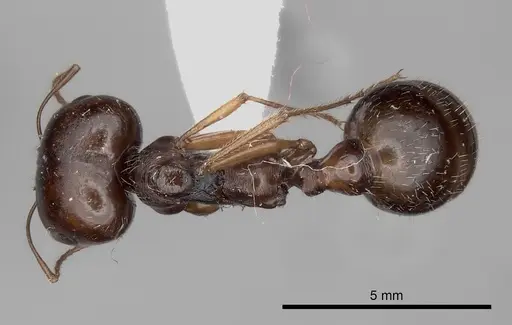
CASENT0904143
View on AntWeb
Literature
Loading distribution map...Loading products...