
Messor santschii
- Sci. Name
- Messor santschii
- Tribe
- Stenammini
- Subfamily
- Myrmicinae
- Author
- Santschi, 1910
- Distribution
- Found in 0 countries
Introduction
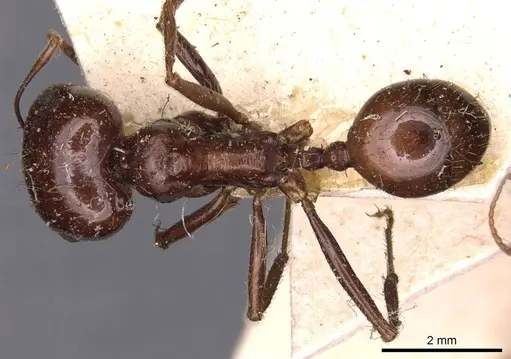
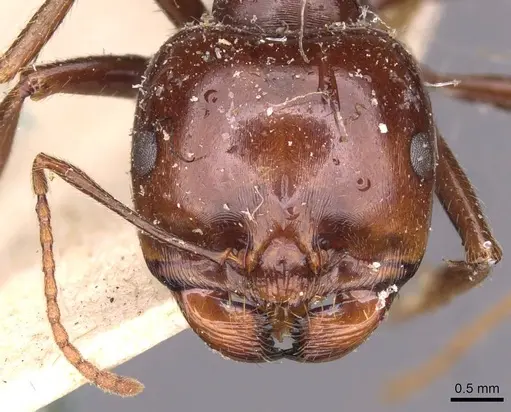
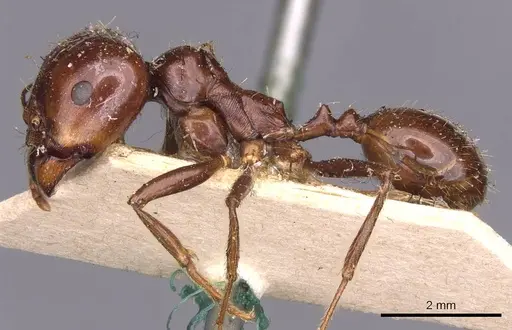
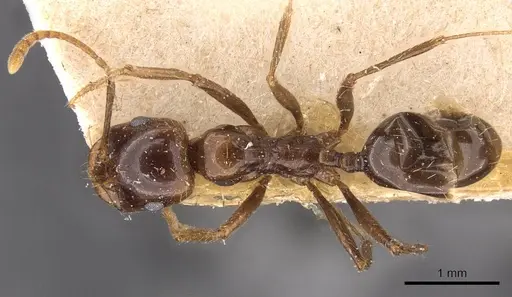
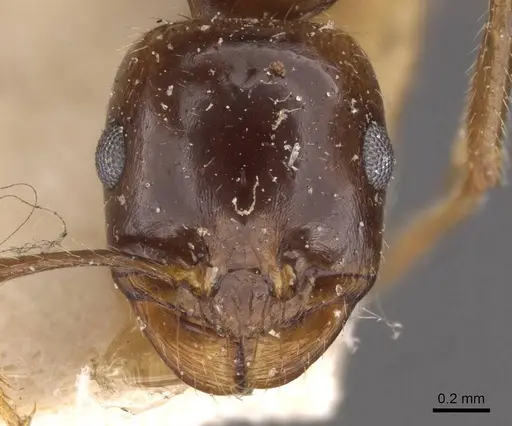
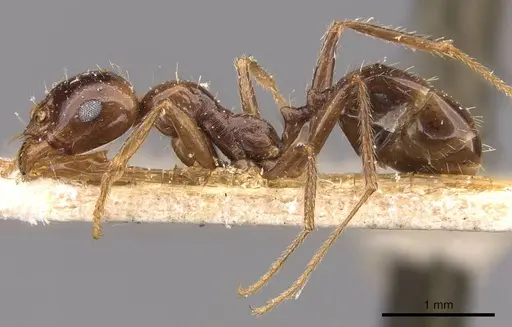
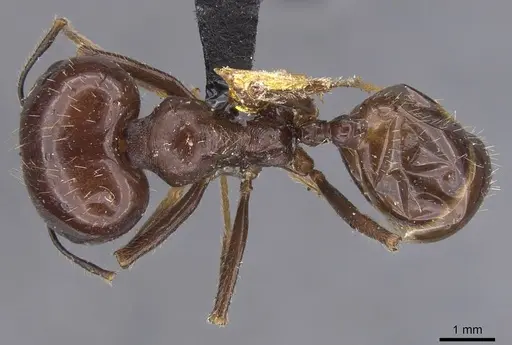
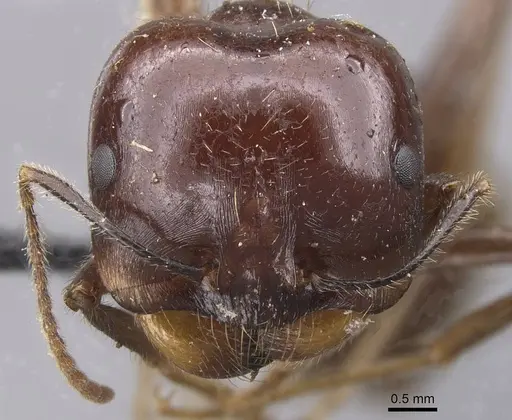
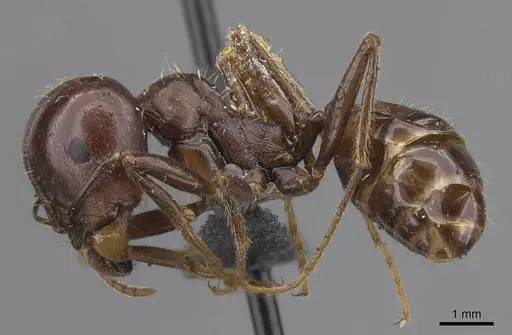
Messor santschii is a medium-sized harvester ant native to Tunisia and Algeria in North Africa. Workers measure 4-12mm total length, with a distinctive brownish yellowish-reddish coloration throughout the body . The species was previously classified as a subspecies of Messor barbarus but was raised to full species status in 2020 . Unlike its close relative M. barbarus, M. santschii has a matte and finely sculpted body surface, with the head being black with red coloration . The propodeum is distinctly angular without spines, and the petiole is elevated and truncated obliquely . These ants are seed-harvesters, playing an important role in their desert and semi-arid ecosystems by collecting and storing seeds.
Quick Summary
- Difficulty: Easy
- Origin & Habitat: Native to Tunisia and Algeria in the Palaearctic region. Found in arid and semi-arid habitats, including the Kairouan region of central Tunisia, areas around Algiers and Biskra in Algeria, and recently recorded on Djerba island in 2024 [1][2].
- Colony Type: Colony structure is unconfirmed. The research context does not provide specific data on queen number or colony organization for this species.
- Size & Growth:
- Queen: Approximately 8-10mm estimated based on total length range and typical Messor proportions [1]
- Worker: 4-12mm total length, with major workers at the larger end and minor workers at the smaller end [1]
- Colony: Estimated up to several thousand workers at maturity based on typical Messor genus patterns
- Growth: Moderate
- Development: Estimated 6-10 weeks based on typical Messor genus development at warm temperatures (Development time depends on temperature. First workers (nanitics) are smaller than mature workers.)
- Antkeeping:
- Temperature: Keep at 24-30°C, with a slight gradient allowing workers to regulate their temperature. These ants come from warm North African climates and prefer heated setups [3].
- Humidity: Low to moderate humidity. Messor santschii originates from arid regions and prefers dry conditions. The nest substrate should be mostly dry with a small moist area for brood development [3].
- Diapause: Not required. As a North African species from a warm climate, these ants do not typically undergo true hibernation. However, a slight reduction in temperature during winter months (to around 18-20°C) may slow activity and is generally well-tolerated [3].
- Nesting: Y-tong (AAC) nests work well for this species, or a test tube setup for founding colonies. They prefer compact chambers and narrow passages. A naturalistic setup with dry substrate (sand/soil mix) also works well. Avoid overly humid conditions that can cause mold [3].
- Behavior: Generally peaceful and not aggressive toward keepers. As typical harvester ants, they are active foragers that collect seeds and store them in the nest. Major workers have large heads and powerful mandibles for seed processing. They are moderate escape artists, use standard barrier methods but they are not particularly prone to escaping compared to tiny ants. Workers are primarily active during warmer parts of the day in nature [3].
- Common Issues: mold growth from excessive moisture, keep nesting area dry, seed storage can lead to moldy nests if humidity is too high, provide good ventilation, colonies may decline if fed only sugar, they are primarily seed-eaters, overfeeding can lead to seed hoarding that goes moldy, test tube setups need careful water reservoir management to avoid flooding
Housing and Nest Setup
Messor santschii does well in Y-tong (AAC) nests which provide the dark, compact environment they prefer. For founding colonies, a simple test tube setup works well, fill a test tube with water, plug the end with cotton, and place the queen in the open portion. The queen will seal herself in a chamber she creates. As the colony grows, you can transition to a formicarium with multiple connected chambers. These ants prefer dry nesting conditions, so avoid setups that retain moisture. A sand or soil substrate works well for naturalistic setups. Ensure the outworld (foraging area) is separate from the nest proper to allow for seed storage without affecting nest humidity. [3]
Feeding and Diet
As true harvester ants, Messor santschii primarily eats seeds. Provide a variety of seeds including grass seeds, millet, flax, and commercial ant seed mixes. Major workers have specialized large heads and mandibles designed for cracking and processing seeds. You can offer seeds directly in the foraging area, the ants will collect them and store them in the nest. While seeds form the bulk of their diet, occasional protein is beneficial, offer small insects like fruit flies or tiny crickets occasionally. Sugar water or honey can be offered occasionally but is not required as Messor species get most energy from seeds. Fresh water should always be available. [3]
Temperature and Heating
These North African ants thrive at warm temperatures between 24-30°C. A heating cable or heating mat on one side of the nest creates a temperature gradient that allows the ants to regulate their own temperature by moving between warmer and cooler areas. Room temperature (around 22-24°C) is acceptable, but warmer conditions will increase activity and speed development. During winter, a slight reduction to 18-20°C is tolerated but not required. Avoid temperatures below 15°C for extended periods. Place heating under or to the side of the nest, never directly on it, to avoid overheating. [3]
Colony Founding
In claustral founding, the queen seals herself in a small chamber she digs in the substrate. She uses stored fat reserves to survive and feed her first brood without leaving the nest to forage. This typically takes 4-8 weeks depending on temperature. During this time, the queen will lay eggs, which develop into larvae and then pupate before emerging as the first workers (nanitics). Do not disturb the queen during founding, stress can cause her to abandon or eat the brood. Once the first workers emerge, they will begin foraging for seeds to feed the colony. The colony grows slowly at first but accelerates once the first major workers appear. [3]
Growth and Development
Messor colonies grow steadily rather than explosively. The first workers (nanitics) are smaller than mature workers and may take several months to reach their full size potential. Major workers (soldiers) with enlarged heads typically appear once the colony reaches several hundred workers. The total time from egg to worker is approximately 6-10 weeks at optimal temperatures (around 26-28°C). Growth rate depends heavily on temperature, food quality, and colony size. A well-established colony can eventually reach several thousand workers over several years. [3]
Frequently Asked Questions
How long does it take for Messor santschii first workers to emerge?
First workers typically emerge 6-10 weeks after the queen lays eggs, assuming optimal temperatures around 26-28°C. The exact timing depends on temperature, warmer conditions speed development while cooler temperatures slow it down.
What do Messor santschii ants eat?
They are seed-harvester ants. Offer a variety of seeds including grass seeds, millet, flax, and commercial ant seed mixes. They also occasionally accept small insects for protein. Seeds should make up the majority of their diet.
Do Messor santschii ants need hibernation?
No, they do not require true hibernation. As a North African species from a warm climate, they are active year-round. A slight temperature reduction to 18-20°C during winter is acceptable but not necessary.
Are Messor santschii good for beginners?
Yes, they are considered easy to keep. They are forgiving of minor care mistakes, do not require hibernation, and are not aggressive. Their primary needs are warm temperatures, dry nesting conditions, and a seed-based diet.
How big do Messor santschii colonies get?
Mature colonies can reach several thousand workers over several years. The size range of workers is 4-12mm, with major workers at the larger end.
Can I keep multiple Messor santschii queens together?
Colony structure for this species is unconfirmed. It is generally not recommended to house multiple queens together unless pleometrosis (founding with multiple queens) is confirmed for the species.
Do Messor santschii ants sting?
They can sting, but their stingers are small and the pain is minimal for most people. They are not considered dangerous and typically only sting when directly threatened or handled roughly.
When should I move my Messor santschii colony to a formicarium?
Move from a test tube to a formicarium once the colony reaches 50-100 workers and the test tube is becoming crowded. Ensure the formicarium has appropriate humidity zones and is escape-proof.
Why are my Messor santschii dying?
Common causes include excessive humidity (they prefer dry conditions), temperatures below 15°C, mold from overwatering or poor ventilation, or an inappropriate diet. Check that the nest is dry, temperatures are in the 24-30°C range, and you are providing seeds as the primary food.
Do Messor santschii need a heat source?
Yes, they benefit from heating. While they can survive at room temperature, providing a temperature gradient with a heating mat or cable (24-30°C) will increase activity and speed colony growth.
How often should I feed Messor santschii?
Offer seeds continuously, they will store them. Check every few days and add more seeds when the previous ones are collected. Protein (insects) can be offered once or twice per week. Remove any uneaten insects within 24 hours to prevent mold.
Report an Issue
The current care sheet is based fully on literature. See inconsistencies, or something that's incorrect? Please , it will be resolved after review from an admin. Contributing to the blogs tab also helps providing information, to make us be able to further improve the caresheets. Thank you for your support!
References

This caresheet is licensed under CC BY-SA 4.0 .
Community Blogs
Literature
Loading distribution map...Loading products...