
Messor sanctus
- Sci. Name
- Messor sanctus
- Tribe
- Stenammini
- Subfamily
- Myrmicinae
- Author
- Emery, 1921
- Distribution
- Found in 3 countries
Introduction
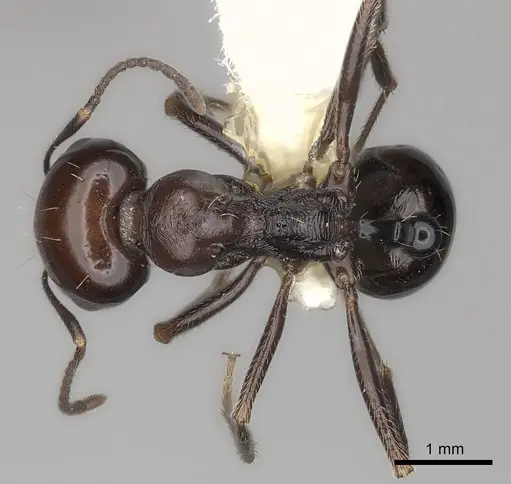
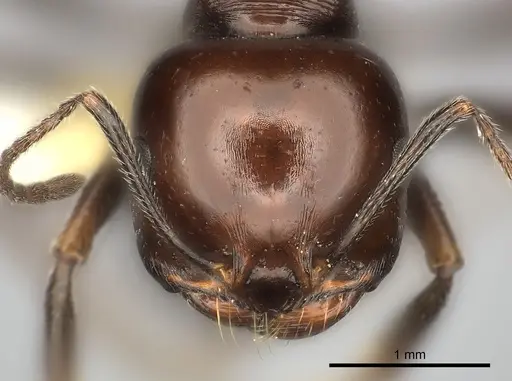
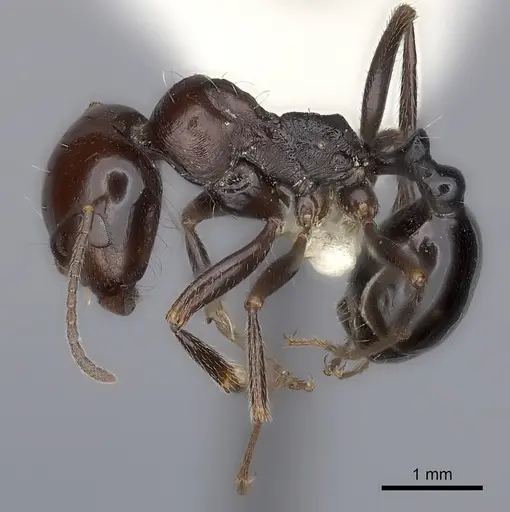
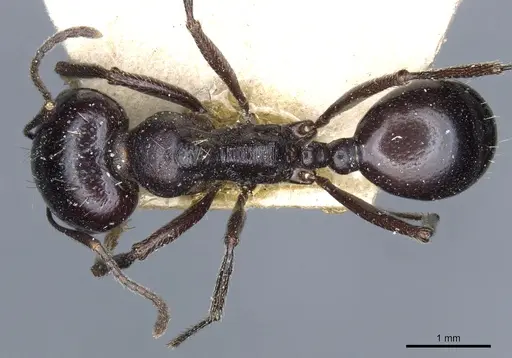
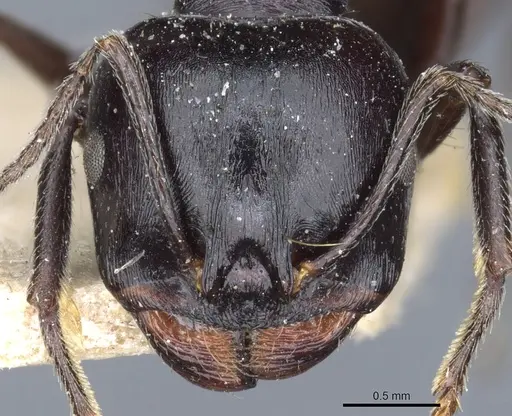
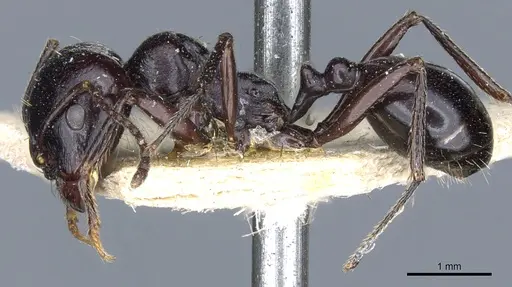
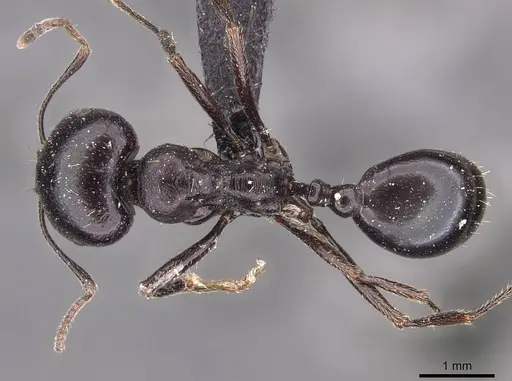
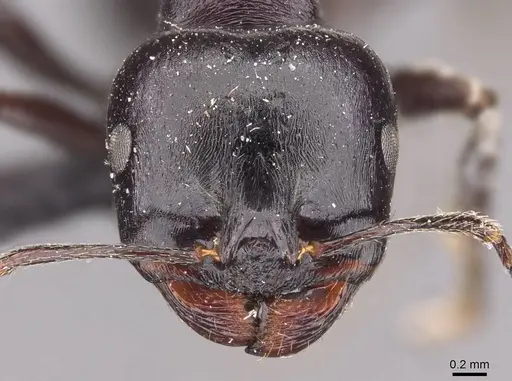
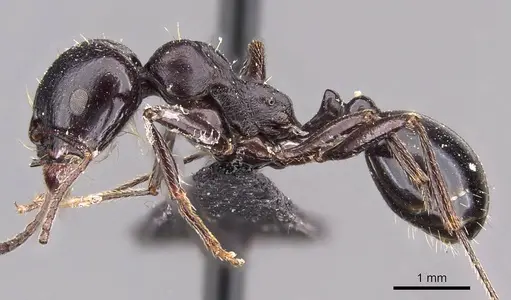
Messor sanctus is a small harvester ant from the Mediterranean region. Workers are 4–7 mm with a black matte body, a pubescent gaster (abdomen) without erect hairs, a transversely wrinkled pronotum, reticulated vertex and gaster, and an elevated petiole . It belongs to the aegyptiacus group and is found across Algeria, Tunisia, Morocco, Libya, and Sicily . Like other Messor, they harvest seeds and build meshed gallery networks in sandy soil . The poison gland contains (2'S)-anabasine, used for defense . This species is fairly rare in parts of its range and may be introduced in some areas of Morocco .
Quick Summary
- Difficulty: Easy
- Origin & Habitat: Mediterranean North Africa (Algeria, Tunisia, Morocco, Libya, Sicily) [4]. Found in warm, dry to semi-arid habitats, often under stones or in grazed areas [8][1].
- Colony Type: Colony structure unknown. Based on related Messor species, probably single-queen (monogyne), but not confirmed for this species.
- Size & Growth:
- Queen: Size data unavailable – queens are larger than workers, but no published measurements.
- Worker: 4–7 mm [1][2]
- Colony: Unknown – not documented in available research.
- Growth: Moderate – inferred from slow seed-based diet and related species.
- Development: Unknown – no published data for this species. (Development likely takes 6–10 weeks at warm temperatures, similar to other Messor, but this is unconfirmed.)
- Antkeeping:
- Temperature: Mediterranean species adapted to warm conditions. Keep at room temperature (22–26°C). Can tolerate cooler periods, but growth slows below 20°C. Exact optimal range is unstudied.
- Humidity: Low to moderate. These ants come from dry, sandy habitats. Keep the nest substrate mostly dry, with just one small moist area. Avoid waterlogging.
- Diapause: Likely yes – given the Mediterranean climate with distinct seasons, a cool winter period (10–15°C for 2–3 months) is recommended, but not confirmed by research.
- Nesting: Y-tong (AAC), plaster, or test tube setups work well. They prefer dry to moderately humid nests and will build galleries in sandy substrates. Providing a thin layer of sand or fine grit encourages natural digging [5].
- Behavior: Peaceful seed-harvesting ants. They form foraging columns and efficiently collect seeds [3]. Not aggressive toward humans – they have a sting containing (2'S)-anabasine [6] but rarely use it. Escape risk is moderate to high due to small size (4–7 mm), use standard barriers like fluon or oil.
- Common Issues: colonies may decline if seeds are not provided in sizes their workers can carry (2–4 mm seeds)., founding queens are sensitive to excessive moisture – keep founding setup dry but with a small water source., wild-caught colonies may carry parasites, quarantine new colonies., seed-based diet leads to slow colony growth compared to protein-fed species – be patient., foraging columns require space – provide a large enough outworld for trail formation.
Nest Preferences and Housing
In the wild, Messor sanctus nests under stones and builds gallery networks in sandy soil [8][5]. In captivity, Y-tong (AAC), plaster, or test tube setups work well. They prefer relatively dry conditions – keep the nest substrate mostly dry with just one small moist area. A thin layer of sand or fine grit allows natural digging behavior [5]. These ants are not aggressive and are easy to observe. Provide a small water tube for drinking.
Feeding and Diet
Messor sanctus is granivorous (seed-eating). Provide a variety of small seeds – grass seeds, millet, poppy seeds, or commercial ant seed mixes. They form foraging columns and systematically harvest seeds from one pile before moving to the next [3]. Mean foraging rate is about 7 seeds per minute from a single pile [3]. They also benefit from occasional protein sources (e.g., small insects like fruit flies) and sugar water, but seeds should be the staple. Ensure seed size is appropriate for their worker size (2–4 mm seeds work best).
Temperature and Seasonal Care
These ants are from warm Mediterranean climates. Keep them at room temperature (22–26°C) for normal activity. Below 20°C, activity slows. A winter cool-down (10–15°C) is likely beneficial to mimic natural seasonality, but has not been experimentally confirmed. Avoid temperatures below 10°C. A heat cable on one side of the nest can create a gradient. [3]
Foraging Behavior
Messor sanctus forages in organized columns. They discover seed sources quickly (average discovery time 3–5 minutes depending on distribution) [3]. Foraging rate is stable during most of a foraging bout but lower at the start and end [3]. They exploit one resource fully before moving to another, likely as a competition strategy [3]. They can also be trained to use mazes with seed rewards [9]. Provide a spacious outworld where columns can form.
Growth and Development
Colony growth is slow to moderate. Founding and development timelines are unstudied for this species. Based on related Messor, queens likely found claustrally (sealing themselves in) and the first workers (nanitics) appear after several weeks. Growth depends on seed availability – a colony may take 1–2 years to reach a sizable workforce. Exact numbers are unknown. The seed-based diet supports steady rather than rapid growth.
Frequently Asked Questions
How long does it take for Messor sanctus to raise first workers?
This is unknown for this species. Based on related Messor, it likely takes 6–10 weeks at warm temperatures, but this has not been confirmed by research.
Can I keep Messor sanctus in a test tube?
Yes, test tubes work well for founding colonies and small groups. Ensure the water reservoir is not too large to avoid flooding, and provide seeds in the outworld area.
What do Messor sanctus eat?
They primarily eat seeds – provide small grass seeds, millet, poppy seeds, or commercial ant seeds. Occasional small insects and sugar water are good supplements [3].
Do Messor sanctus ants sting?
They have a sting containing (2'S)-anabasine [6] but rarely use it against humans due to their small size. They are not aggressive.
Are Messor sanctus good for beginners?
Yes, they are considered easy to keep. They tolerate a range of conditions, do not require high humidity, and their seed-based diet is simple. The main challenge is slow growth – be patient.
Do Messor sanctus need hibernation?
Likely yes – given their Mediterranean origins, a cool winter period (10–15°C for 2–3 months) is recommended, though not confirmed by research. Reduce feeding during this time.
When should I move Messor sanctus to a formicarium?
Move them when the test tube becomes crowded – usually around 50–100 workers. But since colony size is undocumented, watch for signs of cramped conditions (ants piling up outside the tube).
How big do Messor sanctus colonies get?
The maximum colony size is unknown. Related Messor species can reach 500+ workers, but this has not been confirmed for M. sanctus.
Why are my Messor sanctus not foraging?
Check that seeds are appropriately sized (2–4 mm), that the outworld is accessible, and that temperature is above 20°C. They may also have stored enough seeds – check if the nest has seed caches.
Can I keep multiple Messor sanctus queens together?
Probably not – most Messor are singly queen (monogyne) and unrelated queens will fight. But this has not been confirmed for this species.
Report an Issue
The current care sheet is based fully on literature. See inconsistencies, or something that's incorrect? Please , it will be resolved after review from an admin. Contributing to the blogs tab also helps providing information, to make us be able to further improve the caresheets. Thank you for your support!
References

This caresheet is licensed under CC BY-SA 4.0 .
Community Blogs
Literature
Loading distribution map...Loading products...