
Meranoplus tricuspidatus
- Sci. Name
- Meranoplus tricuspidatus
- Tribe
- Crematogastrini
- Subfamily
- Myrmicinae
- Author
- Schödl, 2007
- Distribution
- Found in 0 countries
Introduction
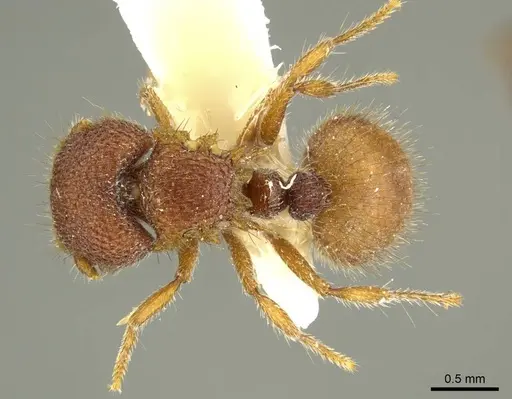
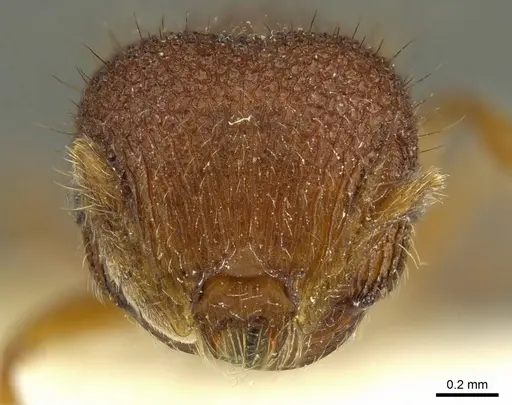
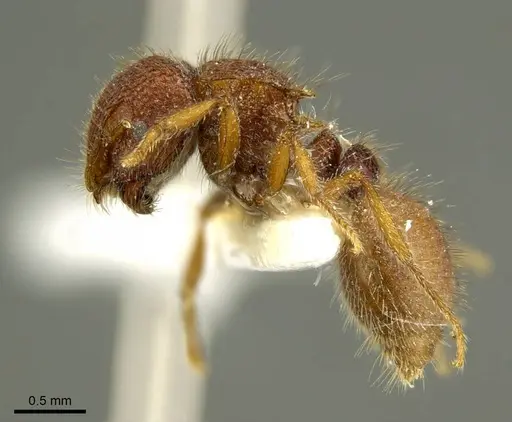
Meranoplus tricuspidatus is a medium-sized Myrmicinae ant native to Australia, specifically found in coastal and south-central Queensland with rare sightings as far inland as Alice Springs. Workers measure 4.75-6.05mm and feature a distinctive three-pointed (tridentate) clypeal projection that gives the species its name. They are brown to dark brown in color, with slightly lighter gaster, legs, and antennae. The promesonotal shield has a characteristic translucent flange that wraps around the sides. These ants nest in the ground and are granivorous, meaning they collect and eat seeds . This species is part of the Meranoplus diversus group and can be identified by its unique clypeus structure - it has two acute teeth with an additional short medial denticle in the center. The promesonotum is notably wider than long with a translucent margin. While closely related to M. wilsoni and M. mars, the clypeal structure and translucent promesonotal shield reliably separate this species .
Quick Summary
- Difficulty: Medium
- Origin & Habitat: Coastal and south-central Queensland, Australia. A single specimen has been recorded from Alice Springs, suggesting the species may have a broader distribution than current records indicate. They nest in the ground in natural habitats [1].
- Colony Type: Colony structure is unconfirmed. Based on typical Meranoplus patterns, likely single-queen (monogyne) colonies, though this requires verification through field observations.
- Size & Growth:
- Queen: Unconfirmed, queen measurements not documented in available literature
- Worker: 4.75-6.05mm [1]
- Colony: Unknown, no colony size data available
- Growth: Unknown, growth rate has not been studied
- Development: Unconfirmed, no direct development data available. (Development timeline is unconfirmed. Related Australian Meranoplus species typically complete development in 6-10 weeks during warm months.)
- Antkeeping:
- Temperature: Based on their Queensland coastal habitat, keep nest areas at 24-28°C. Australian species experience warm conditions year-round in their range. Provide a gentle temperature gradient allowing workers to self-regulate.
- Humidity: Moderate humidity. Queensland coastal areas experience humid subtropical conditions. Keep nest substrate moist but not waterlogged, with some drier areas available. Aim for substrate that holds moisture without becoming soggy.
- Diapause: Likely minimal or no true diapause. Queensland experiences mild winters without extended cold periods. However, colony activity may slow during cooler months. Do not force hibernation, instead reduce feeding and allow natural slow-down if ambient temperatures drop.
- Nesting: Ground-nesting species. In captivity, they do well in naturalistic setups with soil or sand substrate, or in Y-tong/plaster nests with appropriate moisture retention. Provide deep enough substrate for them to create tunnels and chambers. A naturalistic setup with a soil chamber mimics their natural nesting preferences.
- Behavior: Granivorous ants that collect and consume seeds. They are moderate in size and likely moderately active foragers. Escape risk is moderate, their 5-6mm size means standard formicarium barriers work well, but ensure all connections are secure. Temperament is likely docile compared to some Myrmicinae, but they will defend the nest if threatened. They forage by searching for seeds and other plant matter on the ground.
- Common Issues: granivorous diet means they need seed offerings, protein-only feeding will likely fail, ground-nesting behavior requires appropriate substrate depth for tunneling, limited distribution data means their exact temperature/humidity preferences are inferred, not confirmed, queen and colony structure unconfirmed, wild-caught queens may have unexpected founding requirements, Australian species may have different care requirements than common tropical ant species
Housing and Nest Setup
Meranoplus tricuspidatus is a ground-nesting species that naturally creates tunnels and chambers in soil. In captivity, a naturalistic setup with a deep soil chamber works best, this allows them to exhibit their natural tunneling behavior. Use a mixture of sand and soil (about 70:30 ratio) that holds moisture well but drains adequately. Alternatively, a Y-tong or plaster nest with a soil chamber attached can work, providing the substrate depth is sufficient for tunneling.
The outworld (foraging area) should be simple and easy to clean. These ants are granivorous, so provide a shallow dish or designated area for seeds. A water tube should always be available. Because they nest in the ground, ensure the nest area remains dark (cover with a red film or keep in a dark room) to encourage the ants to use the nesting chambers. [1]
Feeding and Diet
As a granivorous species, M. tricuspidatus primarily eats seeds. Offer a variety of small seeds appropriate for their size, sesame seeds, chia seeds, millet, and crushed bird seed work well. They will also likely accept other plant matter and may take small amounts of protein.
In addition to seeds, offer occasional protein sources like small insects (fruit flies, small mealworms) or protein jelly. Sugar water or honey can be offered occasionally, though their natural diet focuses on seeds. Fresh water must always be available. The key to success with this species is providing consistent seed offerings, this mimics their natural foraging behavior where they collect and store seeds. [1]
Temperature and Seasonal Care
Keep the nest area at 24-28°C, with a slight gradient if possible. These ants come from coastal Queensland, which experiences warm temperatures year-round with mild winters. Unlike temperate species, they likely do not require a true hibernation period. During cooler months (if your room temperature drops), simply reduce feeding frequency and allow the colony to slow naturally.
Avoid temperatures below 20°C for extended periods. A heating cable or mat on one side of the nest can help maintain optimal temperatures, but always provide an unheated area so workers can self-regulate. Place the heating on top of the nest, not underneath, to avoid drying out the substrate too quickly. [1]
Colony Founding
The founding behavior of M. tricuspidatus has not been documented in scientific literature. If you obtain a founding queen, provide her with a small test tube setup with moist cotton or a small soil chamber. Keep her warm (around 26°C) and in darkness. Do not feed the founding queen until the first workers emerge. Wait patiently for several weeks before expecting the first workers (nanitics). If she does not produce workers within this timeframe, the founding may have failed.
Behavior and Temperament
This species is likely docile and non-aggressive compared to many Myrmicinae. They are moderate foragers that search for seeds and plant matter on the ground. Workers are 5-6mm in size, making them medium-sized ants that are easy to observe.
Escape prevention is straightforward, their size means standard barriers work well. However, ensure all tubes and connections are secure, as with any ant species. They will defend their nest if threatened but are not particularly aggressive toward keepers. The distinctive three-pointed clypeus (visible under magnification) and translucent promesonotal flange make this species interesting to observe. [1]
Frequently Asked Questions
What do Meranoplus tricuspidatus ants eat?
They are granivorous, meaning they primarily eat seeds. Offer sesame seeds, chia seeds, millet, or crushed bird seed. You can also offer occasional protein (small insects) and sugar water, but seeds should be the staple food.
How long does it take for Meranoplus tricuspidatus to produce first workers?
The exact development time is unconfirmed. Based on related Meranoplus species, expect several weeks from egg to first worker at optimal temperature (around 26°C). Founding queens may take longer if conditions are not ideal.
What size are Meranoplus tricuspidatus workers?
Workers measure 4.75-6.05mm, making them medium-sized Myrmicinae ants [1].
Do Meranoplus tricuspidatus ants need hibernation?
Probably not. They come from Queensland, Australia, which has mild winters without extended cold periods. Reduce feeding slightly during cooler months but do not force a hibernation period. They may slow down naturally if room temperatures drop.
What nest type is best for Meranoplus tricuspidatus?
A naturalistic setup with deep soil substrate works best since they are ground-nesting ants. A Y-tong or plaster nest with an attached soil chamber also works well. They need substrate deep enough to create tunnels and chambers.
Are Meranoplus tricuspidatus good for beginners?
This species is rated as Medium difficulty. They have specific dietary needs (granivorous diet) and their exact care requirements are not well-documented since they are not commonly kept. They are best suited for keepers with some antkeeping experience who can adapt care based on colony behavior.
Where is Meranoplus tricuspidatus found?
Coastal and south-central Queensland, Australia. A single specimen has been recorded from Alice Springs. They likely have a broader distribution than current records show [1].
Do Meranoplus tricuspidatus ants sting?
Most Myrmicinae ants can sting. The sting may be mild due to their small size. They are not considered dangerous to humans.
How big do Meranoplus tricuspidatus colonies get?
Colony size is unknown, no data is available on maximum colony size for this species.
Can I keep multiple Meranoplus tricuspidatus queens together?
The colony structure is unconfirmed. It is unknown whether they are monogyne (single queen) or polygyne (multiple queens). Until more data is available, it is not recommended to combine unrelated foundress queens.
Report an Issue
The current care sheet is based fully on literature. See inconsistencies, or something that's incorrect? Please , it will be resolved after review from an admin. Contributing to the blogs tab also helps providing information, to make us be able to further improve the caresheets. Thank you for your support!
References

This caresheet is licensed under CC BY-SA 4.0 .
Community Blogs
CASENT0919725
View on AntWeb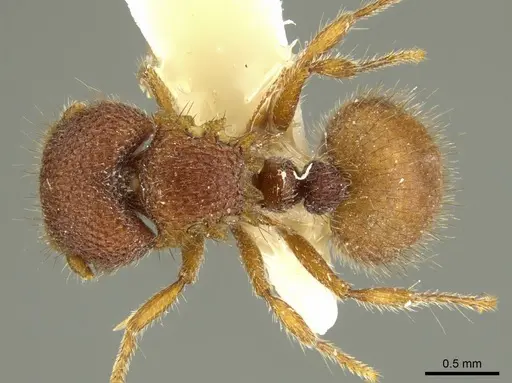
Literature
Loading distribution map...Loading products...