
Meranoplus pulcher
- Sci. Name
- Meranoplus pulcher
- Tribe
- Crematogastrini
- Subfamily
- Myrmicinae
- Author
- Sharaf, 2014
- Distribution
- Found in 1 countries
Introduction
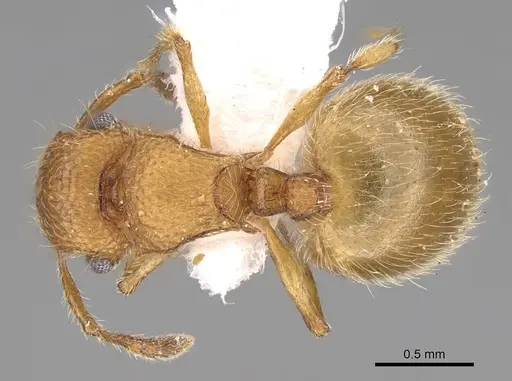
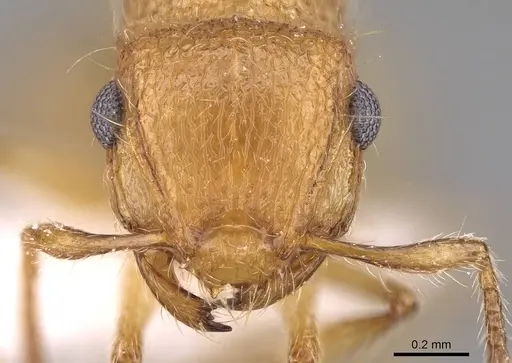
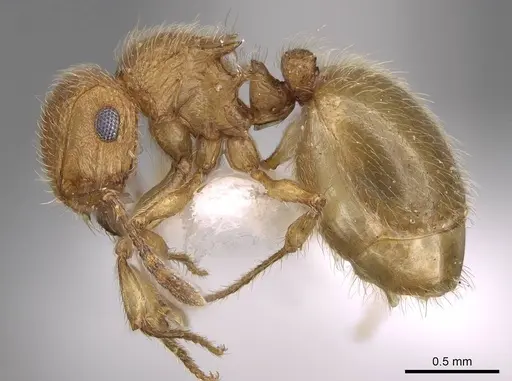
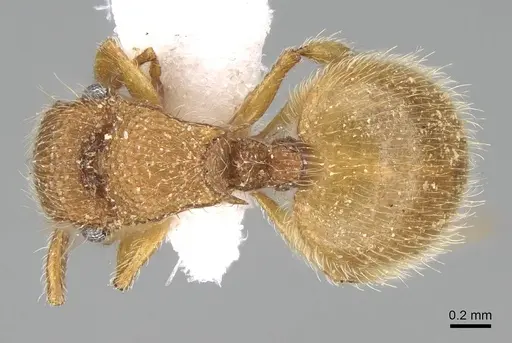
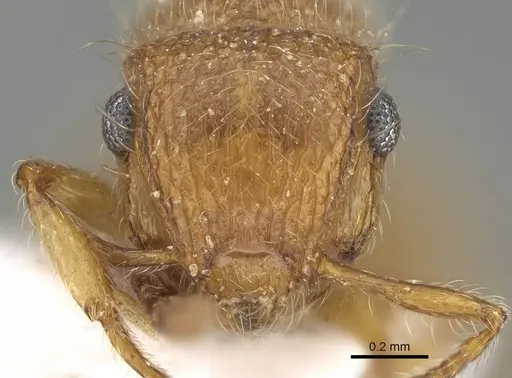
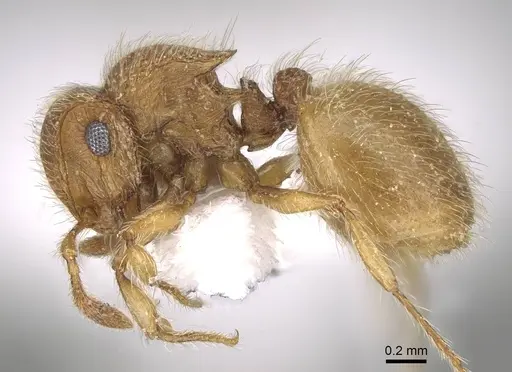
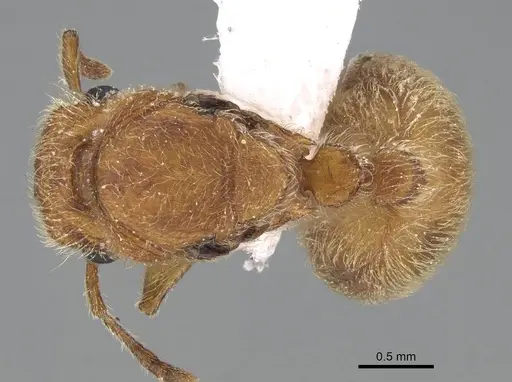
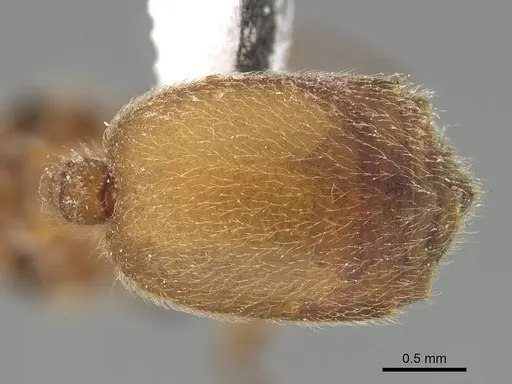
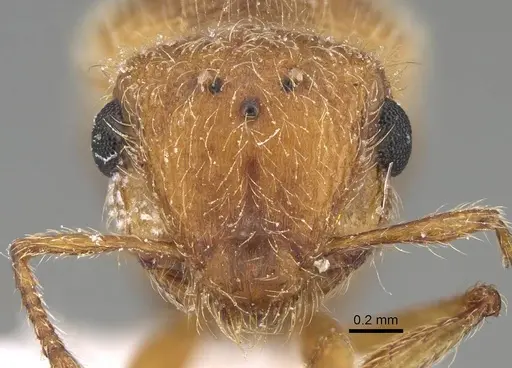
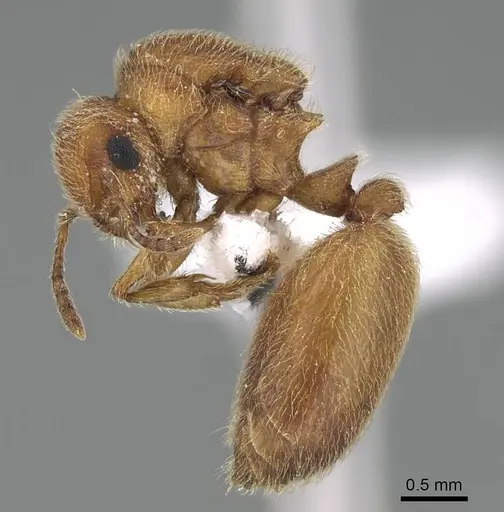
Meranoplus pulcher is a small myrmicine ant native to the juniper woodlands of southwestern Saudi Arabia. Workers measure 3.2-3.7mm in total length and are uniformly yellow in color, with some specimens showing slight brownish markings on the postpetiole and gaster . This species belongs to the M. magrettii-group and is distinguished by its distinctly concave clypeal margin with paired teeth, dense longitudinal rugae on the head, and relatively large eyes . The species was described in 2014 and represents the first record of the genus Meranoplus from the Arabian Peninsula . Queens were later described in 2019,measuring approximately 5.5mm total length . These ants were collected at elevations between 1325-1772 meters in two protected areas: Al-Baha Province (Shada Al Ala) and Asir Province (Raydah) .
Quick Summary
- Difficulty: Hard
- Origin & Habitat: Juniper woodlands of southwestern Saudi Arabia, specifically Al-Baha and Asir provinces at elevations 1325-1772 meters. Found near Acacia trees in extremely dry soil with abundant dry seeds of shrubs [1].
- Colony Type: Colony structure is unconfirmed. Only worker and queen castes have been documented, colony size in the wild is unknown.
- Size & Growth:
- Queen: 5.5mm total length [2]
- Worker: 3.2-3.7mm total length [1]
- Colony: Unknown, only limited worker specimens have been collected (25 from one site,6 from another)
- Growth: Unknown
- Development: Unconfirmed, no development data exists for this species (Development time has not been scientifically documented for Meranoplus pulcher)
- Antkeeping:
- Temperature: Based on their juniper woodland habitat at moderate elevations in southwestern Saudi Arabia, these ants likely prefer warm conditions. Start around 24-28°C and observe colony activity.
- Humidity: Found in extremely dry soil in nature, they prefer drier conditions than many ants. Keep nest substrate moderately dry, not waterlogged. Allow areas to dry out between waterings.
- Diapause: Unknown, the juniper woodland habitat at 1325-1772m elevation suggests they may experience cooler winters, but specific diapause requirements have not been documented
- Nesting: In nature they nest in dry soil near Acacia trees. For captivity, a naturalistic setup with dry to moderately moist substrate works well. Y-tong or plaster nests with low humidity chambers are suitable. Avoid overly damp conditions.
- Behavior: Behavior is not well documented. Workers were collected using pitfall traps and one specimen was found on a cactus plant, suggesting they are ground-nesting and may forage on low vegetation. Their large eyes suggest they may be visually oriented. Escape risk is moderate given their small 3-4mm size, use standard barrier methods. As Myrmicinae, they possess a stinger but use a smear defense mechanism rather than piercing stings.
- Common Issues: limited availability, this is a newly described species rarely available in the antkeeping trade, no established care protocols, keepers will need to experiment with conditions, unknown colony structure makes it unclear whether they are single-queen or multi-queen species, dry habitat requirements may conflict with standard moist nest setups, very limited biological data makes it difficult to provide precise care guidelines
Discovery and Distribution
Meranoplus pulcher is the first member of its genus recorded from the vast Arabian Peninsula. It was discovered in 2014 during surveys of the southwestern mountains of Saudi Arabia, specifically in the Al-Baha and Asir provinces [1]. The species name 'pulcher' comes from the Greek word for 'beautiful, ' referring to the attractive appearance of these yellow ants [1]. They have only been collected from two protected areas: Shada Al Ala Protectorate and Raydah Protectorate, both at elevations between 1325-1772 meters. The juniper woodland habitat at these sites represents the northernmost extent of Meranoplus distribution in the Arabian region.
Identification and Morphology
Workers of Meranoplus pulcher are small ants measuring 3.2-3.7mm total length with a distinctive yellow coloration that is uniform across the body, though some specimens may show slight brownish markings on the postpetiole and first gastral tergite [1]. They belong to the M. magrettii-group, characterized by their distinctly concave anterior clypeal margin featuring a pair of well-developed blunt teeth, and dense longitudinal rugae on the head surface [1]. Their eyes are relatively large. The promesonotal shield is distinctly broader than long, and the posterior corners of the mesonotum bear sharp spines. The propodeal spines are long, sharp, and curve upward. Queens are larger at approximately 5.5mm total length and were formally described in 2019,sharing the same yellow coloration but with slightly different sculpture patterns [2].
Natural Habitat and Collection
In the wild, Meranoplus pulcher inhabits juniper woodlands in the southwestern mountains of Saudi Arabia, a habitat characterized by dry conditions and sparse vegetation [1]. Workers were collected using pitfall traps placed next to Acacia trees, and the soil at collection sites was described as extremely dry with abundant dry seeds of shrubs [1]. One specimen was collected by aspirator from a cactus plant, suggesting these ants may forage on low vegetation as well as on the ground. The elevation range of 1325-1772 meters suggests they prefer moderate temperatures typical of mountainous regions.
Housing and Nesting
Based on their natural habitat in dry juniper woodlands, these ants should be kept in relatively dry conditions. A naturalistic setup with a substrate mixture of sand and soil works well, allowing it to dry out between waterings. Y-tong or plaster nests with low-to-moderate humidity chambers are suitable options. The key is to avoid the constantly moist conditions preferred by many tropical ant species. Provide a water source in the outworld but keep the nest itself relatively dry. Test tube setups can work for founding colonies, but monitor moisture levels carefully, these ants likely prefer drier conditions than the standard test tube setup provides for most species.
Feeding and Diet
The diet of Meranoplus pulcher in the wild has not been specifically studied, but Meranoplus generally are omnivorous, feeding on honeydew, small insects, and seeds. Based on related species, they likely accept sugar sources (honey water, sugar water) and protein sources like small insects (fruit flies, small mealworms, crickets). Their small size means prey items should be appropriately sized. The dry seed environment they were found in suggests they may also consume seeds. Start with standard ant foods and observe what the colony accepts. Feed protein 2-3 times per week and provide sugar water continuously.
Temperature and Seasonal Care
Given their collection at elevations of 1325-1772 meters in southwestern Saudi Arabia, these ants experience seasonal temperature variation. The juniper woodland habitat suggests they can tolerate a range of temperatures but prefer warmth. Maintain nest temperatures around 24-28°C for optimal activity and brood development. Since this species has not been kept in captivity extensively, these recommendations are estimates based on habitat data. Observe your colony's behavior and adjust accordingly, if workers become sluggish, temperatures may be too low, if they avoid the heated areas, it may be too warm.
Frequently Asked Questions
How long does it take for Meranoplus pulcher eggs to develop into workers?
The egg-to-worker development time has not been documented for this species. Actual development time is unknown and has not been scientifically studied.
What size colony does Meranoplus pulcher reach?
Colony size in the wild is unknown. Only small numbers of workers have been collected (25 from one site,6 from another), suggesting colonies may be relatively small, but this limited data makes it difficult to estimate maximum colony size.
Do Meranoplus pulcher ants sting?
Stinging behavior has not been documented for this species. As Myrmicinae, they do possess a stinger, but use a smear defense mechanism rather than piercing stings. Given their small size (3-4mm), any sting would likely be negligible to humans.
Can I keep multiple Meranoplus pulcher queens together?
The colony structure of this species is unconfirmed. Without documented evidence of polygyny (multiple queens) or monogyne (single queen) colonies in the wild, combining unrelated queens is not recommended. There is no data on whether they tolerate multi-queen arrangements.
What temperature should I keep Meranoplus pulcher at?
Based on their juniper woodland habitat at moderate elevations, aim for temperatures around 24-28°C. Avoid temperatures below 20°C or above 35°C. A heating cable on one side of the nest can create a temperature gradient allowing the ants to choose their preferred zone.
Are Meranoplus pulcher good for beginners?
This species is not recommended for beginners. It is a newly described species (2014) with very limited biological data and no established care protocols in the antkeeping hobby. Keepers will need to experiment with conditions based on limited habitat information. Consider starting with more established species like Lasius, Camponotus, or Messor before attempting Meranoplus pulcher.
Do Meranoplus pulcher need hibernation?
Diapause requirements are unknown. The mountainous juniper woodland environment at 1325-1772m elevation experiences seasonal temperature changes, so a hibernation period may be beneficial, though this has not been confirmed through captive observation.
What do Meranoplus pulcher eat?
Their specific diet has not been studied, but based on related Meranoplus species, they are omnivorous. Offer sugar water or honey as a constant energy source, and protein sources like small insects (fruit flies, small mealworms, crickets) 2-3 times per week. They may also accept seeds. Start with standard ant foods and observe what your colony accepts.
When will Meranoplus pulcher nuptial flights occur?
Nuptial flight timing is unconfirmed. No data exists on when alates (reproductive ants) are produced or when mating flights occur. The limited collection data (specimens collected in February, April, and August) does not provide enough information to determine flight timing.
How do I set up a nest for Meranoplus pulcher?
Based on their dry habitat, use a setup that allows for lower humidity than most ants prefer. A Y-tong or plaster nest with dry to moderately moist chambers works well. Avoid constantly damp conditions. Provide a water source in the outworld. For founding colonies, a test tube setup can work but monitor moisture levels carefully.
Report an Issue
The current care sheet is based fully on literature. See inconsistencies, or something that's incorrect? Please , it will be resolved after review from an admin. Contributing to the blogs tab also helps providing information, to make us be able to further improve the caresheets. Thank you for your support!
References

This caresheet is licensed under CC BY-SA 4.0 .
Community Blogs
Literature
Loading distribution map...Loading products...