
Meranoplus malaysianus
- Sci. Name
- Meranoplus malaysianus
- Tribe
- Crematogastrini
- Subfamily
- Myrmicinae
- Author
- Schödl, 1998
- Distribution
- Found in 1 countries
Introduction
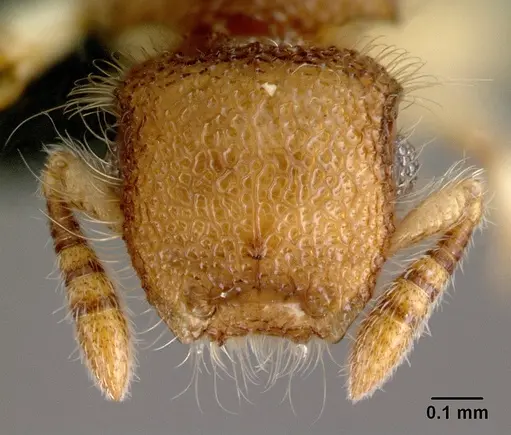
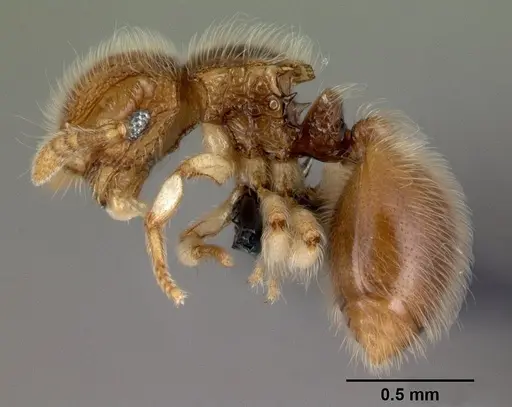
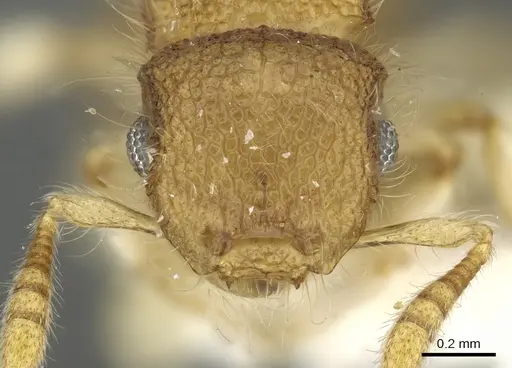
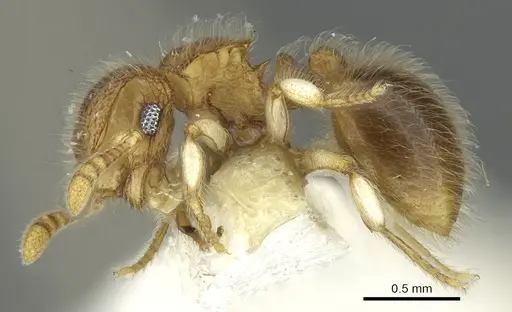
Meranoplus malaysianus is a tiny ground-dwelling ant native to Southeast Asia, found across Malaysia, Indonesia, Borneo, the Philippines, Singapore, and Thailand. Workers measure 2.3-2.87mm in total length, making them one of the smaller ant species you'll encounter. They have a distinctive appearance with a rectangular promesonotal shield that overhangs the sides of their body, and their entire dorsal surface is covered in dense whitish pubescence. The head and promesonotum have a characteristic densely reticulate-rugulose texture, while the gaster is smooth and shiny. Color ranges from pale yellow to dark brown depending on the population. These ants live in leaf litter in tropical forests, making them a true litter-dwelling species that prefers the damp, shaded microhabitats of the forest floor .
Quick Summary
- Difficulty: Medium
- Origin & Habitat: Tropical Southeast Asia, found in leaf litter across Malaysia (Peninsular, Sabah, Sarawak), Indonesia (Java, Sumatra), Borneo, Philippines, Singapore, and Thailand. They inhabit mesic (damp) forest environments, collected from leaf litter in both primary and secondary forests, as well as disturbed areas near lowland evergreen forest [3][2][1].
- Colony Type: Colony structure is unconfirmed. No published data on queen number or colony organization exists for this species.
- Size & Growth:
- Antkeeping:
- Temperature: Keep at 24-28°C. As a tropical species from Southeast Asia, they need warm conditions year-round. Room temperature in most homes (20-24°C) may be too cool, consider a heating cable on one side of the nest to create a warm zone [2].
- Humidity: High humidity is essential. These ants live in leaf litter in damp tropical forests, so keep the nest substrate consistently moist but not waterlogged. The substrate should feel damp to the touch. Provide a water tube for drinking access.
- Diapause: No, as a tropical species, they do not require hibernation. Keep them warm year-round. Temperature drops below 20°C for extended periods could be harmful.
- Nesting: They are ground-dwelling litter ants. In captivity, they do well in naturalistic setups with moist substrate (like a mixture of soil and rotting leaves) or in Y-tong/plaster nests with tight chambers scaled to their tiny size. Avoid tall, open spaces, they prefer tight, confined spaces that mimic their leaf litter habitat.
- Behavior: These are shy, secretive ants that prefer to stay hidden in their nest or forage in concealed areas. They are not aggressive and rarely venture into the open. Workers are small and slow-moving. They appear to be predatory based on their trophic level (high δ15N values indicate they eat other small invertebrates) [4]. Escape risk is moderate, while small, they are not particularly active climbers and standard barrier methods should work. However, their tiny size means you should still use fine mesh and tight-fitting lids.
- Common Issues: colonies often fail because keepers keep them too dry, these are rainforest litter ants that need constant moisture, temperature too cold is a common killer, they need 24-28°C and may struggle at standard room temperature, slow growth tests patience, without published development data, keepers may overfeed or disturb the colony trying to speed things up, escape prevention is important despite their small size, they can squeeze through tiny gaps in equipment not designed for micro ants, wild-caught colonies may have parasites or diseases that cause colony collapse in captivity
Housing and Nest Setup
Meranoplus malaysianus is a tiny ground-dwelling ant that thrives in humid, naturalistic setups. Because they naturally live in leaf litter on the forest floor, a naturalistic terrarium with a deep layer of moist substrate works well, use a mix of soil, sand, and rotting leaves to mimic their natural habitat. The substrate should be kept consistently moist but never waterlogged. Alternatively, a Y-tong (AAC) or plaster nest with narrow chambers works well, as these ants prefer tight, confined spaces. Whatever nest type you choose, ensure excellent escape prevention, their tiny size means they can slip through gaps that larger ants cannot. Use fine mesh on any ventilation holes and ensure all lids fit tightly. A small outworld for foraging is sufficient, these ants are not active foragers and prefer to stay hidden. [1][2]
Feeding and Diet
Based on stable isotope studies showing high δ15N values (5.79 for Myrmicinae in Borneo), M. malaysianus is predatory, feeding on small invertebrates rather than plant matter [4]. In captivity, offer small live prey like fruit flies, springtails, and other tiny arthropods. They likely accept small insects like pinhead crickets, bloodworms, and similar fare. Sugar sources may be accepted occasionally, but do not rely on them as a primary food, these are primarily predatory ants. Feed small amounts every few days and remove any uneaten prey to prevent mold. A constant water source is essential.
Temperature and Humidity
As a tropical species from Southeast Asia, M. malaysianus requires warm, humid conditions. Keep the nest at 24-28°C year-round, this is warmer than typical room temperature in many homes. A heating cable placed on one side of the nest creates a temperature gradient, allowing the ants to choose their preferred warmth. High humidity is critical: maintain 70-80% relative humidity or keep the substrate consistently damp. These ants come from the damp leaf litter of tropical forests, so drying out is a serious risk. Mist the nest occasionally and ensure the water tube is always filled. Avoid temperature fluctuations and cold drafts. [2][3]
Colony Development and Growth
No published data exists on the development timeline of M. malaysianus. The first workers, called nanitics, will be smaller than mature workers. Be patient: small colonies can take months to establish. Avoid disturbing the nest frequently or overfeeding, as this causes mold problems that can kill the colony.
Behavior and Temperament
M. malaysianus is a shy, secretive ant that prefers to stay hidden. Workers are small, slow-moving, and not aggressive. They are not defensive and rarely sting, even if they could, their tiny size means they likely cannot penetrate human skin. These ants are not active foragers in the open, instead, they forage in concealed areas within the substrate or under debris. They do not form large supercolonies and are not territorial or aggressive toward other colonies. In the wild, they live in small colonies in leaf litter, which explains their preference for tight, humid spaces in captivity. Their secretive nature means you may not see much activity, this is normal, not a sign of problems. [1]
Frequently Asked Questions
How long does it take for Meranoplus malaysianus to produce first workers?
The exact timeline is unknown as no published development data exists for this species. Be patient, small colonies grow slowly and development times vary.
Can I keep Meranoplus malaysianus in a test tube?
Yes, test tubes work for founding colonies. Keep the water tube filled and maintain high humidity around the tube. However, because they need very moist conditions, monitor for mold. Once the colony reaches 20-30 workers, consider moving to a naturalistic setup or Y-tong nest with better humidity control.
What do Meranoplus malaysianus ants eat?
They are predatory ants based on their trophic position. Feed small live prey like fruit flies, springtails, and tiny insects. They may accept small crickets, bloodworms, and similar fare. Sugar water may be accepted occasionally but should not be the primary food.
Do Meranoplus malaysianus ants sting?
They likely have a stinger but are so small that they probably cannot penetrate human skin. They are not aggressive and rarely defend their nest. These ants are completely safe to handle and pose no danger to keepers.
Are Meranoplus malaysianus good for beginners?
They are intermediate-level ants. While not aggressive, they have specific humidity and temperature requirements that make them more challenging than hardy species like Lasius or Tetramorium. Their slow growth and need for high humidity require attentive keepers.
What temperature do Meranoplus malaysianus need?
Keep them at 24-28°C year-round. As a tropical species from Southeast Asia, they need warmth. Standard room temperature (20-24°C) may be too cool, consider using a heating cable on part of the nest to create a warm zone.
Do Meranoplus malaysianus need hibernation?
No, they do not hibernate. As a tropical species, they need warm conditions year-round. Temperature drops below 20°C for extended periods could be harmful. Keep them at consistent tropical temperatures.
How big do Meranoplus malaysianus colonies get?
The maximum colony size is unknown. No published colony size data exists for this species. They are not large colony formers.
Why are my Meranoplus malaysianus dying?
The most common causes are: 1) too dry, they need consistently moist substrate,2) too cold, they need 24-28°C,3) mold from overfeeding or poor ventilation,4) stress from disturbance. Check your temperature and humidity first. Ensure the substrate stays damp but not waterlogged.
When should I move Meranoplus malaysianus to a formicarium?
Move them when the colony reaches 30-50 workers and you see consistent activity. For the first few months, a test tube setup is fine as long as humidity is maintained. A naturalistic setup with moist substrate often works better than acrylic nests for this species.
Report an Issue
The current care sheet is based fully on literature. See inconsistencies, or something that's incorrect? Please , it will be resolved after review from an admin. Contributing to the blogs tab also helps providing information, to make us be able to further improve the caresheets. Thank you for your support!
References

This caresheet is licensed under CC BY-SA 4.0 .
Community Blogs
CASENT0179628
View on AntWeb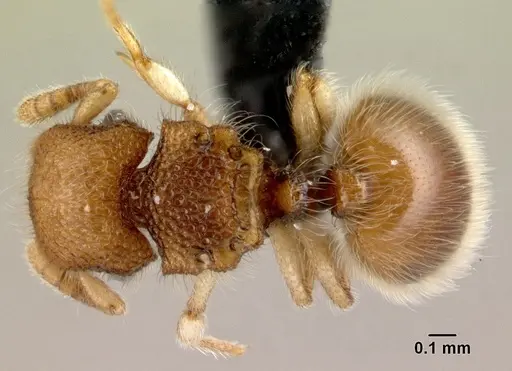
CASENT0902029
View on AntWeb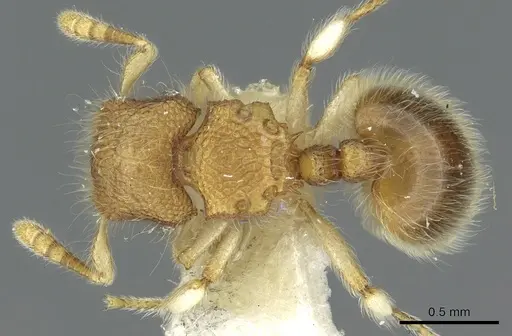
Literature
Loading distribution map...Loading products...