
Meranoplus froggatti
- Sci. Name
- Meranoplus froggatti
- Tribe
- Crematogastrini
- Subfamily
- Myrmicinae
- Author
- Forel, 1913
- Distribution
- Found in 1 countries
Introduction
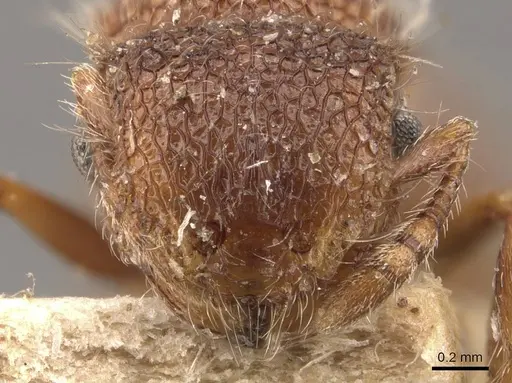
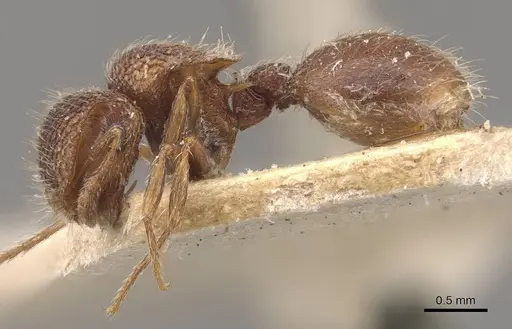
Meranoplus froggatti is a myrmicine ant native to Australia . It has a distinctive promesonotal shield - a raised, plate-like structure on the middle body section that is especially well-developed in this species, with two pairs of large translucent windows . This species belongs to the froggatti complex, a group of five closely related Australian species that also includes Meranoplus barretti . Its distribution covers primarily the southern semi-arid zone, with extensions into northern Western Australia . It is relatively common in these regions . The species was described by Forel in 1913 from type specimens collected in Victoria (AntWiki). Like other members of its subfamily, Meranoplus froggatti has a modified, flattened spatulate stinger that it uses to smear venom onto enemies instead of piercing flesh.
Quick Summary
- Difficulty: Medium
- Origin & Habitat: Native to Australia, found primarily in the southern semi-arid zone with populations extending into northern Western Australia [1].
- Colony Type: Colony structure is unknown, not documented in available research.
- Size & Growth:
- Queen: Size data unavailable, no measurements are recorded for queens.
- Worker: Size data unavailable, no body measurements are provided in the available literature.
- Colony: Unknown, maximum colony size is not documented for this species.
- Growth: Unknown, growth rate is not documented.
- Development: Unknown, development time has not been studied. (No data is available on brood development for this species.)
- Antkeeping:
- Temperature: Unknown, no specific temperature data exists. As an Australian arid-adapted species, keep warm (22-26°C is a reasonable guess) and observe your colony's response.
- Humidity: Unknown, no specific humidity data. Likely prefers drier conditions based on semi-arid origin, but this is unconfirmed.
- Diapause: Unknown, whether they require a winter rest period is not documented. If from temperate Australia, they may benefit from a cool period, but this is speculation.
- Nesting: Preferred nest type is unknown. In the absence of data, try a Y-tong (AAC) or plaster nest with some substrate depth.
- Behavior: Temperament is unknown. Based on subfamily patterns (Myrmicinae), they likely have a mild sting used for smearing venom. Escape risk should be taken seriously due to their small size, though exact size is unrecorded.
- Common Issues: escape prevention is critical due to small size, use fine mesh and tight barriers., most care parameters are unknown, observe colony closely and adjust based on their behavior., overheating is a risk in captivity, avoid temperatures above 30°C despite semi-arid origin., wild-caught colonies may carry parasites that affect captive survival.
Housing and Nest Setup
Specific nesting preferences for Meranoplus froggatti are unknown. In general, for small myrmicine ants, a Y-tong (AAC) or plaster nest with small chambers works well. Provide a foraging area (outworld) and use a barrier like fluon on test tube rims to prevent escapes. Ventilation openings should be covered with fine mesh, these ants are small and can squeeze through tiny gaps. Humidity management is uncertain, so a gradient from dry to slightly moist may be beneficial.
Feeding and Diet
Diet is not documented for this species. As a general guide for Australian myrmicines, offer a varied diet including sugar water or honey for energy, and protein sources such as small insects (fruit flies, pinhead crickets). Remove uneaten protein after 24-48 hours to prevent mold. Base feeding frequency on how quickly they consume food.
Temperature and Seasonal Care
No specific temperature requirements are known. As a species from semi-arid Australia, they likely tolerate warm conditions but should be kept below 30°C to avoid stress. Seasonal rest (diapause) is unconfirmed. If you choose to provide a cooler period, aim for 10-15°C for 2-3 months during the Southern Hemisphere winter (June-August), but this is based on typical temperate ant patterns, not on species-specific data.
Colony Establishment and Growth
Founding behavior and colony growth are not documented. If you have a queen, use a standard test tube setup with a water reservoir and cotton plug. Avoid disturbing her to maximize chances of success. There is no data on how long it takes to produce first workers or colony growth rates.
Behavior and Defense
Behavior is poorly known. As a member of subfamily Myrmicinae, tribe Crematogastrini, Meranoplus froggatti uses a smear defense: its stinger is flattened and spatulate, used to wipe venom onto enemies rather than piercing. They are not considered aggressive toward humans, but will defend the nest if disturbed. Their small size makes them escape artists, ensure barriers are secure.
Frequently Asked Questions
How long does it take for Meranoplus froggatti to produce first workers?
This is unknown, development time has not been studied for this species.
What temperature do Meranoplus froggatti need?
Temperature needs are undocumented. Keep them warm (22-26°C is a reasonable starting point) and avoid temperatures above 30°C.
Do Meranoplus froggatti need hibernation?
It is unknown whether they require hibernation. If you choose to provide a winter rest, a cooling period (10-15°C for 2-3 months) may be beneficial, but this is speculative.
How big do Meranoplus froggatti colonies get?
Colony size is not documented for this species.
What do Meranoplus froggatti eat?
Diet is not recorded for this species. In captivity, offer sugar water or honey for carbohydrates and small insects for protein. Remove uneaten food after 24-48 hours.
Are Meranoplus froggatti good for beginners?
This species is rated as medium difficulty, but keep in mind that most of its care requirements are unknown. It is better suited to keepers comfortable with uncertainty and who are willing to experiment.
Do Meranoplus froggatti sting?
Yes, like other Myrmicinae, they have a stinger. But it is used for smearing venom rather than piercing. Stings are mild and not considered a threat to humans.
Can I keep multiple Meranoplus froggatti queens together?
There is no information on queen tolerance in this species. It is safest to assume single-queen colonies unless you observe otherwise.
When should I move Meranoplus froggatti to a formicarium?
Without documented colony growth data, wait until the colony has a small worker force (10+) and is actively foraging. Moving too early can stress the colony.
Why are my Meranoplus froggatti dying?
Possible causes include: unsuitable temperature (too hot or cold), humidity imbalance (likely keep drier), stress from disturbance, or inadequate food. Because specific requirements are unknown, adjust conditions and observe.
Report an Issue
The current care sheet is based fully on literature. See inconsistencies, or something that's incorrect? Please , it will be resolved after review from an admin. Contributing to the blogs tab also helps providing information, to make us be able to further improve the caresheets. Thank you for your support!
References

This caresheet is licensed under CC BY-SA 4.0 .
Community Blogs
CASENT0908940
View on AntWeb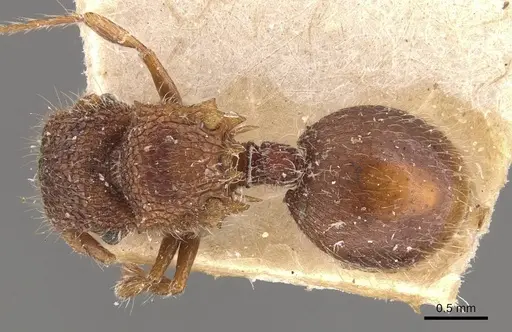
Literature
Loading distribution map...Loading products...