
Melophorus bruneus
- Sci. Name
- Melophorus bruneus
- Tribe
- Melophorini
- Subfamily
- Formicinae
- Author
- McAreavey, 1949
- Distribution
- Found in 1 countries
Introduction
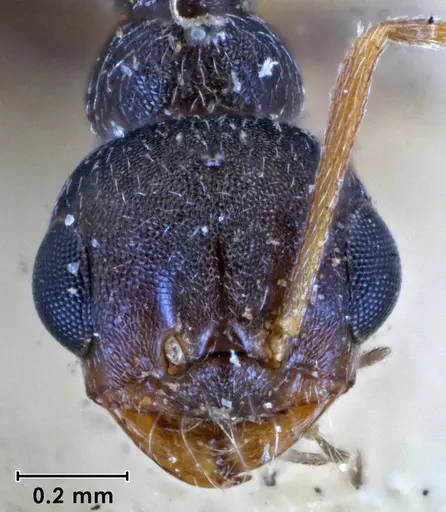
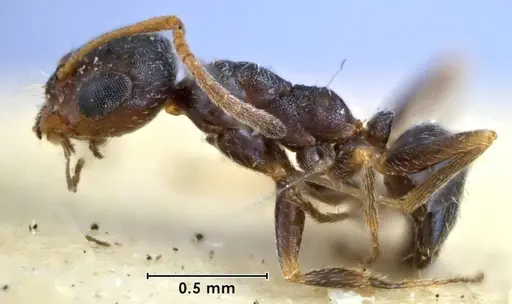
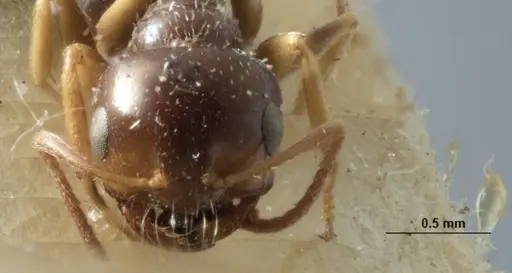
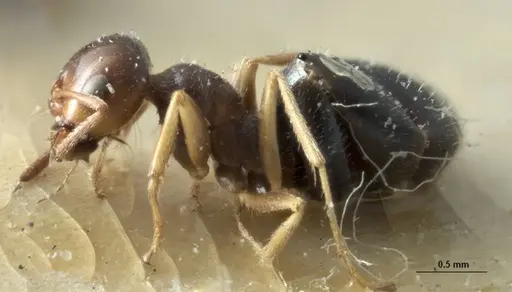
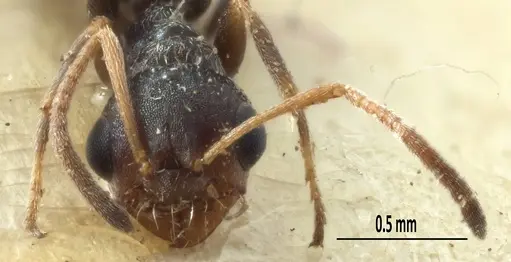
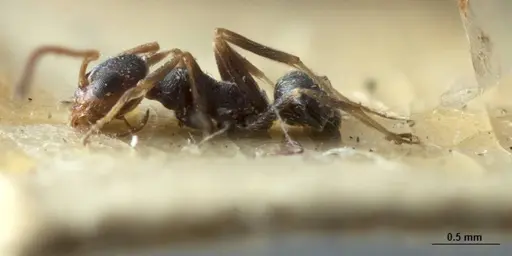
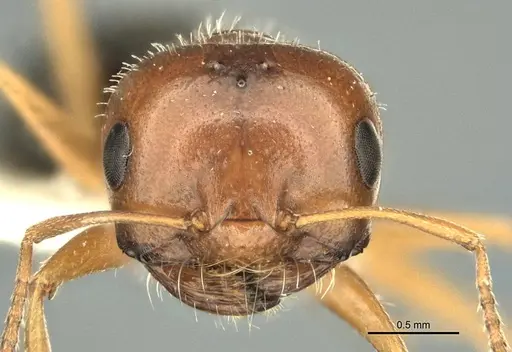
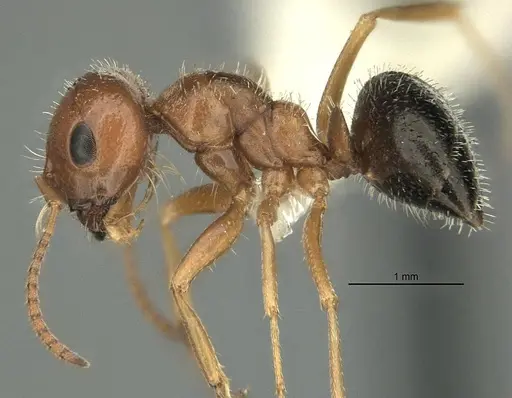
Melophorus bruneus is a small to medium-sized ant native to Australia, belonging to the Melophorus biroi species group and the fieldi complex. Workers come in two distinct sizes: minor workers are small with a brown to dark reddish-brown color, while major workers have a brownish-orange to brown head with a notably darker, often blackish gaster . This species is characterized by its relatively large eyes and distinctive bristly setae around the upper frons. M. bruneus is widely distributed across all mainland Australian states but is more commonly found in drier, inland areas . This ant is likely a generalist scavenger, feeding on both plant and animal matter like others in the fieldi complex . It plays a useful role in its ecosystem as a seed disperser, with studies showing it contributes to seed movement in both disturbed and non-disturbed Australian environments . The species nests in simple holes in the ground, with one specimen collected from a nest in red, lateritic soil with surface ironstone pebbles .
Quick Summary
- Difficulty: Medium
- Origin & Habitat: Australia, found in all mainland states but more common in drier, inland areas. Inhabits savanna woodland, Callitris forests, mallee, scribbly gum woodland, and heath habitats. Also collected from red soil environments [1][2].
- Colony Type: Colony structure for M. bruneus specifically is not well-documented. Based on Melophorus genus patterns, colonies are likely single-queen.
- Size & Growth:
- Queen: Size data unavailable for this species, inferred from Melophorus genus patterns to be approximately 6-8mm
- Worker: Minor workers: approximately 3-4mm, Major workers: approximately 5-7mm, inferred from Melophorus genus patterns [1]
- Colony: Colony size not specifically documented for this species
- Growth: Moderate, based on typical genus development patterns
- Development: Development time is unconfirmed for this species (No specific study exists for this species. Temperature-dependent development typical of Australian ants applies.)
- Antkeeping:
- Temperature: Keep at warm room temperature, these are warm-climate Australian ants. Provide a temperature gradient allowing workers to self-regulate. Avoid cold temperatures.
- Humidity: Low to moderate, these ants inhabit drier, inland areas of Australia. Keep nest substrate moderately dry, similar to their arid natural habitat.
- Diapause: Unconfirmed, Australian arid-zone ants may not require a true hibernation diapause, but a slight cooling period during winter months may be beneficial.
- Nesting: They naturally nest in soil with pebbles. Provide a naturalistic setup with a dry, warm nesting area.
- Behavior: These ants are active foragers with large eyes suggesting good vision. They are generalist scavengers and likely use chemical trails to recruit nestmates to food sources. Workers are medium-sized and relatively fast-moving. Major workers have a distinctive shaggy appearance due to numerous short setae. Escape risk is moderate, standard barrier methods should suffice.
- Common Issues: colonies may grow slowly, patience is required as they establish, overwatering can be fatal given their arid habitat preferences, wild-caught colonies may have parasites that affect survival in captivity, major workers can squeeze through small gaps if barrier is inadequate, limited specific research means care is based on genus-level knowledge rather than species-specific studies
Housing and Nest Preferences
Melophorus bruneus naturally nests in simple soil nests, with specimens collected from red lateritic soil with surface ironstone pebbles [1]. For captive care, a naturalistic setup with a soil chamber works well. These ants prefer drier conditions than many other ant species, avoid overly humid nests. Provide a warm area in the nesting chamber. The outworld can be kept at room temperature. Ensure the nest has chambers large enough for major workers to move through comfortably.
Feeding and Diet
As a generalist scavenger in the Melophorus fieldi complex, M. bruneus likely accepts a wide variety of foods [1]. Offer protein sources such as small insects (fruit flies, small crickets, mealworms), and provide sugar sources like honey water or sugar water regularly. Their role as seed dispersers in the wild [2] suggests they may also interact with plant matter, but protein should form the primary diet. Feed every 2-3 days, removing uneaten food to prevent mold. Fresh water should always be available.
Temperature and Seasonal Care
These are warm-climate Australian ants from arid to semi-arid regions. Maintain nest temperatures in the warm room temperature range for optimal colony activity and brood development. A heating cable or heating mat on one side of the nest can create additional warmth if needed. Unlike temperate species, they do not require a true hibernation diapause, but you can reduce temperatures slightly during winter months to simulate natural seasonal slowing. Avoid keeping them too cold, as this can weaken the colony. Their natural habitat in inland Australia experiences hot summers and mild winters, so they are adapted to warmth. [1]
Behavior and Colony Dynamics
Melophorus bruneus workers are active foragers with relatively large eyes, suggesting they may use visual cues alongside chemical communication. The species has distinctive pilosity, minor workers have long, flexuous erect setae on the mesosoma, while major workers appear shaggy due to numerous short, curved setae [1]. Colonies likely grow gradually, with major workers developing as the colony expands. The large eyes in minor workers are notable for this genus. Workers are probably not aggressive toward humans and unlikely to sting effectively given their small size.
Field Observations and Ecology
In the wild, M. bruneus contributes to ecosystem processes as a seed disperser. Studies in Australian roadside environments found they contributed 10% of total seed dispersal events, with mean dispersal distances of 2.1m in disturbed zones and 2.8m in non-disturbed areas [2]. Larger-bodied workers in disturbed zones moved more seeds to longer distances. This suggests the species is an important ecological player even in modified landscapes. Their wide distribution across mainland Australia, particularly in drier inland areas, indicates adaptability to varied conditions.
Frequently Asked Questions
How long does it take for Melophorus bruneus to produce first workers?
The exact timeline is not documented for this species. Expect several months from egg to first worker at optimal temperatures. Growth is typically moderate, patience is needed during the founding stage.
What temperature do Melophorus bruneus ants need?
Keep nest temperatures in the warm room temperature range. These are warm-climate Australian ants from arid regions that prefer heat. A heating cable on one side of the nest can help maintain warmth if needed.
Are Melophorus bruneus ants good for beginners?
This species is rated as Medium difficulty. While not the easiest species, they are relatively hardy once established. The main challenges are providing appropriate warmth and avoiding overwatering. Their moderate size and generalist diet make them manageable for intermediate antkeepers.
What do Melophorus bruneus ants eat?
They are generalist scavengers. Offer small insects (fruit flies, small crickets, mealworms) as protein sources 2-3 times per week, and provide constant access to sugar water or honey water. They may also accept seeds or plant matter given their role as seed dispersers in the wild.
Do Melophorus bruneus ants need hibernation?
No true hibernation is required, these are arid-zone Australian ants. However, you can reduce temperatures slightly during winter to simulate natural seasonal slowing. Avoid cold temperatures below 15°C.
How big do Melophorus bruneus colonies get?
Colony size is not specifically documented for this species, but based on related species in the fieldi complex, colonies likely reach several hundred workers. Major workers develop as the colony grows.
Can I keep multiple Melophorus bruneus queens together?
Colony structure is not well-documented for this species. Based on Melophorus genus patterns, colonies are likely single-queen. Combining unrelated queens is not recommended as they would likely fight. Only one queen per colony should be kept.
What type of nest is best for Melophorus bruneus?
A naturalistic setup with a soil chamber works well. They naturally nest in soil, so this suits their preferences. Keep the nest dry and warm, avoid humid conditions.
Where is Melophorus bruneus found in the wild?
This species is widely distributed across all mainland Australian states but is more common in drier, inland areas. They inhabit savanna woodland, mallee, and heath habitats, often in areas with red soil.
Why are my Melophorus bruneus dying?
Common issues include: overwatering (they prefer dry conditions), temperatures too low (need warmth), or stress from wild-caught colonies potentially carrying parasites. Ensure proper warmth, keep the nest moderately dry, and quarantine wild-caught colonies if possible.
When should I move Melophorus bruneus to a formicarium?
Keep founding colonies in a test tube setup until they have 20-30 workers. Once the colony outgrows the test tube or you see workers spending significant time in the outworld, transfer to a proper formicarium.
Report an Issue
The current care sheet is based fully on literature. See inconsistencies, or something that's incorrect? Please , it will be resolved after review from an admin. Contributing to the blogs tab also helps providing information, to make us be able to further improve the caresheets. Thank you for your support!
References

This caresheet is licensed under CC BY-SA 4.0 .
Community Blogs
ANIC32-053433
View on AntWeb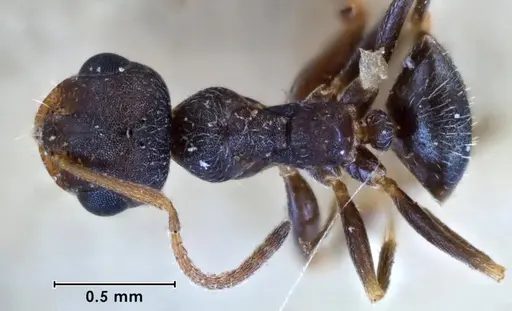
ANIC32-053441-1
View on AntWeb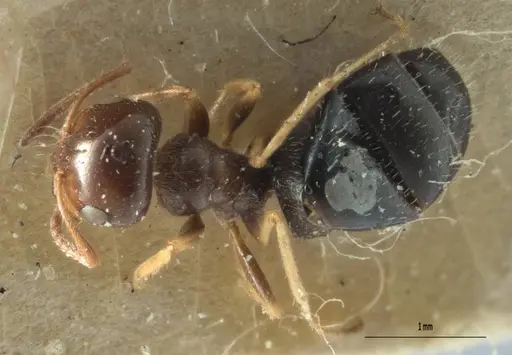
ANIC32-053441-2
View on AntWeb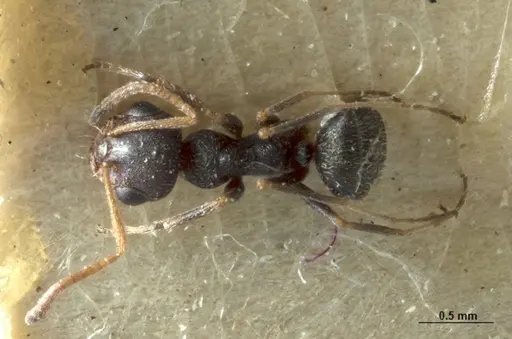
ANIC32-900218
View on AntWeb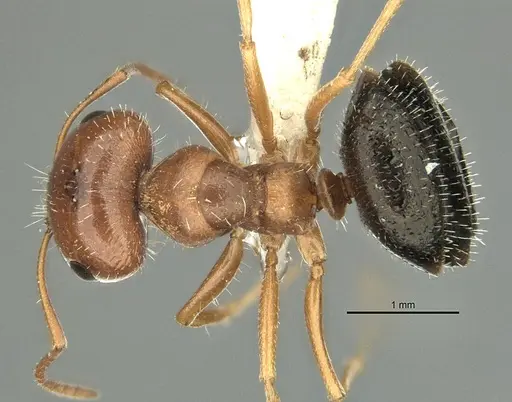
Literature
Loading distribution map...Loading products...