
Melissotarsus beccarii
- Sci. Name
- Melissotarsus beccarii
- Tribe
- Crematogastrini
- Subfamily
- Myrmicinae
- Author
- Emery, 1877
- Distribution
- Found in 4 countries
Introduction
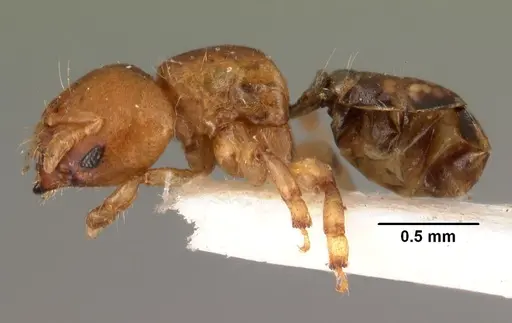
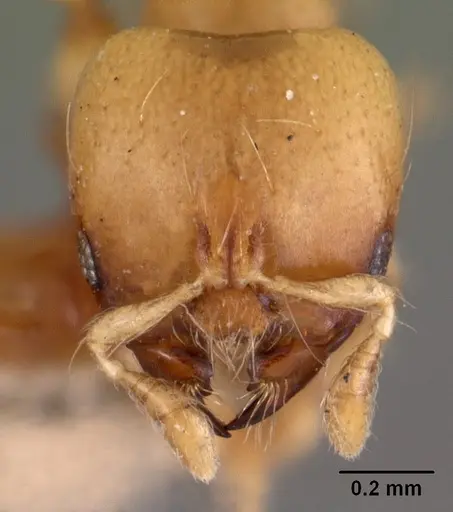
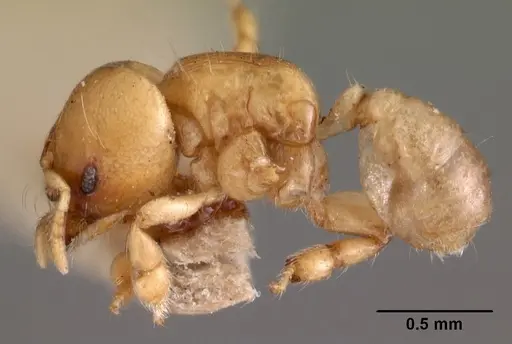
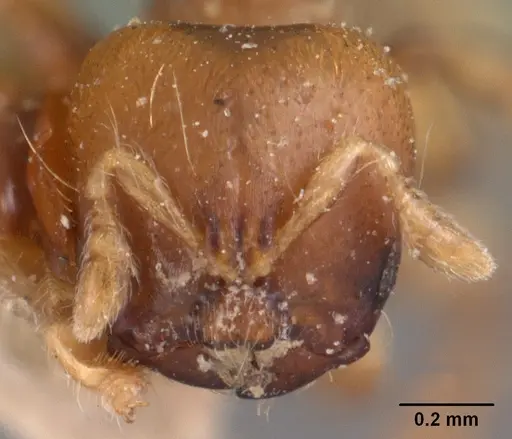
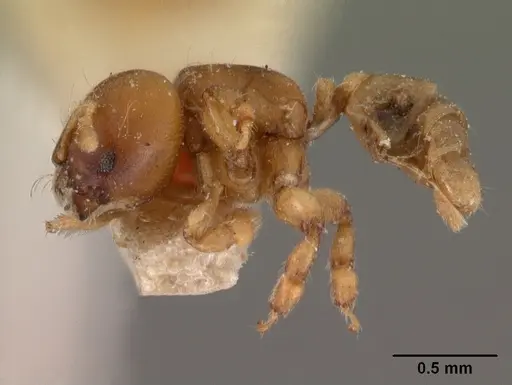
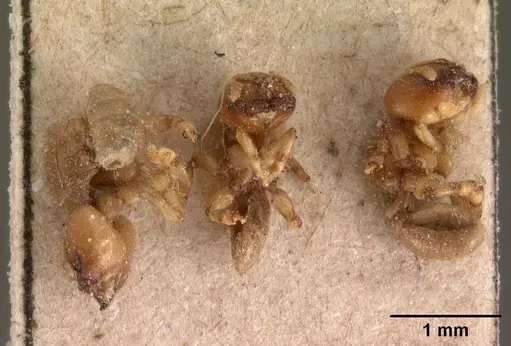
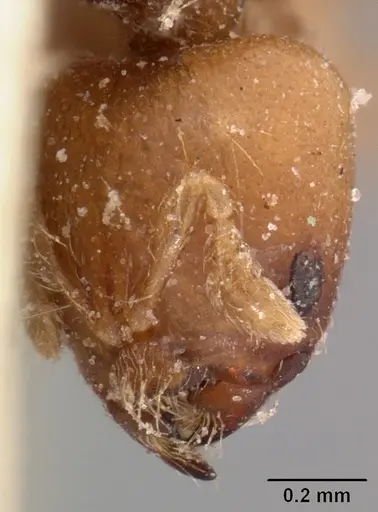
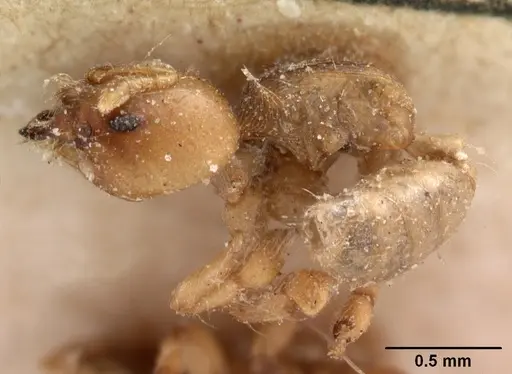
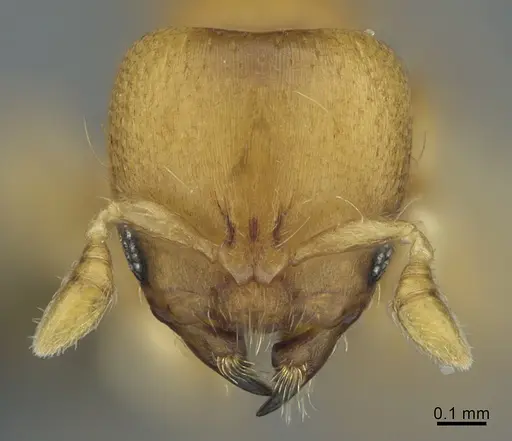
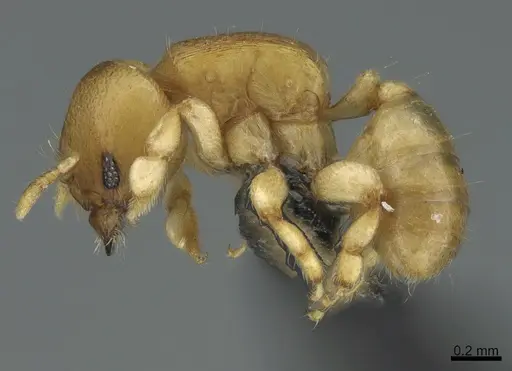
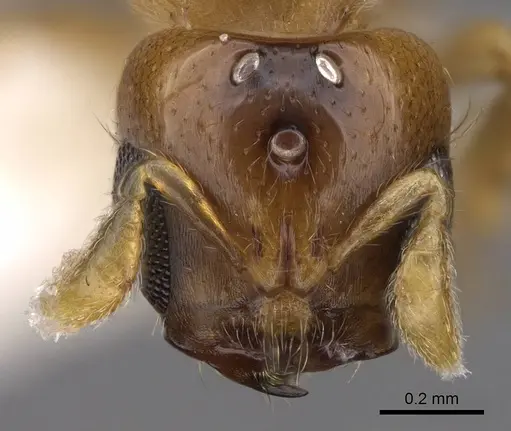
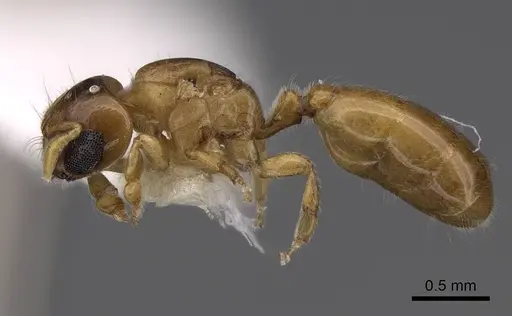
Melissotarsus beccarii is a tiny myrmicine ant from Africa, found in countries like Eritrea, Ethiopia, Ivory Coast, Nigeria, South Africa, and Tanzania . Workers are pale yellow to light brown and measure 2.3–3.3 mm total length . These ants are some of the most specialized in the world – they live exclusively inside the bark and living wood of trees, where they dig their own tunnels . They never come outside to forage. What makes them truly stand out is that adult workers produce silk, the only ant species known to do so, and they use it to line and seal their galleries . Their walking style is also bizarre: they walk on their front and hind legs while keeping their middle pair pointing upward, touching the ceiling of their tunnels. On a flat surface they stagger helplessly .
Quick Summary
- Difficulty: Expert
- Origin & Habitat: Afrotropical region – Eritrea, Ethiopia, Ivory Coast, Nigeria, South Africa, Tanzania. They tunnel through the healthy wood and bark of living trees [1][2].
- Colony Type: Colonies start with a single queen (monogynous) but mature into polygynous and oligogynous societies. Multiple physogastric (egg-laying) queens can live in the same colony, spaced more than 1 m apart. Workers can also lay eggs [2][3].
- Size & Growth:
- Queen: Physogastric queens: 3.63 ± 0.12 mm, non-physogastric gynes: 2.69 ± 0.04 mm [2]
- Worker: ~2 mm to 3.3 mm [3][1]
- Colony: Extremely large – can reach millions of ants. One study recorded 43,100 ants per m² of bark, with about 1.5 million ants on a single tree [3].
- Growth: Unknown – no captive breeding success documented
- Development: Unknown – no captive breeding success documented (Laboratory attempts to raise colonies failed, only fragments survived up to two weeks [2])
- Antkeeping:
- Temperature: Unknown – likely tropical requirements based on their range in Africa. No specific data available.
- Humidity: High – they live inside tree bark which holds stable moisture. No specific data available.
- Diapause: Unknown – given their tropical origin, likely active year-round.
- Nesting: Must have access to living wood or bark to excavate galleries. Standard test tubes or formicaria will not work – they need to be inside wood.
- Behavior: Extremely specialized and not suitable for typical antkeeping. Workers never leave their gallery networks – they spend their entire lives inside tree bark [2]. They are not aggressive and show low intraspecific aggression even between colonies from different trees [2]. They cannot walk properly on flat surfaces due to their unique leg arrangement. Escape prevention is less relevant because they cannot navigate open spaces. They produce silk to seal galleries and tend scale insects (Diaspididae) as a primary food source, eating them directly rather than for honeydew [2][4]. Their primary defense is smearing venom using a modified flattened stinger, typical of Crematogastrini.
- Common Issues: Virtually impossible to keep in captivity – they require live wood to tunnel through and a constant supply of scale insects (Diaspididae) as food, which cannot be reliably provided., No documented successful captive breeding exists – researchers could only keep fragments alive for two weeks [2]., Their unique walking style means they cannot navigate standard formicaria or test tubes., They are extremely rare in the antkeeping hobby and may not be legally available., Their entire lifestyle is tied to living trees – they cannot adapt to any conventional ant nest setup.
Why This Ant Is Not Suitable for Most Antkeepers
Melissotarsus beccarii is one of the most challenging – and likely impossible – species to keep in captivity. Unlike most ants that can adapt to test tubes, acrylic nests, or formicaria, these ants are obligate wood-tunnelers that require access to living tree bark or wood to excavate their galleries [2]. They never forage outside their nests, meaning they cannot be fed like conventional ants. Their primary food source is scale insects (Diaspididae) which they farm and eat directly – not honeydew like typical ant-coccid relationships [2][3]. Researchers attempting to breed these ants in laboratory conditions failed, keeping queenright fragments alive for only two weeks [2]. The combination of specialized nesting requirements, obligate diet, and documented difficulty in captive breeding makes this species unsuitable for anyone except advanced researchers with access to specialized equipment and scale insect colonies.
Beyond the practical impossibility, there are ethical concerns. These ants can become significant agricultural pests in their native range, attacking fruit trees and managed forests [5][3]. In West Africa, they have major impacts on trees of the family Burseraceae including Okoumé (Aucoumea klaineana) [3]. Their ability to form enormous colonies (millions of individuals) and spread to tree canopies means accidental release could pose ecological risks.
Unique Biology and Silk Production
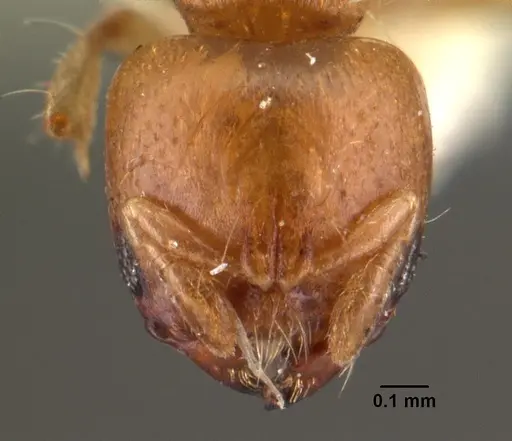
Melissotarsus beccarii holds the distinction of being the only ant species where adults produce silk [2][4]. This silk is produced by large head glands and excreted around the hypostoma (a mouthpart structure). Workers use their modified foreleg protarsi to pull and spin this silk, using it to line and plug their galleries [2]. This behavior serves multiple purposes: sealing cracks, closing exit holes, and maintaining the structural integrity of their tunnel networks.
The silk production is tied to their tunneling lifestyle. Workers erode their mandibles as they dig through wood, and the degree of mandible wear can actually indicate the age of individual workers [2]. Young workers have sharp mandibles, while older workers that have spent more time excavating have significantly worn-down mandibles. Researchers use a mandible wear index to age workers, which helps them understand task allocation within colonies.
This silk-producing ability is so unique that it has attracted significant scientific attention, with researchers studying the specialized hypostomal gland responsible for silk production [6].
Relationship with Scale Insects
Unlike most ant-coccid symbioses where ants farm the insects for honeydew, Melissotarsus beccarii takes a different approach – they eat the scale insects directly [2]. The ants tend phloem-feeding Diaspididae (a family of scale insects) inside their galleries, and these insects do not produce honeydew. Instead, the ants consume the scale insects as a primary food source.
This relationship is essential to the ants' survival. A study in Cameroon found approximately 1.5 million M. beccarii individuals (adults and brood) coexisting with 550,000 Diaspis scale insects on a single safoutier tree [3]. The ratio of scale insects to ants was about 0.35,meaning roughly 3 ants for every 1 scale insect. This represents an obligate predatory farming relationship that cannot be easily replicated in captivity.
The scale insects are tended within the galleries and provide a constant food source. Workers specialize in tending these insects as they age – the oldest workers with the most worn mandibles are typically found around the scale insects [2].
Colony Structure and Reproduction
Melissotarsus beccarii has one of the most complex colony structures documented in ants. Founding colonies start monogynously (with a single queen), but mature colonies become polygynous and oligogynous, containing multiple physogastric (reproductively active) queens that can be spaced more than 1 meter apart within the same colony [2]. This spatial separation is unique – each physogastric queen controls fertility in her immediate vicinity, creating a mosaic of zones within the colony each under the influence of its own queen.
Only one queen is physogastric (actively producing eggs) at a time in each zone, though multiple physogastric queens can exist in a single colony. The colony ratio is approximately 70 workers per queen [3]. Workers themselves can lay eggs – this was observed in laboratory conditions where workers with worn mandibles laid chorioned (viable) eggs [2]. This suggests low within-colony relatedness, as worker reproduction typically evolves when relatedness is reduced.
Gynes (young queens) perform worker-like tasks including digging galleries – 6% of founding gynes in one study had worn mandibles indicating they had been excavating [2]. This is unusual as founding queens typically focus on reproduction rather than colony construction.
The Challenge of Wood-Tunneling
Melissotarsus beccarii is one of the few ant genera that actually excavates through live wood – most ants that nest in wood simply use existing cavities rather than creating them [2]. Workers tunnel through both bark and the living sapwood beneath, creating extensive networks of chambers and galleries. This behavior makes them unique among ants and explains why they are considered xylophagous (wood-eating), though they consume the scale insects rather than the wood itself.
Their body morphology is adapted for this lifestyle. Workers have a distinctive walking method: they progress on their front and hind legs while their middle pair projects upward, maintaining contact with the gallery ceiling [2]. This is why they stagger helplessly when placed on flat surfaces – their legs are literally designed for tunnel ceilings, not horizontal planes.
Incipient (new) colonies prefer the smooth bark of tree trunks and main branches, likely because it is easier to excavate [2]. As colonies mature, they can spread to higher branches, with infestations sometimes extending to the highest branches of large trees [5].
Frequently Asked Questions
Can I keep Melissotarsus beccarii in a test tube or formicarium?
No. These ants cannot be kept in any conventional ant-keeping setup. They require access to wood or bark material to excavate their galleries and will not survive in test tubes, acrylic nests, or soil-based formicaria. Their entire lifestyle revolves around living inside tree bark [2].
What do Melissotarsus beccarii eat?
They eat scale insects (Diaspididae), which they farm and consume directly inside their galleries. This is an obligate relationship – they cannot survive without access to these specific insects. They do not collect honeydew and do not forage outside their nests, so conventional ant foods will not work [2][3].
Has anyone successfully bred Melissotarsus beccarii in captivity?
No documented successful captive breeding exists. Researchers attempting to breed colonies in laboratory conditions failed – they could only keep queenright fragments alive for two weeks [2]. This species is considered impossible to keep in captivity for hobbyists.
Are Melissotarsus beccarii good for beginners?
Absolutely not. This species is not suitable for any level of ant keeping except perhaps specialized scientific research. They require live wood, scale insects as food, and cannot walk on flat surfaces. They are among the most difficult ants to keep – effectively impossible for anyone but expert researchers [2].
Do Melissotarsus beccarii need hibernation?
Unknown. Given their tropical Afrotropical distribution, they likely do not require hibernation. However, this has not been studied and is irrelevant since they cannot be kept in captivity anyway.
Why do Melissotarsus beccarii walk strangely?
Their unique walking style is an adaptation to life inside narrow tunnels. They walk on their front and hind legs with their middle pair pointing upward, keeping contact with the gallery ceiling. When placed on flat surfaces, they cannot walk properly and stagger around. This is not a defect – it is their natural locomotion for tunnel ceilings [2].
How big do Melissotarsus beccarii colonies get?
Extremely large. Colonies can reach millions of individuals. One study documented 43,100 ants per square meter of bark on heavily infested trees, with populations of approximately 1.5 million ants on a single tree [3]. They can spread from the trunk to the highest branches.
Report an Issue
The current care sheet is based fully on literature. See inconsistencies, or something that's incorrect? Please , it will be resolved after review from an admin. Contributing to the blogs tab also helps providing information, to make us be able to further improve the caresheets. Thank you for your support!
References

This caresheet is licensed under CC BY-SA 4.0 .
Community Blogs
CASENT0101464
View on AntWeb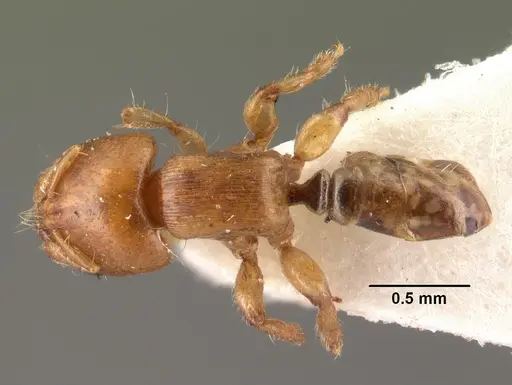
CASENT0102042
View on AntWeb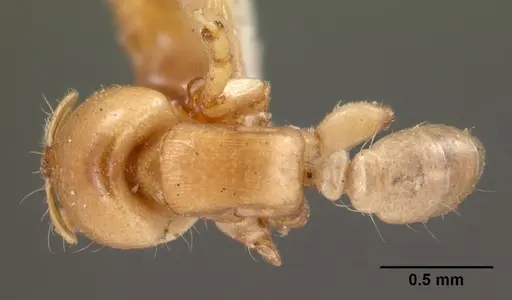
CASENT0102043
View on AntWeb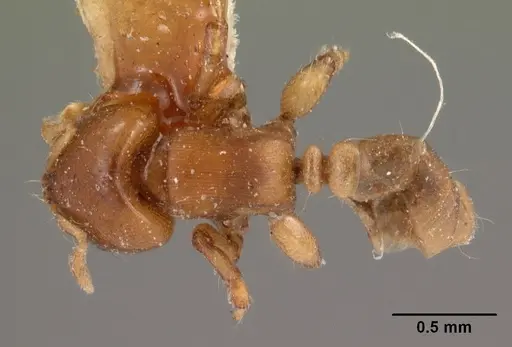
CASENT0102128
View on AntWeb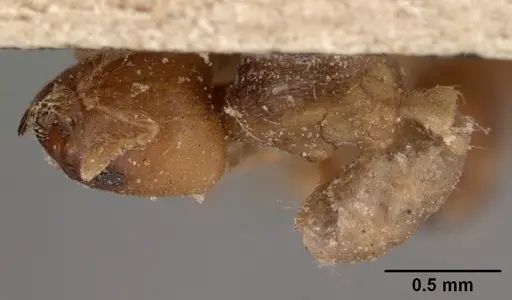
CASENT0170793
View on AntWeb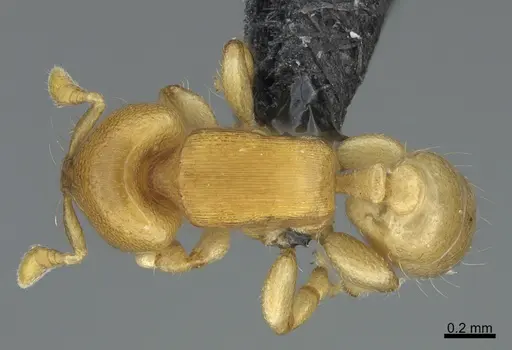
CASENT0922945
View on AntWeb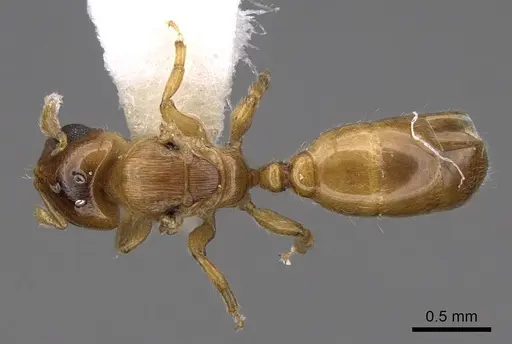
Literature
Loading distribution map...Loading products...