
Megalomyrmex symmetochus
- Sci. Name
- Megalomyrmex symmetochus
- Tribe
- Solenopsidini
- Subfamily
- Myrmicinae
- Author
- Wheeler, 1925
- Distribution
- Found in 5 countries
Introduction
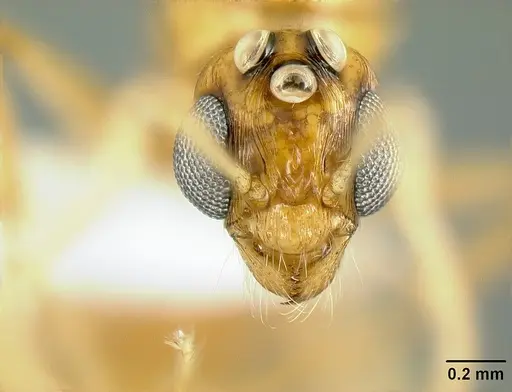
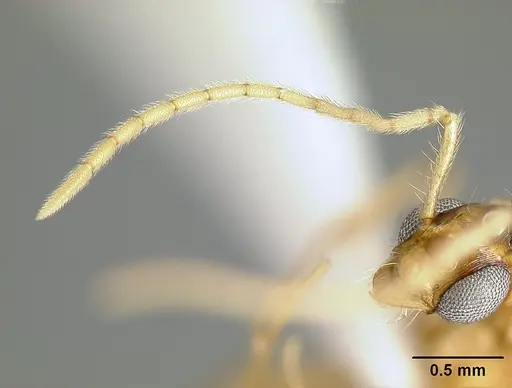
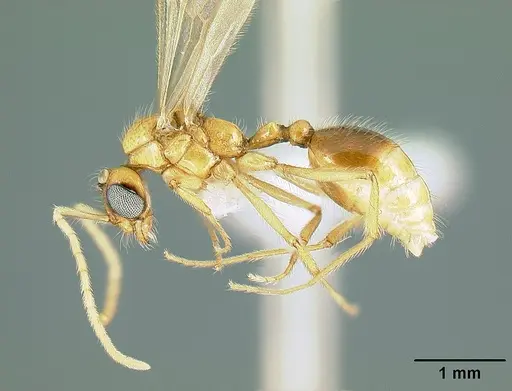
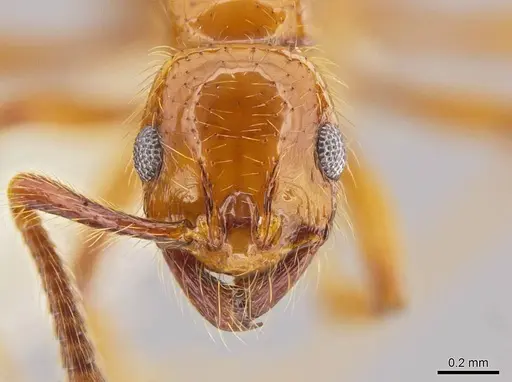
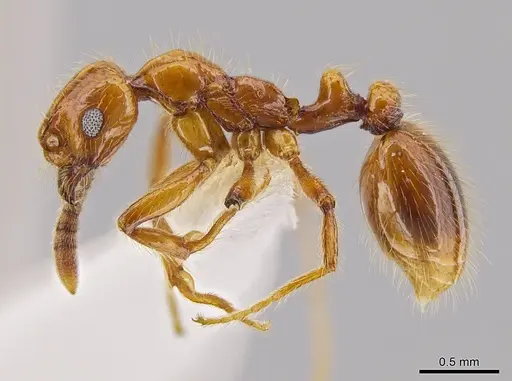
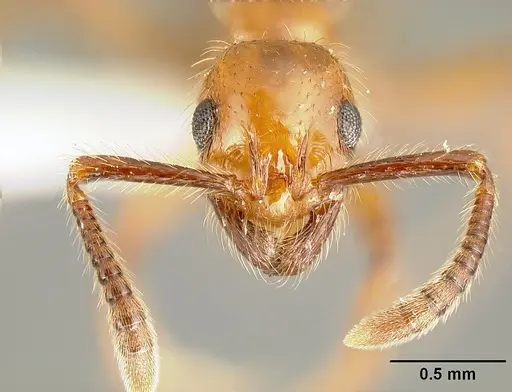
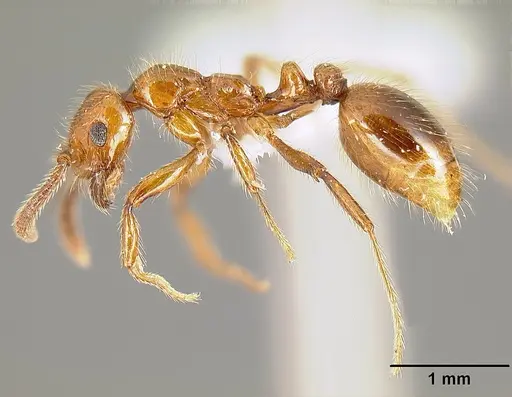
Megalomyrmex symmetochus is a tiny yellow-orange ant native to Central American rainforests from Costa Rica to Peru . This species is remarkable because it is a social parasite that lives permanently inside nests of fungus-farming ants, specifically Sericomyrmex amabilis . The guest ants inhabit separate chambers within the host's fungus garden, feeding on the fungal crop and host brood while maintaining their own queen and brood . In a fascinating twist, these parasites actually defend their hosts against raider ants using powerful alkaloid venom, earning them the nickname 'mercenary ants' . Colonies are small, typically under 75 workers, and can reach densities of over 80% in some host populations .
Quick Summary
- Difficulty: Expert
- Origin & Habitat: Wet Neotropical rainforests in Central America (Costa Rica, Nicaragua, Panama, Peru, Bolivia, Brazil), from sea level to 1070m elevation [1]. Lives exclusively within nests of fungus-farming ants (Sericomyrmex amabilis primarily, also Trachymyrmex) [2].
- Colony Type: Social parasite living xenobiotically within host Sericomyrmex colonies. Single queen per parasite colony, permanently associated with a single host colony [2].
- Size & Growth:
- Queen: size data unavailable, inferred from Megalomyrmex genus as small ant (~3-4mm)
- Worker: size data unavailable, inferred from Megalomyrmex genus as small ant (~2-3mm)
- Colony: Under 75 workers, typically 40-50 [1]
- Growth: Slow, first workers produced approximately 4 months after queen establishes in host colony [3]
- Development: Approximately 4+ months from colony establishment in host nest [3]. Exact timeline unconfirmed but slow due to parasite lifestyle. (Development occurs within the protected environment of the host fungus garden. Growth rate correlates with host garden mass [3].)
- Antkeeping:
- Temperature: Keep at room temperature typical for tropical ant species, around 22-26°C. Avoid temperature extremes as both host and parasite prefer stable conditions [4].
- Humidity: High humidity required, these are rainforest species living within fungus gardens that need consistent moisture. Maintain 70-80% humidity similar to Sericomyrmex requirements [4].
- Diapause: No, this is a tropical species with no documented diapause requirement [4].
- Nesting: Must be kept WITHIN a host Sericomyrmex or Trachymyrmex colony. Cannot be maintained independently. Requires naturalistic setup with living host fungus garden [2].
- Behavior: Alert and active compared to their sluggish hosts. Workers move rapidly through the host nest, patrolling all garden chambers [1]. They are not aggressive toward hosts under normal conditions, most interactions are amicable [1]. However, they will aggressively defend against raider ants like Gnamptogenys hartmani using specialized alkaloid venom that causes invaders to attack each other [2]. Workers clip the wings of host virgin queens (gynes), reducing host reproduction [2]. They do not forage outside the host nest, all food comes from the fungus garden and host brood [5]. Escape risk is moderate for such tiny ants, fine mesh barriers are essential if somehow maintained with a host.
- Common Issues: Impossible to keep without a host colony, this is a social parasite that requires Sericomyrmex or Trachymyrmex hosts to survive., Even with hosts, maintaining both species is extremely difficult and requires specialized knowledge of fungus-farming ant care., Colony growth is slow and dependent on host resources., Host colonies may kill parasite workers by removing legs and antennae (culling behavior) [1]., Both species require high humidity and stable tropical conditions., WARNING: This species is listed as Vulnerable in Brazil according to IUCN Red List, it is illegal to collect in protected areas of Brazil.
The Guest Ant Lifestyle
Megalomyrmex symmetochus is one of the most unusual ants you could ever keep, it is a social parasite that lives permanently inside colonies of fungus-farming ants, specifically Sericomyrmex amabilis [2]. Unlike typical ants that build their own nests, these guest ants construct small chambers within the host's fungus garden, keeping their queen and brood separate from the hosts but living in the same structure [1]. The relationship is called xenobiosis, the guest ants are not fully integrated into the host colony (they maintain their own brood) but they cannot survive independently either. They feed on the fungal garden and occasionally on host brood, but they do not forage outside the nest [5]. The most fascinating aspect is their 'mercenary' role: when raider ants (Gnamptogenys hartmani) attack the host colony, M. symmetochus workers defend aggressively using alkaloid venom that causes the invaders to turn on each other [2]. This defense benefits both species, the host gets protection, and the parasites get to continue feeding on the garden.
Why This Ant Cannot Be Kept by Hobbyists
This species is NOT suitable for typical ant keeping and cannot be maintained without its host. M. symmetochus is an obligate social parasite that requires a living Sericomyrmex or Trachymyrmex colony to survive [2]. The queen cannot found a colony independently, she must invade an existing host colony, similar to how other social parasites operate [3]. Even if you could obtain both species, maintaining a healthy fungus-farming ant colony requires specialized knowledge: the host needs to cultivate its fungal garden, which demands specific humidity, temperature, and food conditions. The parasite cannot be separated from its host, without the fungus garden and host workers, it will simply die. This makes M. symmetochus essentially impossible for hobbyist antkeepers to maintain successfully. Even professional researchers have difficulty maintaining these dual-colony setups in laboratory conditions.
Defense Chemistry: The Mercenary's Weapon
The most remarkable feature of M. symmetochus is its chemical warfare system. Workers produce potent pyrrolizidine alkaloid venom (specifically a 1:1 mix of two isomers of butylhexylpyrrolizidine) that serves dual purposes [2]. When raider ants from the species Gnamptogenys hartmani attack, the guest ants dispense venom as both contact poison and aerosol. The venom is devastating, it killed 45% of raiders within the first hour and 100% within 24 hours in laboratory trials [2]. Even more remarkably, the venom acts as a 'propaganda substance' that disrupts the raiders' nestmate recognition, causing them to attack their own nestmates [2]. Just three M. symmetochus workers can adequately defend against two Gnamptogenys intruders [2]. This mercenary behavior turns the parasite into a beneficial symbiont during attacks, explaining why hosts tolerate their presence despite the costs.
Costs and Benefits of the Relationship
The relationship between M. symmetochus and its Sericomyrmex host is a classic example of balanced parasitism. The guest ant imposes significant costs: it feeds on the fungal garden and host brood, clips the wings of host virgin queens (reducing the host's reproductive output), and generally slows host colony growth [3]. Experiments show that parasitized host colonies have smaller fungus gardens, fewer workers, and reduced reproductive output compared to unparasitized colonies [3]. However, the benefits of having mercenary defenders may outweigh these costs, especially in areas with high raider pressure. The host can also 'cull' excess parasite workers by removing their legs and antennae, which helps regulate the parasite population [1]. This explains why prevalence can exceed 80% in some host populations, the relationship has evolved toward semi-mutualism in many situations [2].
Frequently Asked Questions
Can I keep Megalomyrmex symmetochus in a formicarium?
No. This is an obligate social parasite that cannot survive without a host Sericomyrmex or Trachymyrmex colony. Even if you could obtain both species, maintaining a fungus-farming ant colony requires specialized knowledge and equipment that goes far beyond typical ant keeping.
What do Megalomyrmex symmetochus eat?
They feed exclusively on the host's fungal garden and occasionally on host brood. They do not forage outside the nest, all their nutrition comes from within the host colony [5]. This makes them impossible to keep without their host.
How do M. symmetochus queens found new colonies?
Queens are non-claustral and cannot found colonies independently. A newly mated queen must find and invade an existing Sericomyrmex or Trachymyrmex colony. She enters without being attacked by workers (using chemical insignificance) but may face aggression from the host queen, which she responds to with antennal tapping and venom displays [3].
Are M. symmetochus good for beginners?
Absolutely not. This species cannot be kept by hobbyists at all, it is an obligate social parasite requiring a living host colony. Even professional myrmecologists find dual-colony maintenance challenging. This is an expert-level species in terms of difficulty, and realistically it is beyond what any hobbyist can maintain.
How many workers do M. symmetochus colonies have?
Colonies are very small compared to typical ants. The largest colonies contain fewer than 75 workers, and many colonies have only 40-50 workers [1]. This is because they live within host colonies and face resource limitations.
Do they need hibernation or diapause?
No. As a tropical species from Central American rainforests, they do not require any cold period or diapause. Both host and parasite remain active year-round in their natural habitat.
Why are they called 'mercenary ants'?
They earn this nickname because they provide defense services to their host colony. When raider ants (Gnamptogenys hartmani) attack, M. symmetochus workers aggressively defend using their alkaloid venom, killing invaders and causing confusion that leads raiders to attack each other [2]. This turns the parasitic relationship into a mutually beneficial one during attacks.
Report an Issue
The current care sheet is based fully on literature. See inconsistencies, or something that's incorrect? Please , it will be resolved after review from an admin. Contributing to the blogs tab also helps providing information, to make us be able to further improve the caresheets. Thank you for your support!
References

This caresheet is licensed under CC BY-SA 4.0 .
Community Blogs
CASENT0613260
View on AntWeb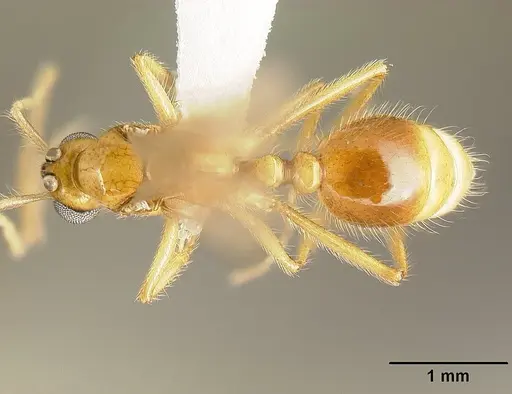
INB0003692962
View on AntWeb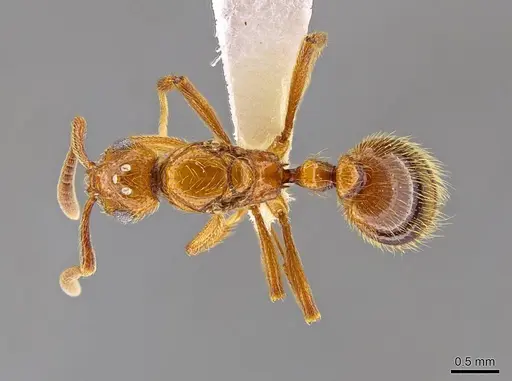
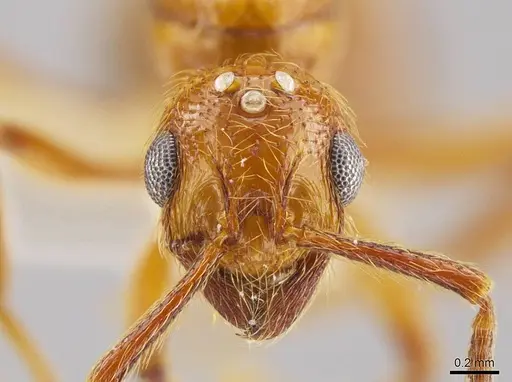
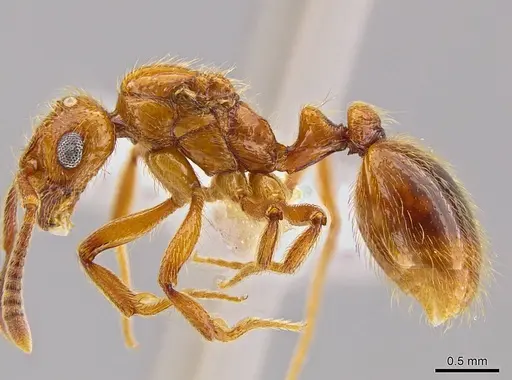
JTLC000015328
View on AntWeb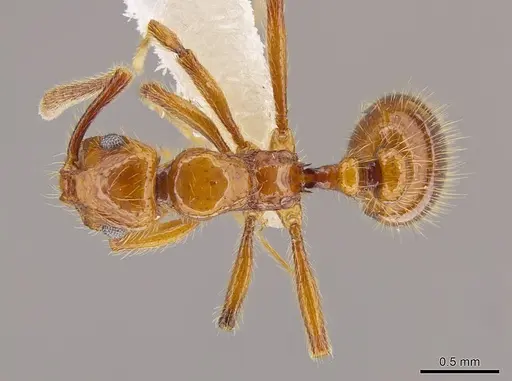
USNMENT00693019
View on AntWeb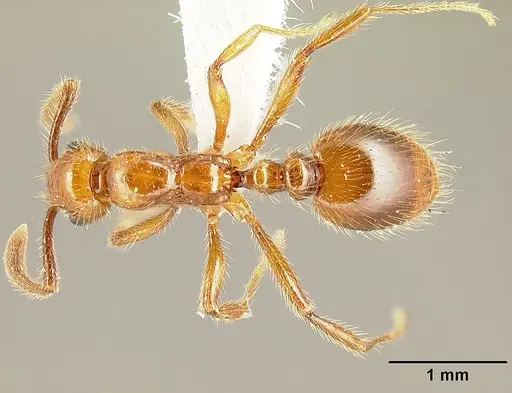
Literature
Loading distribution map...Loading products...