
Megalomyrmex pusillus
- Sci. Name
- Megalomyrmex pusillus
- Tribe
- Solenopsidini
- Subfamily
- Myrmicinae
- Author
- Forel, 1912
- Distribution
- Found in 3 countries
Introduction
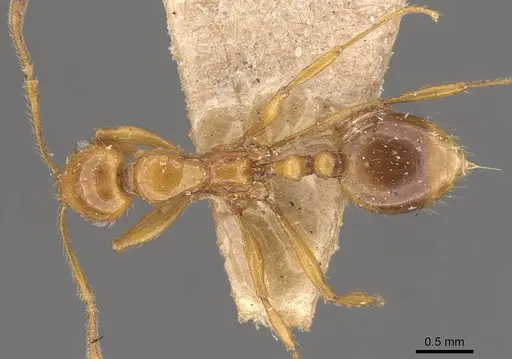
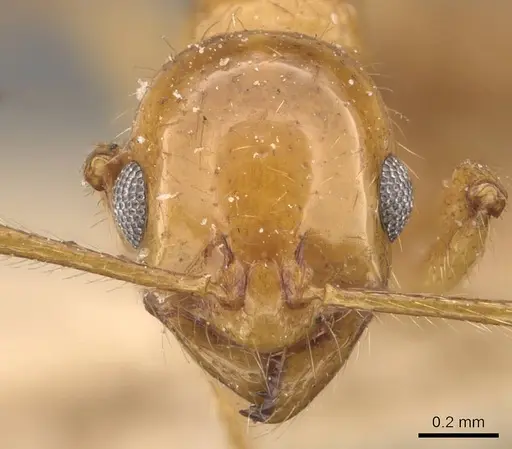
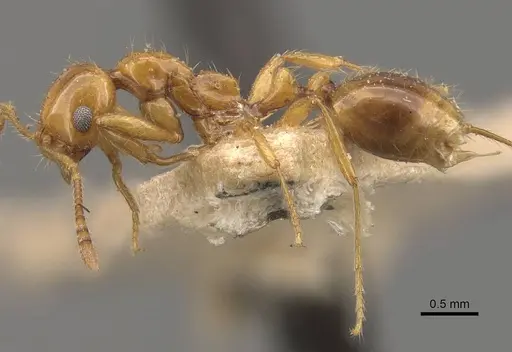
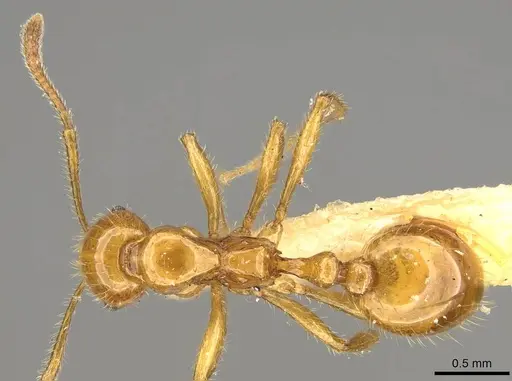
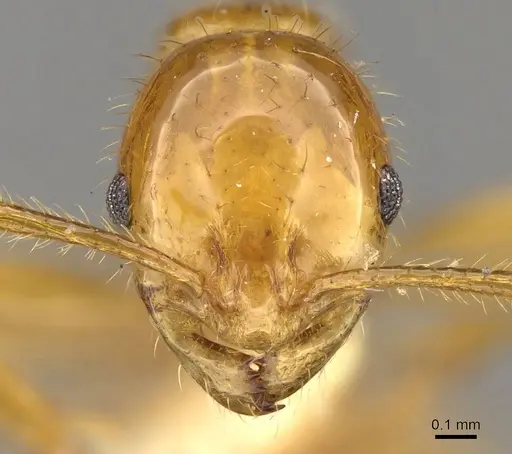
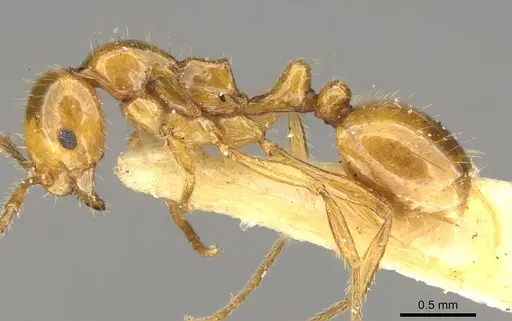
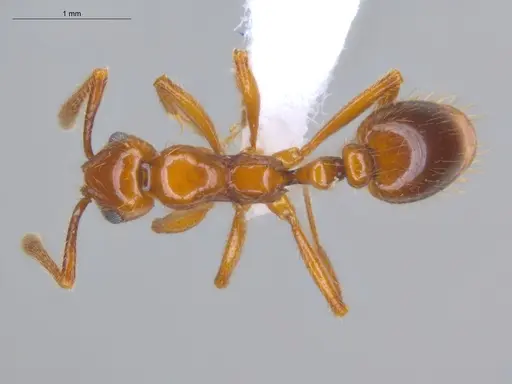
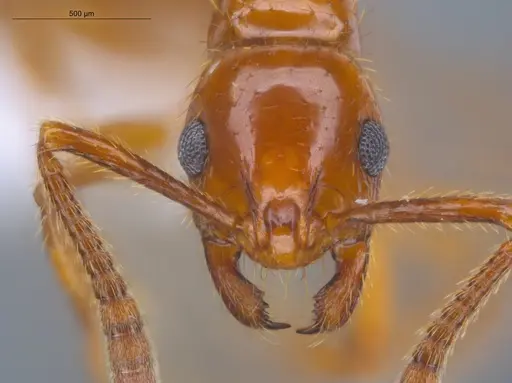
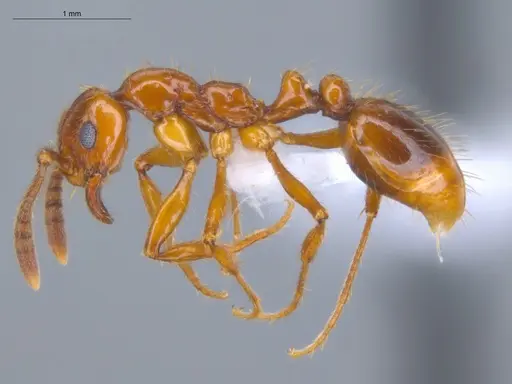
Megalomyrmex pusillus is a small, rarely collected ant species from the Neotropical region, found in Brazil, French Guiana, and Mexico. Workers are bright light yellow in color, sometimes displaying a distinctive wide dark brown transverse band across the first gaster segment, though this marking varies between specimens. They have smooth mandibles with a dental formula of (1-2) + 4,and possess long erect hairs on their body dorsum that exceed the diameter of their compound eyes. This species belongs to the Solenopsidini tribe, which contains predatory ants, though the specific biology and behavior of M. pusillus remains almost entirely unstudied in the scientific literature.
Quick Summary
- Difficulty: Unknown
- Origin & Habitat: Neotropical region, found in Brazil (São Paulo, Minas Gerais, Santa Catarina), French Guiana, and Mexico. They inhabit leaf-litter environments in tropical and subtropical forests, with specimens collected from native forest habitats [1][2][3].
- Colony Type: Colony structure is unconfirmed. Only the worker caste has been described, no established colonies have been documented in scientific literature.
- Size & Growth:
- Queen: undescribed, queens have not been formally described in scientific literature
- Worker: size data unavailable, no measurements exist in available literature
- Colony: unknown, no colony size data exists for this species
- Growth: Unknown
- Development: Unconfirmed, no development data exists for this species (Development timeline has not been studied. Related Megalomyrmex species may provide rough estimates, but specific data is unavailable.)
- Antkeeping:
- Temperature: No specific temperature requirements documented. As a Neotropical species from Brazil, they likely prefer warm conditions, start around 22-26°C and observe colony behavior.
- Humidity: Based on their leaf-litter forest habitat, keep the nest substrate consistently moist but not waterlogged. Provide a humidity gradient if possible.
- Diapause: Unknown, no seasonal studies exist. As a Neotropical species from regions with mild winters, they may not require a true diapause but may show reduced activity during cooler months.
- Nesting: No specific nesting data exists. As leaf-litter inhabitants, they likely nest in small cavities in rotting wood, under stones, or in soil. A small test tube setup or Y-tong nest with fine chambers would be appropriate.
- Behavior: Behavior is unstudied. As members of the Solenopsidini tribe, they may be predatory on small invertebrates, similar to related genera. Their small size means they can easily escape through standard barriers, use fine mesh or fluon on all openings.
- Common Issues: no biological data exists, keepers will be pioneering care for this species, escape prevention is critical due to their very small size, colony founding is unconfirmed, queen caste has not been described, diet preferences are unknown, may require live prey like related Solenopsidini, wild-caught colonies may have parasites given their rarity and limited collection records
Species Overview and Identification
Megalomyrmex pusillus is a small, distinctive ant species that has rarely been collected since its description in 1912. Workers are bright light yellow in color, though some specimens from certain populations (particularly Alto da Serra, São Paulo) display a wide deep brown transversal band across the first gaster segment, this marking is not constant across all specimens. They have smooth mandibles with a distinctive dental formula, long erect hairs on their dorsal surface that exceed the diameter of their compound eyes, and a propodeum with acute lateral tubercles. This species is part of the Solenopsidini tribe, which includes predatory ants, but M. pusillus itself has not been studied for specific behavioral or dietary traits. The queen caste has not been formally described in scientific literature, making colony establishment from wild-caught queens impossible to verify.
Distribution and Habitat
This species is known from the Neotropical region, with confirmed records from Brazil (São Paulo, Minas Gerais, Santa Catarina), French Guiana, and Mexico. Specimens have been collected from native forest leaf-litter in southern Brazil, with 5 specimens recorded in studies of serrapilheira (leaf-litter ant communities) in Santa Catarina and Rio Grande do Sul states. The first record from Minas Gerais came from Poços de Caldas in October 1991. They appear to prefer humid forest floor environments typical of leaf-litter dwelling ants in the Atlantic Forest and Amazon-influenced regions of Brazil. [1][2][3]
Current State of Knowledge
Megalomyrmex pusillus represents a significant knowledge gap in ant biology. The AntWiki explicitly states 'Nothing is known about the biology of M. pusillus.' This is one of the least studied ant species in the hobby, with no published information on colony structure, founding behavior, development timeline, diet preferences, temperature requirements, or any aspect of their captive care. Only the worker caste has been collected and described. This presents both a challenge and an opportunity for antkeepers, any successful captive husbandry of this species would be genuinely pioneering work. Keepers should approach this species as an experimental project and document their observations carefully.
Housing and Nesting
Since no specific nesting data exists, housing recommendations must be inferred from related species and their leaf-litter habitat. Use a small test tube setup or a Y-tong nest with tight, narrow chambers scaled to their tiny size. The nest material should be kept consistently moist but not waterlogged. Given their probable forest floor habitat, provide some humidity gradient within the setup. Ensure escape prevention is excellent, their very small size means they can escape through standard barriers that would contain larger ants. Use fine mesh or fluon on all openings.
Feeding and Diet
Diet preferences are completely unstudied for this species. As members of the Solenopsidini tribe, which includes predatory ants like Solenopsis (fire ants), they may be omnivorous or predatory on small invertebrates. Start with offering small live prey (fruit flies, pinhead crickets, small mealworms) and sugar water or honey. Observe acceptance carefully. Do not rely on any single food source until you confirm acceptance. Given their tiny size, prey items must be appropriately scaled.
Temperature and Seasonal Care
No specific temperature data exists for this species. As a Neotropical ant from Brazil (São Paulo, Minas Gerais, Santa Catarina), they likely prefer temperatures in the low-to-mid 20s Celsius. These regions experience mild winters, so they may not require a true diapause but could show reduced activity during cooler months. Start at room temperature (around 22-24°C) and observe colony behavior. If workers appear sluggish, slightly increase temperature, if they avoid the heated area, reduce it.
Frequently Asked Questions
Is Megalomyrmex pusillus a good species for beginners?
No. This is not a beginner species due to the complete lack of biological data. No established care protocols exist, and keepers will essentially be pioneering husbandry for this species. If you want a rewarding challenge and are prepared to experiment and document your observations, this could be interesting, but there are no guarantees of success.
What do Megalomyrmex pusillus ants eat?
This is completely unknown. As a member of the Solenopsidini tribe, they may be predatory or omnivorous. Offer small live prey (fruit flies, micro crickets) and sugar sources (honey, sugar water) and observe what they accept. Do not rely on any single food source until you confirm acceptance.
How long does it take for Megalomyrmex pusillus to develop from egg to worker?
Unknown, no development data exists for this species. There is no scientific literature on their egg-to-worker timeline. Related Megalomyrmex species may provide rough estimates, but specific data is unavailable.
What temperature should I keep Megalomyrmex pusillus at?
No specific temperature requirements have been documented. As a Neotropical species from Brazil, they likely prefer warm conditions around 22-26°C. Start at room temperature and adjust based on colony activity. If workers cluster together and seem sluggish, try slightly increasing temperature.
Can I keep multiple Megalomyrmex pusillus queens together?
Unknown, colony structure has not been studied. The queen caste has not even been formally described, so combining unrelated queens has not been documented. Do not attempt until more is known about their natural colony structure.
How big do Megalomyrmex pusillus colonies get?
Unknown, no colony size data exists for this species. Only individual workers have been collected, no established colonies have been studied or documented.
Where does Megalomyrmex pusillus come from?
They are found in the Neotropical region, specifically Brazil (São Paulo, Minas Gerais, Santa Catarina), French Guiana, and Mexico. They inhabit leaf-litter in tropical and subtropical forests.
What is the best nest type for Megalomyrmex pusillus?
No specific nesting data exists. Use a small test tube setup or Y-tong nest with narrow chambers scaled to their tiny size. Keep the substrate consistently moist. Ensure excellent escape prevention due to their small size.
Do Megalomyrmex pusillus need hibernation?
Unknown, no seasonal studies exist. As a Neotropical species from regions with mild winters (southern Brazil), they likely do not require a true diapause but may reduce activity during cooler months. Monitor colony behavior and adjust temperature accordingly.
Report an Issue
The current care sheet is based fully on literature. See inconsistencies, or something that's incorrect? Please , it will be resolved after review from an admin. Contributing to the blogs tab also helps providing information, to make us be able to further improve the caresheets. Thank you for your support!
References

This caresheet is licensed under CC BY-SA 4.0 .
Community Blogs
Literature
Loading distribution map...Loading products...